






 Portuguese


Honda CR-V LX 2008 Costs R$ 47,296 According to Fipe, Offers 150 Horsepower, 5-Speed Automatic Transmission, and 628 Liters of Cargo Space.
The Honda CR-V LX 2.0 Automatic 2008 is priced at R$ 47,296 according to the Fipe Table for September 2026, placing this 4.52-meter Japanese SUV in the same price range as various used compact cars. The vehicle features a 2.0 i-VTEC engine with 150 horsepower, a 5-speed automatic transmission, electric steering, independent suspension on all four wheels, seating for five, and a cargo space of 628 liters.
According to iCarros, the 2008 LX version offers 628 liters of cargo space, a 58-liter fuel tank, a 2.62-meter wheelbase, and a weight of 1,539 kg. The model also comes with disc brakes on all four wheels, ABS, electronic brake distribution, and a cabin designed to comfortably accommodate five adults.
Honda CR-V 2008 Priced at R$ 47,296 According to Fipe for September 2026
The CR-V LX 2.0 4×2 Automatic 2008 is listed at R$ 47,296 on the Fipe Table for September 2026. In August, the reference was R$ 48,087; in July, R$ 47,409; and in June, R$ 47,974.
-
Priced at around R$ 70,000, Hyundai ix35 2.0 automatic achieves up to 12.4 km/L, covers over 710 km per tank, and delivers 169 hp, 465 liters of trunk space, and a mid-size SUV stature at the cost of a used compact

-
Mitsubishi ASX O’Neill Boasts 415 Liters of Trunk Space, Costs Around R$ 71,000, Features 2.0 Engine with 160 hp, CVT Transmission, and a Range Over 670 km Without Turbo

-
Owner Spends R$ 3,843 on Major Maintenance for 1997 Corsa, Fuel Efficiency Improves from 12.5 to Nearly 16 km/l
-
For under R$ 75,000, the Subaru Forester XT delivers “sports car performance in an SUV body”: 240 hp, all-wheel drive, 505-liter trunk, and 0 to 100 km/h in 7.5 seconds


The national average for advertisements monitored by Webmotors is around R$ 49,800, while offers considered by the platform range from approximately R$ 40,000 to R$ 56,900. This positions the Japanese SUV in a market segment that also includes hatchbacks, sedans, and much smaller compact cars.

Those opting for the EX-L 4×4 2008 configuration will find a Fipe price of R$ 50,097 in September 2026. The difference compared to the LX is less than R$ 3,000, although the more fully equipped version adds the Real Time 4WD system and additional features.
2.0 i-VTEC Engine Delivers 150 Horsepower and 19.4 kgfm of Torque
The CR-V is powered by a 1,997 cm³, inline four-cylinder engine with 16 valves and aluminum construction. The maximum power output is 150 horsepower at 6,200 rpm, and the torque peaks at 19.4 kgfm at 4,200 rpm.
The cylinder head features SOHC i-VTEC technology, and fuel is delivered via multipoint electronic fuel injection (PGM-FI). This configuration available in Brazil operates exclusively on gasoline.
This setup represents a typical mechanical recipe from Honda during that era: an naturally aspirated engine with variable valve timing that delivers power at relatively high revolutions. There is no turbocharger or electrification, and the 150 horsepower must move approximately 1,539 kg in the LX version.
Five-Speed Automatic Transmission Ensures Comfortable Travels for the SUV
The automatic transmission features five speeds, which is noteworthy for a vehicle launched at a time when many automatics were still utilizing only four ratios. Honda has also equipped the system with Grade Logic Control.
This system manages gear selection based on the driving conditions and can maintain lower ratios on certain descents. Quatro Rodas highlighted the transmission’s good performance when evaluating the third generation of the CR-V in the used car market.
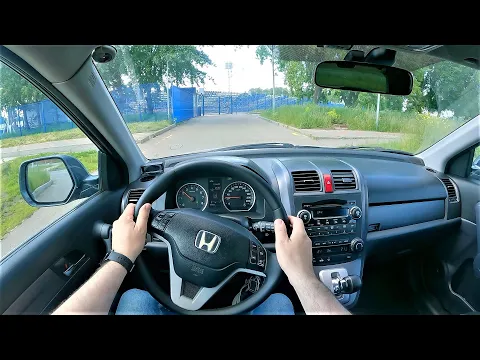

In the LX version, the drive is exclusively front-wheel. The EX-L, on the other hand, uses Real Time 4WD, a system that adds power to the rear axle based on traction conditions.
The 628-liter trunk is larger than many modern SUVs
One of the most impressive figures is found behind the second row. iCarros and AutoPapo report 628 liters of capacity in the trunk of the 2008 Honda CR-V LX.
This volume places the model in a high category even when compared to SUVs sold many years later. For families transporting strollers, luggage, groceries, or sports equipment, this capacity is one of the vehicle’s major selling points.
The rear seat also enhances the versatility of the cabin when folded down, transforming the CR-V into a vehicle capable of accommodating much larger items while maintaining a relatively compact body for a family SUV.
It measures 4.52 meters in length and 2.62 meters between the axles
The CR-V measures 4,520 mm in length, 1,820 mm in width, and 1,680 mm in height, while the wheelbase reaches 2,620 mm.
These proportions help explain the internal space utilization. The vehicle accommodates five people, and the second row benefits from a nearly flat floor, improving space for the central occupant.
Quatro Rodas highlighted the capacity to transport five adults as one of the third generation’s key features.
The gear lever is positioned on the dashboard, freeing up space between the front seats for storage. Additionally, there is a compartment on the ceiling with a small mirror designed to facilitate observing rear passengers.
Independent suspension on all four wheels reinforces the Japanese design
The suspension system also draws attention. At the front, the CR-V features independent McPherson architecture, while the rear uses a Double Wishbone independent setup.
The rear solution is more sophisticated than the torsion axle found in many compact SUVs. The goal was to combine stability, comfort, and good handling on uneven surfaces while maintaining driving characteristics close to those of a car.
The steering uses progressive EPS electric assistance, and the Honda installed ventilated discs at the front and solid discs at the rear.
Disc brakes on all four wheels, ABS, and EBD were already included
The LX configuration comes with ABS brakes, electronic brake distribution (EBD), and front airbags, in addition to the four discs.
For a vehicle launched in Brazil nearly two decades ago, the package was competitive. The EX-L version added equipment and a more comprehensive safety setup, along with all-wheel drive.
The CR-V also features 17-inch alloy wheels with 225/65 R17 tires, a combination that reinforces the SUV’s visual size and helps provide good ground clearance.
A 58-liter tank extends travel range
The tank holds 58 liters of gasoline.
The combination of a relatively large tank and a 2.0 engine allowed the model to undertake long road trips without the need for very frequent refueling.
Quatro Rodas has noted reports from owners achieving high fuel consumption for an SUV of this generation.
In addition to the fuel tank, the five-speed transmission helps maintain optimal RPMs during trips, especially compared to older four-speed automatics common in that period.
CR-V LX weighs 1,539 kg and accelerates from 0 to 100 km/h in 10.2 seconds
AutoPapo records 1,539 kg for the LX version, while the 0 to 100 km/h performance is noted at 10.2 seconds.
This figure shows that the 150 horsepower engine does not make the CR-V sporty, but it offers performance consistent with its family-oriented design.
The torque delivery of 19.4 kgfm occurs at 4,200 RPM, requiring the transmission to downshift when the driver demands stronger acceleration.
On the road, this characteristic becomes more evident during overtaking and inclines. The system operates more efficiently when the engine revs up and enters the range where it delivers maximum power.
EX-L version adds 4×4, leather, and sunroof
For R$ 50,097 in the Fipe Table as of September 2026, the 2008 CR-V EX-L 4×4 is priced just a few thousand reais above the LX.
In addition to the Real Time 4WD system, the more complete configuration includes leather-trimmed seats, a sunroof, additional airbags, fog lights, and other features. The engine remains the same 2.0 i-VTEC with 150 horsepower paired with the five-speed automatic transmission.
The weight increases to approximately 1,606 kg, primarily reflecting the all-wheel drive and additional equipment. The fuel tank remains at 58 liters, and the trunk retains the 628 liters noted by AutoPapo.
CR-V gained traction in Brazil with the 2008 line
The third generation debuted in the Brazilian market in 2007 but saw increased sales with the arrival of the 2008 line imported from Mexico. It was at this time that the range began to offer the LX and EX-L more extensively.
The LX served as the entry-level version, retaining the engine, automatic transmission, and much of the model’s structure, but utilizing front-wheel drive and a simpler equipment list.
The EX-L occupied the top of the range with Real Time 4WD, leather, sunroof, and a comprehensive safety package. This division allowed the CR-V to cater to different buyer profiles without abandoning the same mechanical foundation.
Interior space helped the CR-V build a reputation as a family car
The cabin is one of the elements that best explains the model’s longevity. In addition to the spacious trunk, there is ample legroom and headroom, along with various compartments distributed throughout the interior.

The flat rear floor makes it easier to accommodate a fifth passenger, while the 2.62-meter wheelbase allows adults to travel comfortably in the second row without needing an excessively long body.
This design ensures that the third-generation CR-V still feels spacious inside, even when compared to more recent SUVs. The body length of 4.52 meters combines seating for five and a cargo area of 628 liters without exceeding urban-friendly dimensions.
Suspension, transmission, and brakes are important points in used units
Quatro Rodas identifies the suspension as one of the systems that require inspection in used examples. Misalignment and damaged components can accelerate tire wear, especially considering the 225/65 R17 dimensions.
The automatic transmission should shift smoothly without jolting. Downshift retention on descents is part of the Grade Logic Control’s operational logic.
The brake discs also deserve inspection. Vibrations in the pedal during braking may indicate warping, while dirt on the throttle body can impair accelerator response and idle stability.
Honda CR-V 2008 was priced at R$ 88,410 when brand new
AutoPapo records R$ 88,410 as the price of the Honda CR-V LX 2008 when new. Currently, the model is priced below R$ 48,000 in the September 2026 Fipe Table reference.
This price transformation has placed an SUV originally positioned above conventional mid-size cars in the same range as various used compact automobiles.
And the drop in value hasn’t erased its key specifications: the 150 horsepower, the five-speed automatic transmission, the 4.52 meters of length, the five seats, and the 628 liters of cargo capacity are still present.
For less than R$ 48,000, the CR-V offers size, space, and Honda mechanics
The Honda CR-V LX 2008 reaches September 2026 valued at R$ 47,296 in the Fipe Table, with a market average close to R$ 50,000. This price places an old Japanese mid-size SUV directly in the range occupied by used economy cars.
The 2.0 i-VTEC engine delivers 150 horsepower and 19.4 kgfm, paired with a five-speed automatic transmission and front-wheel drive. The body measures 4.52 meters and accommodates five people, while the trunk achieves an impressive 628 liters.
Independent suspension on all four wheels, electric steering, disc brakes on all four wheels, ABS, and EBD complete a setup that was sophisticated in 2008 and remains attractive among affordable used cars.
For less than R$ 48,000, the CR-V offers a vehicle quantity that is hard to find among compact models in the same price range: 150 horsepower, a five-speed automatic, 628 liters of trunk space, and family SUV dimensions in a Japanese formula that has lasted nearly two decades in the Brazilian market.


