





 Portuguese
  English
  Spanish
  4 min of reading
  0 comments


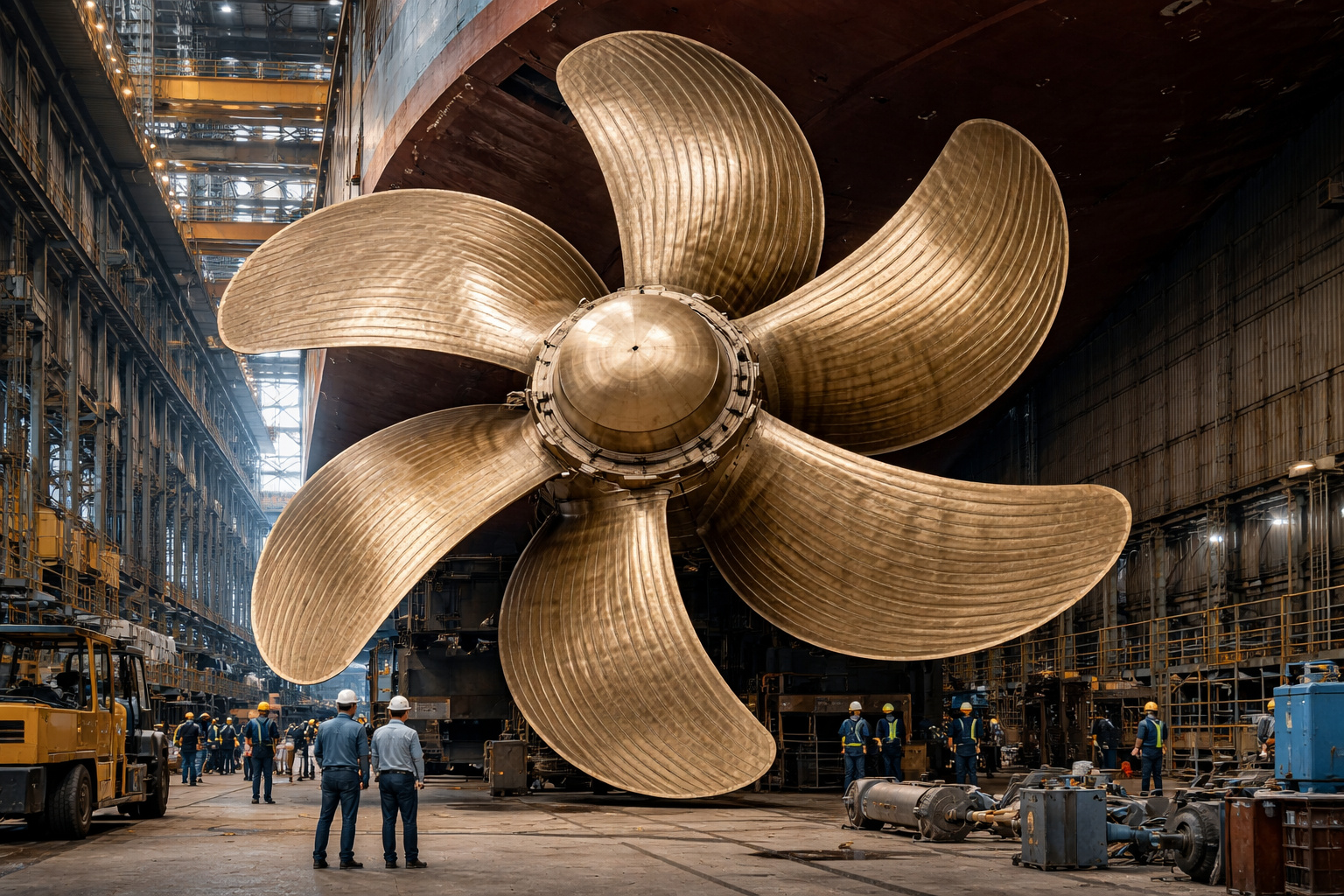
The largest naval propeller in the world supports global trade with giant dimensions, high precision, and direct impact on the efficiency of modern ships
One of the most important pieces of modern maritime engineering remains practically invisible, although it supports a large part of global trade.
The propeller of the largest container ships can weigh up to 131 tons and reach about 11 meters in diameter, costing up to USD 4 million per unit.
At the same time, a single German company concentrates more than 60% of the world’s production of these structures.
Each propeller takes between 3 and 4 months to manufacture, highlighting the level of complexity involved in this industrial process.
Largest ship in the world evidences evolution of propellers
Since March 2023, the largest container ship in the world is the MSC Irina, built by the Hudong-Zhonghua shipyard for the Mediterranean Shipping Company.
With a length of 399.9 meters and a capacity of 24,346 TEUs, the ship represents the pinnacle of current naval engineering.
-
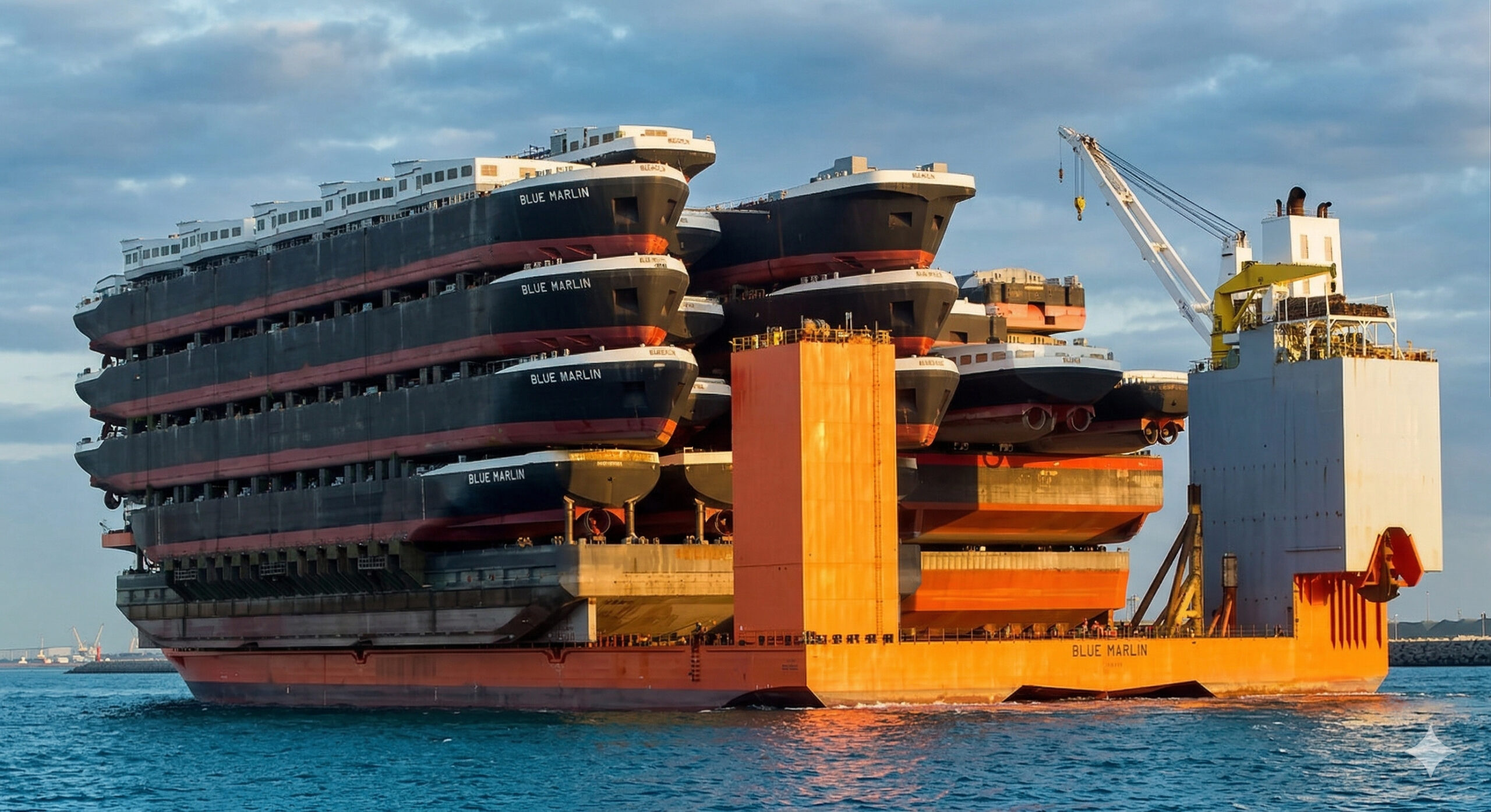
With a length of 225 meters and a capacity of 76 thousand tons, this ship “sinks” its own deck down to 28 meters deep to accommodate war destroyers, oil platforms, and giant radars floating above, and then emerges with everything intact on top like a colossal tray crossing oceans.
-
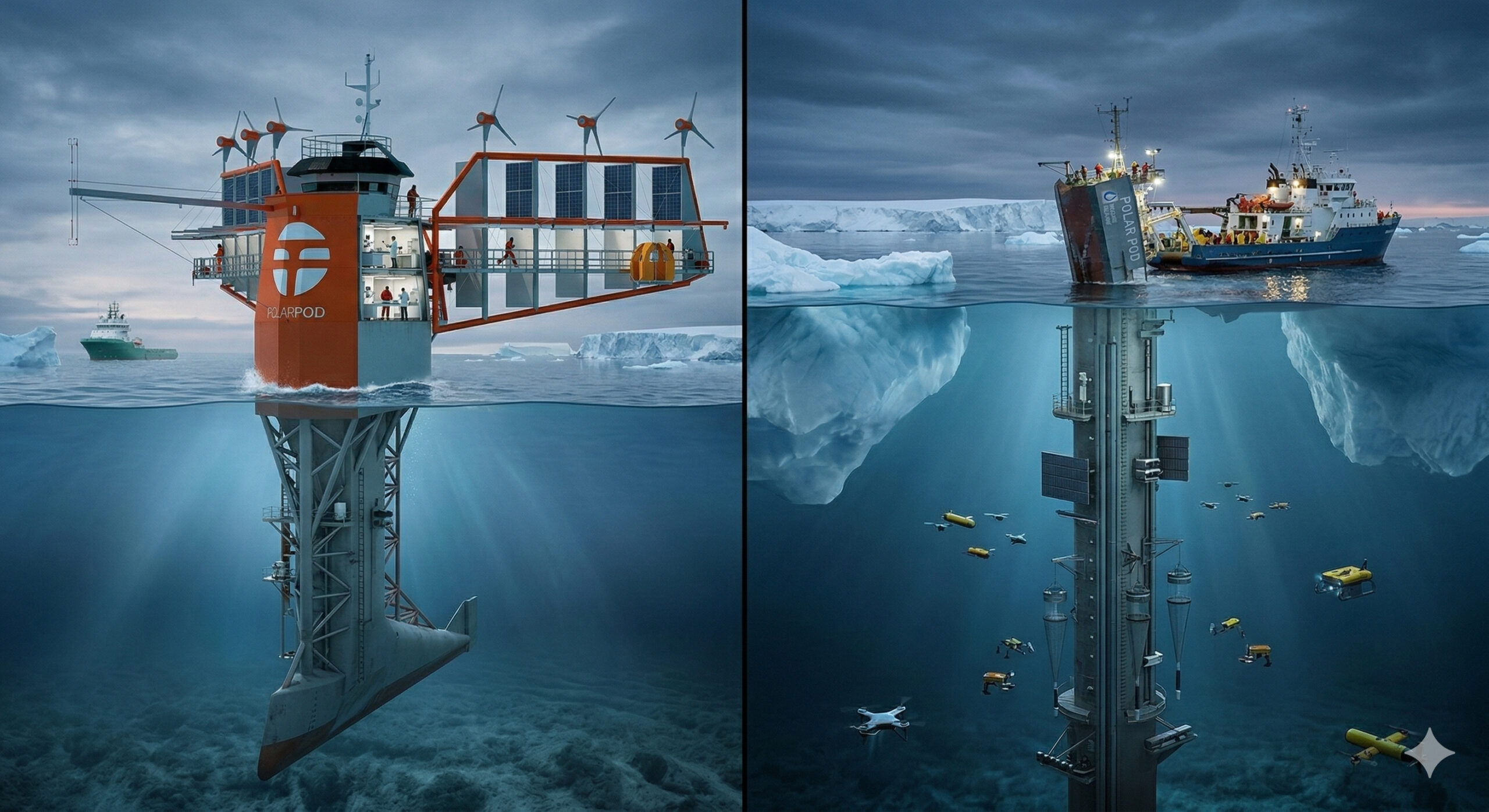
A 100-meter platform without a motor, without a keel, and operating upside down rotates 90 degrees in the ocean, sinks 75 meters, and drifts around Antarctica for two years driven by the planet’s most powerful current to study the largest carbon sink on Earth, still poorly understood by science for accurate climate modeling.
-
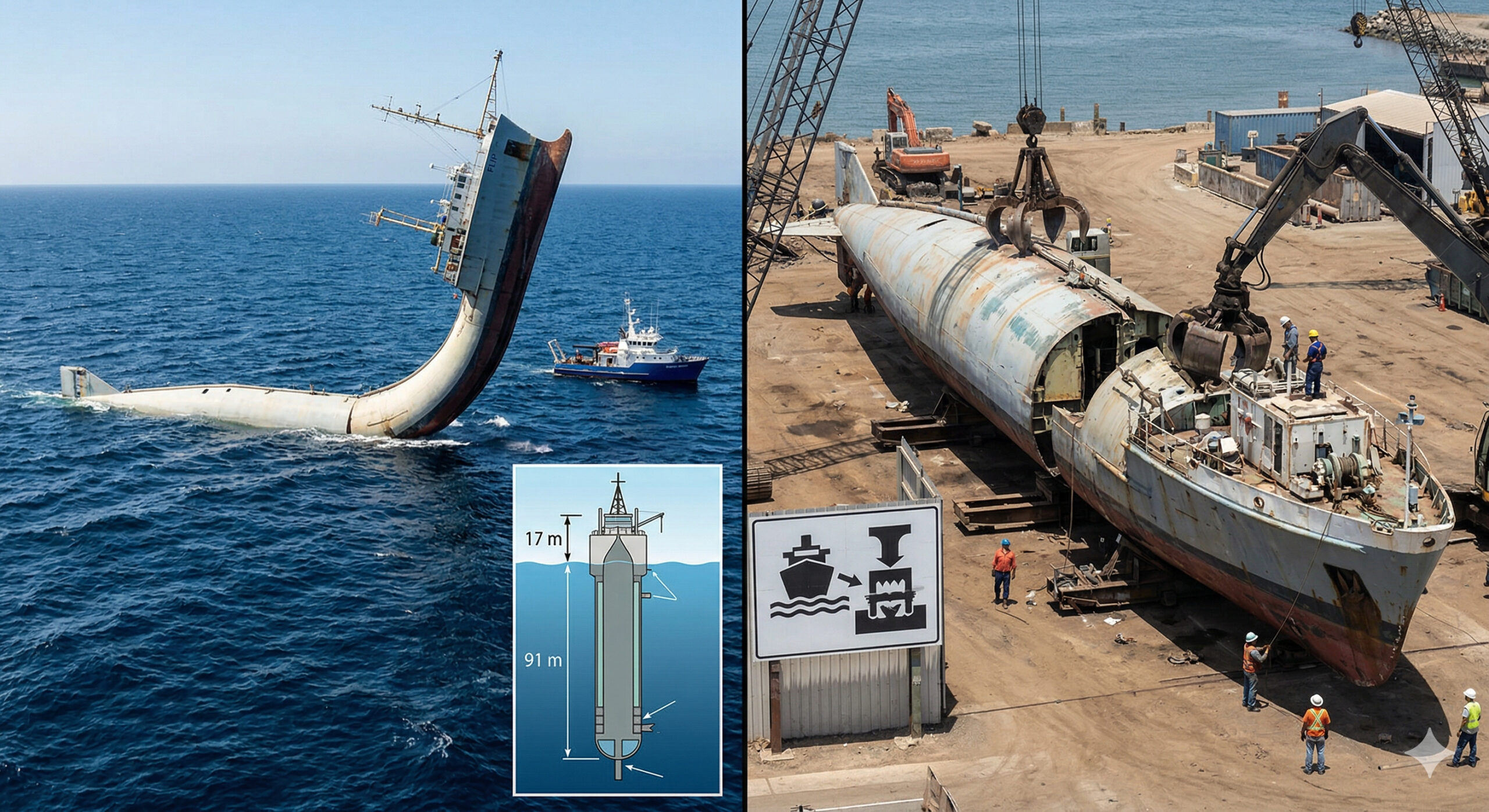
With a length of 108 meters and a giant spoon shape, the FLIP was the only ship in the world capable of rotating 90 degrees in the ocean and remaining vertical, with 91 meters submerged, operating for 60 years until it was retired and sent to the scrapyard in 2023.
-
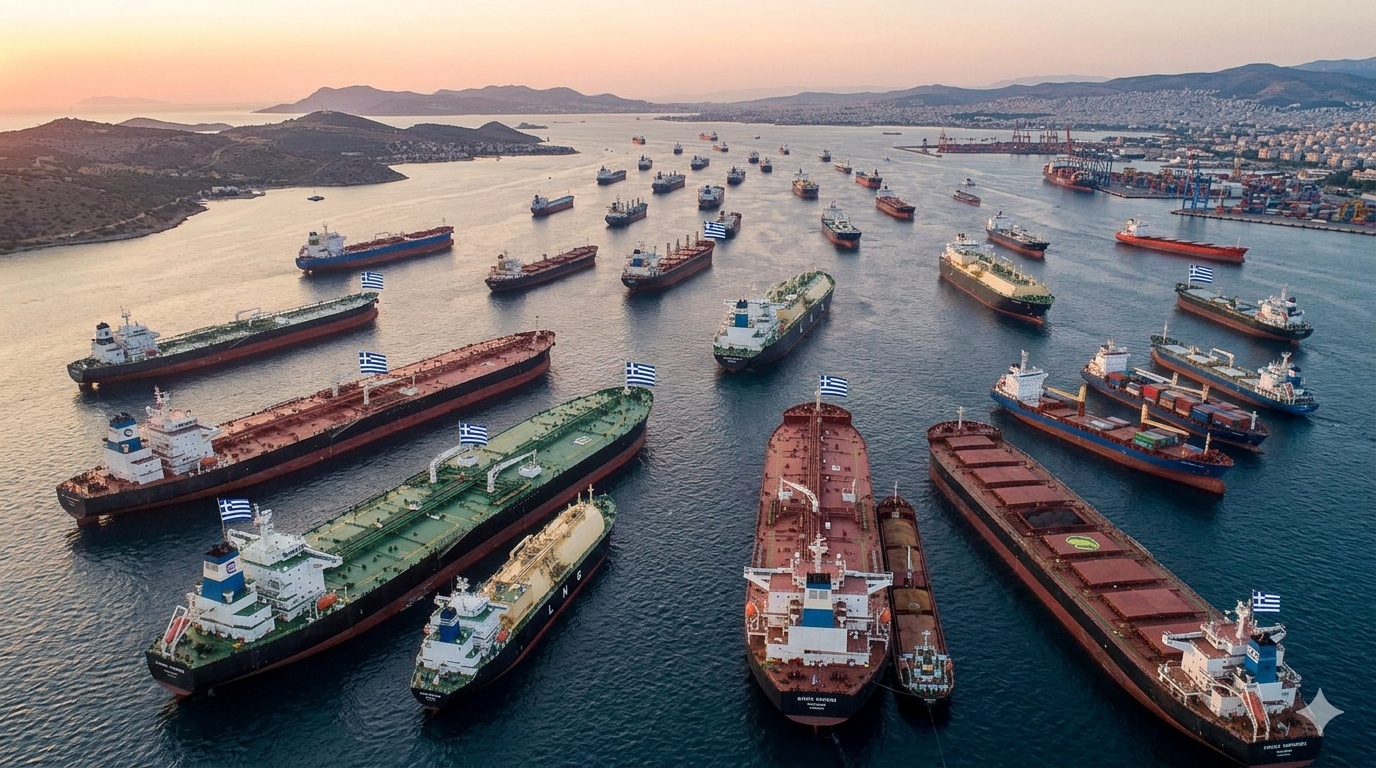
Neither the USA nor China: a small European nation has become one of the largest maritime powers on the planet, controlling one of the largest merchant fleets in the world with thousands of ships and dominating the global transportation of oil and strategic cargo.

This evolution becomes even more evident when compared to the RMS Titanic, launched in 1912.
At the time, its propeller measured only 7 meters in diameter and weighed about 38 tons.
Today, the specifications have changed significantly and show the technological advancement of the sector:
- Diameter between 10 and 11.6 meters
- Weight between 100 and 131 tons
- Structure with 4 to 6 blades
- Material in aluminum-nickel-bronze alloy
- Cost of up to USD 4 million
- Production time between 3 and 4 months


German company dominates global manufacturing
The production of these propellers requires highly specialized technology, which limits the number of manufacturers in the world.
In this context, Mecklenburger Metallguss, based in Germany, leads the sector with more than 60% of the global market.
This dominance occurs because the process combines traditional techniques with advanced digital systems.
Any minimal error in the geometry of the blades can reduce the ship’s efficiency by up to 10%, which demands absolute precision.
Manufacturing process requires months of extreme precision
The production of a large propeller follows rigorous and highly controlled stages.
Each phase requires precision comparable to that of laboratory equipment, even though it is a piece the size of a house.
Initially, 3D modeling and the creation of wooden molds with millimeter precision occur.
Then, casting is performed with a metal alloy heated to over 1,200 °C in deep sand molds.
Next, controlled cooling occurs over days to avoid structural failures.
Subsequently, five-axis CNC machines perform machining with extremely high geometric precision.
Finally, finishing includes manual polishing and rigorous balancing.
Ultrasonic tests ensure that there are no micro-cracks, totaling more than 200 hours of inspection.
Larger propellers increase efficiency and reduce consumption
Larger propellers operate at lower rotation and greater water displacement volume.
This reduces turbulence and significantly improves the energy consumption of ships.
On routes of about 20,000 km between Asia and Europe, this efficiency generates significant fuel savings.
The propellers rotate between 80 and 100 RPM and allow speeds close to 23 knots.
These structures are powered by large engines manufactured by companies such as MAN Energy Solutions and WinGD.
These engines can generate between 80,000 and 100,000 hp.

Strategic piece supports global trade
Although it represents only between 3% and 5% of the total cost of a ship, the propeller is essential for its operation.
Any failure can disrupt routes for weeks, directly impacting maritime transport.
Considering that about 90% of global trade depends on this system, its importance is critical.
Therefore, each propeller undergoes rigorous inspections before being installed.
Additionally, ships of this category operate with spare parts on their first voyages to ensure safety.
This strategy reduces operational risks and ensures logistical continuity.
The silent role of naval engineering in global trade
The naval propeller combines unique engineering characteristics, such as a weight exceeding 100 tons and constant rotation.
Even so, it is produced with extreme precision and highly specialized manual finishing.
This combination of scale and precision reveals one of the most sophisticated technologies in modern industry.
At the same time, it highlights how invisible elements support global trade chains.
Will the evolution of these propellers continue to keep pace with the growth of ships in the coming decades?









Seja o primeiro a reagir!