






 Portuguese


Project Includes 150 m² of Built Area and Can Generate Between R$ 2,700 and R$ 4,500 Gross Monthly, Depending on the Rent of Each Unit. However, Before Assessing Attached Houses, There Are Costs Involved for Projects, Permits, Individual Meters, Retaining Walls, Access, Maintenance, Vacancy, and Local Real Estate Market Characteristics.
Building three attached houses of 50 m² on the same lot means planning for at least 150 m² of primary built area. Using the range presented for a simple or intermediate construction, the estimated investment falls between R$ 375,000 and R$ 600,000, without the value being treated as a fixed budget.
The gross monthly income also varies according to location. Three units rented for R$ 900 would total R$ 2,700; contracts at R$ 1,200 would reach R$ 3,600; and in the scenario of R$ 1,500 per unit, they would amount to R$ 4,500. None of these projections represent guaranteed profit.
Built Area of 150 m² Establishes Only the Starting Point
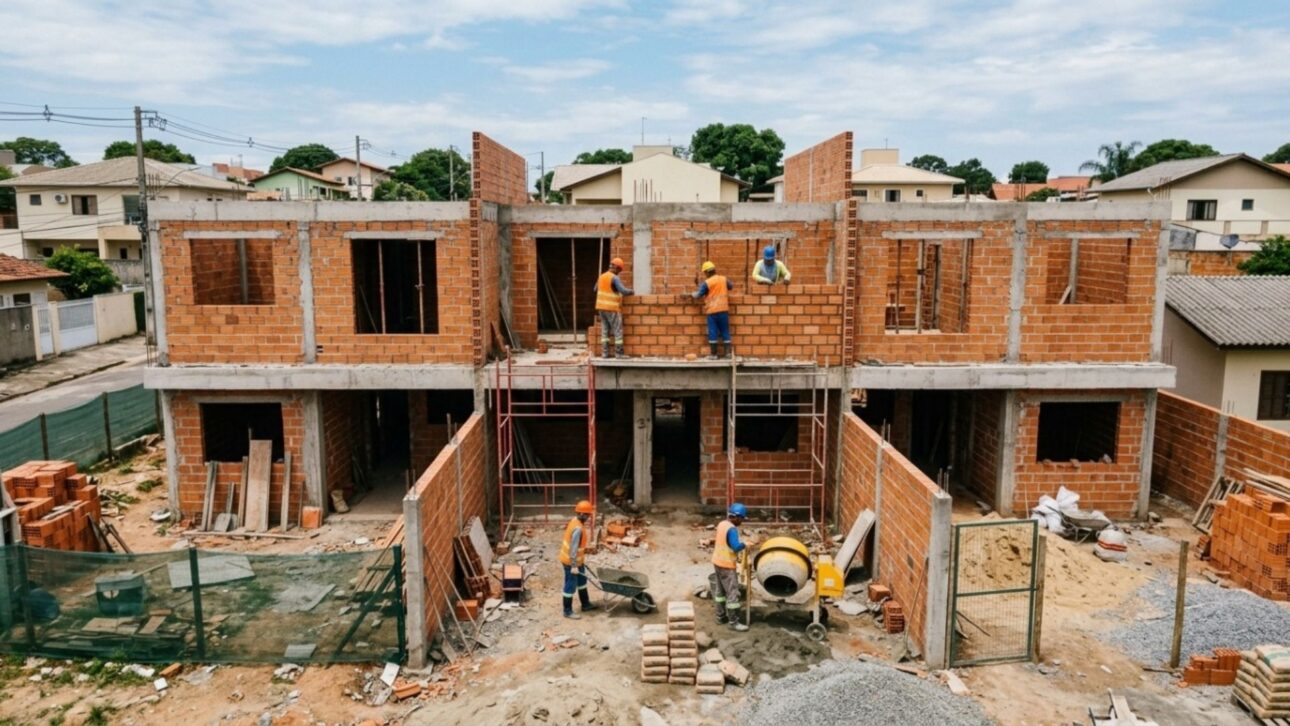
The three 50 m² units create a total of 150 m² of primary built area, but this multiplication does not alone reveal everything that needs to be executed. Walls, sidewalks, gates, access points, technical areas, parking spaces, drainage, and external installations can add services without increasing the internal square footage used by the residents.
-
Brazilian 512 m² Home Designed Around Seven Cerrado Trees Ranks Among Top Three in 2026 Project of the Year Award

-
Ghost Ship of 1891: The Pallas Remains a Navigation Hazard After 130 Years Beneath Brazil’s Itajaí-Açu River
-
Lime Paint Returns to Renovations, Offering Matte Mineral Finish and Improved Moisture Exchange in Porous Walls—Requires Firm Base, Multiple Thin Coats, and Caution with Infiltrations
-
Why a Steel Bar Completely Hidden Inside Concrete Can Begin to Destroy a Column or Beam from the Inside Out Without Anyone Touching the Structure?


The source published by Tupi FM works with a reference between R$ 2,500 and R$ 4,000 per m² for attached houses of simple to intermediate standard. Applied to the 150 m², the range produces an estimate of R$ 375,000 to R$ 600,000. The calculation serves as a preliminary reference, not as a commercial proposal from a construction company.
Price per Square Meter Does Not Automatically Include All Deliverables
Unit costs vary by city, labor availability, construction system, and finishing materials. Items such as slabs, roofs, porcelain tiles, frames, countertops, plumbing fixtures, fixtures, and painting affect the overall cost, as does the decision to include a covered garage, high walls, outdoor lighting, and individual gates.
In June 2026, national costs reported by Sinapi stood at R$ 1,976.37 per square meter, including materials and labor based on the indicator’s methodology. This figure should not be directly compared to a completed rental home, as the executive budget, construction standards, and external expenses may cover different items.
Architectural, structural, electrical, and plumbing plans must be included in the spreadsheet. Municipal approval, permits, fees, technical responsibilities, and independent water and power connections add to a portion that cannot be deducted merely by built area or a generic price. The more items that are postponed, the greater the risk that the initial budget becomes invalid.
Slope Can Alter Foundation, Access, and Drainage of the Development
A flat and regular lot tends to allow for more straightforward implementation. On a slope, the technical team may need to assess cuts, fills, different levels between units, circulation via ramps or stairs, and safe ways to direct rainwater. The solution depends on the slope, soil, and municipal regulations.
Retaining walls are not mandatory on all inclined lots, but they may be needed when the design requires stabilizing slopes or supporting level differences. Reinforced foundations, soil movement and compaction, waterproofing, and drainage may also arise after technical studies. It’s this combination, rather than the slope alone, that can drive costs away from the lower range.
The shape of the lot also influences the arrangement of attached houses. A sequential layout may require longer access routes to the back unit, while a stepped composition can create additional structures and pathways. Therefore, applying the same price per square meter to different lots conceals a critical variable in the construction.
A responsible comparison separates common building costs from those caused by the lot. Topographical surveys, soil assessments, and design define cut and fill volumes, retaining structures, and drainage pathways. Without this understanding, an estimate made for a flat lot may be wrongly applied to a slope, omitting the very work that most alters the implementation.
Three Rentals Can Generate Between R$ 2,700 and R$ 4,500 Gross
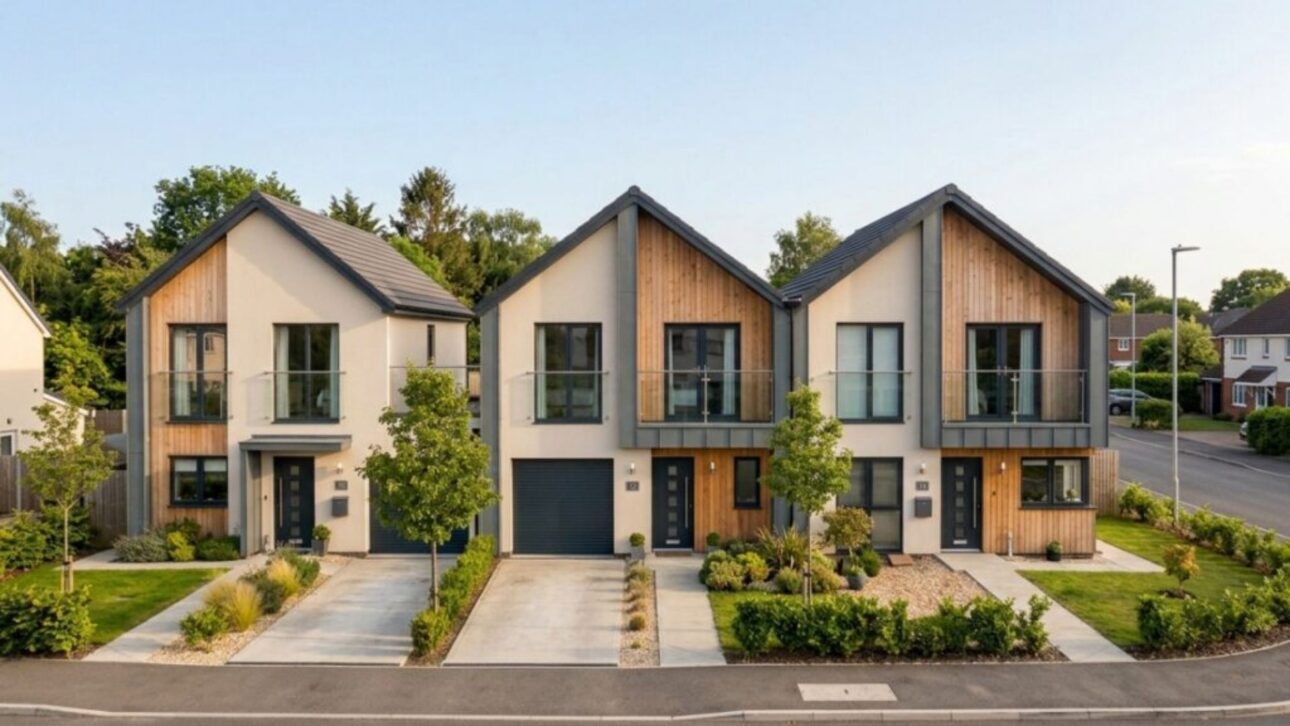
The projections presented are based on three unit values. A monthly rent of R$ 900 generates R$ 2,700 for the set; R$ 1,200 per house results in R$ 3,600; and R$ 1,500 brings the gross monthly income to R$ 4,500. The term “gross” is crucial because expenses have not yet been deducted.
The practical value depends on the city, neighborhood, access to transportation, commerce, schools, work hubs, state of maintenance, and competing supply. A more expensive construction does not automatically increase rent if the local market does not absorb that standard. The finishing must align with actual demand, not just the builder’s preferences.
In the example where the construction costs R$ 480,000 and the three contracts total R$ 3,600, the gross return is 0.75% per month. This percentage results from dividing the income by the considered investment but does not represent net return, guaranteed recovery time, or future appreciation of the property.
Net income falls short of the total stated in the contracts
Vacancy reduces revenue when a unit remains unoccupied. Default, taxes, management, insurance, and preparation periods between contracts can also decrease the monthly income effectively available, depending on the owner’s situation and the municipality.
Maintenance does not occur uniformly. Painting, showers, faucets, gates, roofs, electrical installations, and minor repairs may require expenditures in different months. Keeping a reserve prevents an unforeseen expense from consuming all the rental income during that period.
Having three attached houses distributes the risk of vacancy: the departure of one resident does not necessarily eliminate the payments of the other two. Conversely, the owner then has to manage three kitchens, three bathrooms, three installations, and three contractual relationships. Diversifying the contracts reduces dependence on a single unit, but does not automatically convert monthly income into profit.
Project must consider independence and coexistence among units
Attached houses share part of the layout, but each unit needs to function adequately. The distribution must consider lighting, ventilation, privacy, circulation, access, and location of equipment, ensuring that space savings do not compromise daily use.
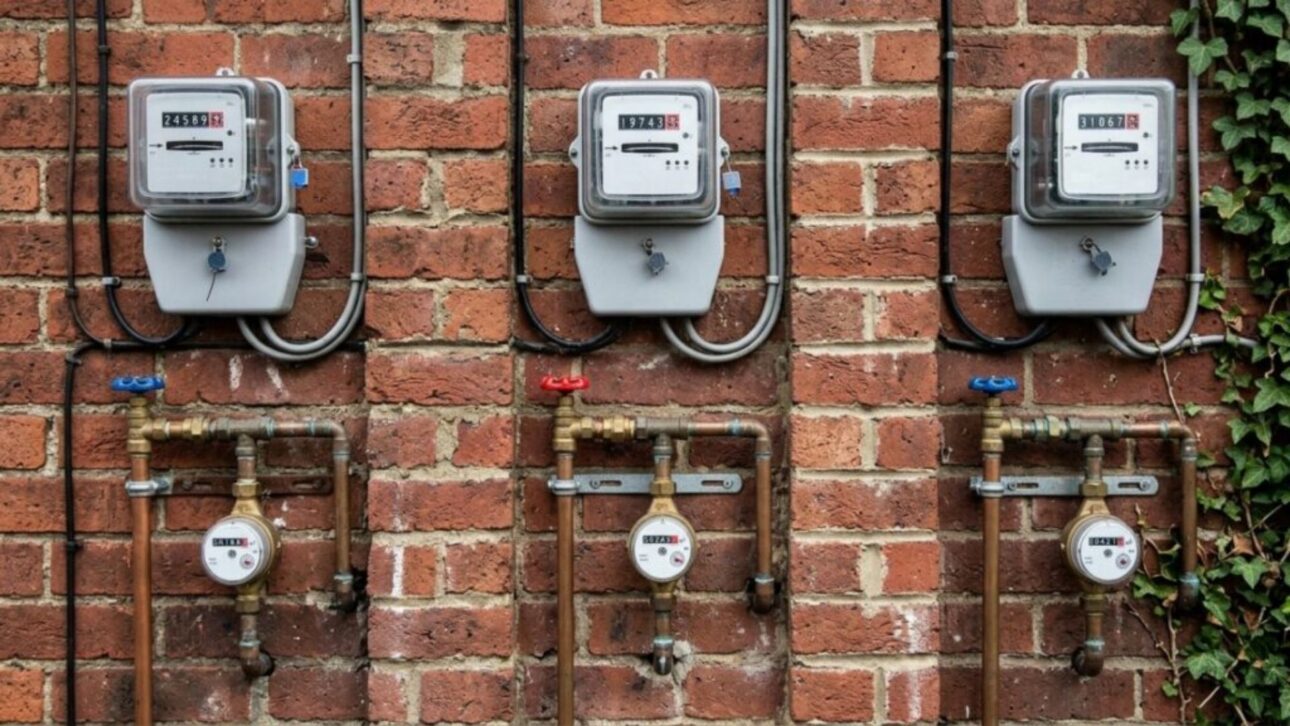
Individualizing the meters facilitates the separation of consumption but may require adjustments for the utilities and the project. Parking spaces, setbacks, occupancy rates, permeability, the allowed number of units, and access rules vary according to local legislation. Approval must be verified before assuming that three houses legally fit on the plot.
Technical responsibility and documentation are also not optional details in the spreadsheet. Projects and execution need to be carried out by qualified professionals, with corresponding registrations and compliance with municipal requirements. A physically large lot may not accommodate the imagined configuration when urban parameters are applied.
Financial comparison must use the complete project cost
To evaluate the outcome, the investment should not only consider walls and roofs. It includes foundation, finishing, designs, licenses, external areas, containment when necessary, connections, corrections made during construction, and funds allocated for unforeseen events. If the land is still to be purchased, that acquisition represents another significant component, absent from the basic range presented.
On the other side of the equation, using the highest possible rent can distort expectations. The analysis needs to examine comparable listings, how long similar properties remain available, and the characteristics that tenants actually seek. The monthly income should be tested under less favorable scenarios, even with one unit vacant or with maintenance expenses.
The extremes of the simulation show why isolated values do not resolve the decision. R$ 2,700 divided by a project of R$ 375,000 represents a gross return of 0.72% per month; R$ 4,500 on R$ 600,000 equates to 0.75%. Even with very different rents and investments, the percentages remain close before accounting for expenses, vacancy, and land costs.
The project becomes more coherent when the built area, finishing standards, and implementation fit within the budget and the market of the region. The attached houses can distribute the receipt among three contracts, but costs, occupancy, and returns remain subject to technical and economic variables.
In your opinion, what should be verified first in this type of project: land viability, complete budget, rental demand, or maintenance costs? Share in the comments which factor is often overlooked.


