





 Portuguese
  English
  Spanish
  3 min of reading
  0 comments


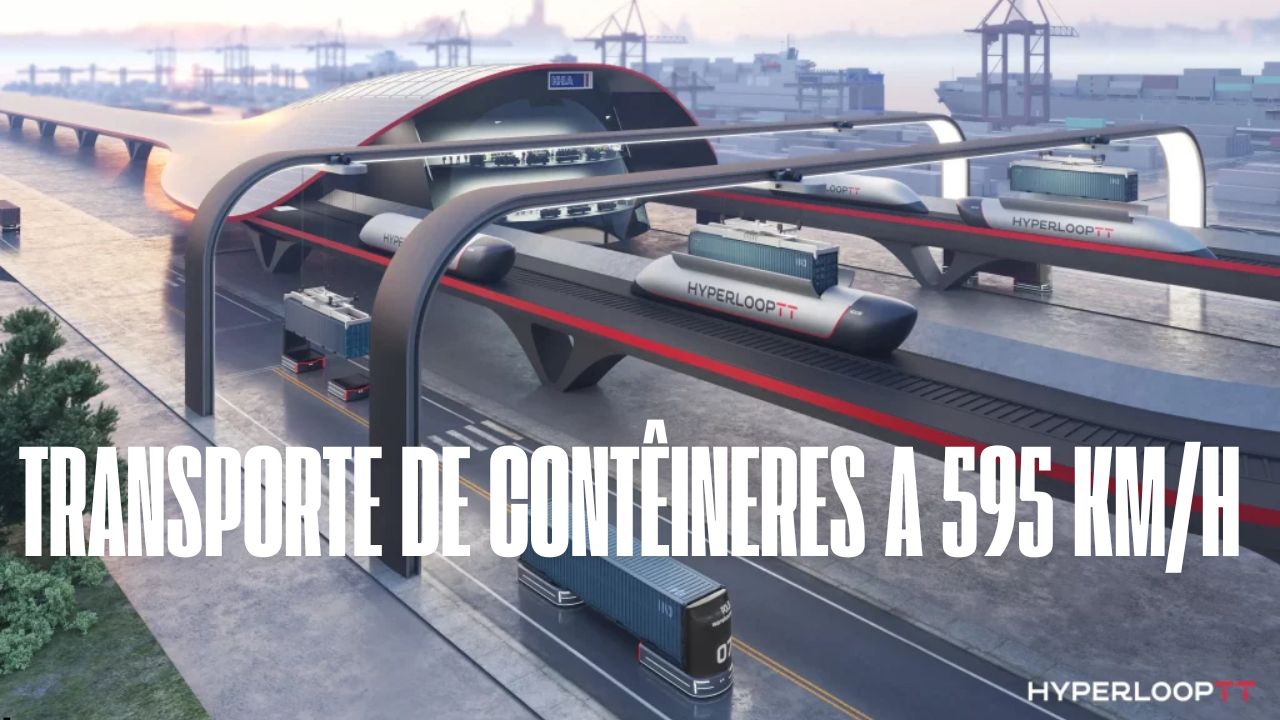
Project Predicts Billion-Dollar Investment and Promises to Reduce Transport Time Between Santos and Campinas to 30 Minutes
The Brazilian hyperloop, a project by Hyperloop Transportation Technologies (HTT), aims to transform cargo logistics in the country with a high-speed capsule-based transport system. The goal is to connect the Port of Santos to São Paulo and Campinas, allowing for container transport at speeds of up to 595 km/h. According to HTT, the project is in the feasibility study phase and could be a watershed moment for cargo movement in Brazil.
Currently, the Port of Santos, the largest in Latin America, faces logistical challenges due to the intense flow of trucks. There are about 15,000 vehicles per day, leading to congestion and extending travel time to São Paulo to up to two hours. With the Brazilian hyperloop, the expectation is that travel time will be reduced to just 30 minutes, making it a competitive alternative to road and air transport.
How Does the Brazilian Hyperloop Work?

The system of the Brazilian hyperloop will use capsules inside partial vacuum tubes, reducing air resistance and allowing cargo to reach speeds of nearly 600 km/h. According to New Atlas, the capsules will be designed to transport 40-foot containers, equivalent to two TEUs (twenty-foot equivalent units), drastically reducing travel time and logistical costs.
-
Scientists transform sawdust into fire-resistant panels, stabilize the compound with an enzyme extracted from watermelon seeds, and turn waste into promising material for construction.

-
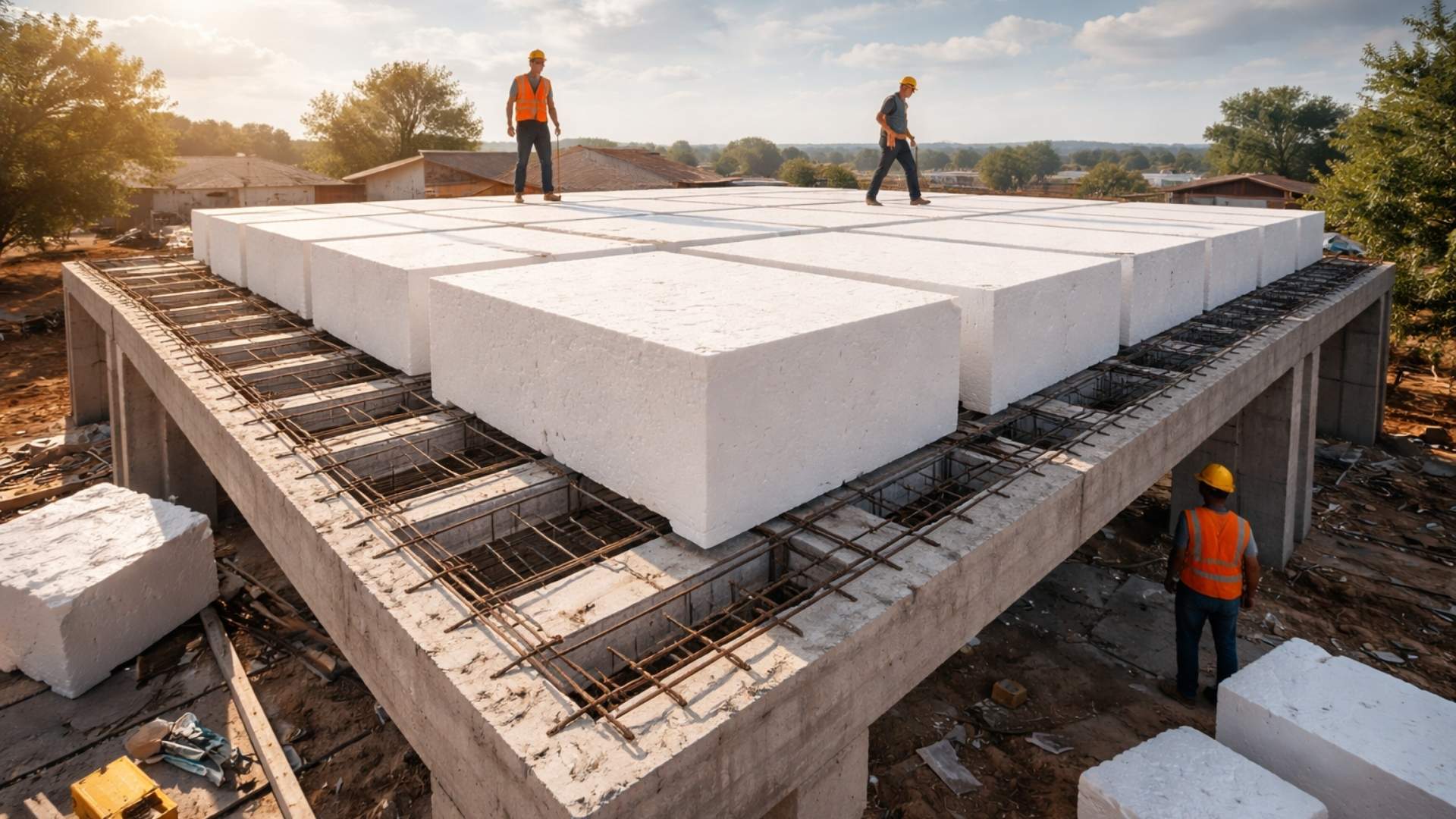
Forget concrete: architects are replacing tons of concrete with giant blocks of expanded polystyrene to build the roofs of houses and reduce structural weight by up to 50%, cut costs, improve thermal insulation, and speed up construction.
-
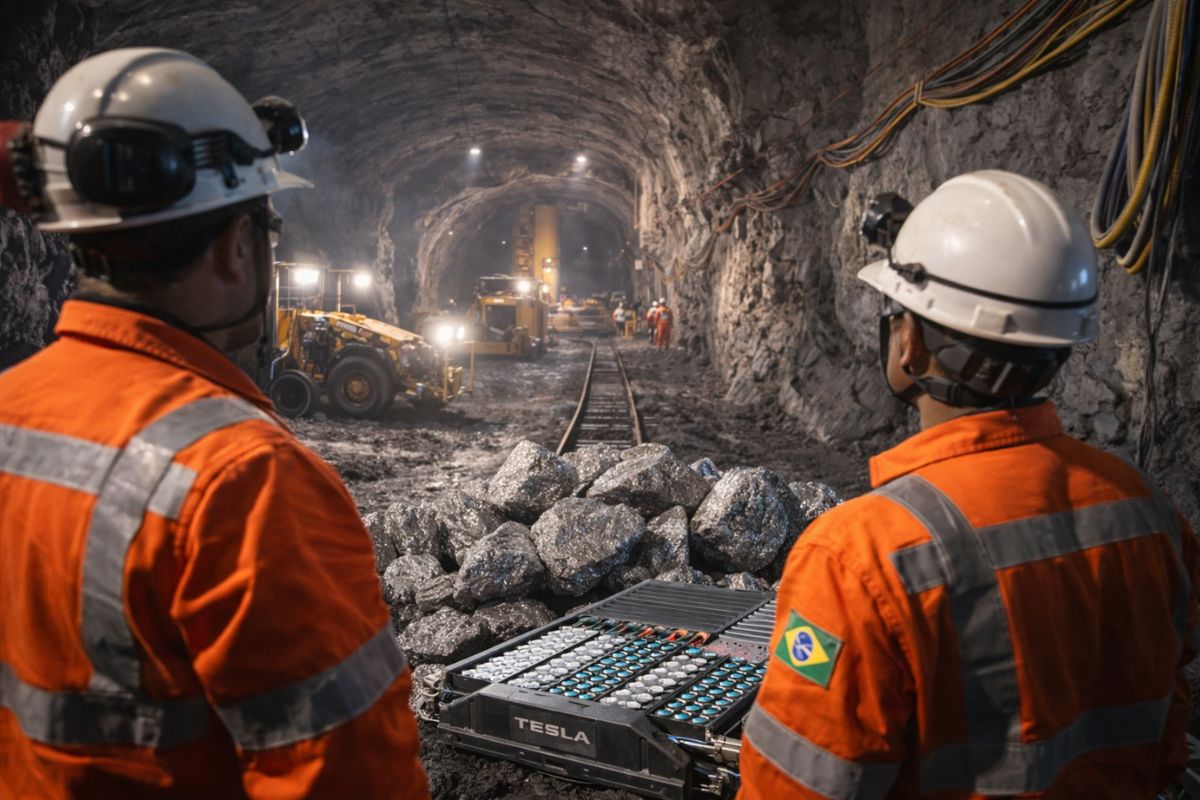
The Brazilian state enters the center of the global race for critical minerals by starting the construction of the largest underground nickel mine in Latin America, a mineral essential for electric car batteries that the entire world is competing for at this moment.
-
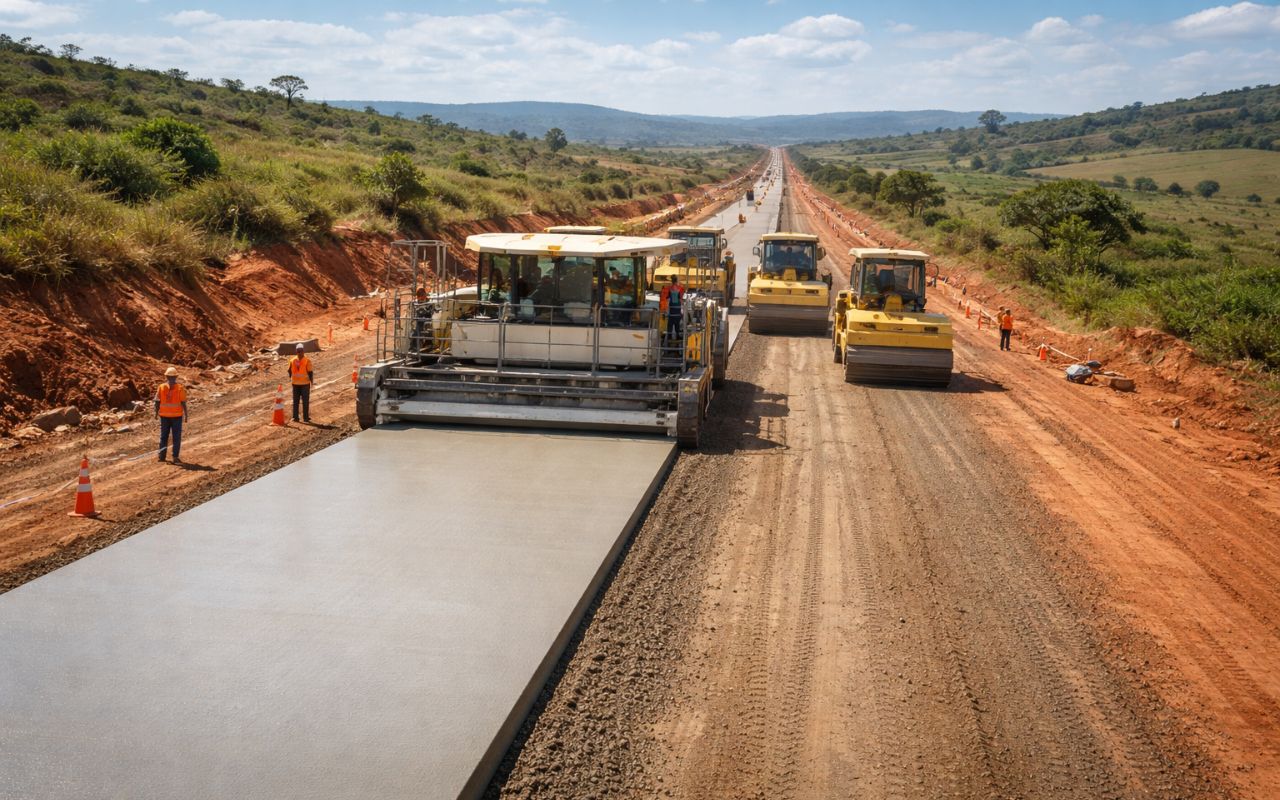
New CCR concrete paving technology promises roads up to 3x more durable, less maintenance, and cost reduction in Brazil.

In addition to efficiency, the Brazilian hyperloop also stands out for its environmental impact. It is expected to reduce truck traffic by up to 4,000 vehicles per day, which would help decrease CO₂ emissions by about 906 tons daily by 2060.
Investments and Economic Viability
The first segment of the Brazilian hyperloop will connect Santos to Campinas, extending 169 km with an estimated investment of US$ 9.6 billion. The projection is that this segment will generate revenues of US$ 17.1 billion, making it financially viable for private investors and public bodies. The complete project anticipates expansion to São José do Rio Preto, totaling 549 km in length with additional investment needed to complete the network.
HTT estimates that the project will have an Internal Rate of Return (IRR) of 62.7% and a Net Present Value (NPV) of US$ 4.8 billion if the government finances part of the infrastructure. A public-private partnership (PPP) model is being studied to enable the construction and operation of the system.
Impacts on Transport and Economy
The Brazilian hyperloop would not only revolutionize port logistics but also bring economic benefits. Experts indicate that reducing truck traffic would lower operational costs at the Port of Santos, as well as relieve pressure on the highways connecting the city to the interior of São Paulo. It is estimated that the system could generate savings of up to US$ 2 billion in indirect costs, including reductions in accidents, air pollution, and road wear.
According to HyperloopTT, the project is in the Technical, Economic, and Environmental Feasibility Study (TEA). After this phase, financing models will be defined, and the necessary government approvals will be obtained to begin construction. The expectation is that, if approved, the system will start to be built in the second half of this decade, positioning Brazil at the forefront of high-speed cargo transport.








Seja o primeiro a reagir!