





 Portuguese
  English
  Spanish
  4 min of reading
  0 comments


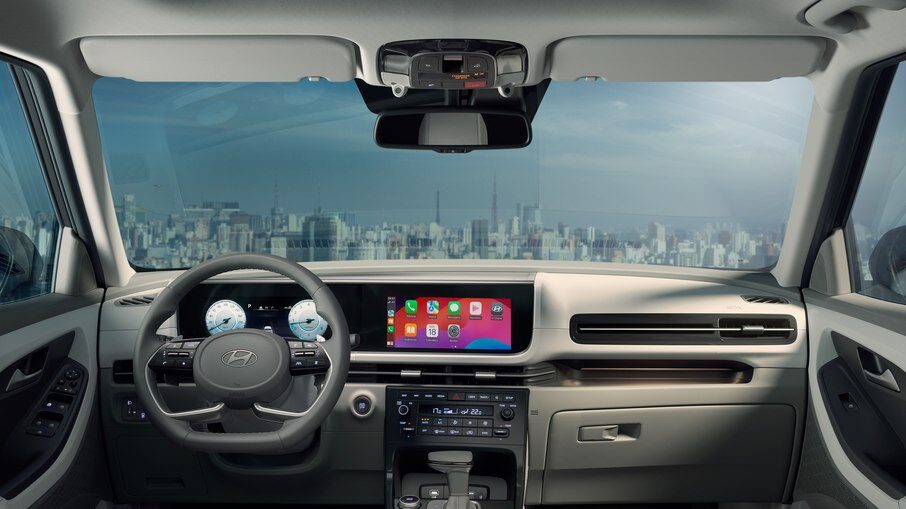
With a New Futuristic Visual, More Powerful Turbo Engine, State-of-the-Art Multimedia Center and Even Emotional Support via Artificial Intelligence, the Hyundai Creta 2026 Emerges Redesigned to Surprise, Elevate the Standard of Compact SUVs and Gain More Space in Brazil.
Hyundai has brought major news for the Creta, which, even without changing the platform, has captured consumer attention with a deep renewal in its design and technological features.
The most significant transformation was in the visual aspect, which eliminated the ornate aesthetics of the front and rear.
The brand successfully applied a precise update, making the Creta an even more modern and sophisticated SUV.
-
Discovery of a 15-kilometer labyrinth beneath the buildings of Rome raises alarm for collapses and reveals the largest underground network ever found in the Italian capital.

-
A rare storm phenomenon in the United States alerts meteorologists worldwide due to four different forms of water falling from the sky, which freeze immediately upon touching the ground, poles, cars, or trees.

-
He has been using a wheelchair for almost 10 years, lives alone, is independent, and decided to become a delivery driver for an app: Samuel makes up to 6 deliveries a day, covering routes of 1 km in his wheelchair and has even managed to do 2.5 km in a single run.

-
An island of 7,500 people received 38,000 bananas by mistake, was left unsure where to store everything, and turned the error into a viral case with donations, hustle, and fruit overflowing everywhere.


New Visual and Greater External and Internal Sophistication
The most noticeable change in the model was the exterior design, with straighter and bolder lines, especially at the front.
Hyundai has reinterpreted the front of the Creta, which now features an LED strip that runs across the entire front, in addition to the redesigned grille, hood, and headlight set, giving the model a more robust and futuristic look.

At the rear, the taillights have been redesigned and connected by an illuminated bar, a bet that brought more unity and modernity to the visual.
Inside, the top-of-the-line version, the Ultimate, maintained the sophistication proposal, although it still features some plastic trim.
However, the brand managed to enhance the experience of those driving the Creta, offering soft surfaces and a two-tone finish on the dashboard and seats.
The car also received cutting-edge technology, with digital screens integrated into the instrument panel and multimedia system, both 10.25 inches, features that are standard on the Platinum, N Line, and Ultimate versions.
The technological atmosphere is reinforced by comfort features such as dual-zone climate control, wireless phone charging, and a panoramic sunroof, characteristics that make the interior of the Creta much more pleasant for those inside the car.
Engine Changes: More Power and Efficiency
One of the main transformations of the Creta 2026 is in the engine.
Hyundai has discontinued the version with the 2.0 naturally aspirated flex engine and introduced the new 1.6 TGDI engine, which uses gasoline and offers 193 horsepower and an impressive 27 kgfm of torque.
The change positively impacted the SUV’s performance, with faster accelerations and secure recoveries, essential for overtaking on the highway.

The turbo engine also has the advantage of providing an efficient response even at low RPMs, ensuring that the driver has greater control and pleasure while driving.
Together with the 1.6 turbo engine, the Creta now features a 7-speed dry dual-clutch automatic transmission, which means a more agile and efficient drive, as there is no need for oil to dissipate heat.
This translates into better performance and lower fuel consumption.
In practice, the model achieves averages of 11.9 km/l in the city and 13.5 km/l on the highway, values that stand out against competitors with smaller and less powerful engines.
Connectivity and New Emotional Features: The 2025/26 Lineup of the Creta
Hyundai also updated the Creta regarding connectivity, which is one of the strongest trends in the automotive market.
In April 2025, the brand announced the 2025/26 lineup of the model, including the Creta.
The main news was the inclusion of Bluelink as standard equipment in all versions of the SUV.
Bluelink is a connected car system from Hyundai that offers several functionalities, such as vehicle monitoring, tracking and immobilization in case of theft, along with 24-hour assistance and a 360° camera that allows the driver to view the surroundings of the car directly on their phone.

A particularly interesting addition was the SOS Bluelink, which allows the driver to request emergency emotional support in case of stress or a risky situation on the road.
With this, Hyundai has introduced a new concept into the driving experience, offering emotional support when the driver needs it most.
This is an innovative feature that shows how the brand is concerned not only with safety but also with the well-being of the driver and passengers.
In addition to these innovations, the 2025/26 lineup of the Creta also brought leather seats, which were previously exclusive to the Platinum, N Line, and Ultimate versions, to the Limited version, enhancing sophistication and comfort in more versions of the model.
High Sales and the Future of the Creta
The impact of the changes in the Creta was notable in the market.
After the renewal of the model, sales soared, and the SUV became a retail sales leader, an impressive feat for a model that has not yet undergone a new generation.
With the new update, the Creta continues to be offered in five versions, with prices ranging from R$ 149,620 (Confort 1.0 TGDI version) to R$ 198,920 (Ultimate 1.6 TGDI version with 7-speed automatic transmission).
The model remains in its current version, but with updates that have captivated the market and reaffirmed Hyundai’s leadership position in the compact SUV segment.

What’s Next?
While Hyundai has not launched a new generation of the Creta, it is interesting to observe how the model adapts to changes in the market and consumer demands.
The focus on connectivity, comfort, and performance has shown that the brand is attentive to trends and willing to invest in innovations that make a difference in the driver’s daily life.
Will other automakers follow this path and bring even more technology to their models? What do you think about these innovations in the Creta? Leave your opinion in the comments!




Seja o primeiro a reagir!