





 Portuguese
  English
  Spanish
  5 min of reading
  0 comments


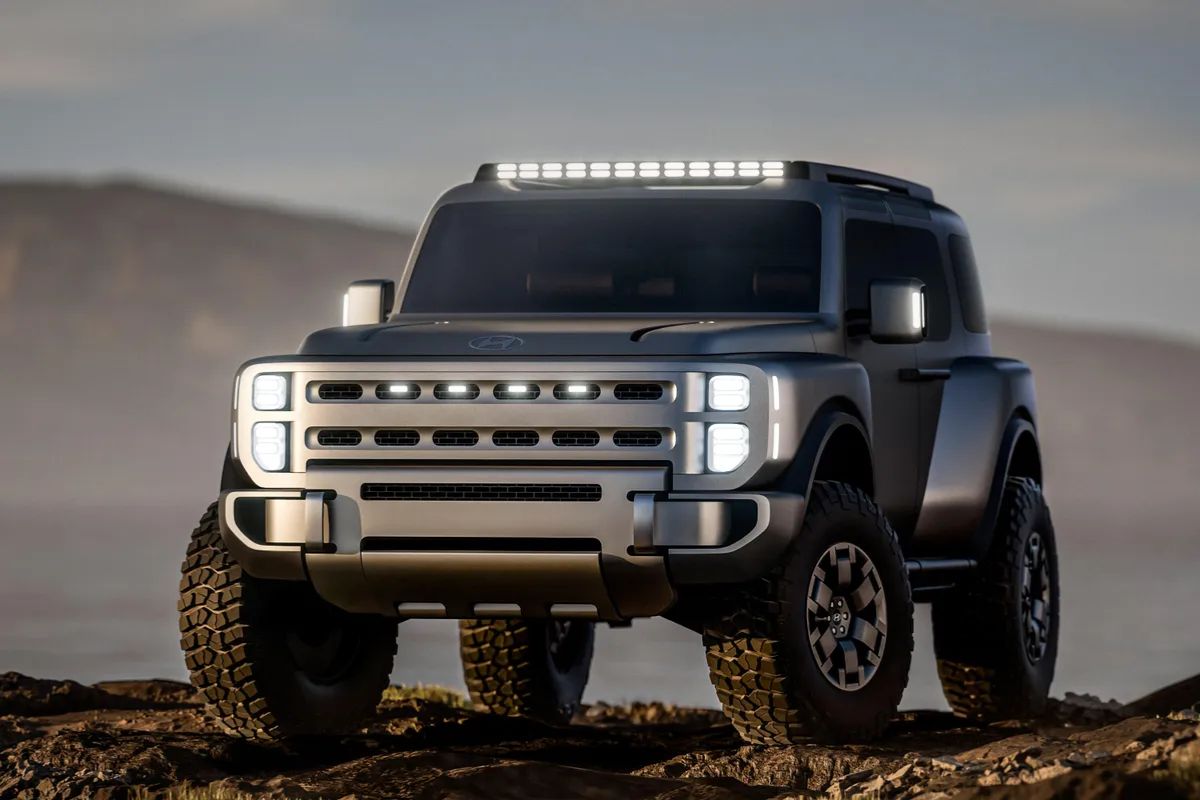
The Hyundai Boulder was the most striking debut at the 2026 New York Auto Show, a concept SUV with square and vertical proportions, body-on-frame construction, 37-inch mud tires, carriage-style rear doors, a dual-hinge rear door, an external spare tire, and an interior that prioritizes physical controls over giant screens, anticipating the future utility vehicles that Hyundai will develop and build in the United States with American steel
Hyundai presented the Boulder, the most striking debut at the 2026 New York Auto Show. The Boulder is a concept SUV with square and vertical proportions, body-on-frame construction, and 37-inch mud tires that clearly indicate where Hyundai is aiming: the territory of the Ford Bronco and the future Scout Traveller. The Boulder anticipates the future utility vehicles and pickups that Hyundai will develop and build in the United States with steel produced on American soil, marking the beginning of a new chapter in the brand’s ambitions in the market that matters most for off-road utilities.
According to CNET, the design of the Boulder is a statement of intentions. Carriage-style rear doors that open backward. A dual-hinge rear door that opens in any direction. Spare tire mounted on the rear door. Integrated auxiliary light bar on the roof rack. And inside, the Boulder surprises by doing the opposite of what most modern SUVs do: instead of a giant screen dominating the dashboard, the concept uses extensive physical controls with three small screens and a heads-up display projected at the base of the windshield.
The design of the Boulder that challenges the Ford Bronco and the Scout Traveller

The proportions of the Boulder are unmistakable: square, vertical, and robust, without the rounded lines that dominate most current urban SUVs.
-
The Toyota Hilux is R$ 75.5 thousand cheaper and bets on the 2.8 turbodiesel engine with up to 204 hp and 50.9 kgfm to catch up with the VW Saveiro, which leads with 4,472 sales.
-
The new Renault Koleos has a screen exclusively for the passenger that is invisible to the driver, heated rear seats, and 29 assistance systems, but its Chinese competitors cost R$ 40,000 less and deliver more power.
-
The car stored for 38 years: when opening the barn door, what appears is breathtaking and looks like a scene from a movie!

-
Fiat works miracles in the Brazilian market, lowers the price of its 0 km hatch to R$ 69,990, reestablishes the model as the cheapest car in the country, and reignites the battle against Kwid and C3.

The Boulder has body-on-frame construction, the same build used by the Ford Bronco, Jeep Wrangler, and traditional utilities that dominate the off-road segment in the United States.
This choice is not aesthetic. Body-on-frame is the preferred architecture for vehicles that need to tackle heavy terrain because it offers greater structural rigidity and facilitates repair after impacts.
The Boulder’s 37-inch mud tires increase ground clearance and reinforce the message that this concept is not made to stay on pavement.
The spare tire mounted on the rear door, the auxiliary light bar on the roof rack, and the durable materials of the dashboard complete an expedition aesthetic that places the Boulder squarely in the category of utilities that Americans buy for trails, camping, and off-road trips.
The Boulder is the most American Hyundai ever, according to experts who saw the concept in New York.
The carriage-style doors and the dual rear door that differentiate the Boulder
The Boulder has two design details that immediately catch attention.
The rear doors of the Boulder are carriage-style: they open backward with hinges at the back of the vehicle, allowing unobstructed access to the cabin without the obstacle of a conventional door.
The central handles keep the look clean and sleek, without exposed door handles that break the lines of the body.
The rear door of the Boulder features a dual-hinge design that allows opening in any direction, a practical solution for those who need to access the cargo from different sides depending on the terrain or situation.
These design choices position the Boulder as a vehicle designed for real off-road use, not just as an urban SUV with an adventurous appearance.
The Ford Bronco uses removable doors. The Boulder proposes doors that open differently. They are distinct approaches to the same problem: providing maximum access to the interior in situations that deviate from the norm.
Inside the Boulder: physical controls instead of giant screens
The interior of the Boulder is a surprise for those expecting the current trend of dashboards dominated by touchscreen displays.
Instead of a giant screen in the center of the dashboard, the Boulder makes extensive use of physical controls: buttons, knobs, and switches that can be operated with gloves or with hands dirty from mud.
Three small screens complement the interface, and a heads-up display projected at the base of the windshield provides information without the driver needing to divert their gaze from the road.
The materials of the Boulder’s dashboard are described as robust and durable, designed for a vehicle that will get dirty.
The choice for physical controls in the Boulder is a direct response to the frustration of many off-road drivers with touchscreen displays that do not work well with gloves, bright sunlight, or intense vibrations on rough terrain.
The Boulder seems to have been designed by someone who actually goes off-roading, not by a designer who looks at trails from an office window.
What the Boulder means for the future of Hyundai in the United States
The Boulder is not just a pretty concept for an auto show.
Hyundai has stated that the Boulder anticipates future utility vehicles and pickups with body-on-frame construction that will be developed and built in the United States with American steel produced by Hyundai itself.
This means that Hyundai plans to dive headfirst into the utility segment dominated by American brands like Ford, Jeep, and the future Scout.
It’s a bold bet for a Korean brand that has built its reputation on sedans and urban SUVs.
But the American off-road utility market is huge, lucrative, and has consumers willing to pay top dollar for vehicles with personality, and the Boulder shows that Hyundai wants that money.
If the Boulder becomes a production model faithful to the concept, Hyundai will finally have a vehicle that competes for the same buyer who today chooses between the Bronco, Wrangler, and Defender.
The most American SUV that a Korean brand has ever created
The Hyundai Boulder is a square concept, with body-on-frame construction, 37-inch mud tires, carriage-style doors, and an interior with physical controls.
It seems to have been made to take on the Ford Bronco and the Scout Traveller, and Hyundai has confirmed that the Boulder anticipates the utilities it will produce in the United States with American steel.
If the Boulder reaches the dealerships looking like what was shown in New York, Hyundai is not just entering a new segment. It is declaring war on American off-road icons in their own backyard.
What do you think of the Hyundai Boulder? Can it compete with the Ford Bronco? Do you prefer giant screens or physical controls on the dashboard? Would you buy an off-road SUV from a Korean brand? Leave your comments and share with car and utility enthusiasts.









Seja o primeiro a reagir!