





 Portuguese
  English
  Spanish
 3 min of reading


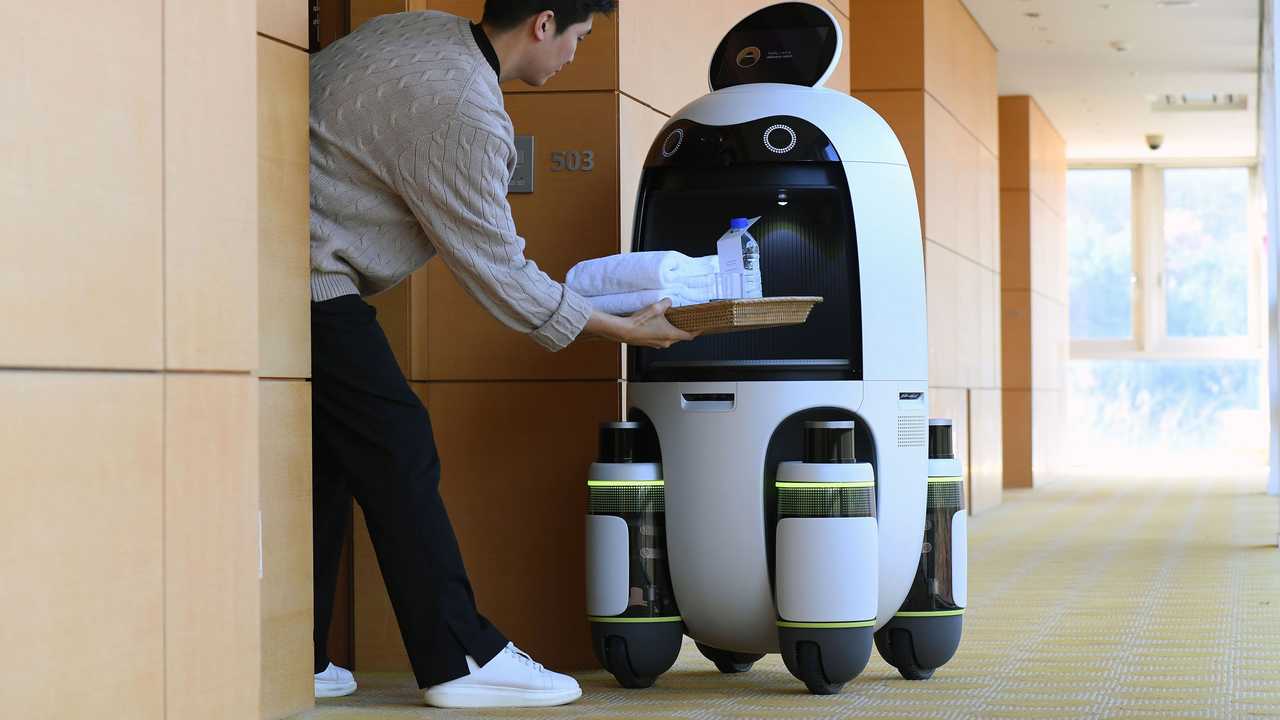
Last Week, Hyundai Motor Group Announced That It Is Developing Two Pilot Delivery Service Programs Using Autonomous Robots Based on Its Modular Plug & Drive (PnD) Platform. The Tests Were Conducted at a Hotel and a Mixed Residential-Commercial Complex.
Initially Introduced at CES 2022, the Modular PnD Platform Is a “All-in-One” Wheel Unit That Uses Intelligent Steering, Electric Wheel Traction, Braking, LiDAR, Suspension Hardware, and Camera Sensors for Navigation. Additionally, It Has an Integrated Storage Unit to Transport Items to Customers.
On the Other Hand, the Autonomous Driving Capability Ensures That the PnD-Based Robot Finds the Ideal Path Within the Area to Deliver Items to Customers. Furthermore, Hyundai Motor Group Ensured That the Robot Can Also Detect and Avoid Fixed and Moving Objects.
At Rolling Hills Hotel, the System Is Used to Deliver Items, Food, and Beverages to Guests’ Rooms. Regarding the Residential-Commercial Space, the Robot Performs Food Delivery Services Through Orders from Nearby Restaurants.
-
Motorola launched the Signature with a gold seal from DxOMark, tying with the iPhone 17 Pro in camera performance, Snapdragon 8 Gen 5 that surpassed 3 million in benchmarks, and a zoom that impresses even at night.

-
Satellites reveal beneath the Sahara a giant river buried for thousands of kilometers: study shows that the largest hot desert on the planet was once traversed by a river system comparable to the largest on Earth.

-
Scientists have captured something never seen in space: newly born stars are creating gigantic rings of light a thousand times larger than the distance between the Earth and the Sun, and this changes everything we knew about stellar birth.

-
Geologists find traces of a continent that disappeared 155 million years ago after separating from Australia and reveal that it did not sink, but broke into fragments scattered across Southeast Asia.

Hyundai Motor Group Launches Robots Capable of Moving Autonomously to Deliver Items
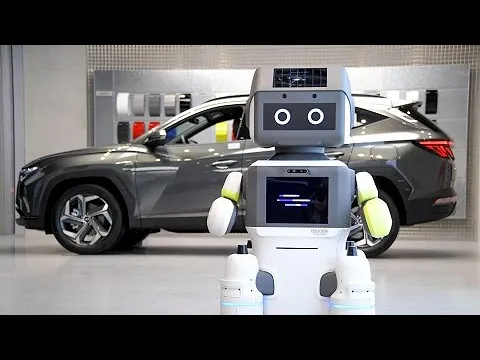

Being a Milestone of the Project, the LiDAR Sensors and Cameras Allow the Robot to Move Autonomously and Easily. Thus, It Detects Both Stationary and Moving Obstacles, in Addition to Finding the Best Route to Its Destination, Which Is Essential for the Success of the Project.
Moreover, Hyundai Motor Group Stated That the Robot Has a Deep Learning-Based Algorithm to Recognize Where It Is Going. Therefore, If It Needs to Use an Elevator, for Example, It Can Identify Whether the Maximum Number of People Is Present and, Consequently, Wait for a New Elevator.
When the System Arrives at the Room, It Waits for the Door to Open and Can Recognize the Hotel Guest, Automatically Opening the Compartments with the Requested Item. It Is Worth Mentioning That the Robot Can Communicate via Voice Message and a Notice on Its Screen.
As It Can Also Make Deliveries Throughout the Cities, Hyundai Motor Group Partnered with the Korean Food Delivery Company, Woowa Brothers, to Test the Complexity of the System. In This Way, the Robot Delivers Food in the Outskirts of Seoul to Demonstrate How It Works.
Thus, After Receiving the Online Order Through an App Called Baemin, the Robot Picks Up the Order and Delivers It to the User’s Doorstep. To Succeed in This Endeavor, the Equipment Uses Wireless Communication, Being Able to Open Locked Doors and Even Recognizing Who Is Nearby.
Finally, Hyundai Motor Group Believes That the New Robots Will Significantly Increase Delivery Efficiency in the Region. Thus, Based on the Results from the Two Pilot Programs, the Mission Is to Improve the Delivery Robot to Expand Its Capabilities.








Seja o primeiro a reagir!