






 Portuguese
  Spanish
  3 min of reading


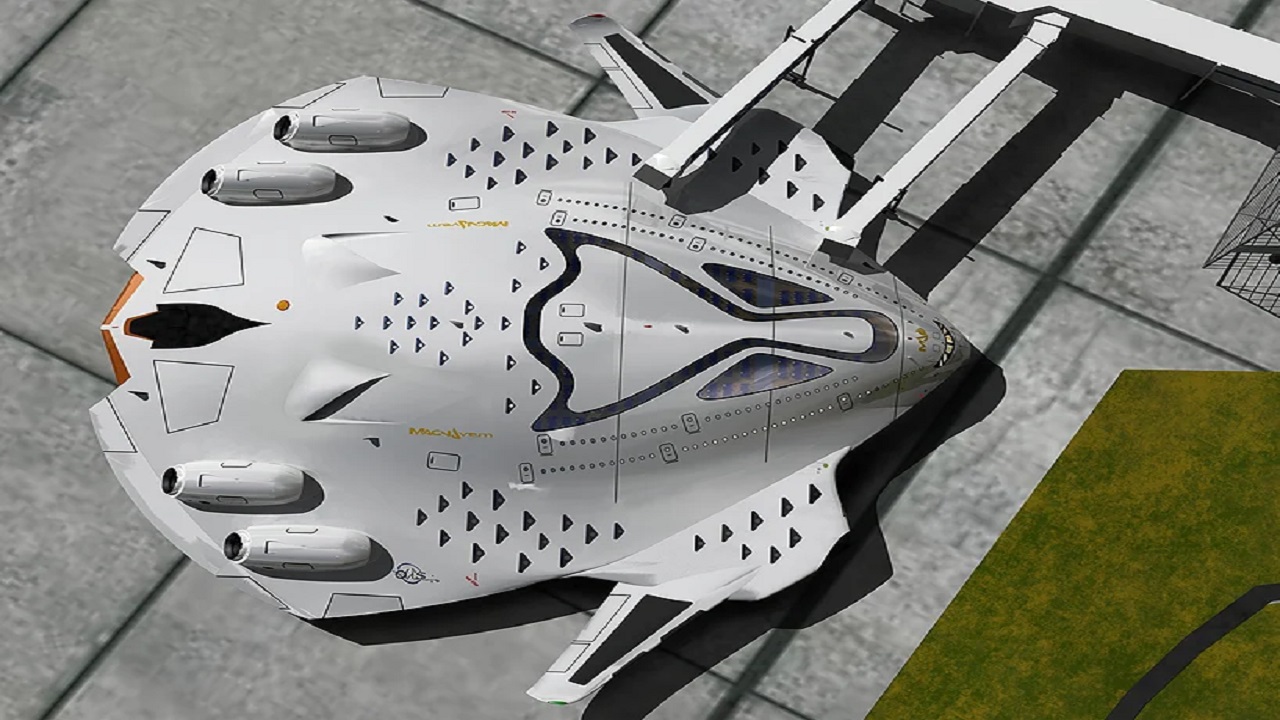
Spanish Designer Develops Magnavem Project, A Supersonic Nuclear Plane That Uses Nuclear Energy To Reach 1,852 Km/h With Capacity To Carry 500 People.
The Magnavem is a concept for a futuristic nuclear airplane that can carry 500 passengers and reach Mach 1.5, developed by Spanish designer Oscar Vinals. It sounds like something out of a movie, to have a plane take off, make the entire journey, and land, all powered by energy generated from a nuclear engine. To make it even more futuristic, the supersonic nuclear plane could take off and land vertically, just like helicopters do.
Supersonic Nuclear Plane Magnavem Reaches Supersonic Speed
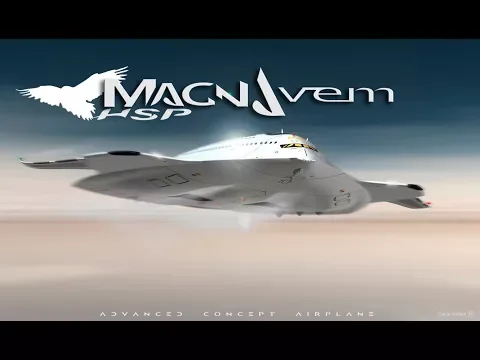

Aside from its speed and futuristic features, the model can also have a profile that resembles more of a spacecraft than an airplane, kind of like the Millennium Falcon from Star Wars. For now, taking off without running on the runway doesn’t seem to be part of the project, but visually, it resembles a spacecraft quite a bit.
According to the project developer, Oscar Vinals, the supersonic nuclear plane is very lightweight and uses a mini-fusion reactor, capable of carrying around 500 passengers while reaching a speed of Mach 1.5, equivalent to 1,852 km/h.
-
Helicopter Drops 180 Tons of Sand and Gravel on Swedish River to Revive Ecosystem Damaged by Decades of Exploitation

-
Brazilian Company Launches Retro Smartphone with 48 MP Camera, T9 Keyboard, and Privacy Features for Social Media-Free Use

-
Self-Taught Chinese Farmer Builds 5-Ton Submarine from Scrap, Launches It in Anhui River
-
Invisible Induction Technology Enables Wireless Power for Blenders, Coffee Makers, and Air Fryers, Reducing Countertop Cables





The Mach number or Mach speed is a dimensionless measure of speed, defined as the ratio of the speed of the object to the speed of sound. In other words, Mach speed indicates how many times the object has reached the speed of sound.
The project is named Magnavem, which translates from Latin to great bird. Inside the supersonic plane, there will be a nuclear propulsion system that will produce abundant energy with no cost or harm to nature. The hypersonic plan will reduce travel times between New York and London to just three hours, more than half the duration of current flights.
How Will Nuclear Propulsion Work?
It’s important to remember that the incredible supersonic nuclear plane will produce zero carbon emissions, thanks to the compact fusion reactor that will power it. According to the designer responsible for the project, the craft, which he hopes will revolutionize the aviation industry, will primarily operate on a compact fusion reactor (CFR).
This reactor provides the Magnavem with an incredible amount of electrical energy, all with no cost to the environment. Nuclear fusion is the process that the sun itself operates on. Compact fusion reactors will mimic this process in a magnetic container and release hydrogen energy in a controlled manner to produce energy that can be used by the aircraft.
While it may sound like somewhat impossible technology, several companies are working to make nuclear energy more accessible. The great search for increased efficiency and sustainability in energy has led the American company Laser Power Systems, based in Connecticut, to begin developing a new propulsion method that uses thorium in energy production to power a car engine. Thorium is an element similar to uranium and, being a very dense material, has the potential to produce large amounts of heat, thereby generating nuclear energy.
U.S. Advances Development of Silent Supersonic Aircraft
Military aircraft are vehicles capable of performing supersonic flight, meaning flying at speeds greater than the speed of sound. However, commercial airplanes have been somewhat restricted on land due to the loud noises associated with this type of aircraft.
Called sonic booms, these are a series of shockwaves generated by supersonic aircraft that combine to form two deafening booms that can be heard miles away.





Be the first to react!