






 Portuguese


The Hyundai Ioniq 3 is a 100% electric hatchback in the B segment with two battery options, a range of up to 490 km, and 10% to 80% charging in 29 minutes.
The Hyundai Ioniq 3 will be the automaker’s new compact electric hatchback for the B segment. Unveiled in a pre-production unit, the model measures just over 4 meters in length, features two battery options, and boasts a maximum announced range of 490 km, with a market launch expected by the end of 2026.
The specifications were presented in a video by Razão Automóvel on April 24, 2026, which obtained access to the vehicle ahead of its commercial launch. The material details versions with 42.2 kWh and 61 kWh batteries, fast charging capabilities via direct current, an expanded trunk with a lower compartment, and interior solutions designed to make better use of available space.
Hyundai Ioniq 3 Will Be an Electric Hatchback in the B Segment

Unlike the wave of compact SUVs that has gained popularity in recent years, the new model focuses on a lower hatchback body style. The Hyundai Ioniq 3 will measure just over 4 meters in length and will be positioned in the B segment.
-
New Aston Martin Valen: 5.2-Liter Twin-Turbo V12 with 840 HP, 1,000 Nm Torque, Top Speed of 344 km/h, Carbon Fiber, Titanium, Magnesium, and Limited to 150 Units Priced Over £1.5 Million

-
Honda Civic LXR 2015 Offers Mid-Size Sedan Features for About R$ 74,000, Over R$ 30,000 Less Than a New Hyundai HB20S

-
How Many Solar Panels Are Needed to Fully Charge a BYD Dolphin Mini at Home?
-
Costing Less Than a Brand-New Chevrolet Onix: 2015 Honda City Sedan Offers Space, Durability, and Reliability for Around R$ 63,000


The unit presented was configured in the N Line trim, which has a sportier appearance. However, this does not mean it is a high-performance version equivalent to Hyundai’s N models. The vehicle shown was a pre-production configuration with specific visual elements.
Range Could Reach 490 km With 61 kWh Battery
The higher-range configuration will use a 61 kWh battery and is announced to have a range of up to 490 km. This is the Long Range option mentioned in the presentation.
The smaller battery will have 42.2 kWh and an indicated range of approximately 335 km. Thus, the Hyundai Ioniq 3 will offer two clearly distinct alternatives based on the range provided between charges.
Charging From 10% to 80% Will Take 29 Minutes
Both battery options can go from 10% to 80% charge in approximately 29 minutes when connected to fast direct current charging, according to the information presented.
The Hyundai Ioniq 3 will use a 400-volt electrical architecture on the Hyundai group’s E-GMP platform. The material does not provide the maximum charging power in kW, so that data should not be estimated based on the time disclosed.
Smaller Battery Version Will Have More Powerful Motor

One notable aspect is the power distribution among the versions. The Standard Range configuration, equipped with the smaller 42.2 kWh battery, will have 147 hp.
The Long Range version with a 61 kWh battery, despite having the larger battery, will utilize a motor rated at 135 hp. According to the provided explanation, the difference aims to enhance efficiency and make better use of the energy capacity of the longer range configuration.
Trunk will have about 440 liters
Another noteworthy figure for a hatchback measuring just over four meters is the cargo capacity. The trunk reaches approximately 440 liters considering the different available spaces, according to the presentation.
Part of this volume comes from a solution positioned under the floor. Hyundai refers to the lower compartment as Mega Box, with an additional 119 liters of space, enough to fit a larger suitcase, as demonstrated.
Lower compartment creates hidden space under the floor

The Mega Box also allows items to remain out of sight when the main floor of the trunk is installed. This adds a layer of modularity to the rear compartment.
This solution helps the Hyundai Ioniq 3 offset a relatively compact body and a low roofline. The aim is to maximize vertical utilization of an area that would typically be less accessible to the user.
Model maintains visual identity of the Ioniq family
At the front and rear, the model employs lighting elements in a pixel format, a feature already associated with the Ioniq electric range.
Additionally, there are four light points representing the letter H in Morse code, a nod to the name Hyundai. At the front, air intakes can open or close automatically as needed for cooling.
N Line will feature 19-inch wheels and a more aggressive design

The pre-production unit showcased was equipped with 19-inch wheels, glossy black wheel arches, and sportier-looking bumpers.
The design also features a large rear spoiler and surfaces marked by the design language Hyundai calls Art of Steel. According to the presentation, some of these elements assist in aerodynamic management and drag reduction.
Interior to Feature 12.9 and 14.6-Inch Screens

Inside the cabin, the instrument panel utilizes a 12.9-inch screen, mounted in a high position in front of the driver.
The information and entertainment system is presented on another screen, measuring 14.6 inches. The base of the operating system utilizes Google technology, while the user interface was developed by Hyundai itself.
Hyundai Retained Physical Buttons for Frequent Functions
Despite the large screens, the manufacturer did not centralize all controls in the digital system. Physical controls remain available for functions frequently used during driving.
Among them are climate control, temperature, ventilation, audio, and seat functions. This choice aims to reduce the need to navigate through digital menus for simple tasks.
Cabin Focuses on Modular Spaces

The interior design aims to utilize different areas for storage. There are two designated spots for smartphones, one of which features wireless charging, along with cup holders and additional compartments in the console.
One of the cup holders can be removed to create a deeper and wider space, capable of accommodating larger containers. There is also storage space beneath the armrest and below the center console.
Rear space tries to compensate for low roofline

The compact body and relatively low roof could limit space in the second row. However, in the demonstration, an occupant about 1.78 meters tall still had knee and headroom.
The presentation notes that people taller than approximately 1.80 meters may feel greater limitations near the ceiling. Rear passengers also benefit, in the shown configuration, from ventilation outlets and heated seats in the side positions.
Hyundai Ioniq 3 slated to hit the market by the end of 2026
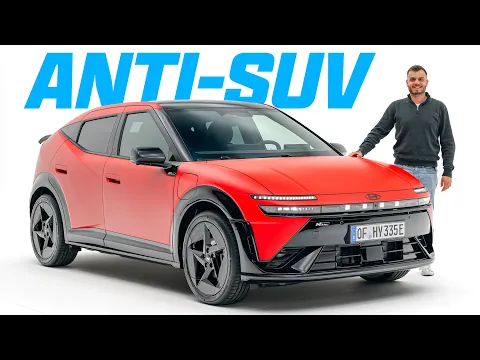

The presenters during the event indicated that the Hyundai Ioniq 3 is expected to reach the market by the end of 2026, although a more specific timeframe for the start of sales has not yet been disclosed.
The prices were also not defined in the materials used as a source. Therefore, any estimates presented during the video should not be treated as Hyundai’s official pricing table until the manufacturer releases the final values.
Compact hatchback bets on range and space to compete in the electric market
With up to 490 km of range, a 61 kWh battery, charging from 10% to 80% in 29 minutes, and approximately 440 liters of trunk space, the Hyundai Ioniq 3 aims to combine compact external dimensions with figures typically valued in larger electric vehicles.
Its arrival also presents an alternative to the compact electric SUVs that dominate a significant portion of recent launches. Would you prefer a slightly over 4-meter electric hatchback with 490 km of range, or would you still choose an SUV despite its larger dimensions and price? Share your thoughts in the comments.


