





 Portuguese
  English
  Spanish
  4 min of reading
  2 comments


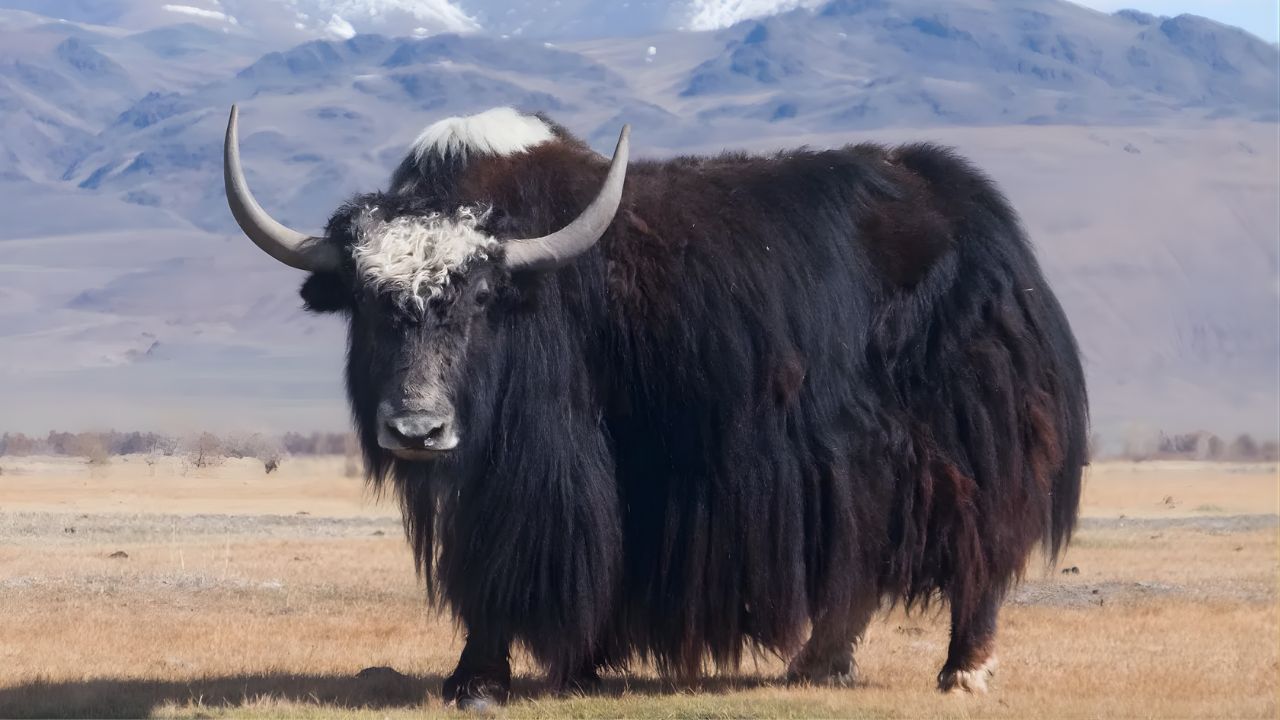


Meet The Yak, The Wild Cow Of Asia Adapted To High Altitudes And Essential For Life In The Himalayas And The Tibetan Plateau.
The yak, popularly known as the wild cow, is one of the most impressive animals in the world when it comes to adaptation to extreme environments, living at high altitudes in the Himalayas and on the Tibetan Plateau in Central Asia.
It survives in regions where few species can thrive thanks to a series of unique physiological adaptations and its crucial role in the lives of local populations.
This makes it an icon of mountain wildlife and an essential component of the traditional lifestyles in these areas.
-
A woman went out for a regular walk and ended up finding a treasure buried for over 900 years, with more than 2,000 medieval silver coins compared by archaeologists to a lottery prize and considered one of the most significant finds in recent years in the country.

-
Scientists revealed 11 signs that very intelligent people exhibit in their daily lives, and most people have no idea that some of these common behaviors are directly linked to an above-average brain.

-
From space, Buenos Aires appears as a colossal spot of light surrounded by kilometers of darkness, revealing at a single glance the exact boundary between the metropolis and the countryside, seen from 400 km altitude.

-
NASA spent over 118 million reais to build a single bathroom that works in zero gravity, and it has just gone to space on the first crewed mission to the Moon in more than 50 years.


Extreme Habitat: Where The Yak Lives
The yak inhabits remote and cold areas of Central Asia, such as the Tibetan Plateau, parts of the Himalayas, China, Nepal, and Mongolia.
These regions are characterized by high altitudes, with temperatures often below freezing and thin air, with less available oxygen.
Such rigorous environments require special capabilities, and the yak stands out for its ability to withstand intense cold and low oxygen levels, conditions under which most large mammals would struggle to survive.
Unique Characteristics That Allow The Yak To Survive At High Altitudes
The yak, or wild cow of Asia, has a body covered with long, dense fur, which provides thermal insulation against temperatures that can reach -40 °C or lower.
Its body plan is compact, with short legs and a robust body, making it ideal for steep and slippery terrain.
The long, curved horns, which can reach up to 80 cm in males, are not only for defense but also help the animal clear snow and reach pastures hidden beneath the frozen layers.
Physiological Adaptations That Defy Altitude
The yak has adaptations that go beyond its fur. Its lung capacity is about three times greater than that of regular cattle, and its red blood cells are smaller but more efficient at transporting oxygen at high altitudes.
This is crucial, as thin air makes breathing more difficult for most animals.
On the other hand, it sweats very little, which helps conserve heat in cold environments, but can make it uncomfortable for the animal to stay at lower altitudes below 3,000 m, even during winter.
Additionally, when water is scarce, the yak resorts to a simple yet effective strategy: it consumes snow to hydrate, demonstrating how the species is adapted to the harshest conditions.
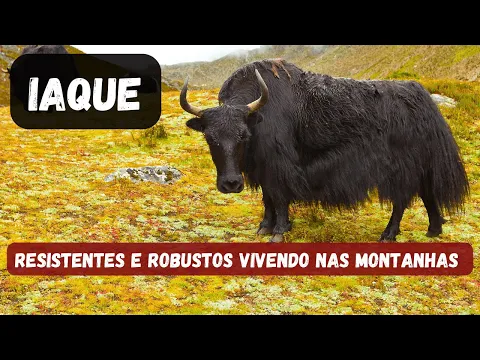

Behavior And Diet Of The Yak
The yak is a ruminant herbivore and primarily feeds on grasses, herbs, mosses, and lichens, scraped from rocky surfaces with its rough tongue during the warmer months.
During cold periods, the animal migrates to higher elevations where it finds suitable food, returning to lower areas when the weather warms up to feed on more abundant vegetation.
Size, Weight, And Differences Between Wild And Domesticated
Among the main differences between the wild and domesticated yak is size. Wild males can reach about 2 m tall at the shoulder and weigh over 800 kg, while females weigh about half that.
Domesticated yaks, found in various grazing regions and villages, exhibit greater color variation, including white patches, and are generally smaller than their wild relatives.
Cultural And Economic Role Of The Yak Among Local Populations
Much more than just a “wild cow of Asia,” the yak is vital for populations living at extreme altitudes.
It provides food, clothing, transport, and fuel, representing a link between humanity and nature in inhospitable environments.
Its dry dung, for example, is the primary source of fuel in treeless areas, used for both heating and food preparation.
Additionally, yak milk is rich in fat and is used to produce butter, cheese, and other traditional products widely consumed in Tibetan and Mongolian communities.
Reproduction, Social Behavior, And Survival
Wild yaks live in mixed herds of about 25 individuals, which facilitates mutual protection against predators and the harsh environmental conditions.
Breeding usually occurs between September and October.
After a gestation period of about nine months, calves are born in spring and are nursed for about a year before the mother mates again.
A Survivor Of The Planet’s Heights
The yak — or wild cow — proves that life can flourish even at the highest altitudes on the planet, where temperatures are extreme and the air is thin.
More than a symbol of mountain wildlife, it represents the close relationship between species and human culture in the highest regions of Asia, demonstrating that adaptation and resilience are the keys to survival in the harshest environments.
Source: Compre Rural







Lindíssimo ****!! Um colosso que a natureza criou. Pena não termos essa raça nas Américas. Beleza de matéria.👏👏
Outra matéria bacana. Parabéns!
Eu já estava cansado da técnica de clickbait que passou a ser amplamente utilizada pelo site. Já considerei bloquear o site nas sugestões do Google para mim.
Desejo que sigam com matérias interessantes e prosperem adequadamente.