





 Portuguese
  English
  Spanish
  4 min of reading


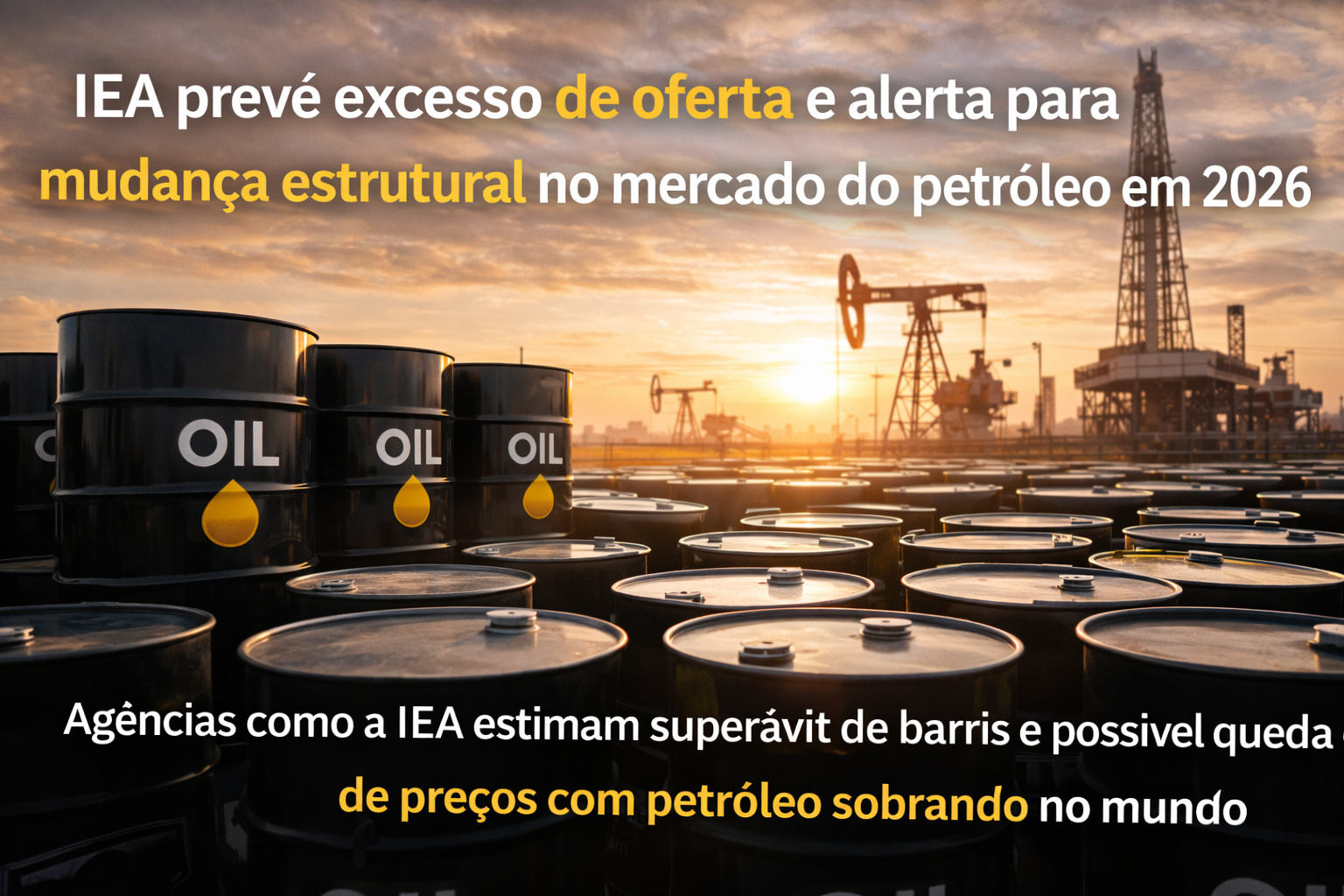
The global oil market could undergo an important shift as early as 2026.
The International Energy Agency (IEA) released projections indicating a likely oversupply in the coming years.
According to the agency, global production may exceed demand by millions of barrels per day if all planned projects advance.
The analysis suggests that several producing countries are increasing investments simultaneously.
Thus, the volume of available oil tends to grow while consumption gradually slows down.
This combination creates a surplus scenario that historically results in lower prices.
Supply Increases in Various Regions at the Same Time
The main expansions come from emerging markets and already established hubs.
Countries like the United States, Brazil, and Guyana continue to increase extraction in onshore and offshore fields.
Additionally, producers in the Middle East have announced new projects with the capacity to become operational by 2026.
-
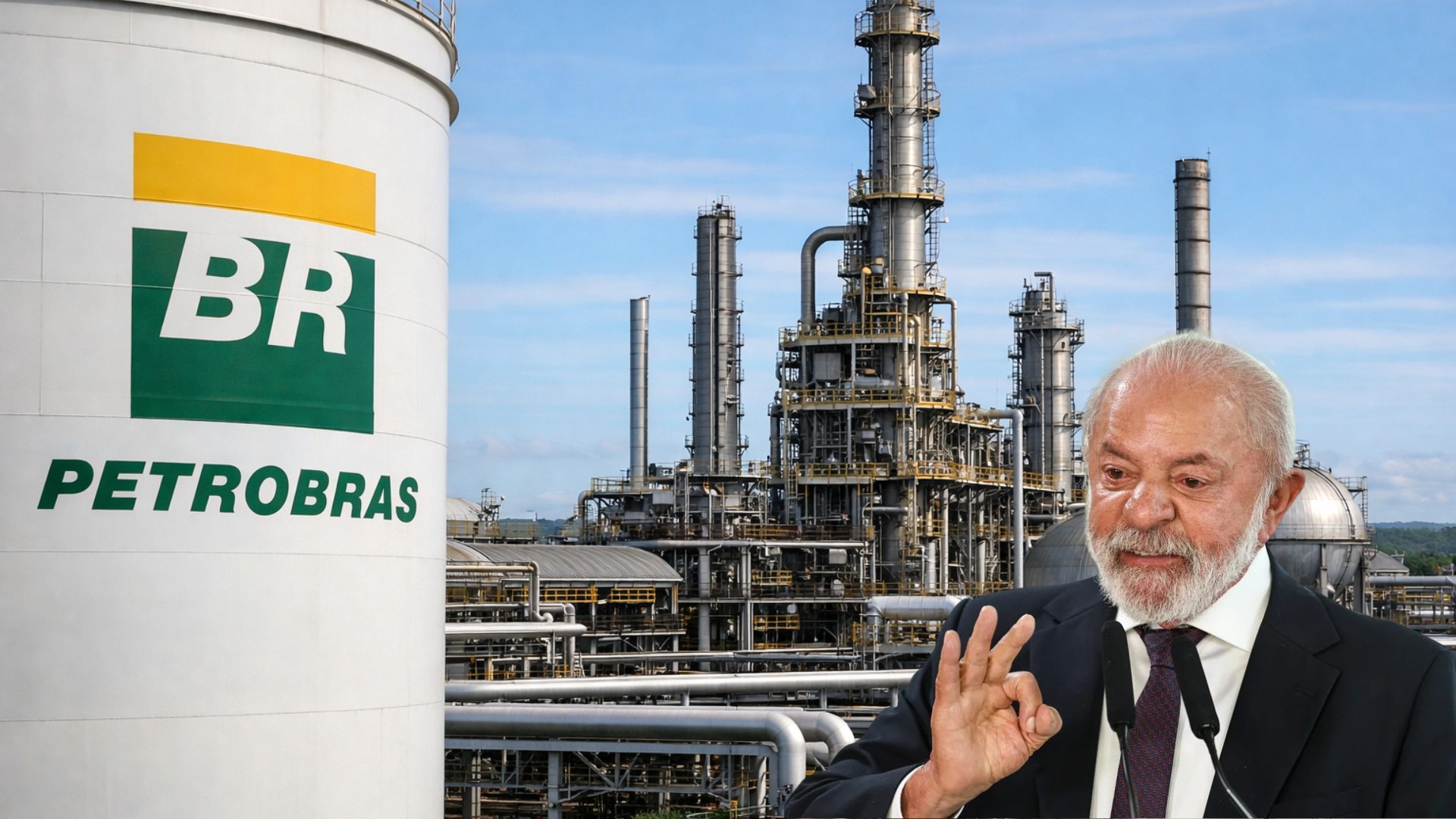
Lula reveals a masterstroke by Petrobras to undo a deal made by Bolsonaro, which involves the return of an important refinery that currently produces less than half of what was expected and makes Brazil dependent on international diesel.
-
A study confirms that the natural gas sector will reduce greenhouse gas emissions in Brazil by 0.5% and accelerate the energy transition by 2026.

-
Petrobras implements a severe adjustment and confirms a 55% increase in the price of aviation kerosene with a proposal for installment payments for the companies.

-
The rise in oil prices could ensure an extra revenue of R$ 100 billion for the Federal Government, indicates a recent economic study.


The IEA explains that this simultaneous expansion increases the global margin.
Even if geopolitical tensions persist, the available oil is likely to exceed what is necessary to supply the planet.
Consequently, ships, refineries, and inventories should operate with greater comfort than observed at the beginning of the decade.
Demand Weakens with the Energy Transition
Although oil remains essential for transport, industry, and chemicals, consumption is no longer growing at the same pace.
The transition to electric vehicles and the advancement of renewable energies weigh on the long-term curve.
Reports from the IEA show that large economies are adopting policies to reduce dependence on fossil fuels.
As a result, the momentum that previously came from transport and aviation has become less intense.
Meanwhile, countries with rising consumption patterns are also investing in solar, wind, and hydrogen energy.
Therefore, global demand is likely to stabilize before starting a gradual decline.
Direct Impact on Oil Prices
When there is more oil than buyers, the market usually adjusts through prices.
If the expected surplus is confirmed, values may remain under permanent pressure.
Although short-term fluctuations will continue to depend on wars and sanctions, the structural movement is different.
For analysts, this trend resembles previous moments of excess.
During those times, producers reduced margins and sought alternative markets to maintain profitability.
However, the difference now is that the energy transition is advancing and reducing the room for long cycles of increases.
OPEC May Attempt to Balance Production Rate
The Organization of the Petroleum Exporting Countries (OPEC) and its allies will closely monitor the scenario.
Historically, the group cuts production to avoid sharp price declines.
However, the IEA emphasizes that this mechanism will become more difficult if new independent producers continue to grow.
Moreover, countries dependent on oil for internal budgets may resist reducing extraction.
This internal conflict directly influences the market and creates uncertainties about the pace of adjustments.
Nevertheless, coordinated cuts remain a tool to prevent barrel prices from declining too much.
What Surplus Means for Investors and Consumers
For consumers, the news seems positive.
More oil available tends to relieve prices, especially for fuels and industrial derivatives.
Transportation and aviation companies may also benefit.
On the other hand, investors assess greater risks in projects with tight margins.
Oil companies must seek efficiency, reduce costs, and diversify their businesses.
That’s why many are increasing investments in natural gas, carbon capture, and renewable energies.
Therefore, the structural change in the market is already influencing long-term strategic decisions.
Oil Will Remain Relevant, but the Scenario Changes
The IEA does not foresee an immediate abandonment of fossil fuels.
Oil will remain essential for petrochemicals, fertilizers, plastics, and heavy transport.
However, its relative share will decrease with technological advancements.
Experts state that the combination of energy efficiency, climate policies, and innovations is expected to accelerate this transition.
Thus, companies that adapt early may preserve competitiveness even in an abundant supply environment.
The projection was published by the International Energy Agency (IEA) and discussed in early 2026, with estimates that global production could exceed demand by millions of barrels per day.
The analysis warns that the surplus could pressure prices and change business models in major oil producers.
Therefore, the market enters a new phase: more stable in volume, more competitive, and marked by the transition to clean sources.









Seja o primeiro a reagir!