





 Portuguese
  English
  Spanish
  5 min of reading
  0 comments


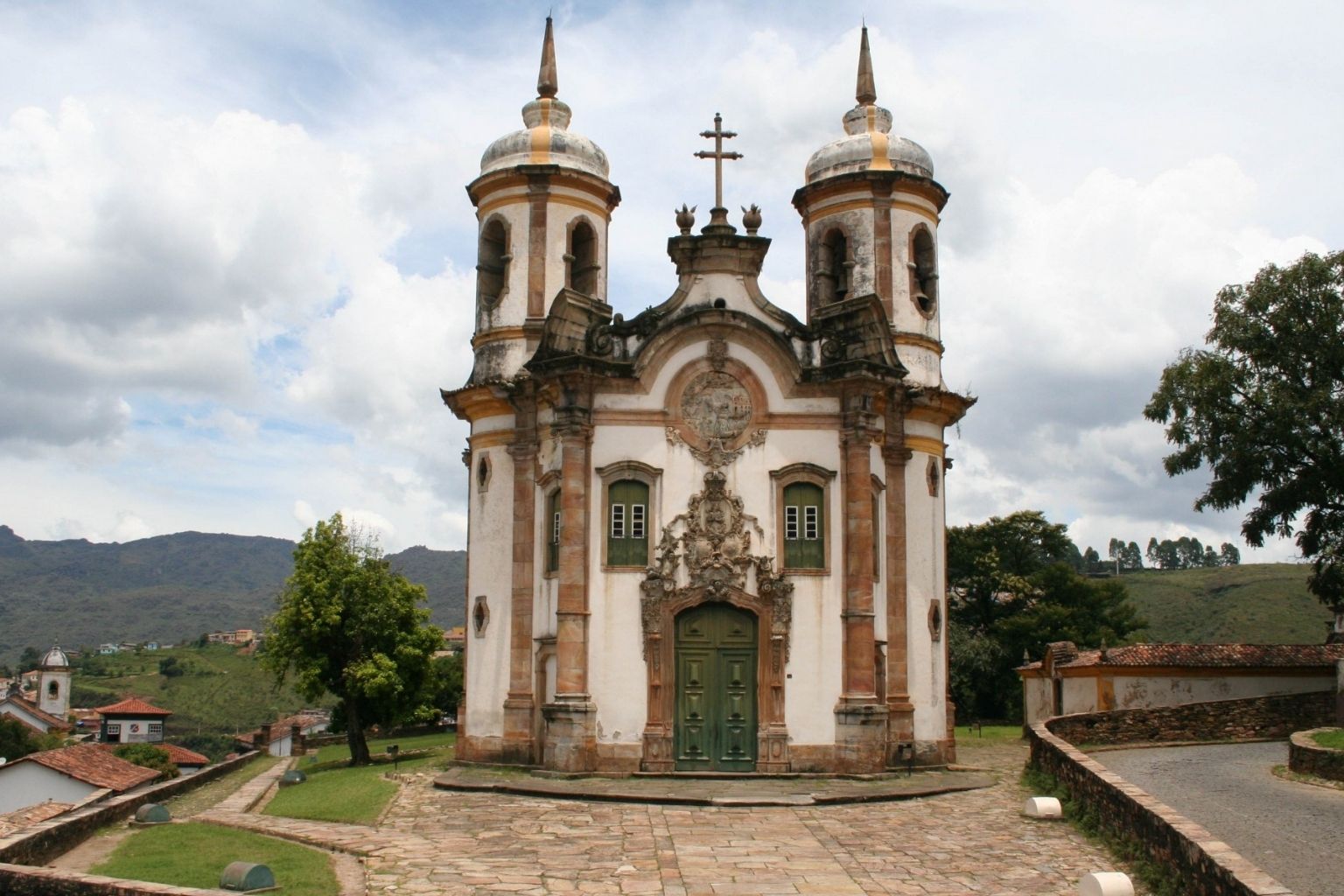
Built in 1766 and carved from soapstone by Aleijadinho, the Church of São Francisco de Assis in Ouro Preto is an icon of Brazilian colonial art and engineering for 250 years.
In the heart of Ouro Preto, where stone slopes wind between colonial mansions and time seems to move slowly, a temple stands as a silent witness to the skill, faith, and ingenuity of a still-burgeoning Brazil. The Church of São Francisco de Assis, with its unmistakable curves and facade carved in soapstone by the master Antônio Francisco Lisboa, known as Aleijadinho, began to rise in 1766 and continues to stand two and a half centuries later. It has withstood the cold winds of the mountains, the persistent rains of the Minas winter, political, economic, and cultural changes, and the passage of centuries themselves — reaffirming daily that architecture crafted with artisanal rigor and environmental awareness transcends time with dignity.
While modern constructions struggle against infiltrations, material deterioration, and premature wear, the church remains steadfast. It is not just a religious monument: it is a manifesto in stone, wood, and lime about the human capacity to transform technique and spirituality into an eternal work. With every detail, from the curved frontispiece to the carved altars, it reveals an encounter between art and engineering mastered by 18th-century Brazil, but rarely replicated.
Architecture That Anticipates the Future with 18th-Century Techniques
The construction of the Church of São Francisco de Assis did not follow the accelerated pace of contemporary works. It was another time, another logic of work, and another relationship with materials. Soapstone, hardwood, lime, and natural pigments make up the structure and finishing of the temple. These elements, far from being mere traditional choices, represent a sophisticated empirical science, built from the knowledge of craftsmen, masons, and master builders who understood the climate, terrain, and physics of construction.
-
Sprinkling dry baking soda directly on the carpet neutralizes odors from sweat and food without wetting the fibers, allowing you to forget about the vacuum cleaner for weeks using a product that costs less than five reais.

-
A bottle thrown into the sea by two Australian soldiers in 1916 on their way to the trenches of World War I was buried in the sand for over 100 years, and the letters inside it were still legible when they were found.

-
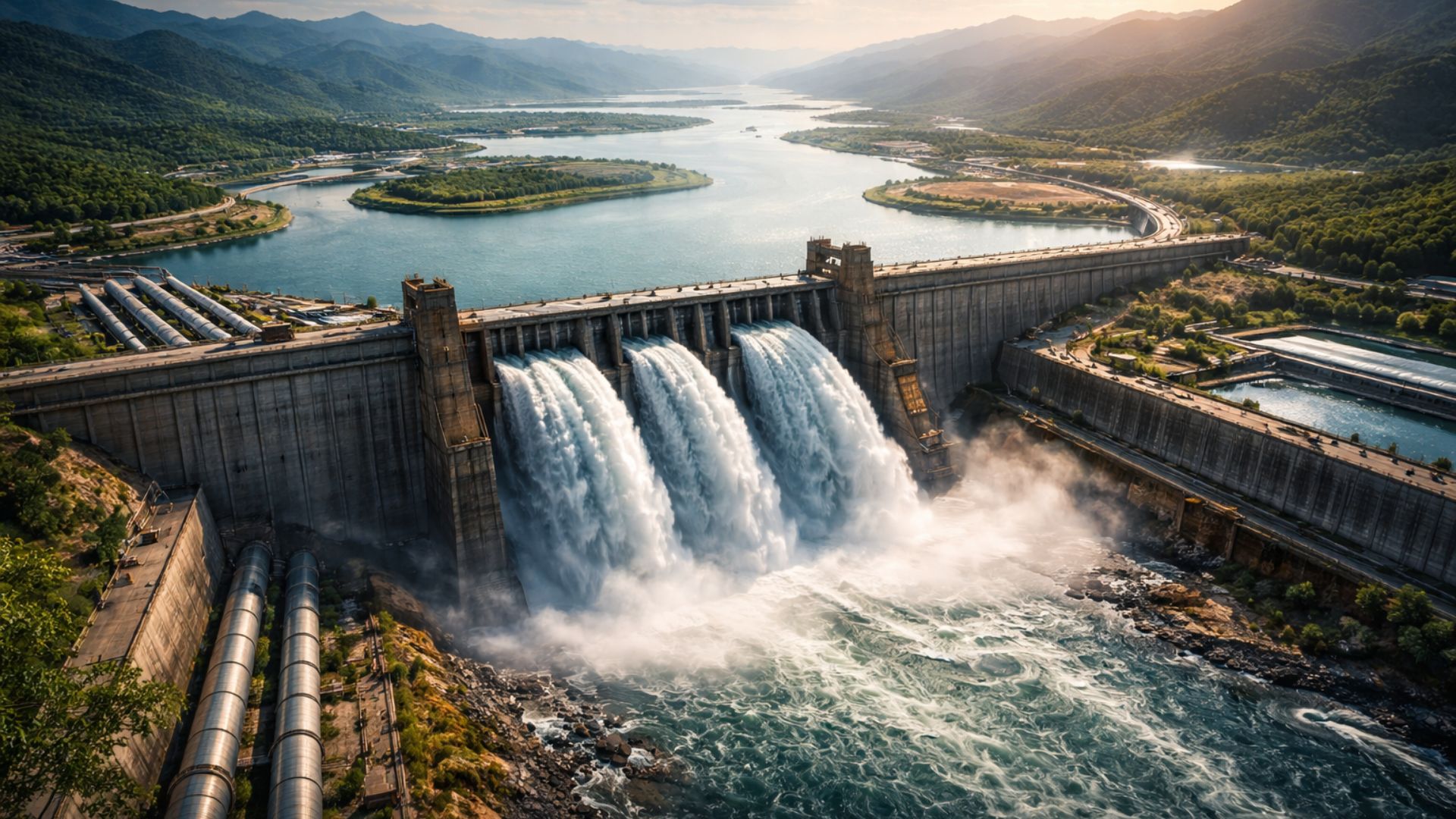
China invests over R$ 4.2 trillion, builds the largest water network in the world with 95,000 reservoirs and 1 trillion m³, expands piped water access to 96% of rural areas, attracts R$ 565 billion in foreign investments, and advances with the “longevity gene” in rice.
-
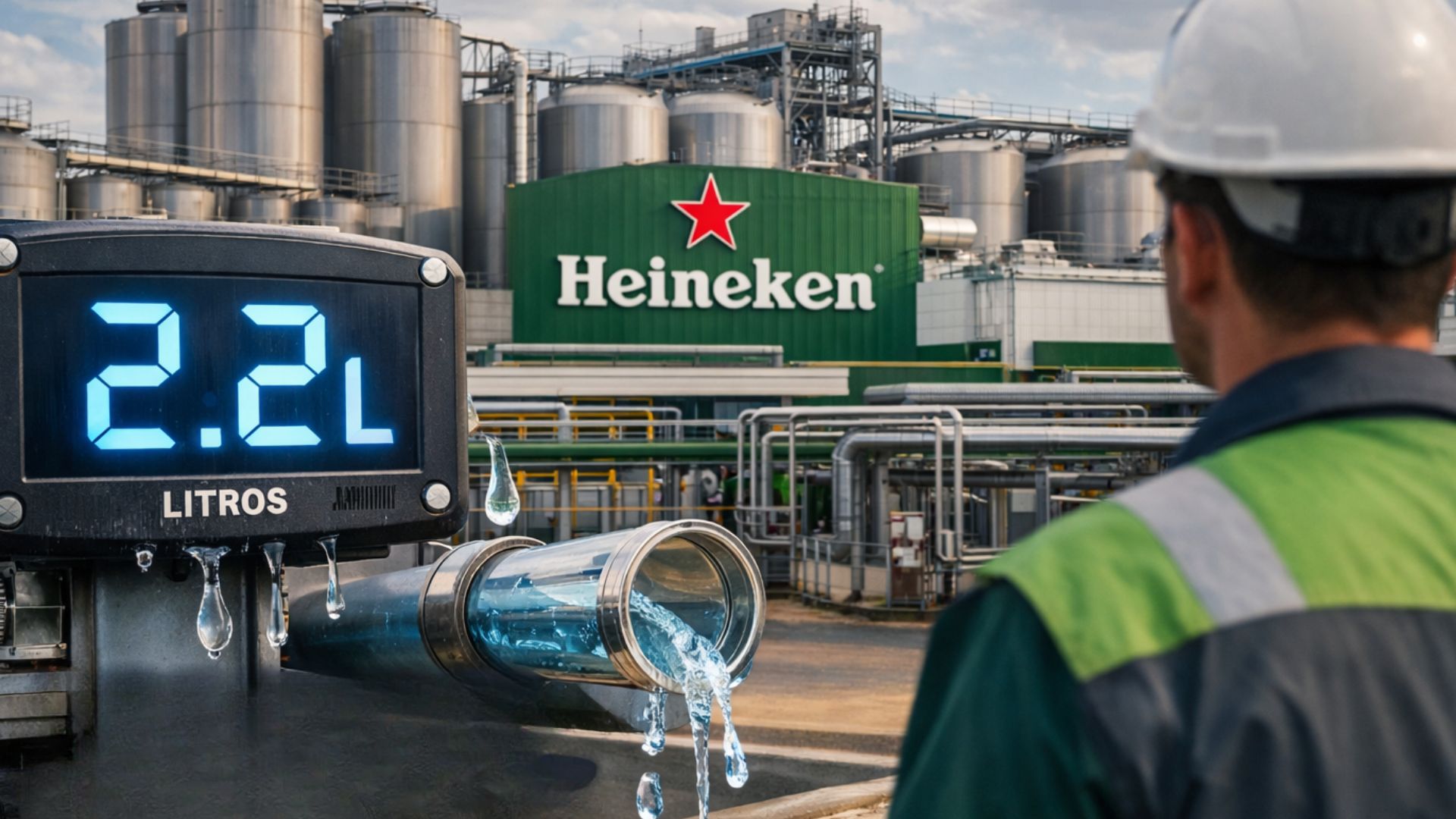
Heineken’s factory in Brazil surprises the world by reducing water consumption for beer production from nearly 10 liters to just 2.2 liters per liter produced, achieving a 23% decrease with real-time technology.



The use of soapstone — abundant in the region — gave the church not only beauty but resistance. This material, with temperature-regulating properties and high durability, is more resistant to the climatic variations of the Minas mountains than modern concrete in many situations. The lime used in the mortar offers flexibility and breathability to the walls, allowing the construction to absorb and release moisture without cracking. These are details that are once again being studied in universities and research centers linked to heritage conservation and bioarchitecture.
When observing the facade, one perceives a fluid, almost organic curve. There is no rigidity — there is movement. The lines seem to dance, as if the stone molded itself to the rhythm of an era when sacred art met technical ingenuity at the height of Minas’ baroque. Nothing there is by chance: the architectural composition distributes weight, creates balance, and ensures ventilation, reducing moisture action and prolonging the life of the structure. In Ouro Preto, engineering did not just challenge the resources of the time — it reinvented itself.
Aleijadinho: The Artist-Engineer Who Mastered Stone and Time
Talking about the Church of São Francisco de Assis is to talk about Aleijadinho, considered one of the greatest artists in Brazilian history. The son of a Portuguese craftsman and an enslaved woman, Antônio Francisco Lisboa synthesized the contradiction and greatness of colonial Brazil in his life. His work on the facade and pulpits combines aesthetic delicacy with mathematical rigor and impeccable structural sense. He was not just a sculptor: he was an architect, carver, designer, and thinker.
The soapstone, worked with extreme skill, allowed almost imaginary shapes to come to life. Faces, curves, leaves, sacred symbols — everything there is hand-carved, in a slow and meticulous process that took decades, patience, and precision. Time sought to test the work; weather conditions confronted it; the changes of eras challenged its meaning. And yet it remains, intact in essence, as a material signature of one of the greatest artists in the Americas.
It is not just about beauty. Aleijadinho’s sculpture on the facade serves a technical function: it reinforces areas, molds contours that channel water, and protects surfaces from rain. More than just an adornment, his art is part of the structure. It is aesthetic engineering. It is functional art. It is resistance converted into detail.
Time, Saw, and Faith: The Strength of Things That Endure
Ouro Preto was born from gold, but it survived through culture. Inside the church, carved gilded wood, paintings by master Ataíde, and ornamentation directed towards the spiritual show that the work is not just stone. It is resonance, ritual, symbolic shelter. Over the centuries, it has witnessed political changes, abandonment, and revaluation. It has transitioned from the grandeur of the 18th century to the silence of the post-mining period, reemerging with heritage protection, and today it stands among the greatest expressions of sacred art in the Americas.
Its surroundings have also changed. The colony became an empire, republic, world heritage site. Roads, electricity, tourism, urbanization, modernity — everything has passed. The church has remained. And it has not only remained: it continues to teach.

In a world that values the fast, the disposable, and the utilitarian, it reminds us that greatness requires time, technique, and purpose. It reminds us that architecture is more than raising walls — it is raising memory.
The Legacy That Transcends Centuries and Inspires the Future
In contemporary engineering, interest is growing in natural materials, slow construction cycles, traditional techniques, and respect for climate. Researchers analyze lime mortars, solid wood, ancestral ventilation systems, and organic shapes that distribute stresses and prevent structural damage. In other words: the future looks back.
The Church of São Francisco de Assis is not just a heritage site; it is a technical reference. Its permanence is a powerful argument that durability does not solely depend on technology — it depends on knowledge, sensitivity, and geography. In its stone, there is science. In its execution, there is precision. In its resistance, there is a lesson.
As one crosses its doors and observes the light filtering through stained glass that illuminates centuries of history, the visitor perceives a simple truth: time does not destroy what was built to last — it only reveals its greatness.
And before the imposing construction that defies the mountain climate, gravity, and human forgetfulness, the question arises that echoes among mountains and centuries: if our ancestors raised such works with rudimentary tools and limited resources, what prevents contemporary architecture from aspiring to the same legacy?






-

-

3 pessoas reagiram a isso.