





 Portuguese
  English
  Spanish
 6 min of reading
  2 comments


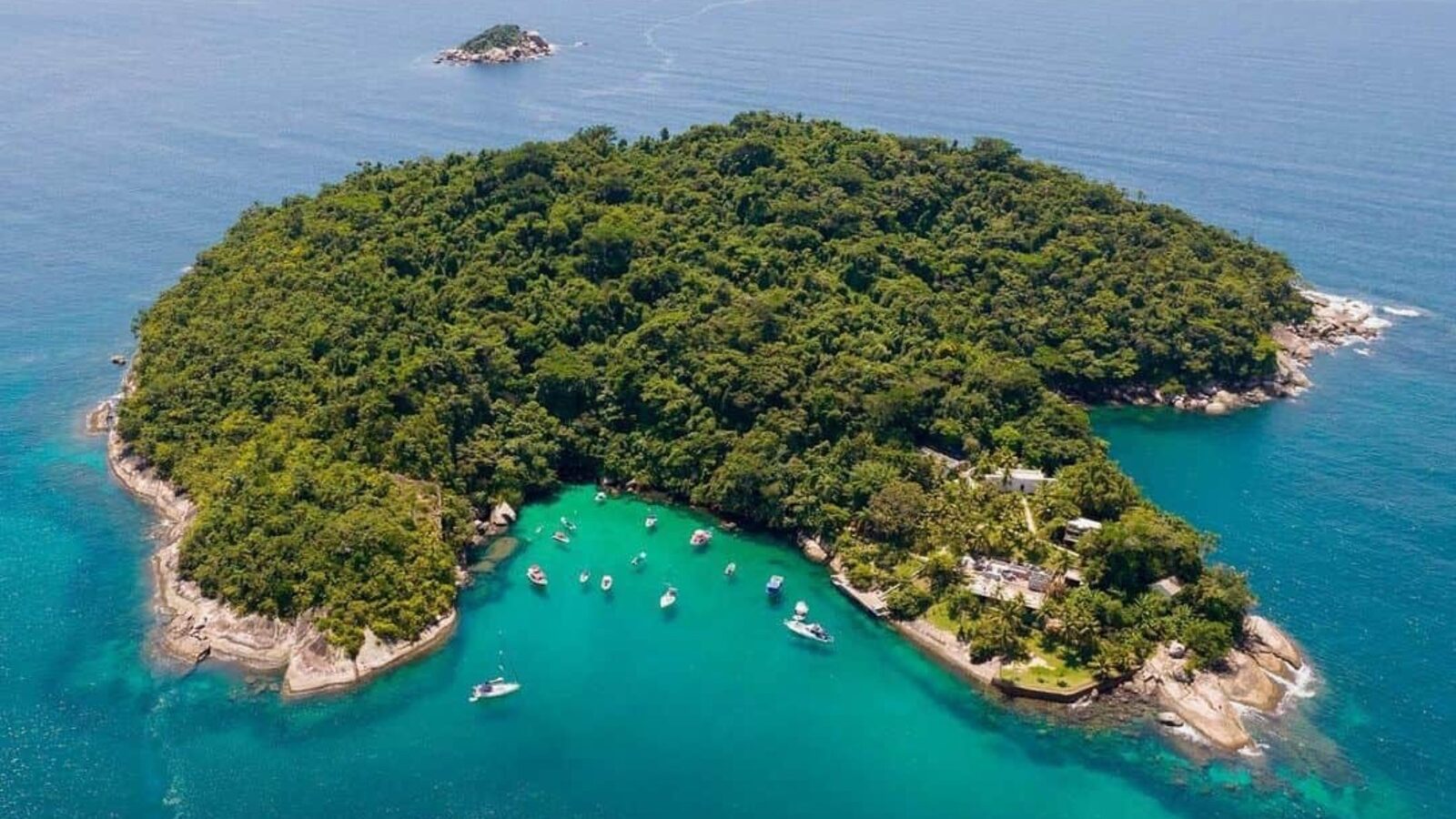


Among Mountains Covered by Atlantic Forest and Emerald Waters, Coconut Island in Paraty Is a Refuge Without Tourist Structure, But Filled with Natural Charm, Ideal for Those Seeking Tranquility, Diving, and Landscapes That Remind of the Maldives
You don’t need to leave Brazil to find landscapes that resemble the Maldives. In the Bay of Paraty, on the southern coast of Rio de Janeiro, Coconut Island enchants with its light sand, coconut palms, and breathtaking emerald waters.
The nickname “Brazilian Maldives” came about for a simple reason: the water is so clear that it allows you to see fish, corals, and stones just below the surface.
It’s a scene that impresses even the most experienced travelers, as the beauty of the place seems untouched.
-
Brazilian fish that lives out of water and hides inside dry logs intrigues scientists and reveals one of the rarest adaptations of mangroves.

-
The Brazilian Navy puts on a show in a complex operation in the Atlantic and rescues an African ship adrift for almost 60 days, with 11 crew members, a rudder failure, no communication, environmental risk, and a mission 1,200 km from the coast.

-
A 68-meter tower, which housed a historic brewery in the heart of Germany’s port, balances on a small base and uses activated core concrete for cooling that reduces the need for air conditioning.

-
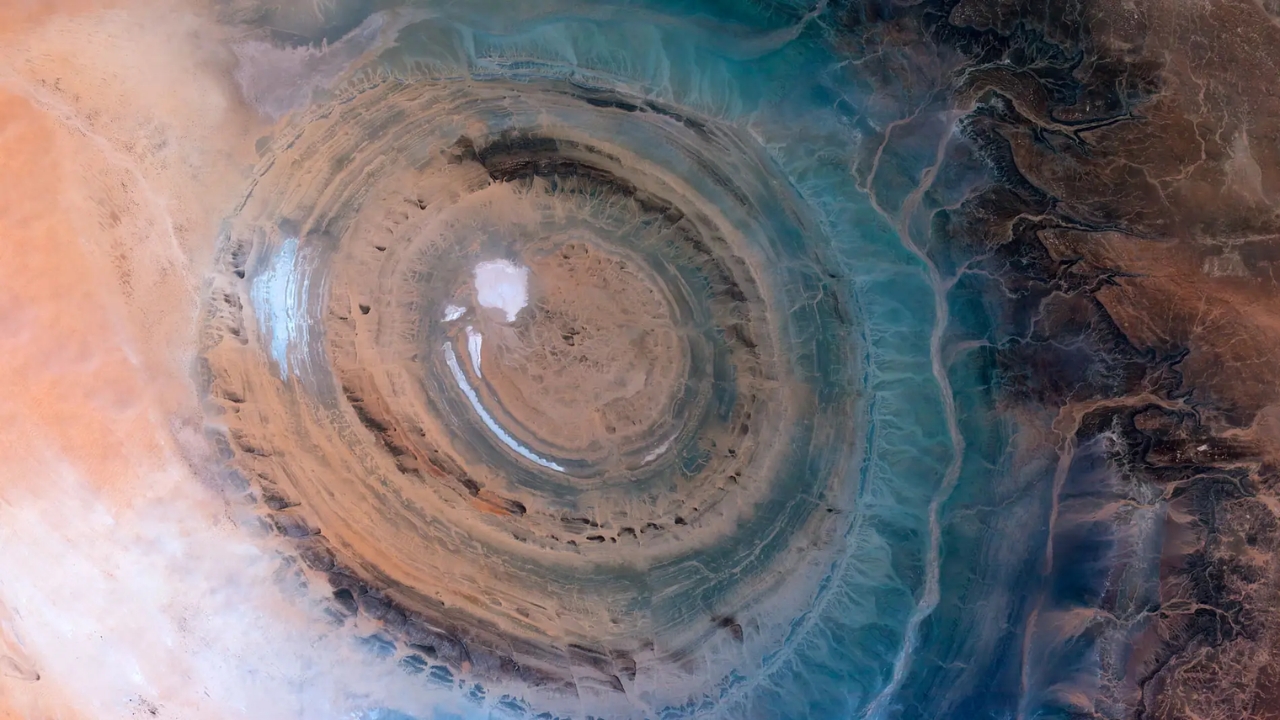
For decades, a 50-kilometer ring structure in the middle of the Sahara has puzzled scientists: visible from space, it reveals layers of millions of years and turns the desert in Africa into a geological mystery.



Getting There Is Part of the Experience
Access is limited, which maintains the island’s isolation and charm. The only way to get there is by boat or schooner.
Departures occur daily at the Paraty Tourist Wharf, usually between 10 AM and 11 AM.
The crossing takes 30 minutes to an hour, depending on the type of vessel. Along the way, visitors pass mountains covered by Atlantic forest and nearly deserted islands while the sea shifts in shades of green and blue. It’s a journey that’s worth the trip by itself.
Island and Crystal-Clear Waters Route
Tourist routes usually include Coconut Island along with other famous destinations, such as Lula Beach, Comprida Island, and Saco da Velha.
Together, these stops form one of the most sought-after routes along the coast of Rio de Janeiro, precisely because they combine preserved nature, small beaches, and clear waters ideal for diving.
Coconut Island belongs to an environmental protection area. Therefore, there are no bars, restaurants, or electricity. The scene is dominated by silence, breeze, and the constant sound of waves crashing against the rocks.

Diving, Rest, and Preservation
The shallow and calm waters are perfect for snorkeling. Visibility can reach up to eight meters, allowing for detailed observation of marine life.
The temperature is pleasant for most of the year, making swimming even more relaxing.
As there are no facilities, it is essential to bring the basics: sunscreen, hat, sarong, water, and some light snacks.
It is also important to collect your own trash and avoid chemical products that pollute the sea, ensuring the preservation of the local ecosystem.
Brazilian Maldives: Beauty That Goes Viral on Social Media
The vibrant colors and cinematic views have made Coconut Island a phenomenon on social media.
Photos and videos showing the contrast between the green sea and the blue sky are multiplying, attracting more and more visitors in search of tranquility and perfect landscapes.
In the end, it is this combination of simplicity, isolation, and natural beauty that transforms Coconut Island into one of Brazil’s most irresistible destinations.
With information from Diário do Comércio.
You May Also Like: Man Builds “Island” and Declares Himself President — But Sees Creation Destroyed by the Government; Story Even Became a Movie on Netflix
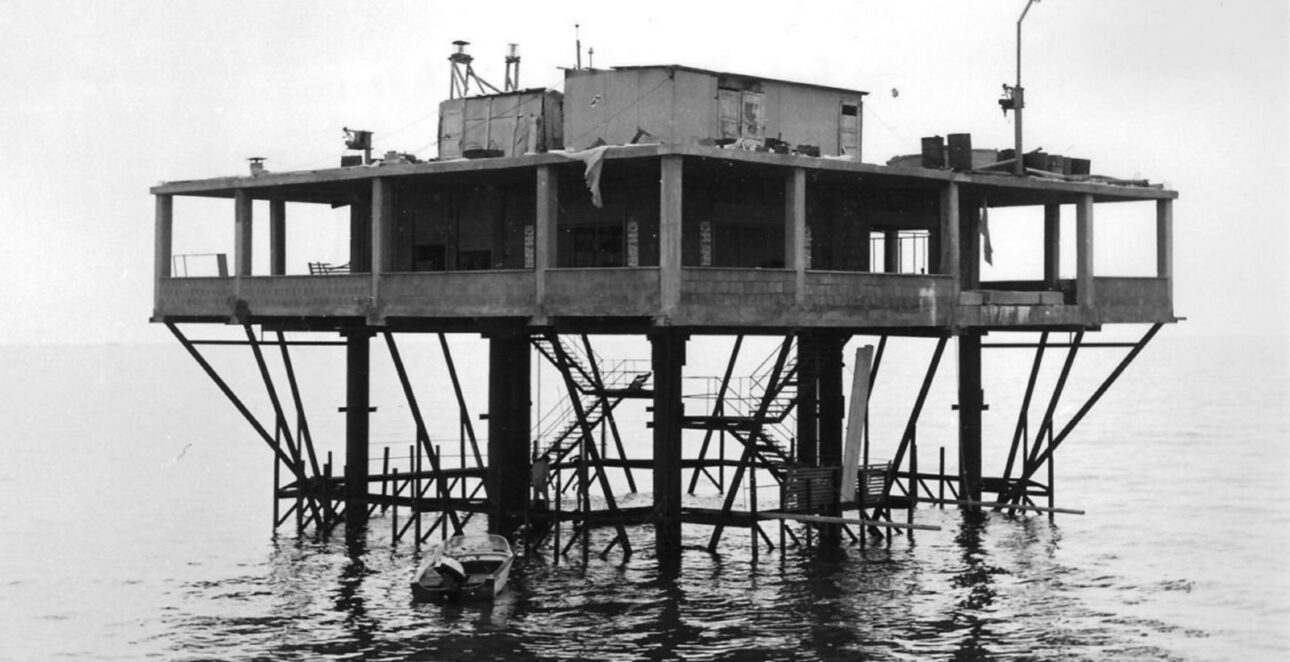
In 1968, Italian engineer Giorgio Rosa decided to put into practice a dream that seemed impossible: to create an island in international waters and turn it into a nation free of bureaucracy.
His plan was simple but bold. He wanted to build a platform in the Adriatic Sea, beyond the limit of Italian territory, and declare his independence.
The project began ten years earlier, in 1958, funded with his own resources. Even facing resistance from the maritime authorities of Italy, Giorgio persevered.
He believed he could prove that an ordinary man could found a country from scratch.
The structure was erected with concrete and steel, on pillars firmly anchored to the sea floor. When he finally completed the construction, Giorgio proclaimed the place to be a new nation: the Republic of Rose Island.
A Symbol of Freedom in the Midst of Counterculture
The initiative emerged during a turbulent moment in history. The world was still feeling the effects of World War II, while the 1960s brought winds of change.
The youth protested, women fought for rights, and counterculture spread.
In this context, the small island became a symbol of freedom. Young people began to visit frequently, attracted by the idea of living without rules.
The place became a sort of alternative refuge, with a bar, restaurant, souvenir shop, and even a small post office.
Letters and citizenship requests arrived from all over the world. For many, Giorgio was a visionary who had created a free paradise. For the Italian government, however, he was a threat.
Storms, Resistance, and the Beginning of the End of the Island
On the first night he slept on the island, Giorgio faced a violent storm. The wind nearly threw him into the sea.
Any other person would have given up, but he did not. He believed so much in his project that he drilled the sea floor with a probe to capture fresh water — and succeeded.
His courage was impressive, but also irritated the authorities. The growing activity of visitors and his independence rhetoric began to bother the Italian government, which started to monitor the platform.
Despite this, Giorgio remained steadfast. The original project envisaged five floors, but only half of the first was completed. Even so, the island endured for 55 days after its inauguration.
The Explosion That Ended a Dream
In 1969, the Italian government decided to put an end to the experiment. The Navy took control of the structure and began its destruction.
Contrary to what the movie inspired by the story depicts, Rose Island was not blown up all at once.
Two rounds of explosives were needed, applied on different days, to cause significant damage to the structure.
Even so, the platform partially resisted — a testament to the engineer’s skill. The final collapse came with another storm, which sank what remained of the construction.
For months, parts of the island could still be seen on the surface of the Adriatic.
The final blow was cruel: in addition to losing the island, Giorgio Rosa had to pay for the military operation that destroyed it.
He paid off the debt gradually, with his salary as a teacher, a profession he took up after the episode.
Rose Island: From Destruction to Rebirth on Screens
Decades later, Rosa’s story inspired the movie “The Incredible Story of Rose Island”, released by Netflix.
Director Sydney Sibilia rebuilt the platform to scale — about 400 square meters — in a giant pool of trapped seawater on the island of Malta.
The filming faced difficulties similar to those of the engineer himself, emphasizing just how ambitious his project had been.
Even with the tragic end, Rose Island continued to spark curiosity. Forty years later, divers found remnants of the platform on the sea floor and brought fragments to the surface.
One of them, a simple brick, was delivered to Giorgio with a symbolic dedication: “A little piece of a dream for a great dreamer.”
Giorgio Rosa passed away in 2017 at the age of 92. He died without his island, but with the recognition of having turned an improbable dream into one of the most extraordinary episodes of engineering and human freedom.
With information from Portal Litoral Sul.







I must say this article is extremely well written, insightful, and packed with valuable knowledge that shows the author’s deep expertise on the subject, and I truly appreciate the time and effort that has gone into creating such high-quality content because it is not only helpful but also inspiring for readers like me who are always looking for trustworthy resources online. Keep up the good work and write more. i am a follower.
I must say this article is extremely well written, insightful, and packed with valuable knowledge that shows the author’s deep expertise on the subject, and I truly appreciate the time and effort that has gone into creating such high-quality content because it is not only helpful but also inspiring for readers like me who are always looking for trustworthy resources online. Keep up the good work and write more. i am a follower.