





 Portuguese
  English
  Spanish
  4 min of reading
  0 comments


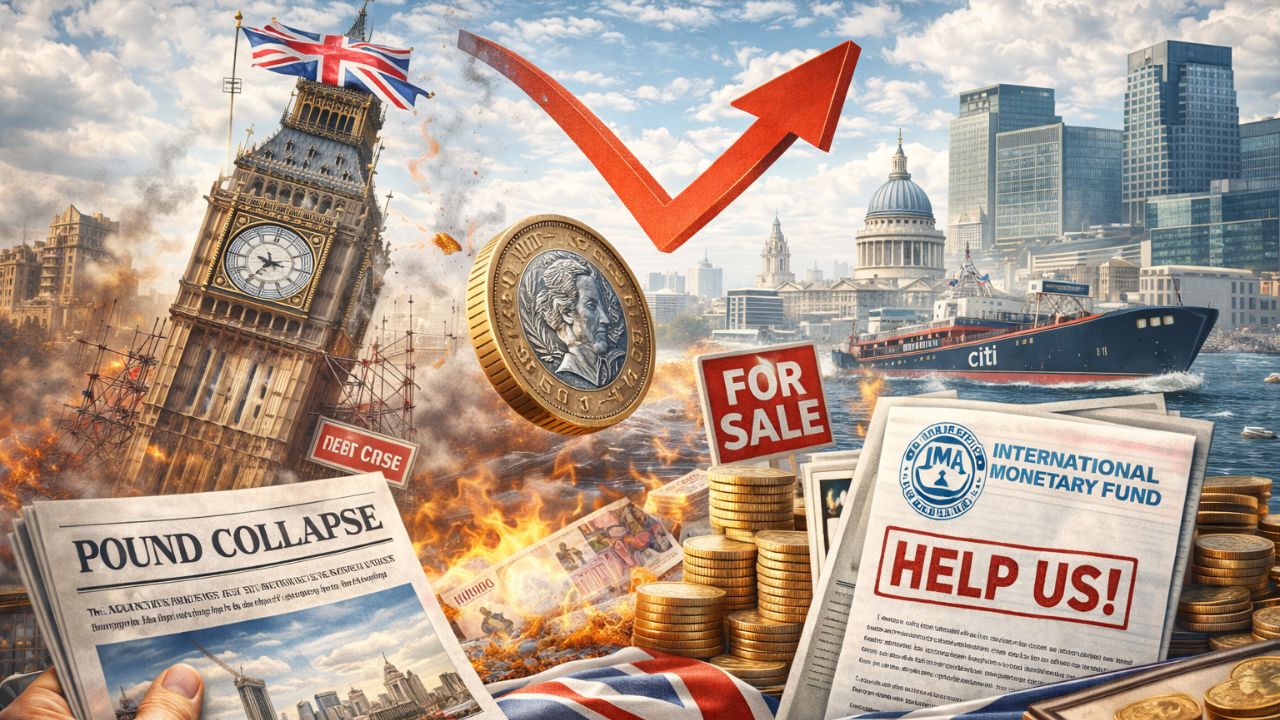
Debts and Financial Collapse Destroyed the British Empire, Dismantled the Pound as Global Currency, Forced Asset Sales, IMF Bailouts, and Transformed the World’s Greatest Power into a Secondary Player
The British Empire seemed indestructible at the beginning of the 20th century, but debts and financial collapse dismantled this illusion in just a few decades. The country that controlled a quarter of the planet, dominated the seas, and issued the world’s most powerful currency ended up losing its position for a simple reason: the money ran out.
History shows that debts and financial collapse weighed more than won battles or military defeats. Even triumphing in wars, Britain lost the empire at the financial table, leaving a harsh lesson that today echoes in the United States and Brazil.
When British Power Seemed Eternal
After World War I, Britain still ruled territories on every continent. The pound sterling was the world’s primary reserve currency, London was the financial center of the planet, and British banks financed projects worldwide.
-
Airfare prices may rise with increasing fuel costs, and the government is considering urgent measures to avoid a direct impact on the wallets of Brazilians.

-
Chocolate prices soar nearly 15% and become a luxury item for Easter 2026, with increases surpassing inflation and changes in Brazilian consumption habits.

-
The Federal Revenue issues a good alert for Brazilian taxpayers: 60.9% are already using the pre-filled tax return, automatic refunds via Pix reach millions, and the government plans for a fully automated income tax in the coming years.

-
India announces a plan of $3.06 billion to bring aviation to forgotten regions: 100 new airports, $1.07 billion in subsidies, and regional routes guaranteed for 10 years, from 2026 to 2036, away from the centers.

This dominance allowed the country to finance wars, manage colonies, and maintain the world’s largest navy with low-interest rates, sustained by international confidence in its currency.
The First World War and the Beginning of the Cracks
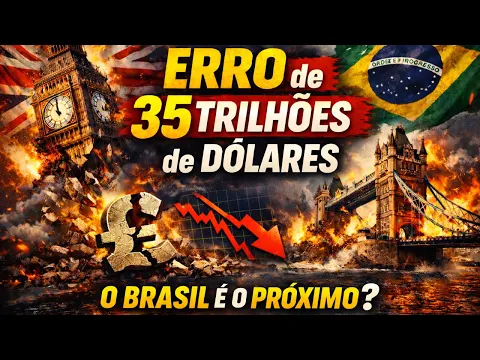

The First World War marked the beginning of the imbalance. To finance the conflict, the government aggressively raised taxes, took massive loans, and began selling off external assets.
Public debt exploded in just a few years, and Britain went from being the world’s largest creditor to being a debtor, especially to the United States.
Abandoning the Gold Standard Weakened the Pound
During the war, the country abandoned the gold standard to print money. The pound lost its real backing and came to rely solely on confidence.
When the government attempted to return to the old standard with an unrealistic rate, the currency became overvalued, making exports expensive, choking the industry, and exacerbating the economic imbalance.
World War II Accelerated Debts and Financial Collapse
World War II was the final blow. Almost all of the country’s production was directed to the military effort. Assets were sold off, reserves were depleted, and loans became the only means of survival.
By the end of the war, British debt surpassed several times the size of its own economy, something unsustainable for any nation.
Dependence on the United States Sealed the Loss of Power
To continue fighting, Britain accepted financial aid from the United States in exchange for economic and trade concessions. In practice, it traded financial sovereignty for immediate survival.
In this process, the dollar replaced the pound as the global reserve currency, transferring the center of world power to Washington.
The Suez Crisis Exposed British Fragility
The Suez Crisis in 1956 made it clear that the empire was a facade. Even militarily victorious, Britain was forced to retreat under financial pressure from the United States.
Without financial support, military power lost value, and the world realized that the former superpower no longer commanded respect.
Devaluations and International Humiliation
In the following decades, the pound suffered successive devaluations. The economy fell into stagnation, strikes spread, and the country earned the label of “the sick man of Europe.”
In 1976, the final symbol of decline came when Britain had to ask for a bailout from the International Monetary Fund, accepting austerity and externally imposed tax cuts.
The Empire Ended Because the Bills Did Not Add Up
The official narrative speaks of moral decolonization and historical progress. The reality was harsher. Maintaining colonies cost money the country no longer had.
The empire did not end by political choice, but because the Treasury was empty and the debt was out of control.
The Lesson for the United States and Brazil Today
The British collapse followed a clear pattern: rising debts, loss of the reserve currency, persistent deficits, asset sales, and external dependence.
Today, the United States and Brazil show signs that remind us of this path, each in its own way. History shows that financial power sustains political and military power, and when it fails, decline is inevitable.
History as a Warning, Not as Curiosity
The fall of the British Empire is not just history. It is a warning about the cost of ignoring debts and financial collapse, even for the greatest powers.
Empires do not end due to speeches or good intentions. They end when the money runs out.
Do you think the United States and Brazil are learning from this historical lesson or heading towards repeating the same mistakes of the British Empire?







-

2 pessoas reagiram a isso.