





 Portuguese
  English
  Spanish
  5 min of reading
  0 comments


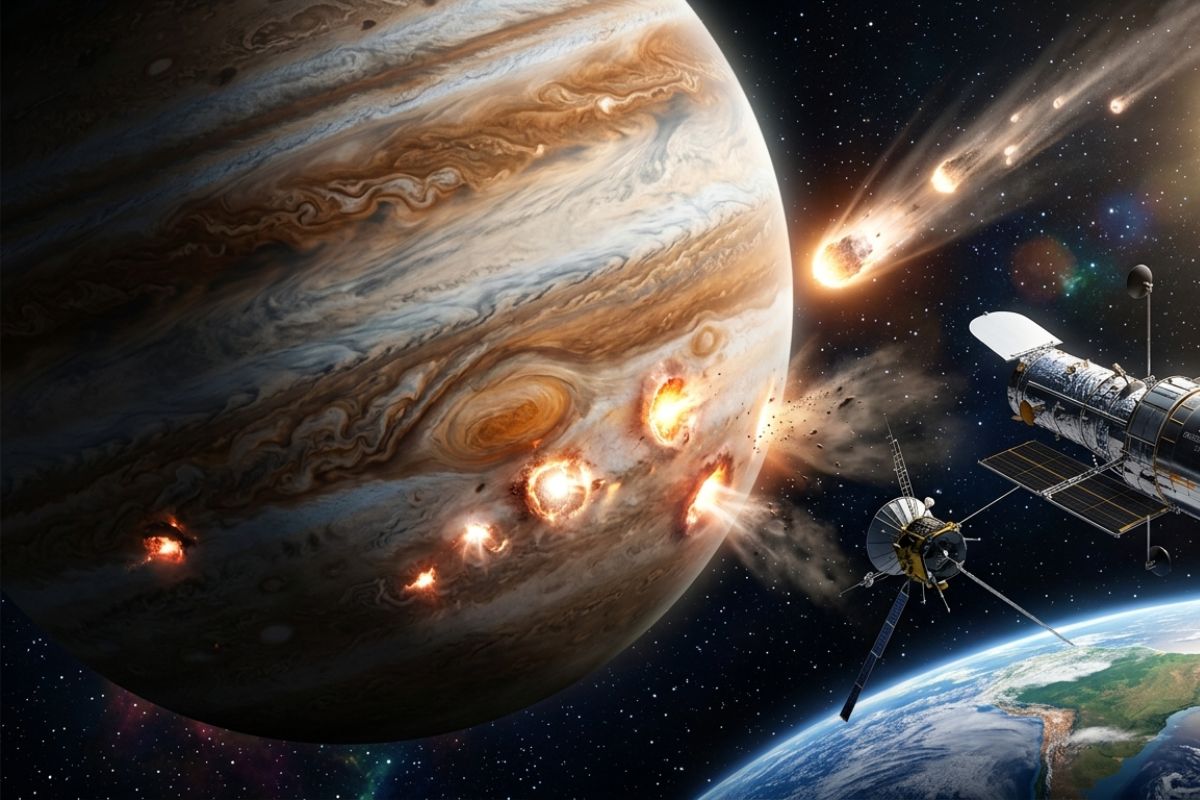
The Shoemaker-Levy 9 comet, observed by telescopes around the world, struck the gas giant in sequence, exposed planetary impacts in real-time, and forever changed the way we think about risk in the solar system
Imagine looking up at the sky and watching, live, a planet being bombarded. In 1994, that is exactly what humanity witnessed when a comet on a collision course with Jupiter turned the giant into the stage for one of the most violent events ever recorded in the solar system.
What seemed like a distant spectacle turned into a direct warning: the cosmos is unpredictable, and impacts of this kind are not just ancient history. From that point on, the idea of monitoring threats and thinking about planetary defense gained a new dimension.
How a comet became a collision timer
The story begins a year before the spectacle, in 1993, when astronomers observed an unusual object in the night sky. It was not a simple dot.
-
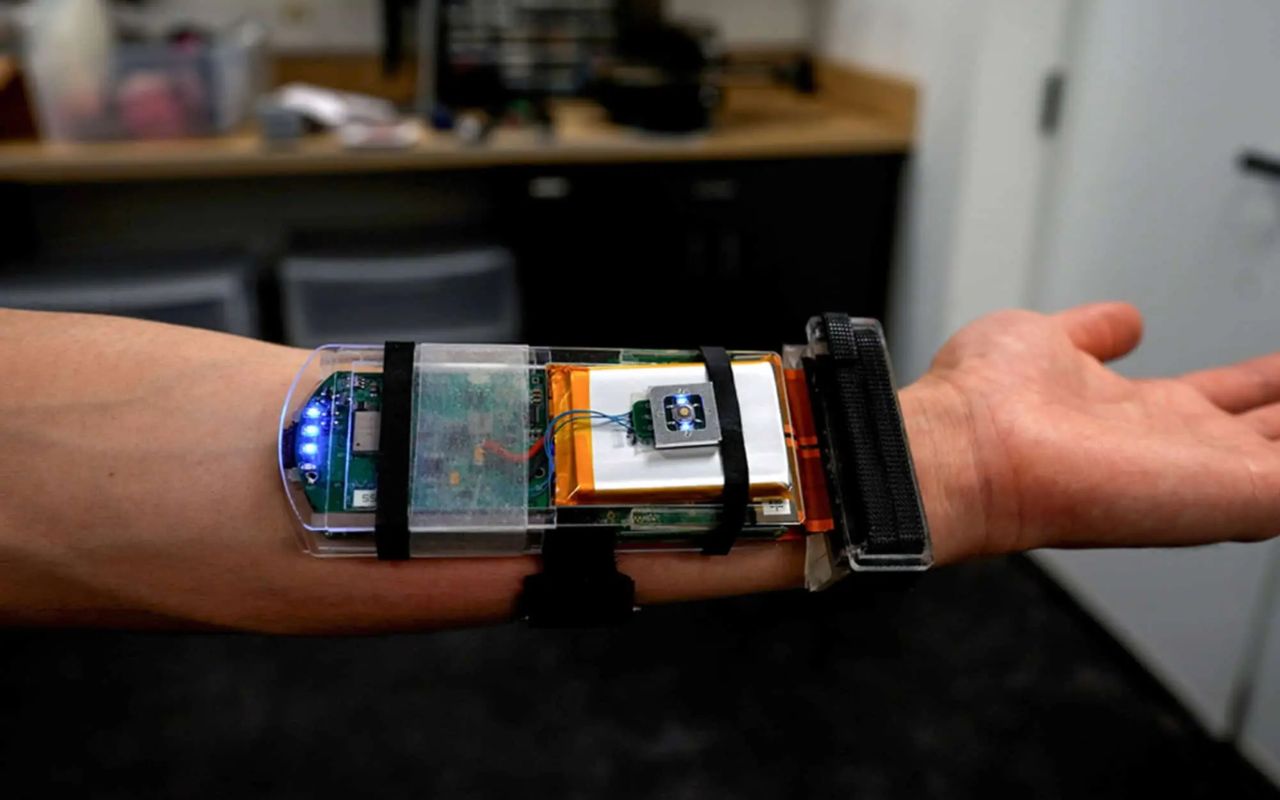
New technology developed by MIT researchers uses a bracelet with ultrasound to control robots and virtual systems with hand movements in real time.
-
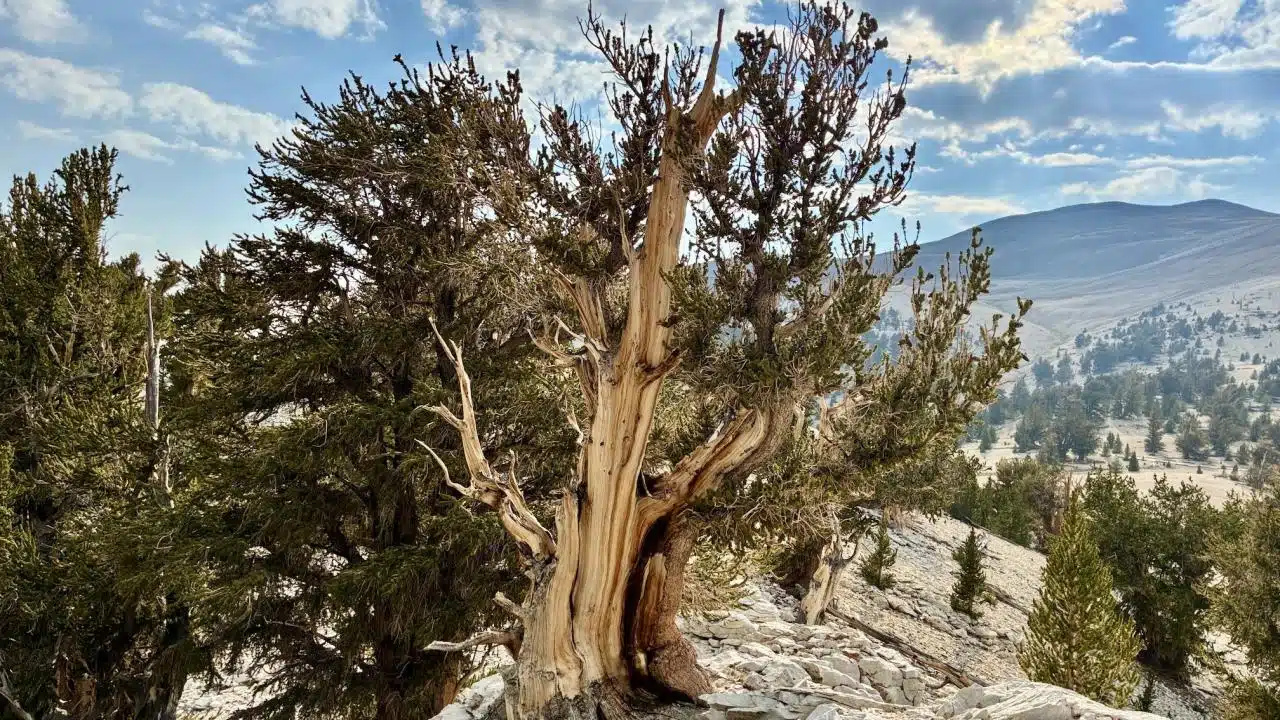
Scientists extract DNA from a tree older than the pyramids, assemble a genome 8 times larger than that of humans, and find clues that may explain how this living being has survived for over 5,000 years without aging like almost all other organisms.
-
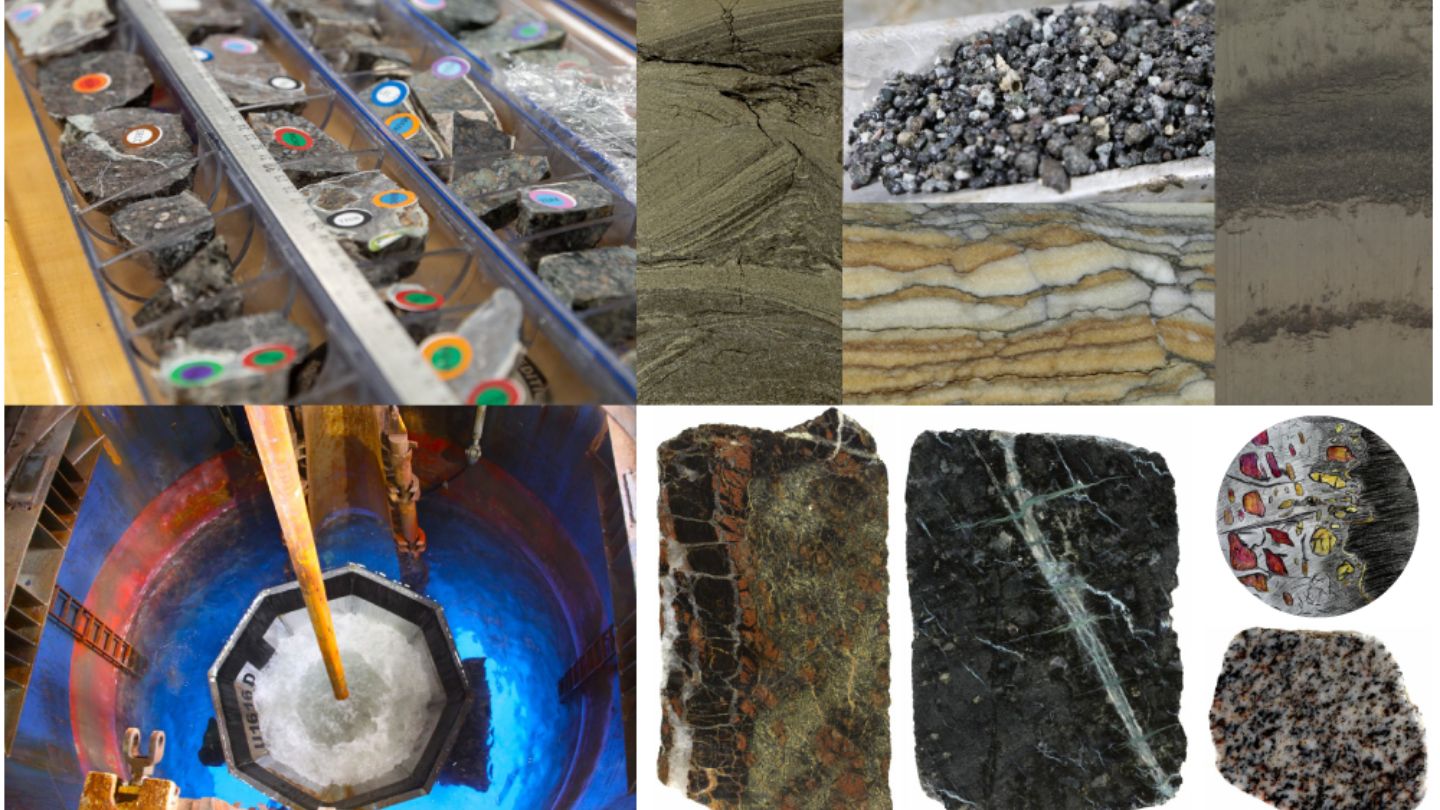
The Tyrrhenian Sea reveals a “fertile” mantle pierced more than 1,200 meters beneath the seabed by scientists in the IODP Expedition, which was expected to generate large volumes of magma, but surprisingly shows limited magmatic activity and leads researchers to investigate why one of the youngest tectonic regions in the Mediterranean does not behave as the models predicted.
-
Meteorologists warn that the polar vortex is behaving in an unprecedented manner, and the speed of this anomaly could cause frost and droughts outside the norm in major agricultural production areas.

It was something elongated, irregular, almost like a string of pearls. For those with experience in discovering comets, this was different.
The object was named Shoemaker-Levy 9. The most unsettling detail was this: the comet did not orbit the Sun like most, it orbited Jupiter.
It was as if it had been captured by the planet’s gravity and had become a temporary moon. And, even more disturbingly, it was already shattered into dozens of fragments.
The Roche limit and the moment the comet broke apart
The background explains that, years before, this same comet passed too close to Jupiter. By crossing an invisible limit in space, known as the Roche limit, it was torn apart by the planet’s gravitational forces.
The gravity pulled different parts with different intensities. The result was inevitable: the comet became a train of fragments.
Suddenly, there were more than 20 pieces following the same trajectory. And the conclusion of the calculations was direct and frightening: the fragments would not pass close.
They would collide directly with Jupiter, with no chance of deviation. For the first time, humanity knew that a planetary impact was going to happen and knew when.
July 1994: the comet strikes Jupiter and the solar system watches
Between July 16 and 22, 1994, huge chunks of ice and rock plunged into Jupiter’s atmosphere, one after the other, like a sequence of bombings.
Telescope around the world were pointed at the planet. Observatories prepared themselves. Satellites went on alert. And yet, no one was sure what they would actually see.
When the first fragment hit, Jupiter responded violently. The background describes an explosion equivalent to 10 million megatons of TNT and mentions that one fragment, known as fragment G, caused the largest detonation, saturating sensors and telescopes. Then, a scar thousands of kilometers long appeared in the atmosphere, and the spots remained visible for weeks.
The comet as a real-time scientific experiment
The impact was not just visual. The background describes the episode as a gigantic scientific experiment because it allowed the study of the interior of Jupiter’s atmosphere.
Fragments of the comet pierced the clouds and brought materials from deep layers, revealing elements and compounds observed through light spectra.
It was at this point that an idea gained traction: perhaps Jupiter had saved Earth. If an object that size were to hit our planet, the effect could be catastrophic, with the potential for mass extinction and global climate alteration, as described in the background.
Jupiter as a shield and as a threat at the same time


For years, the interpretation of Jupiter as a guardian seemed simple. The giant, with its colossal gravity, would attract comets and asteroids that could hit Earth, capturing dangerous objects and absorbing impacts. But the background emphasizes that science rarely remains at that level of simplicity.
Over time, researchers began to look at the other side of the equation. Jupiter’s gravity not only attracts, it can also launch.
The background mentions the Kirkwood gaps in the asteroid belt between Mars and Jupiter, regions where gravitational influence destabilizes orbits and pushes objects outward. Some of these bodies can head toward the inner solar system, even crossing Earth’s orbit.
The result is a paradox that the impact of the comet helped to crystallize: Jupiter can reduce threats, but it can also reorganize trajectories and create risks.
The comet and the birth of the planetary defense era
The 1994 event is treated in the background as a global warning. The central idea is that impacts do not belong only to a distant past.
By observing the collision on Jupiter, scientists reinforced that the risk exists in the present and that it is necessary to identify dangerous objects before they become an imminent threat.
The background points out that, after this, the concern with monitoring grew, with telescopes tracking near-Earth objects.
Decades later, this change in posture led to an even greater step: a space mission managed to alter the trajectory of an asteroid, using an intentional and controlled impact, proving that humanity can interfere with trajectories when necessary.
What remains after a comet changes the conversation
In the end, what the Shoemaker-Levy 9 comet left was not just a memory of gigantic explosions. It left a shift in mindset: it is not enough to look at the sky out of curiosity, we must look out of responsibility. Jupiter remains there, giant and fascinating, and space continues to be dynamic, violent, and unpredictable.
If a shattered comet managed to turn an entire planet into a live laboratory, the lingering question is simple and uncomfortable: do you think we are today closer to preventing an impact, or are we still just watching the risk pass by?







Seja o primeiro a reagir!