





 Portuguese
  English
  Spanish
  4 min of reading
  0 comments



Kia and BraunAbility revealed at the New York International Auto Show a fully electric and wheelchair-accessible taxi concept with an automatic ramp, integrated straps, and autonomy for a full day of city rides with a recharge from 10% to 80% in less than half an hour.
In four years, all taxis in New York will have to be zero-emission. Kia has just shown at the International Auto Show how it intends for this future to work: a fully electric taxi concept, with an automatic ramp for wheelchairs, five-point safety straps, and the ability to run all day on a single charge. According to information from CBS New York, the vehicle was developed in partnership with BraunAbility, a company specialized in vehicle accessibility, and placed two themes at the center of the debate: sustainability and inclusion.
What differentiates this concept from other electric vehicles is how it addresses accessibility. The accessible taxis that exist today often make wheelchair passengers feel, in the words of users heard by Kia, “like cargo.” The concept presented in New York aims to change this experience: access from the street to the interior is direct and unobstructed, and the wheelchair passenger travels alongside their companions, not isolated in a separate space.
How the accessible electric taxi presented by Kia works

With the push of a button, the rear of the vehicle opens and a ramp is automatically pulled out. The wheelchair passenger enters directly from the street to the interior, where the chair is positioned and secured in five points with integrated straps.
-
It surpassed the Polo, the Toro, the Hilux, and the Saveiro: with almost 17 thousand units sold, the Fiat Strada was the best-selling car in March 2026.

-
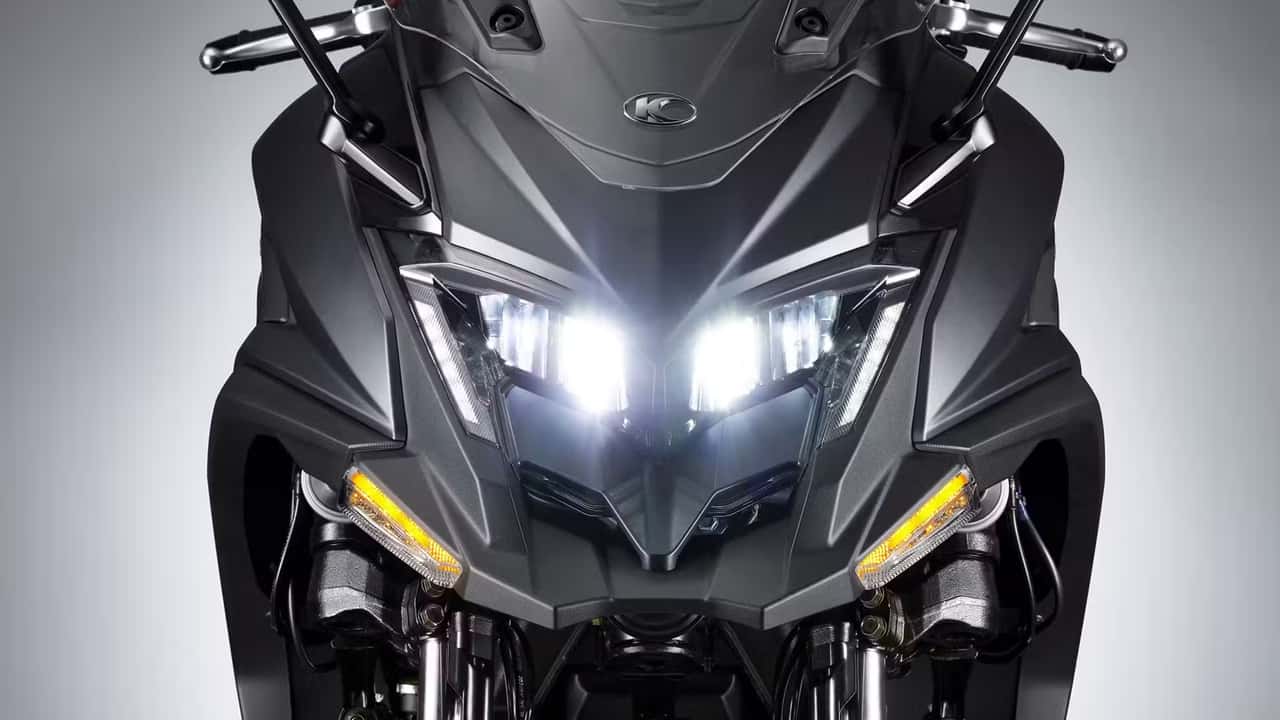
Kymco launches a 3-wheeled scooter with a 52 hp engine, a tilting front, and an audacious proposal to address one of the biggest fears of those who want to ride a motorcycle but still do not trust two wheels.
-
Most drivers make a big mistake on the road without knowing: there is an exact speed that makes the engine work with minimal effort and saves much more fuel, and it is neither 80 km/h nor 100 km/h as many imagine.

-
Mechanic explains: Ferrari 296 has a hybrid system management failure that can drain the high-voltage battery to an “irrecoverable” point in the car; recovery requires charging cell by cell on a bench, is risky, and the battery can cost R$ 250,000 imported.

The two seats in the second row can be folded down: if the passenger is traveling with a companion, one seat is available next to them; if traveling alone, both can be lifted to free up space for luggage.

The concept was designed based on direct feedback from wheelchair users. “We heard from many customers, and one thing we heard constantly is: I don’t want to feel like cargo,” explained one of the project leaders. The central idea is to eliminate the separation between the passenger with a disability and their travel companions—something that current adapted taxis rarely achieve.
What the zero-emission requirement means for New York taxis
The city of New York has established that all taxis must have zero emissions within four years. This means that the iconic yellow taxis and all ride-hailing vehicles will need to be electric or hydrogen-powered to continue operating.
The regulation turns New York into one of the largest urban laboratories for electrification of public transportation fleets in the world.
For drivers and operators, the transition requires vehicles that make economic sense. This is where the numbers from Kia’s concept become important.
The company’s simulations suggest that the vehicle could run a full day of rides in taxi or ride-hailing apps on a single charge.
And when it needs to charge, the battery goes from 10% to 80% in less than half an hour—a viable time for an operational break between shifts. For electric taxis to work in practice, the range and charging speed need to be compatible with the brutal routine of New York traffic.
Why accessibility has become a priority in the design of future taxis
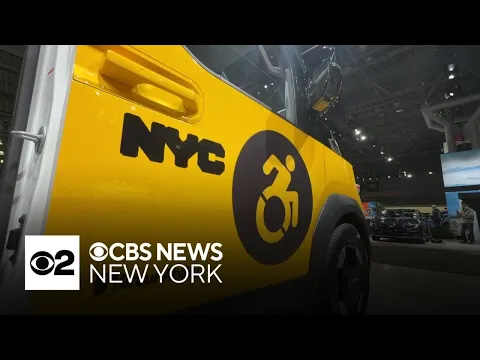

The issue of accessibility in New York taxis is not new. The city already requires that a percentage of the fleet be accessible, but the experience of wheelchair users in current adapted vehicles is often described as dehumanizing.
The passenger enters from the back, is separated from other occupants, and travels in a position that feels more like a cargo compartment than a passenger seat.
Kia’s concept aims to address this structurally. The automatic ramp, foldable seats, and positioning of the wheelchair next to other passengers eliminate the physical and symbolic barrier that exists in traditional adapted taxis.
It is a shift in philosophy: instead of adapting a regular vehicle to fit a wheelchair, the car was designed from the ground up so that all passengers travel together, in the same space, with the same level of comfort.
What is needed for this concept to become real taxis in New York
For now, the vehicle presented at the show is just a concept—a demonstration of technology and design that still needs to be approved, certified, and produced at scale.
The gap between a show prototype and thousands of taxis circulating in the streets of Manhattan is enormous, and includes challenges of regulation, production costs, charging infrastructure, and acceptance by fleet operators.
But the clock is ticking. With the zero-emission requirement approaching, manufacturers like Kia are presenting their proposals now to secure a position in a market that will need to renew thousands of vehicles in a few years.
New York taxis are a global showcase; what works there tends to be adopted by other major cities. If Kia’s concept or something similar hits the streets, it could set a new standard for what is expected of a taxi in the 21st century: electric, quick to charge, and truly accessible.
What do you think of this accessible electric taxi concept?










Seja o primeiro a reagir!