





 Portuguese
  English
  Spanish
  7 min of reading
  0 comments


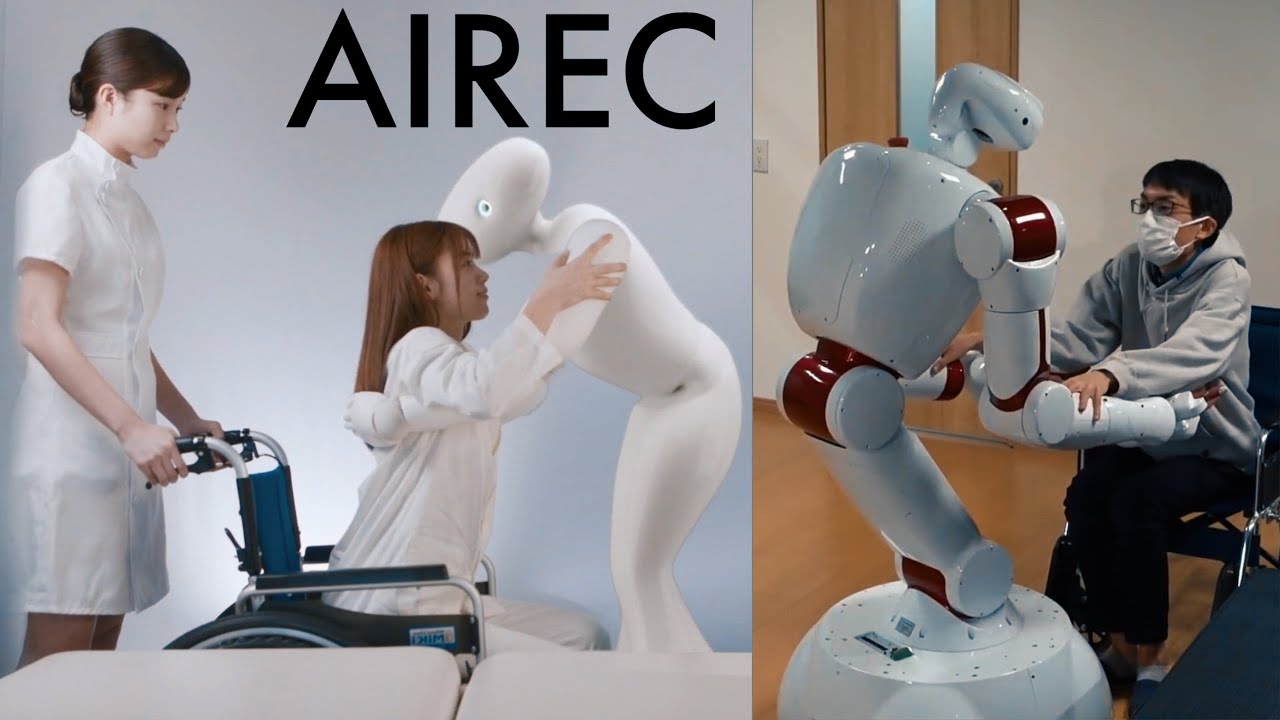
Japan tests 150 kg humanoid robot to care for the elderly amid critical worker shortage in the assistance sector.
In 2025, data released by Reuters and the Ministry of Health, Labor and Welfare of Japan clearly exposed the extent of the labor crisis in the elderly care sector in Japan. The country, which already operates under strong demographic pressure, faces a structural deficit of workers in essential assistance services for an increasingly aging population. The most alarming data shows that there was only 1 candidate for every 4.25 vacancies in the care segment, a severe imbalance between supply and demand for labor that pressures hospitals, nursing homes, and home care services. And here comes the AIREC humanoid robot.
In the official document on the workforce situation in care, the Japanese government also projects a growing need for professionals in the coming years, reinforcing the size of the bottleneck that threatens the continuity and quality of care.
In light of this scenario, Japan has begun to accelerate the search for technological solutions, including humanoid robots aimed at care and physical assistance. Among the most advanced projects is the AIREC, developed at Waseda University, with the proposal to perform complex tasks in areas such as long-term care, nursing, and medical support.
-
A cold air mass has already arrived in Brazil and is advancing in the coming hours with temperatures that may approach 0°C in the southern mountains and a risk of frost in the middle of April, surprising those who had not yet felt the autumn of 2026.

-
Equatorial Game aims to reach 120 thousand students with energy efficiency, gamification, and solar energy in public schools across seven states.

-
One of the worst volcanoes in history, which erupted 7,300 years ago, is raising alarms again because its caldera is filling with magma once more in Japan.

-
Rubin Observatory debuts and already reveals 11,000 new asteroids in just a few days, maps tens of thousands, finds 33 near-Earth objects, and promises to discover millions in the entire southern sky.

The AIREC robot thus emerges as a direct response to a demographic crisis that has already surpassed the capacity to replace human workers, at a time when the accelerated aging of the Japanese population and the shortage of professionals have begun to be treated as a structural challenge for the country’s care system.
AIREC humanoid robot was developed to perform critical physical tasks in patient care
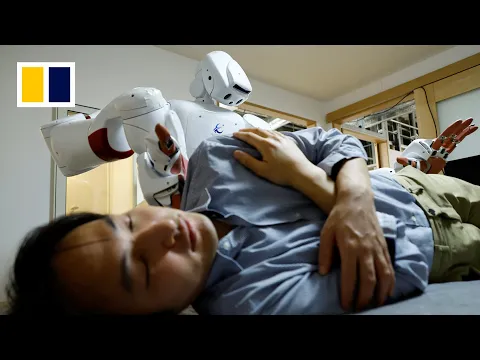

The robot known as AIREC (Artificial Intelligence Robot for Elderly Care) was developed by Japanese researchers focusing on solving one of the biggest challenges in the sector: performing physically demanding tasks in elderly care.
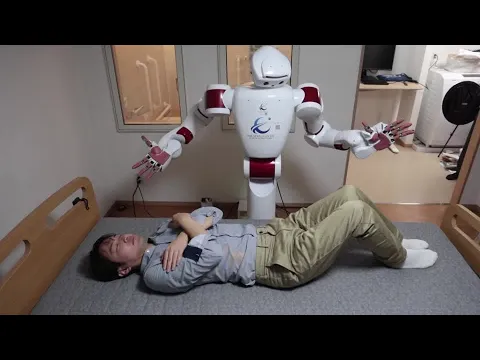
Weighing approximately 150 kg, the equipment is designed to perform activities such as:
- turning bedridden patients
- assisting with diaper changes
- repositioning bodies to prevent injuries
- assisting in the movement of people with reduced mobility
These tasks are considered some of the most exhausting for human workers, especially during long and repetitive shifts.
The AIREC’s proposal is not to completely replace the human caregiver, but to reduce the physical burden and allow professionals to focus on more complex and sensitive functions.
The robot uses advanced systems of sensors, motion control, and artificial intelligence to operate with precision and safety.
Accelerated aging of the Japanese population is at the center of the labor crisis
Japan is often cited as one of the most aged countries on the planet. According to official data, more than 28% of the population is already 65 years or older, and the trend is for continuous growth in the coming decades.
This rapid aging occurs simultaneously with a reduction in the working-age population, creating a structural imbalance.
Fewer available workers means a lower capacity to meet the growing demand for health and assistance services.
This demographic scenario is considered one of the main drivers of automation in the country, especially in sectors where human replacement is more difficult. Elderly care is one of the most critical examples of this transformation.
Assistance sector faces structural labor shortage and increasing demand
The labor shortage in Japan is not isolated but structural. The long-term care sector suffers from low attractiveness, limited wages, and high physical and emotional demands.
Many workers avoid these roles, while demand continues to grow with the aging population.
Institutions face difficulties in maintaining complete teams, which increases pressure on existing professionals. This cycle creates an environment where workload overload can lead to attrition, further exacerbating the problem.
The introduction of robots emerges as an attempt to break this cycle.
Assistive robotics gains ground as a solution for repetitive and heavy tasks
In recent years, Japan has heavily invested in assistive robotics as a way to complement the human workforce.
Unlike traditional industrial automation, these systems are designed to interact directly with people, requiring high levels of precision and safety.

In the case of AIREC, the focus is on tasks that require physical strength and repetition, reducing the risk of injuries for both patients and caregivers.
Assistive robotics represents a paradigm shift, bringing automation to environments where human contact is essential. This transition requires not only technology but also cultural and regulatory adaptation.
Initial tests indicate potential, but technical and social challenges remain
Although tests with humanoid robots are advancing, large-scale use still faces significant challenges.
From a technical standpoint, it is necessary to ensure:
- absolute precision in movements
- safety in contact with fragile patients
- ability to adapt to different environments
Additionally, there are social and ethical issues related to the acceptance of technology. Many experts highlight that human care involves emotional aspects that cannot be replicated by machines.
Therefore, the current trend is towards integration between humans and robots, rather than complete replacement. Success will depend on the ability to balance efficiency and humanization.
Japan leads the use of technology to address labor shortage on a national scale
The case of Japan is not isolated, but it is the most advanced. The country has become a global laboratory for technological solutions aimed at worker shortages. In addition to robotics, the government encourages:
- use of artificial intelligence
- digiitalization of services
- automation in various sectors
This strategy seeks to compensate for the reduction of the workforce and maintain economic productivity. The elderly care sector is one of the areas where this transformation is most urgent and visible. The Japanese experience is likely to influence other countries facing similar demographic trends.
Labor shortage in elderly care is already a global phenomenon
Although Japan is at the forefront, the shortage of caregivers is not exclusive to the country. Various developed economies face similar challenges.
Countries in Europe and North America also report population aging and difficulties in filling positions in the assistance sector. This scenario suggests that technological solutions developed in Japan can be replicated in other regions.

Assistive robotics could become one of the main pillars of elderly care in the coming decades. The global scale of the problem amplifies the relevance of current initiatives. The recent advancement of artificial intelligence has driven the development of more sophisticated robots.
Machine learning systems allow these machines to better interpret the environment, adjust movements, and respond to complex situations. In the context of AIREC, this means greater capacity for safe interaction with patients.
The convergence between AI and robotics is enabling machines to perform tasks that were previously considered exclusively human. This technological advancement opens new possibilities for the care sector.
Costs and scale are still decisive factors for large-scale adoption
Despite the potential, large-scale adoption depends on economic factors. The cost of developing and implementing humanoid robots is still high.
Healthcare institutions need to evaluate the return on investment, considering labor savings and improvements in service quality.
With increased production and technological advances, costs are expected to decrease over time. Economic viability will be one of the main determinants for the expansion of the use of these systems.
The trend is for technology to become more accessible as it matures.
Integration between humans and robots redefines the future of work in the health sector
The use of robots in elderly care does not eliminate the need for human professionals, but transforms the nature of the work.
Caregivers begin to take on more strategic roles, while machines handle physical and repetitive tasks. This division can improve working conditions and reduce overload.
The hybrid model between humans and robots is seen as the most viable way to address the labor shortage. This transformation is already underway in various Japanese institutions.
The advancement of robotics in Japan indicates a broader trend of automation in sectors considered critical to society.
The labor shortage is shifting from being merely an economic problem to becoming a determining factor for technological innovation. Sectors such as health, transportation, and agriculture are already beginning to adopt similar solutions.
The Japanese case shows that automation is not just a strategic choice, but a necessity in the face of profound demographic changes. This movement could redefine the relationship between technology and work in the coming decades.
The shortage of workers could accelerate an irreversible transformation in human care
The introduction of humanoid robots in elderly care raises a central question: to what extent can technology replace or complement human work in sensitive areas?
With demand growing and the supply of workers decreasing, the pressure for automated solutions is likely to increase.
The Japanese experience may be just the beginning of a global transformation in how societies care for their aging populations.
In light of this scenario, an inevitable debate arises: will the future of care be dominated by humans, machines, or an increasingly integrated combination of both?









Seja o primeiro a reagir!