





 Portuguese
  English
  Spanish
 6 min of reading
  0 comments


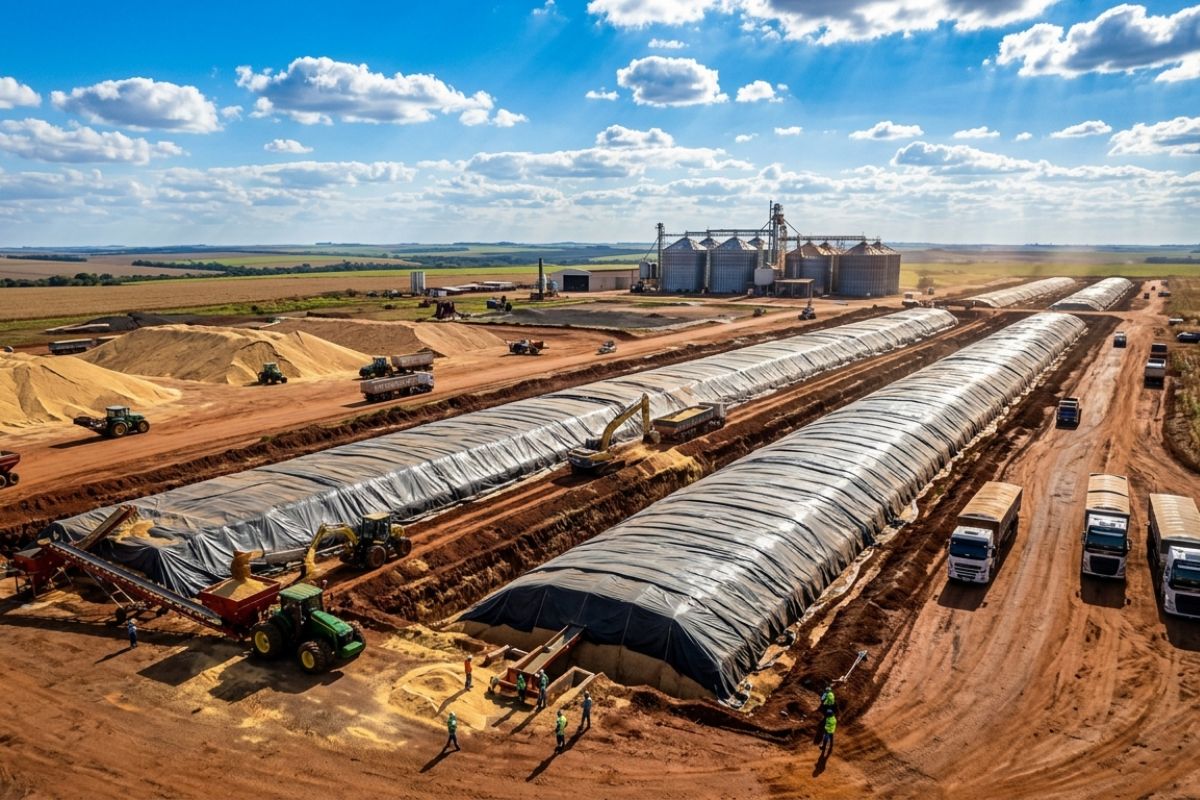
With the harvest above 330 million tons, the underground grain empire gains strength by storing for up to 180 days at a lower cost, relieving highways, ports, and the pressure on global supply
Imagine you are flying over the heart of Mato Grosso. Below, soybeans and corn look like an endless carpet, all organized and predictable. But there is a decisive detail that does not appear from above: an underground empire of storage, hidden just a few meters below the ground, which became the centerpiece of Brazilian logistics in 2026.
While the metal silos shine in the sun, it is the hermetic trenches that, in silence, help maintain the pace of a giant harvest, reducing queues, costs, and risks. When there is a lack of space “above ground,” the soil becomes a wall, protection, and strategy.
Why the “underground empire” was born from the lack of space

Brazil is currently the largest exporter of soybeans in the world and the second largest of corn. In the 2025-2026 harvest, soybeans are expected to exceed 169 million tons, according to projections cited in the report. The problem is that storage has not grown at the same pace.
-
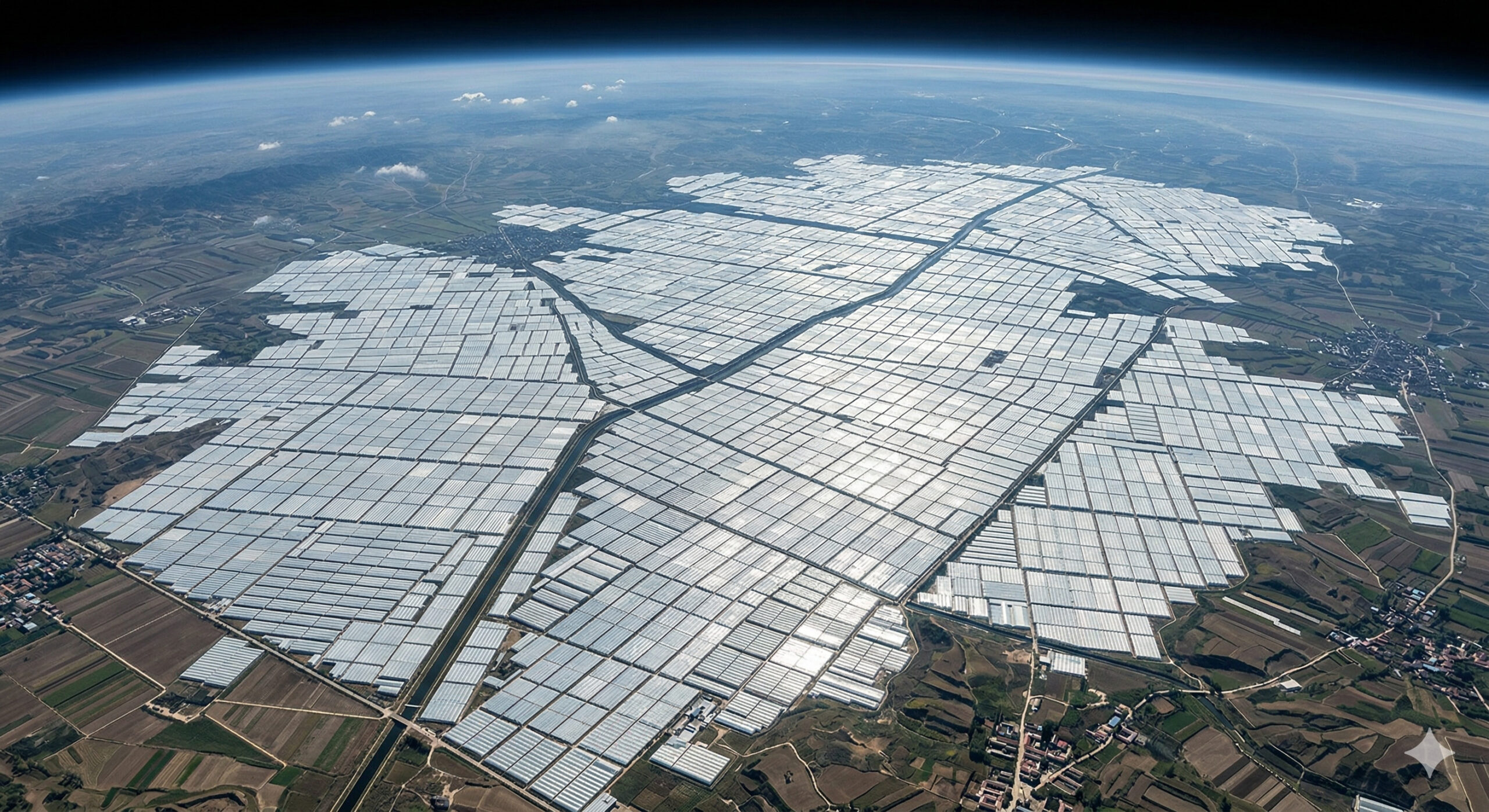
Seen from space, northern China reveals a “white city” of greenhouses covering more than 820 km² that has engulfed entire fields in just a few decades and formed the largest continuous cluster of covered agriculture ever mapped on the planet.
-
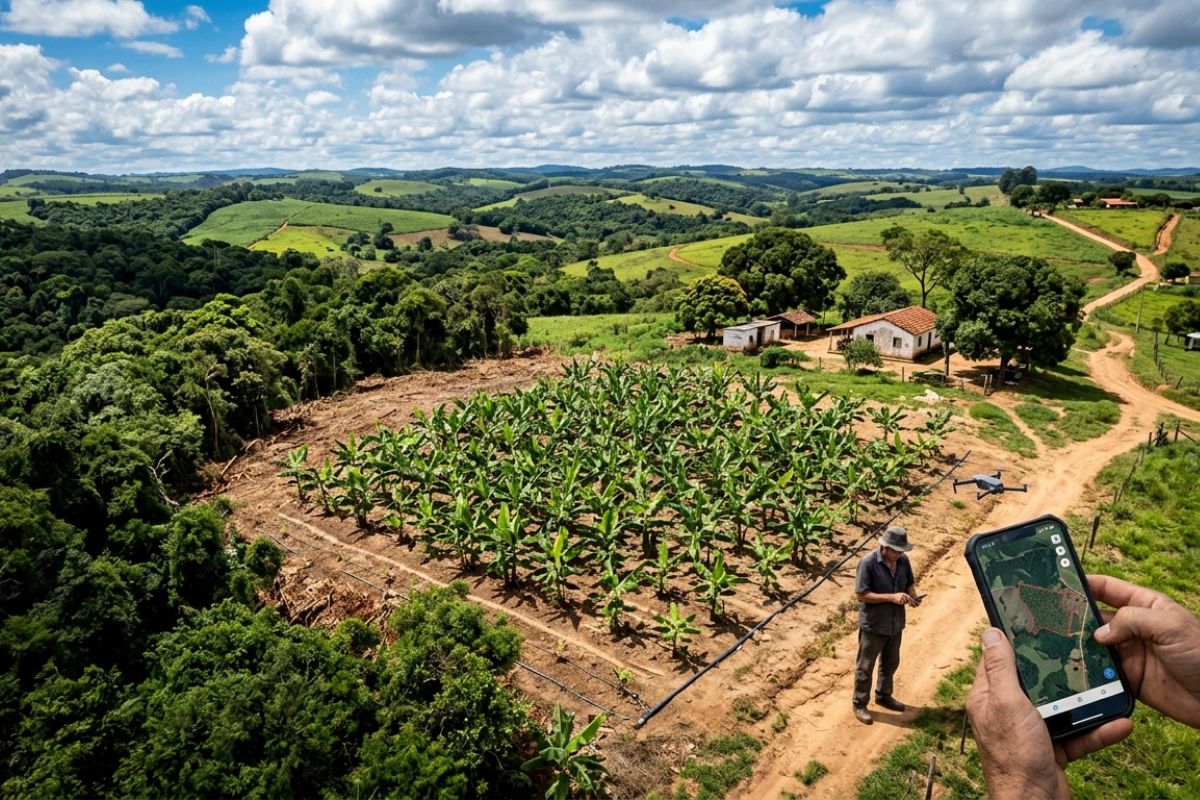
Cleared 2,700 m² to plant bananas and received a fine of R$ 31,600: satellite provided evidence, neighbor can report, and the video reveals the 5 mistakes that most harm producers in the field every day.
-
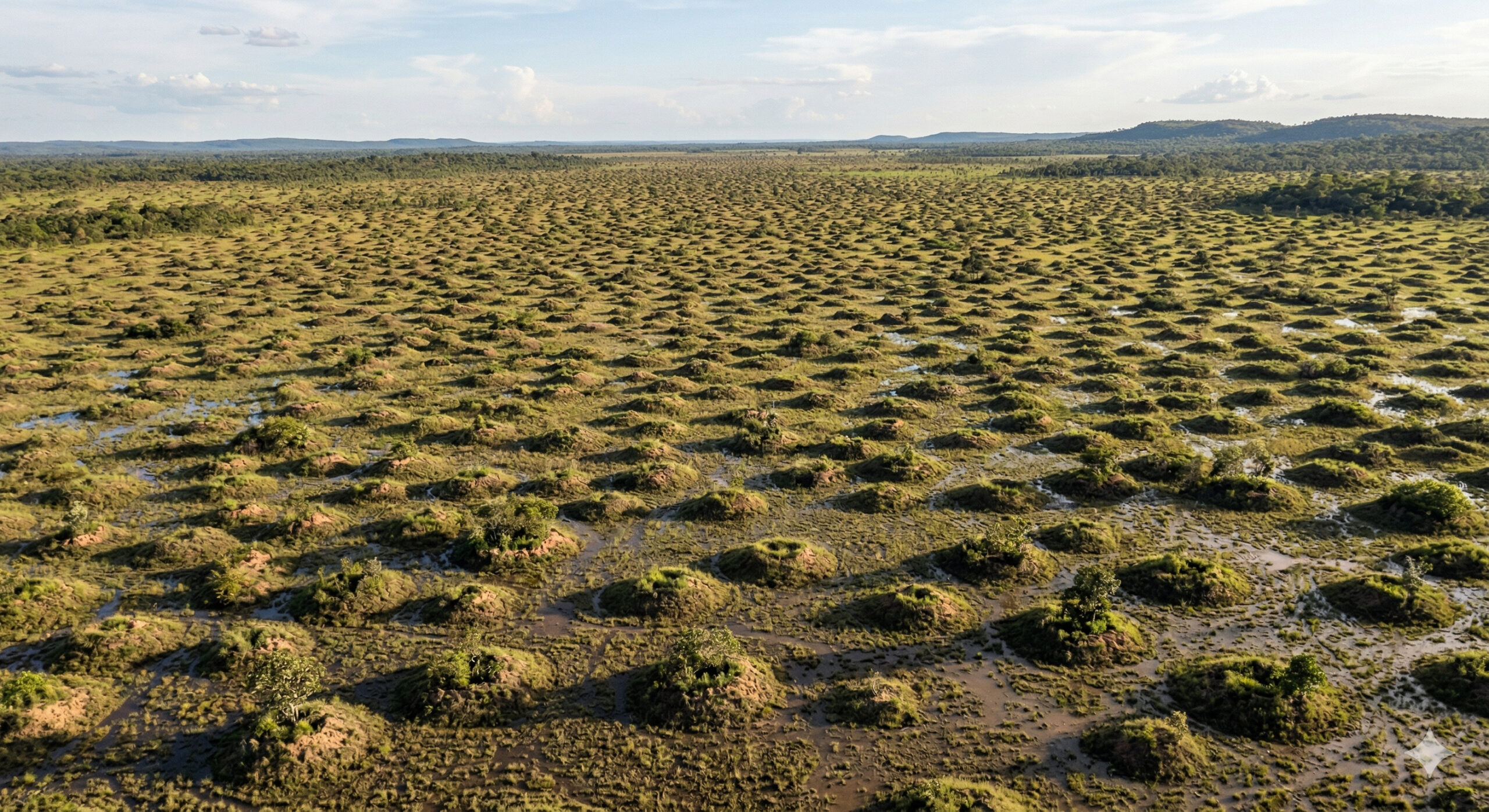
In the Brazilian Cerrado, the fields of murundus spread thousands of mounds up to 20 meters in diameter and over 1.5 meters in height in almost regular patterns over waterlogged soils, and the most accepted explanation points to termites reshaping the land for centuries until creating a landscape that looks drawn from above.
-
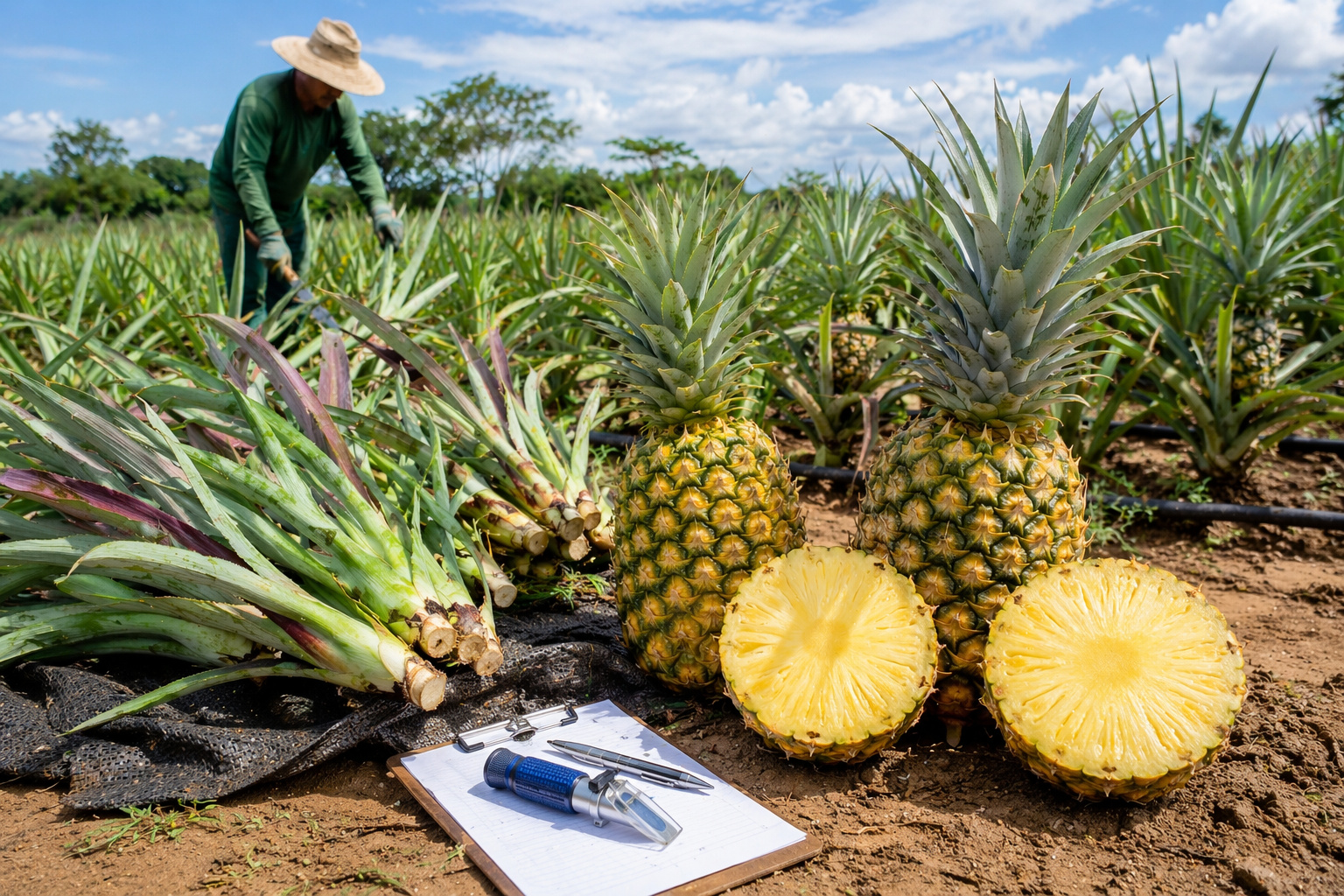
Spiny-free pineapple, sweeter and more resilient: Mato Grosso develops new cultivars that promise to reduce losses from fusariosis and increase productivity in the field.
In practice, during the peak harvest months, between February and May, there is more grain than safe space to store it. This pushes the entire supply chain to the limit: crowded silos, pressured highways, saturated ports, and exploding logistics costs at the worst possible time.
And the inequality of infrastructure worsens the scenario. A significant portion of capacity is close to cooperatives and urban centers, while areas of productive expansion, such as the agricultural frontier of Matopiba, still face critical deficits. For those far from the port and far from the silo, the equation becomes almost impossible each harvest.
What are hermetic trenches and why do they work

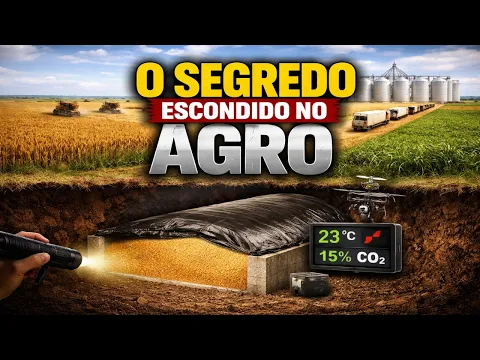
The logic is straightforward: if there are no “walls” of steel, the soil is used as a structure. The trenches are dug into the ground, usually 3 to 5 meters deep and can reach up to 60 meters in length.
The grain is deposited in compacted layers and covered with multi-layer geomembranes, forming a highly sealed system.
This detail changes everything because grains “breathe.” In a sealed environment, the natural respiration process consumes residual oxygen and increases CO2 inside the structure.
In a few weeks, the trench can reach about 15% carbon dioxide, creating a hostile environment for pests, fungi, and bacteria. Without chemical fumigation and without artificial cooling, the system itself creates a biological barrier.
Soil temperature and grain quality for up to 180 days
In addition to controlled air, the earth acts as a natural thermal insulator. While the surface of Mato Grosso can reach 40 degrees in the summer, a well-implemented trench maintains more stable temperatures, in the range of 22 to 26 degrees, close to the ideal for preservation.
The report also points to tests by Embrapa and federal universities indicating that grains stored in hermetic trenches for up to 180 days maintained moisture, protein, and industrial quality indices equivalent to or superior to those of vertical silos with forced actions, which require much more expensive technology to install and operate. The result is long storage with stability and less dependence on crowded urban structures.
Cost and speed: the advantage that becomes strategy

In Mato Grosso, during the harvest, every hour counts. Between February and April, machines operate day and night, roads get congested, and the weather does not wait.
In this context, the speed of filling the trenches becomes a differential: a medium-sized trench, with a capacity of 3 to 5 thousand tons, can be filled in less than 48 hours with portable hoppers and high-capacity conveyors.
The implementation is also quick, done with common equipment in large properties, such as excavators and graders, with the installation of geomembranes taking just a few days.
The cost contrast cited in the report is brutal: vertical silos cost around R$ 8,000 per ton, while trenches range from R$ 80 to R$ 150 per ton. This difference pushes the “underground empire” to the center of economic decision-making.
Fewer queues, smarter freight, and selling power at the right time
There is a phenomenon described in the report as the “transport window,” the period right after the harvest when everyone tries to move their products at the same time.
The demand for trucks explodes, and freight, which can represent between 25% and 35% of the total production cost of soybeans, skyrockets in just a few weeks.
There are reports of enormous queues, with BR 163 registering traffic jams extending over 100 km, and ports like Santos operating near capacity.
The trenches break this logic by allowing part of the harvest to be stored on the farm, reducing the obligation to sell when freight is expensive and prices are pressured.
By storing, the producer gains what the report calls “temporal market power”: they wait until May or June, when logistical pressure decreases, and negotiate under better conditions.
The effect spreads: fewer simultaneous trucks mean fewer accidents, less road wear, and lower emissions per ton transported. And a more regular flow to the ports tends to reduce volatility throughout the year.
Why this matters for global food security in 2026

The report highlights that Brazil can account for more than 60% of global soybean exports in years of supply crisis, when climatic events in Argentina, drought in the United States, or geopolitical instability in the Black Sea tighten the market.
Therefore, any variation in the availability of Brazilian grain is felt immediately in international prices. When the country increases its capacity to strategically store its production, in a distributed and protected manner, it begins to regulate the flow of supply with more sovereignty, releasing volumes in a staggered manner and helping to maintain more stable prices.
In 2026, the report states that this effect was particularly visible with underground stocks preserving part of the corn harvest while Argentina faced severe drought.
Brazil would have been able to fulfill export contracts that would have been breached, avoiding a supply crisis in importing countries like Egypt, Iran, and Vietnam. The trench in the Cerrado, in this scenario, becomes a silent bridge between the interior of Brazil and markets thousands of kilometers away.
The next step: sensors, cloud data, and monitored trenches
The “underground empire” is not just about tarps and excavation. The report describes that, in 2026, wireless temperature and humidity sensors are already transmitting real-time data to cloud platforms.
Machine learning algorithms help identify risk points, such as heating zones and unwanted fermentation, before a human inspection can detect them.
Drones with thermal cameras also appear to find coverage failures invisible to the naked eye, and integrated platforms connecting grain monitoring, pricing, and transportation availability. The trench ceases to be just storage and becomes a decision asset, connected to the market.
In the end, the logic is simple and powerful: food security is not just about producing, it is about storing under the right conditions and at the right time. And, in Mato Grosso, what sustains part of this equation may be precisely where almost no one looks: beneath our feet.
Which part of this underground empire do you find most impressive: the much lower cost, the preservation for 180 days, or the direct impact on queues and freight?





Seja o primeiro a reagir!