





 Portuguese
  English
  Spanish
  6 min of reading
  0 comments


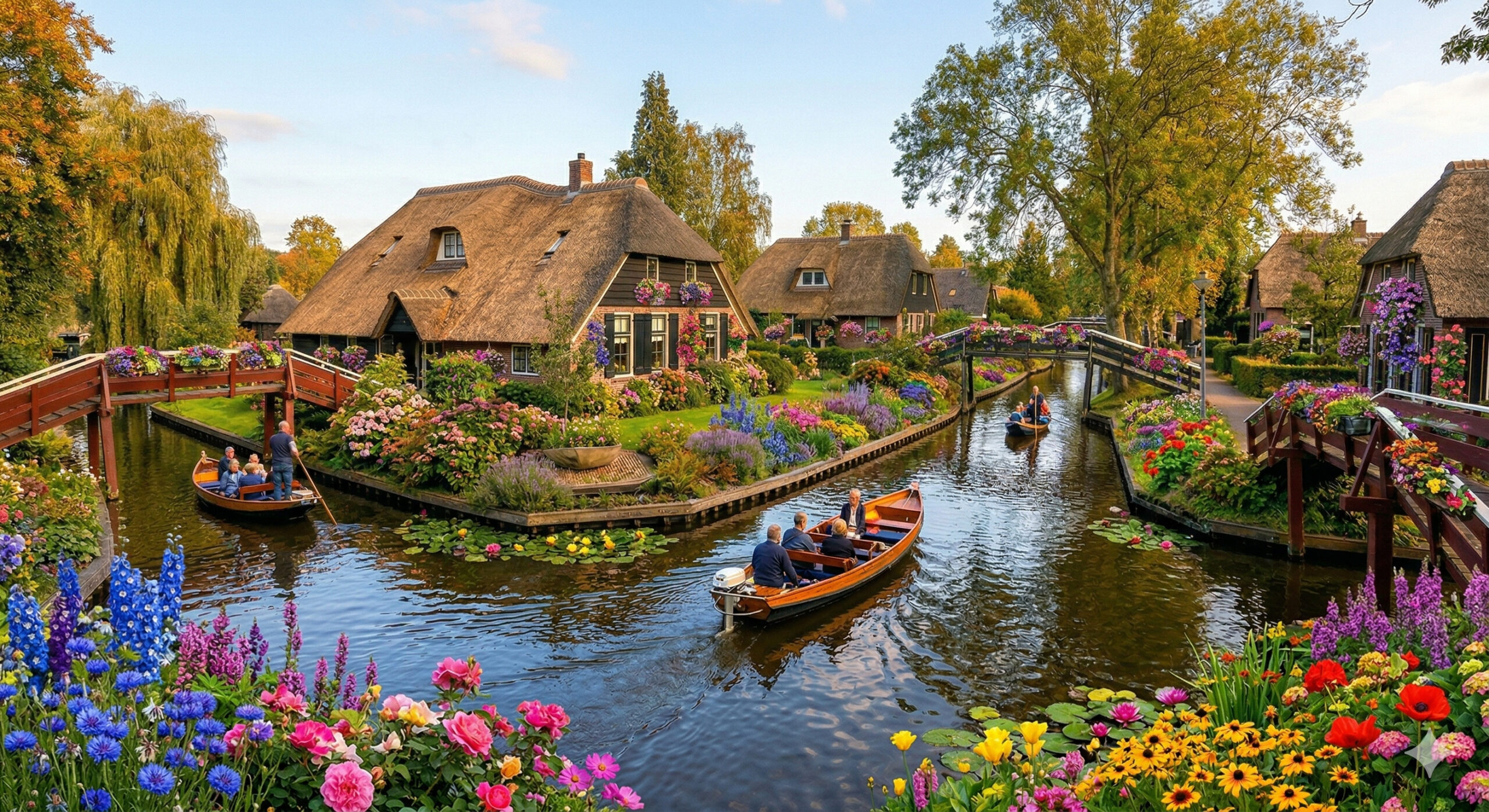
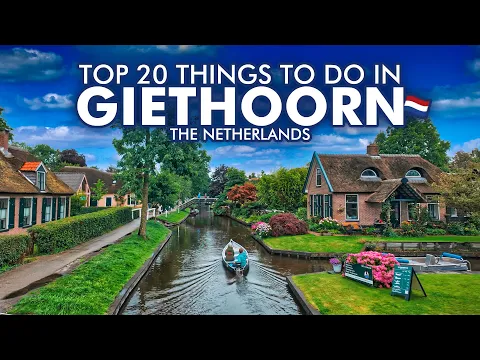
Giethoorn, a village without streets in the Netherlands, has canals, bridges, and houses on islands where cars do not enter and transportation is done only by silent boats.
About 120 kilometers from Amsterdam, in the province of Overijssel, there is a village where cars simply do not enter. Not because they are prohibited, but because there is no infrastructure for that. In the old part of Giethoorn, the houses are distributed across small islands of land separated by shallow canals, connected exclusively by wooden bridges and pedestrian paths. According to National Geographic, Wikipedia, and Atlas Obscura, residents move only by boat, bicycle, or on foot. The electric boats, known as “whisper boats”, get their name because they are extremely quiet. Even the postal service is conducted over the water.
With approximately 3,000 inhabitants, over 6 kilometers of canals, and more than 180 bridges, Giethoorn presents a unique urban configuration, marked by thatched roofs and a landscape reminiscent of medieval settings. All of this exists due to a process that began about 800 years ago when the peat extraction completely shaped the territory.
The origin of Giethoorn in the Middle Ages involves a historic flood and the discovery of buried goat horns
The name Giethoorn first appears in records dated 1225. The origin of the name mixes historical elements and popular accounts. Colonizers who arrived in the region found various goat horns buried in the ground, possibly remains of animals that died during the flood of 1170, an event that significantly altered the geography of the Netherlands.
-
Many people avoid making eye contact due to insecurity, but those who maintain eye contact during a conversation possess four characteristics that psychology associates with confidence, empathy, firmness, and above-average concentration.

-
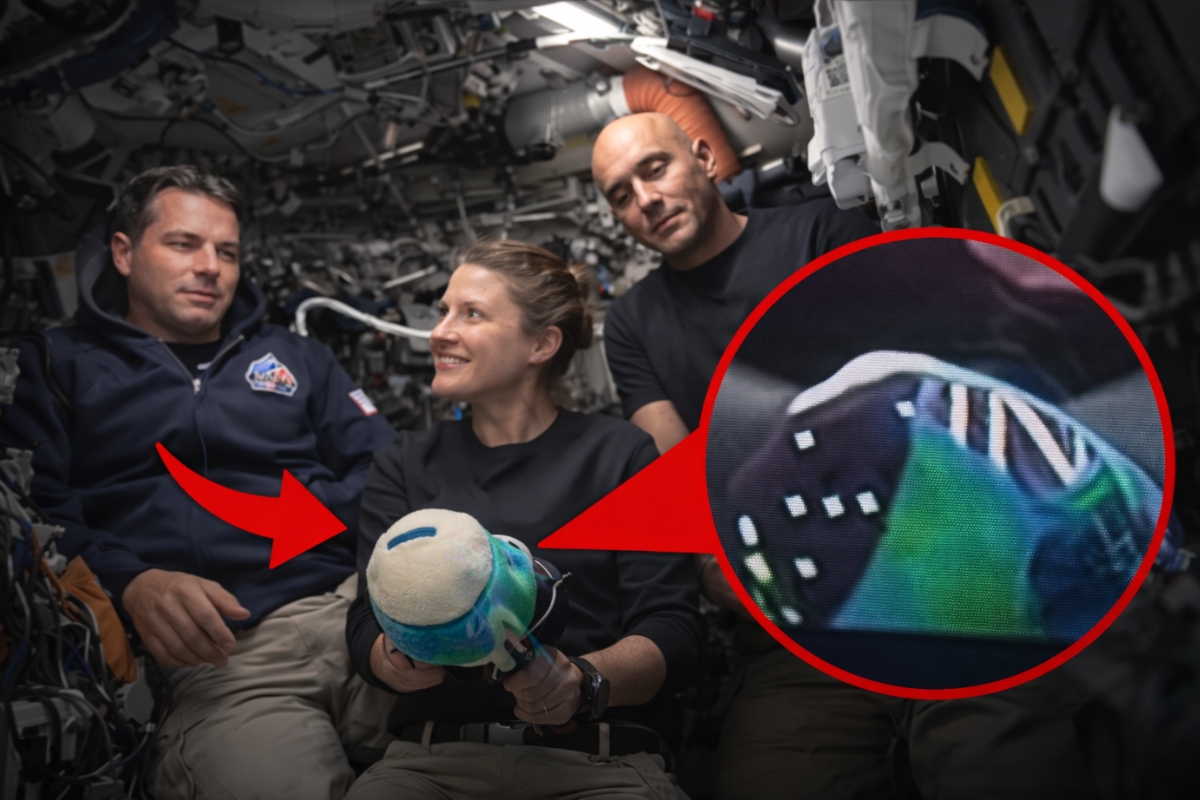
NASA has faced new accusations of alleged lunar deception after a viral video showcased a curious “green screen error” in the Artemis II mission.
-
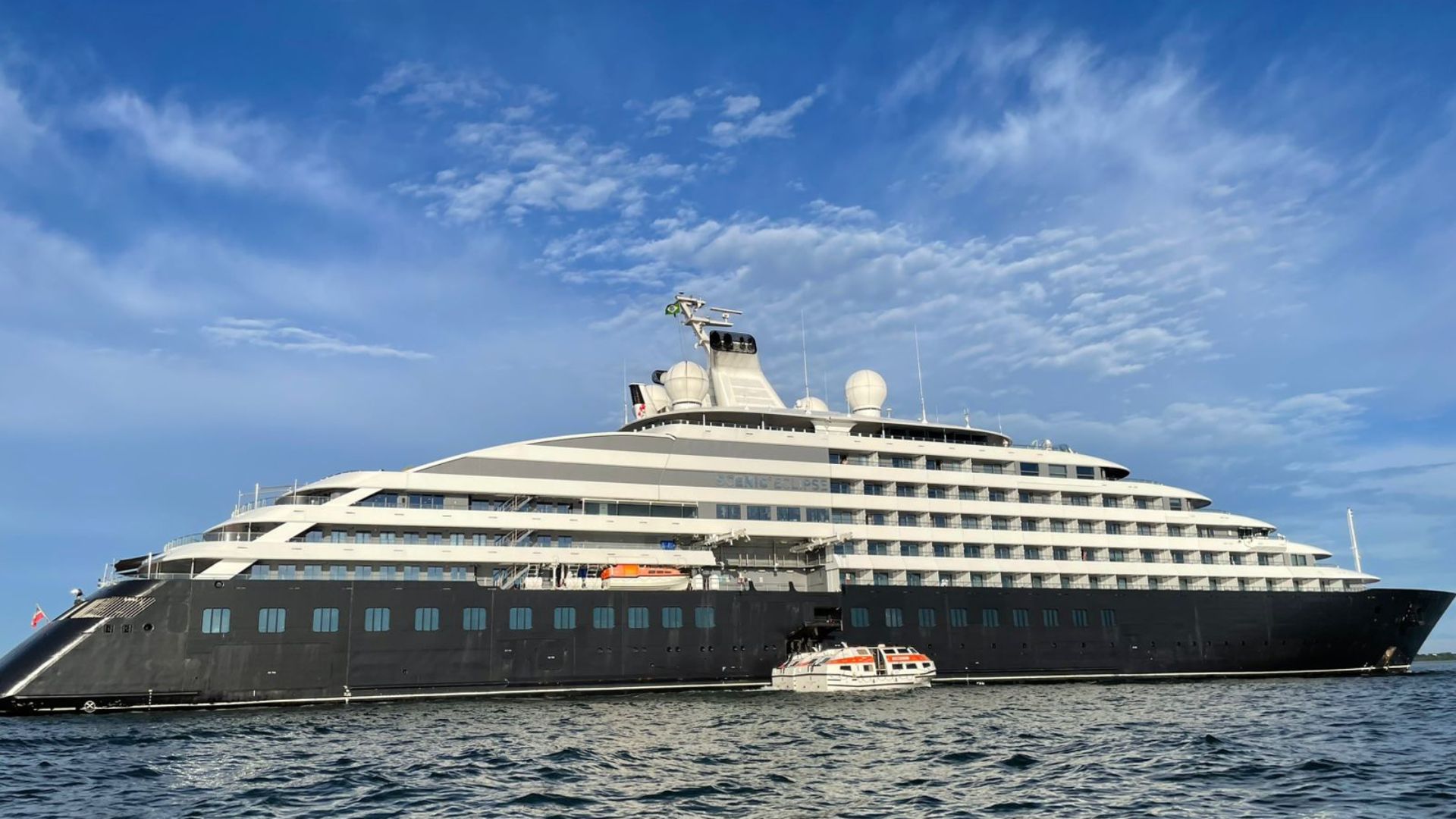
The “most luxurious ship in the world” arrives in Brazil with 2 helicopters, a submarine that reaches 300 meters, a value of R$ 3 billion, only 200 passengers, and an expedition structure that contrasts with suites worthy of a 5-star resort.
-
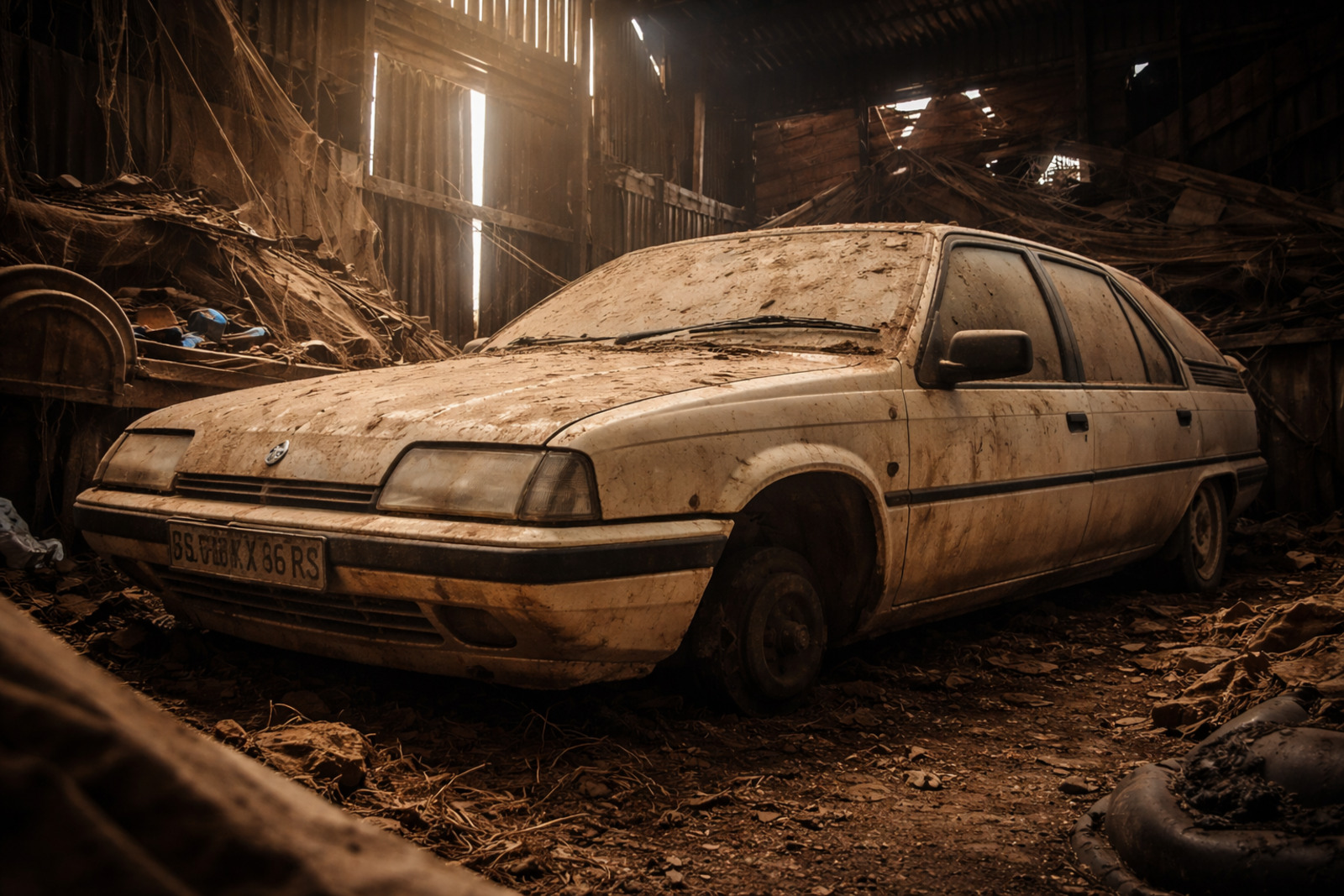
Forgotten for 38 years in a barn, this Citroën BX 16RS emerged with thick dust, rust, a missing wheel, and original interior, linked to the engineer of the car that set a world speed record.
The place came to be called “Geytenhorn,” which means “goat horn” in Old Dutch. Over time, the name evolved to Giethoorn.

Around 1230, groups from the Mediterranean settled in the region. Later, Mennonite communities also occupied the area. The local economy was based on animal husbandry and, primarily, peat extraction — an activity that would define the entire structure of the village.
Peat extraction transformed the land and created the canals that today define Giethoorn
Peat, an organic material historically used as fuel, was extracted from the soil by the residents. Each excavation generated narrow ditches, which were later widened to allow transportation by boat.
Over time, rainwater filled these ditches, transforming them into canals. These canals, in turn, fragmented the land into small islands, separating the habitable areas.
This process occurred entirely unplanned. What today seems like a sophisticated urban project was, in reality, the direct result of manual mining in a flooded soil.
The canals are, on average, about one meter deep, a characteristic that limits the type of vessel and keeps the environment quiet and controlled.
Houses built on individual islands transform Giethoorn into one of the most unusual villages in Europe
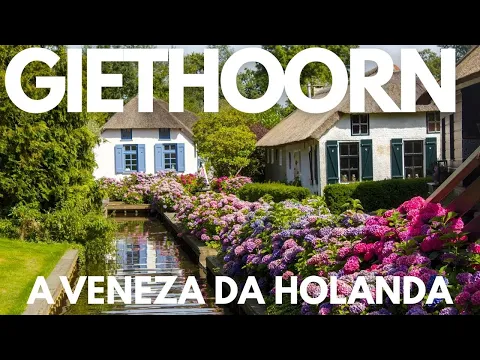
One of the most striking features of Giethoorn is that practically every residence is located on its own island. The space around the houses is surrounded by water, creating a system where movement requires crossings by bridges or the use of boats.
In front of the houses, small piers allow direct access to the boats. In the back, well-kept gardens enhance the village’s aesthetics.
The landscape is composed of flowers, trees such as weeping willows, and canals that function as main thoroughfares. The environment is often described as quiet and visually harmonious, resulting from the complete absence of conventional motor vehicles.
Electric whisper boats ensure silent mobility and sustain transportation in the village
The main means of transportation in Giethoorn are the whisper boats, electric vessels that operate with minimal noise levels. This system maintains the village’s characteristic silence and preserves the natural environment.
In addition to these boats, kayaks, canoes, and traditionally propelled vessels are also used.
The structure of the canals allows for safe navigation but restricts larger vessels, ensuring a controlled flow compatible with the village’s size.
Essential services such as mail and deliveries are carried out exclusively by boat in Giethoorn
The absence of streets completely transforms local logistics. The postal service is conducted by boat, with deliveries made directly to residential islands.

Movings, transportation of goods, and supply also follow this logic, requiring specific planning for water transport.
To access the village by car, visitors must park outside the central area and proceed on foot or by boat. The rail access to Steenwijk and subsequent bus transport complements the connection with other regions.
The 1958 film Fanfare revealed Giethoorn to the world and boosted international tourism
Giethoorn remained relatively unknown until 1958, when Dutch filmmaker Bert Haanstra filmed the comedy “Fanfare” in the village. The production showcased the local landscapes and boosted the destination’s visibility.
Decades later, the village began to receive a growing flow of international tourists, including a significant presence of Asian visitors.
In 2015, Giethoorn was included in a special edition of the Monopoly game, consolidating its global recognition.
Museums and cultural attractions reinforce the history of peat mining and local identity
Despite its small size, Giethoorn has three main museums: The Olde Maat Uus presents the life of the ancient peat workers. The De Oude Aarde exhibits collections of minerals and fossils. Meanwhile, the Art Pottery Giethoorn Floramics functions as a ceramics workshop.
All are accessible by boat or via the Binnenpad, the village’s main pedestrian path. Giethoorn is situated in the Nationaal Park Weerribben-Wieden, an area of over 10,000 hectares composed of swamps, lakes, aquatic vegetation, and diverse fauna.
The park represents the same natural environment that originated the peat explored in the region and today functions as a conservation and ecological tourism area.
Intense tourism creates challenges and pressures the balance between preservation and visitation
The increase in tourism has brought significant impacts. During the summer, the canals become congested with boats rented by inexperienced visitors.
The narrow paths also suffer from overcrowding, generating conflicts with residents and privacy issues.
To minimize these effects, it is recommended to visit the village outside peak hours, especially in the early morning or late afternoon. The buildings in Giethoorn maintain thatched roofs, a traditional technique that offers thermal insulation and long durability, ranging from 30 to 40 years.
This element contributes to the uniform aesthetic of the village, reinforcing its historical and visual identity.
During harsh winters, the canals freeze and are used as skating rinks. This phenomenon completely alters the village’s dynamics, replacing boats with skates. The practice is traditional in the Netherlands and reinforces the cultural and historical character of the region.
Now we want to know: would you live in a village without streets where everything works on water?
Giethoorn represents a unique urban model, formed by natural processes and human activities over centuries.
The absence of cars, the dependence on canals, and the historical preservation create an environment that contrasts with modern cities.
Would you live in a place where there are no streets and all mobility depends on water?






Seja o primeiro a reagir!