





 Portuguese
  English
  Spanish
 3 min of reading
  0 comments


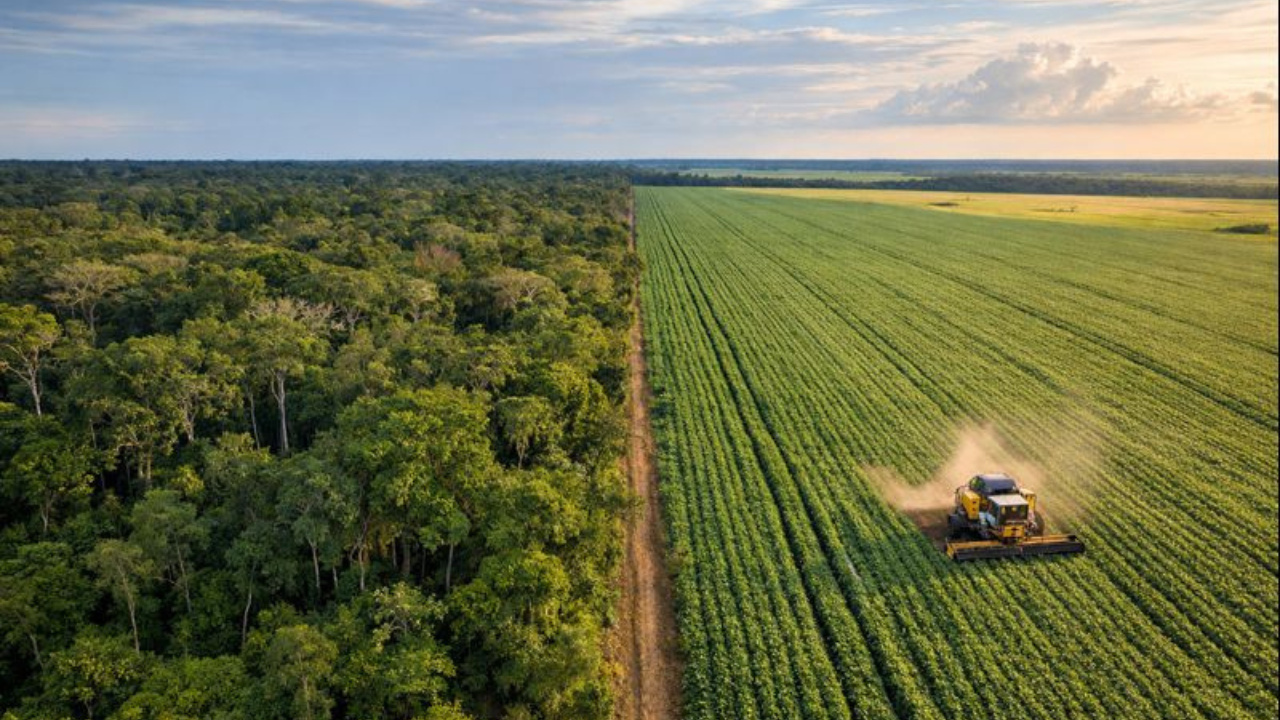
Cutting Tax Incentives in MT Calls the Soy Moratorium into Question and Exposes Conflict Between Agribusiness and Environmental Policy.
The Soy Moratorium, one of Brazil’s main environmental policy agreements, may be broken by large traders of Brazilian agribusiness starting in January, after the enactment of a state law in Mato Grosso that removes tax incentives for companies committed to the agreement.
The possible exit involves global grain trading giants, occurs in the largest soybean-producing state in the country, and exposes a direct clash between economic interests and the fight against deforestation in the Amazon.
The legal change was approved in 2023 and directly affects companies that are signatories to the environmental pact, which since 2006 prohibits the purchase of soy grown in areas cleared after July 2008.
-
With earth, bamboo, straw, and lime mortar, a specialist builds a house for just over $460 and draws attention for its cost being much lower than traditional construction.

-
Rodrigo de Freitas Lagoon advances in environmental recovery with sanitation, elimination of irregular sewage, and the resumption of water sports in Rio de Janeiro.

-
Sustainable housing gains strength with a nationally awarded project in Campo Grande, highlighting innovative solutions that combine sustainability, urban integration, and efficiency in the use of natural resources.

-
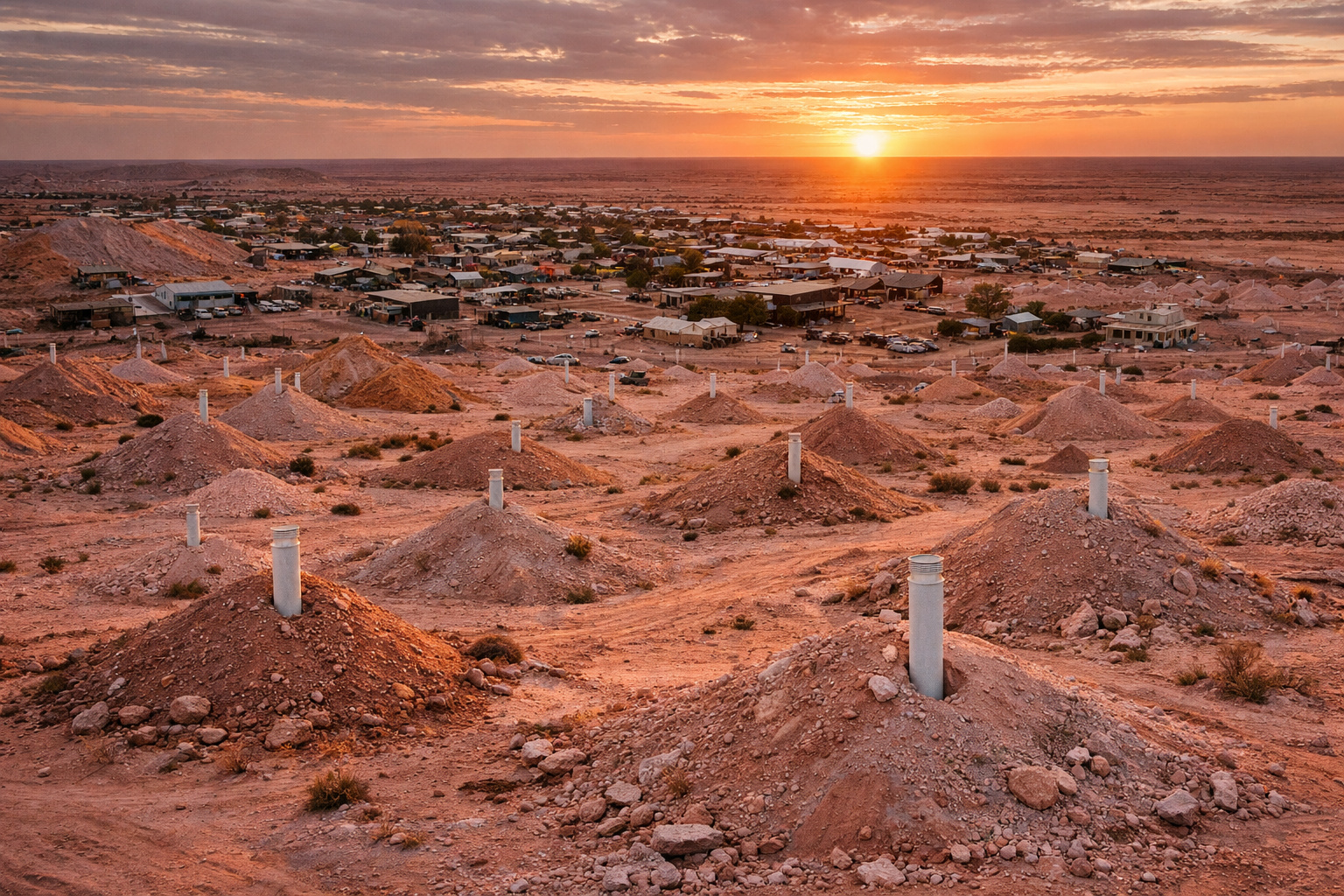
City Where Residents Live Underground to Escape 52°C May Be a Picture of the Future on an Increasingly Hot Planet

According to sources with direct knowledge of the matter, interviewed by Reuters, the economic pressure is expected to lead a significant portion of traders to abandon the commitment in order to preserve billion-dollar tax benefits.
Tax Incentives Weigh in on Traders’ Decisions
Mato Grosso produced about 51 million tons of soy in 2025, a volume higher than Argentina’s, reinforcing its strategic importance in Brazilian agribusiness.
However, the new state legislation provides for the end of tax incentives for companies that maintain environmental commitments considered stricter than national legislation itself.
A preliminary report by state auditors, released in April, indicates that grain traders received approximately R$ 4.7 billion in incentives between 2019 and 2024.
The largest beneficiaries are said to have been ADM and Bunge, with about R$ 1.5 billion each, according to Sergio Ricardo, president of the State Court of Accounts of Mato Grosso.
In addition to them, Cargill, Cofco, and the Brazilian Amaggi are also signatories of the Soy Moratorium and operate in the state.
Soy Moratorium and Its Impact on Deforestation in the Amazon
Considered a milestone in Brazil’s environmental policy, the Soy Moratorium has helped to contain the advance of deforestation in the Amazon for nearly two decades.
Still, critics of the agreement argue that it restricts the market and reduces producers’ competitiveness.
Rural entities in Mato Grosso argue that the protocol compromises income and limits local economic development.
Federal Government Reacts and Warns of Environmental Risks
The federal government has legally contested the removal of tax incentives, arguing that the measure penalizes companies committed to zero deforestation goals. For environmentalists, the withdrawal represents a dangerous precedent.
“Companies could choose to maintain their zero deforestation commitments,” said Cristiane Mazzetti, who supervises the moratorium for Greenpeace.
“It is a dangerous precedent, and it is not what we need at a time of climate emergency,” she added.
Along the same lines, André Lima, secretary of the Ministry of the Environment responsible for combating deforestation, stated:
“If the government of Mato Grosso really removes the incentives, what we have heard is that some, or many companies, will indeed abandon the moratorium for economic reasons.”
Political Pressure and Effects on Brazilian Agribusiness
The possible weakening of the Soy Moratorium occurs as President Luiz Inácio Lula da Silva promises an “ecological transformation” of the economy.
However, internally, the government faces strong resistance from an influential rural lobby in Congress.
This year, lawmakers approved measures that weakened environmental licensing and reduced protections for indigenous lands.
CADE, STF, and Ongoing Legal Disputes
Meanwhile, CADE opened an investigation into the Soy Moratorium for possible violations of competition rules.
Starting in January, the agency determined that traders must refrain from sharing commercial information about soybean production and sales.
In interim decisions, Supreme Federal Court Minister Flávio Dino suspended the antitrust investigation but upheld the validity of the law in Mato Grosso.
Environmental groups are still trying to block the regulation before a final ruling.
What Is at Stake in the Long Term
Experts assess that breaking the Soy Moratorium could have effects beyond soy, impacting other sectors such as cellulose and slaughterhouses.
So while this is happening, the impasse between tax incentives and environmental commitments reinforces a central dilemma for Brazil
How to reconcile economic growth with the preservation of the Amazon in an increasingly intense climate change scenario.










Seja o primeiro a reagir!