






 Portuguese


As Attacks in the Black Sea Increase Risks and Costs, Russian Companies Adapt Fertilizer, Coal, and Other Cargo Terminals to Handle Grain in Ust-Luga, St. Petersburg, and Murmansk, While Exports Continue to Decline This Year
Russia has begun shifting part of its grain exports to Baltic and even Arctic ports after increased attacks in the Black Sea made traditional southern routes riskier. Terminals previously used for fertilizers, coal, and other cargoes are currently being adapted.
According to information published on Monday, September 21, by Reuters, the shift involves facilities in Ust-Luga and St. Petersburg in the Baltic region, as well as Murmansk in the Arctic.
-
Beijing Places Flávio Bolsonaro on Its Radar, Monitoring Positions on China, BRICS, and AI While Assessing Future Investments in Brazil

-
North Korea Expands Yongbyon Nuclear Complex with New Facility Identified by IAEA, Raising Concerns About Nuclear Production Capacity and Geopolitical Tensions in East Asia

-
Trump Administration Begins Construction of 30-Foot-High Border Wall in Texas, Stretching 75 Kilometers, Part of $46 Billion Plan for U.S.-Mexico Border
-
Trump Administration Moves Forward with $2.8 Billion Sale of 40,000 Bombs to Israel Amid Increasing International Criticism Over Operations in Gaza and Lebanon


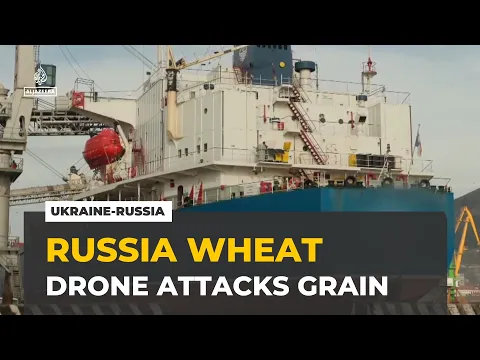

This change is significant because the Black Sea still accounts for most of Russia’s maritime grain exits. Last season, almost 90% of these shipments passed through the region.
Now, with attacks targeting Russian port infrastructure, companies are trying to open new routes to keep exports functioning.
The numbers indicate that the pressure has already affected shipments. In July and August, Russia exported 4.4 million tons of grain, a 31% decrease compared to the same period last year.
For September, the Russian consultancy SovEcon estimates about 2.45 million tons. If this forecast holds, it will be nearly half the volume recorded in September 2025.

Fertilizer Terminal Has Already Started Shipping Grains
One of the most noticeable changes is in Ust-Luga, located in the Gulf of Finland. The Ultramar terminal, primarily used for mineral fertilizers, began handling grains in August.
Other facilities are also being prepared to receive agricultural loads that would normally be heading to Black Sea ports.
The adaptation has reached even further north. In Murmansk, above the Arctic Circle, terminals are also beginning to be prepared to handle grains.
The challenge doesn’t end at the port. Russia needs to ensure sufficient rail transport to move production to these new routes.
This means longer distances from key production areas and requires changes in transportation and storage. In exchange, the country reduces some dependence on facilities more exposed to attacks.

Increased Risks in the Black Sea Could Raise Transportation Costs
The search for alternatives has intensified as the security situation worsens in the Black Sea.
On Friday (18), London-based maritime insurers expanded the high-risk classification to the entire region following an uptick in attacks on ships and commercial infrastructure.
This classification may increase war insurance costs, making the transportation of commodities through the corridor more expensive.
The issue also affects Ukraine. Ukrainian ports in the Black Sea are crucial for exporting the country’s agricultural production, keeping the region under constant scrutiny from the international markets for wheat, corn, and vegetable oils.
On Monday, renewed tensions again placed a risk premium on agricultural prices. Corn futures rose by over 3%, while soy and wheat also saw gains.
The shift towards Baltic and Arctic routes indicates that Russia is already attempting to reorganize part of its export logistics in light of vulnerabilities in traditional shipping routes.
Moving forward, the market will be closely watching the capacity of these alternatives to absorb volumes, the additional costs, and the pace of adjustments.
Sources: Reuters, with information on terminal adaptations and the situation in the Black Sea; SovEcon, with estimates of Russian grain exports for September.


