





 English
  Francês
  Alemão
  Italiano
  Japonês
  Norueguês
  Portuguese
  Spanish
 3 min of reading


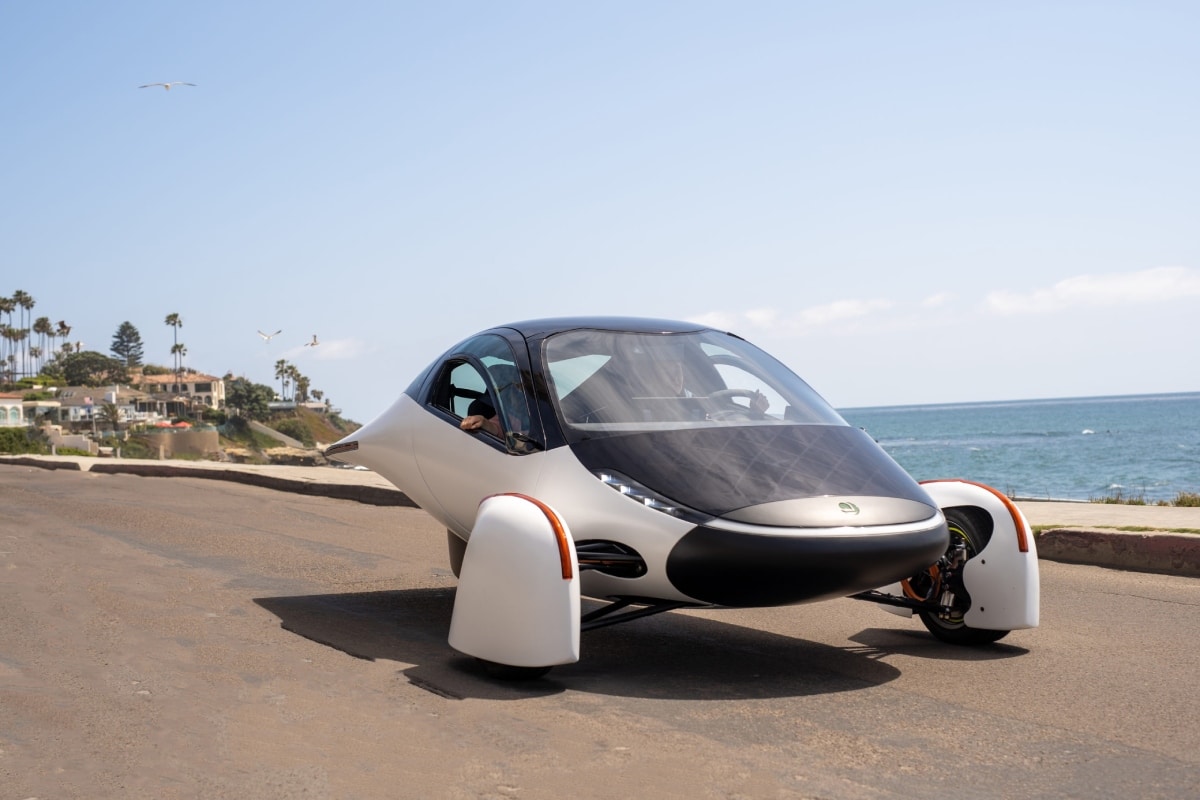
Reservations for the Solar-Powered Car Are Now Open and Delivery Is Expected by the End of 2022 for Brazil
Announced in 2020 by the American Aptera Motors, the solar-powered electric car already has 22,000 reservations, including from buyers in Brazil. The manufacturer’s expected delivery is for the end of 2022. Without a doubt, it is a car that attracts attention due to its futuristic body, which provides unprecedented aerodynamics, with only 6 main structural components, in addition to being powered by just 3 wheels and having solar cells attached.
And that’s not all. According to Aptera Motors, the vehicle has the potential for more than 1,600 kilometers of range per charge and can travel up to 64 km per day using free solar energy from the integrated panels.
The developers also claim that the electric car can glide through the air with lower energy consumption than conventional electric vehicles, given its drag coefficient (Cd) of only 0.13. Moreover, the Aptera reaches a maximum speed of 177 km/h and accelerates from 0-100 km/h in just over 3.5 seconds. Learn more about this car and its prices below.
-
Rio Grande do Sul accelerates energy transition: State invests in renewable technologies and consolidates decarbonization strategies and pathways to attract billions in new industrial investments.

-
Engineers propose a fourth traffic light for intersections – the change promises to affect crossings, queues, and waiting times.

-
Chevrolet Suburban Z71 lands in Brazil with a V8 engine, off-road design, air suspension, seven seats, and colossal size, a rare version imported for around R$ 1.3 million with luxury and exclusivity.
-
The Chevrolet Onix 1.0 turbo achieves 17.7 km per liter on the highway and ranks among the three most economical cars in Brazil in 2026, alongside two more expensive Toyota hybrids available at dealerships.

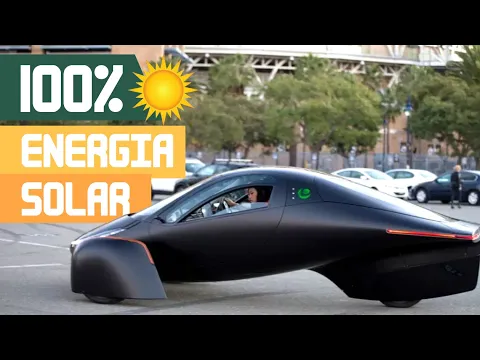
See How the Structure of the Solar-Powered Electric Car from Aptera Looks in the Video Below

Prices Vary According to the Range Capacity of the Solar-Powered Electric Car, Between US$ 25,900 and US$ 44,900
The solar-powered electric cars from Aptera have different range capacities, which determine the price to be paid for the vehicle. The most basic model in the lineup has a range of 402 km on a single charge and is expected to cost US$ 25,900.00, around R$122,602.00.
Those looking for an intermediate model can opt for a version with a range of 644 km on a single charge, costing US$ 29,800.00, or approximately R$ 141,064.00. Another intermediate version can reach 966 km and costs US$ 34,600, or about R$ 163,786.00.
However, for innovation enthusiasts, the most advanced model can reach up to 1,600 km on a single charge and is expected to cost US$ 44,900, approximately R$ 212,543.00. These stated prices do not include any national taxes and fees, they are merely conversions.
There are already 22,000 reservations registered, totaling US$ 800 million (more than R$ 3.7 billion) in orders. In Brazil, deliveries are expected to occur by the end of 2022.
The Aptera Electric Car Model May Be Ideal for Certain Regions of Brazil Due to Solar Incidence
Brazil is a country with distinct climates, such as tropical, subtropical, and temperate. Additionally, it receives an excellent annual incidence of sunlight, which favors the operation of solar-powered vehicles. The North and Northeast regions of the country are the ones that record the highest incidence, with the latter having an average global radiation of 5.9 kWh/m².
However, even in states from the South region, which have a temperate climate, radiation is recorded at an average of 5.0 kWh/m², which is even greater than in countries like Germany. Overall, Brazil receives more than 3,000 hours of sunlight throughout the year, which corresponds to a daily solar incidence of between 4,500 and 6,300 Wh/m².
Nonetheless, the highway infrastructure in some places, like the North and Northeast regions, which receive the most sunlight, is still poor and could generate damage to the Aptera car. Therefore, it would be important to review certain roads to enhance the mobility of this innovative vehicle.





Seja o primeiro a reagir!