Portuguese
  Spanish


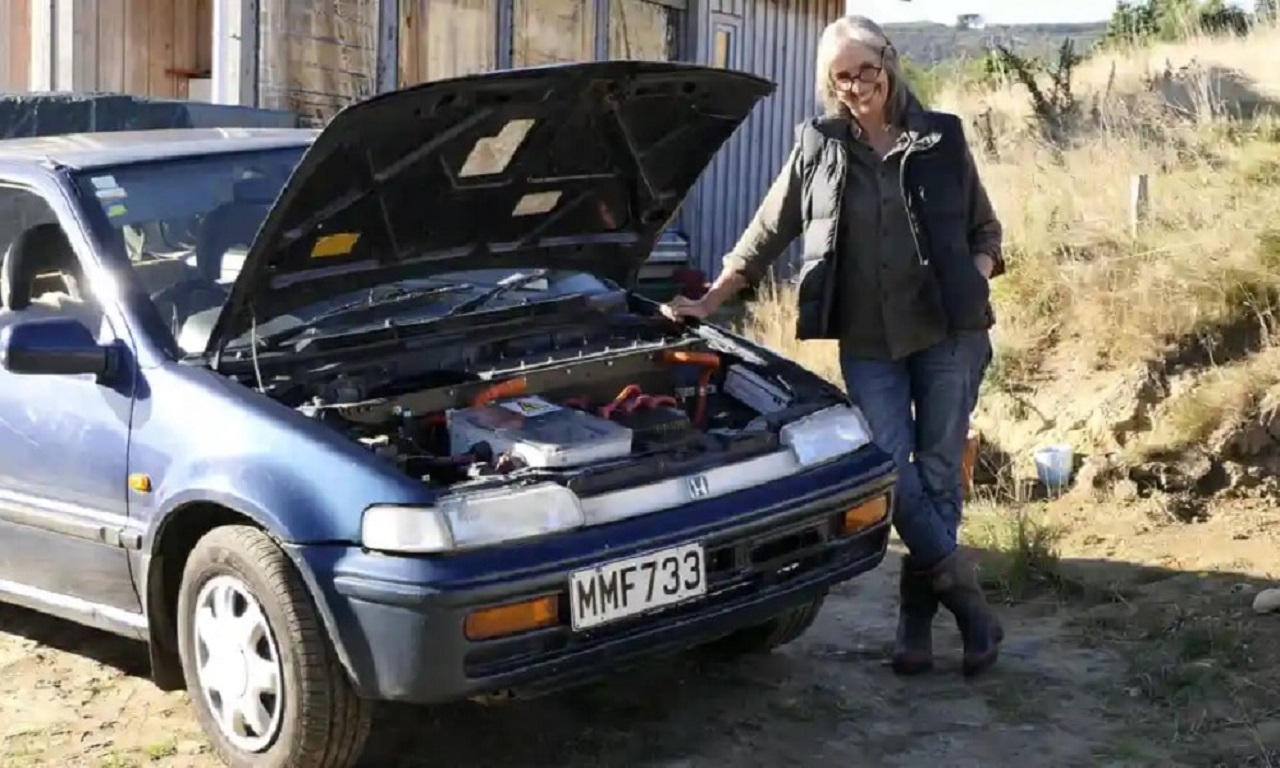

Entrepreneur Transforms Honda City 1993 Into An Electric Car That Can Be Recharged With Solar Panels. The Vehicle Offers A Range Of 120 Km And Generates Savings Of R$ 500 Per Week.
Rosemary Penwarden, businesswoman and environmental activist, transformed her 1993 Honda City into a homemade electric car that is recharged using solar panels. The project, including labor, cost approximately 24,000 New Zealand dollars, which directly converts to around R$ 74,000, half the price of a Renault Kwid e-Tech, the cheapest electric car in Brazil.
Electric Car Powered By Solar Panels
-

Rosemary Penwarden says that while converting a car is not possible for everyone, she wanted to illustrate the possibility. Photo: provided by Rosemary Penwarden – Image: The Guardian/Reproduction -
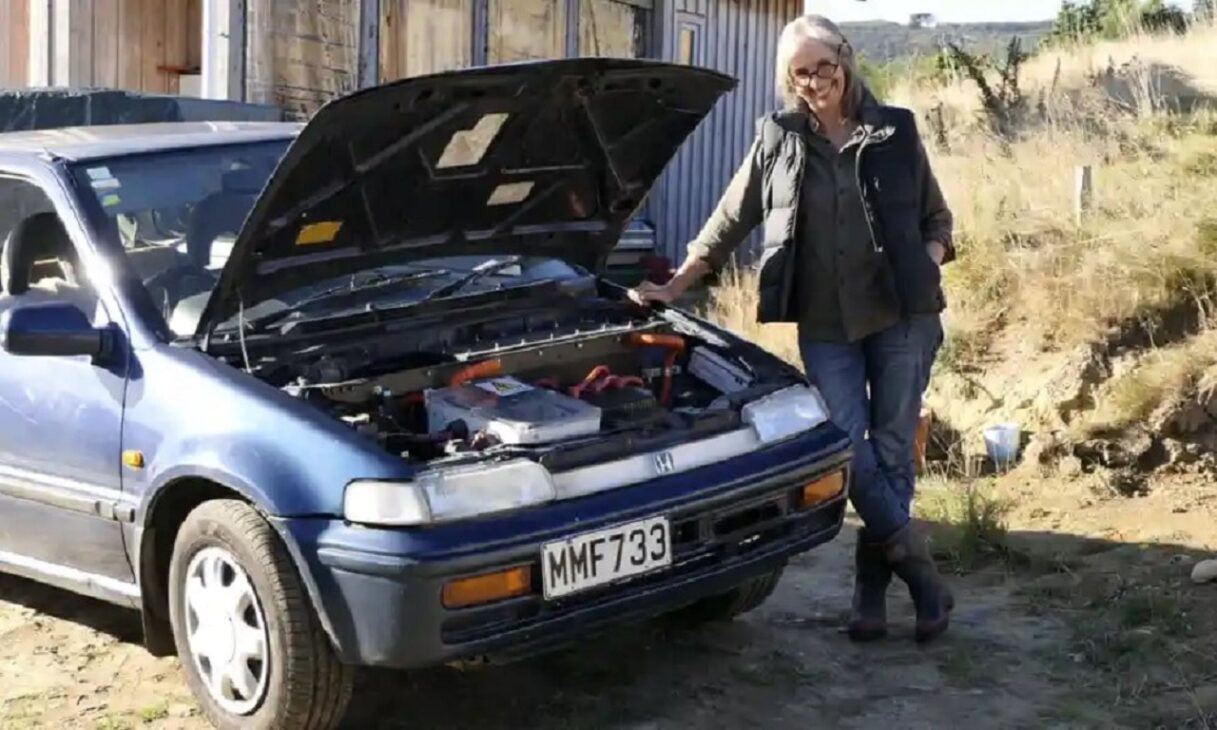
The New Zealander Rosemary Penwarden in her homemade electric car, which is fully signed and certified. Photo: provided by Rosemary Penwarden – Image: The Guardian/Reproduction
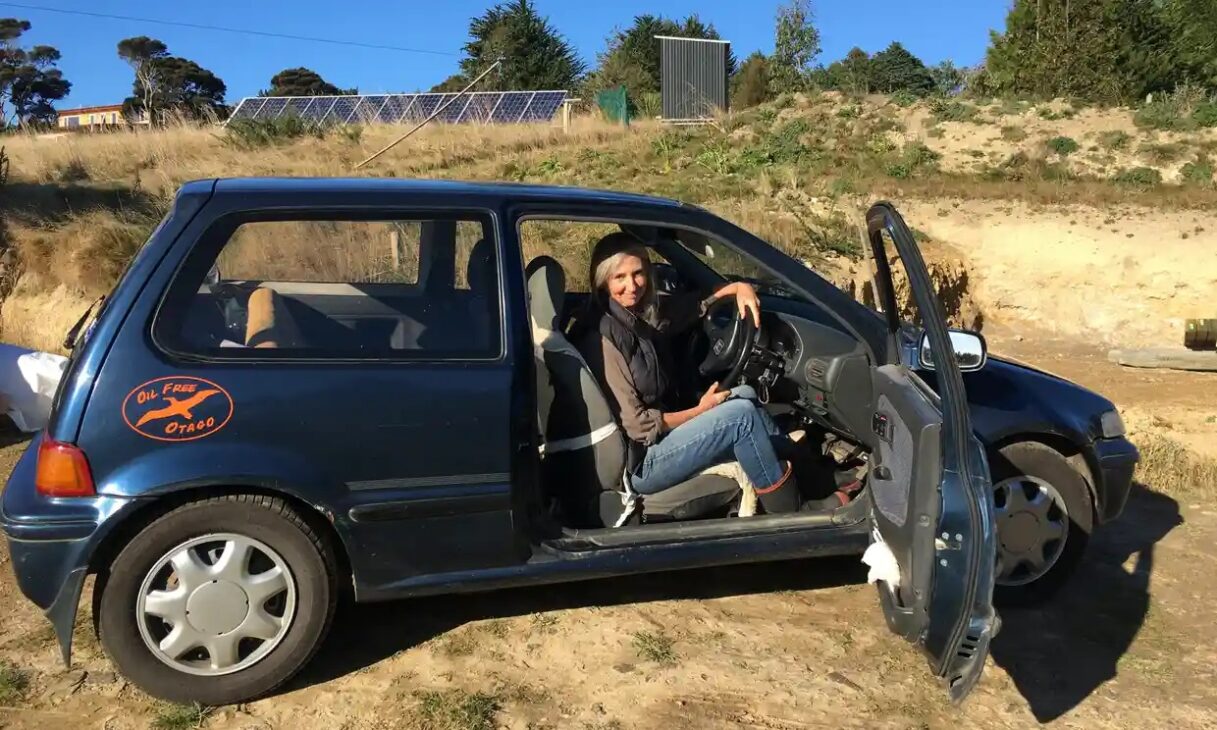
According to the activist, you have to be a little crazy to convert a vehicle at home. The entrepreneur thanked oil companies for the motivation and stated that she has been driving her battery and solar panel-powered Honda City on the roads of the South Island, New Zealand, for three years.
With the help of her engineer friend, Hagen Bruggemann, the activist worked for 8 months on the electric car project. The entrepreneur purchased the body of a tow truck and personally removed the 1.3 gasoline engine from the Honda City.
-
1983 Chevrolet Runs Over 100,000 km Without Gasoline, Powered by Wood Chips, Reaches 125 km/h in Airport Test

-
Workshop Converts Giant Tractor Tire Tricycle into a Three-Wheel Drive Hybrid with 36,000-Watt Electric Motor Capable of Climbing Hills

-
Chery Offers Lifetime Battery Warranty and Car Replacement for Major Failures Under New Chinese Regulations
-
Sales of Brazil’s Cheapest Electric Car Halted Before First Deliveries: E-Motors Suspends Emova Easy Due to Import Tax Increase and Rising Freight Costs





In place of the engine, she installed a new gearbox, an electric motor, and a mix of batteries in the front and back of the chassis. There are 24 batteries under the hood and 56 in the trunk, and it is also possible to charge the electric car at her home, which is entirely powered by solar panels.
Bruggemann, the engineer who assisted Penwarden, claims that electrical conversion is not financially viable for most people. Therefore, from the engineer’s perspective, companies are taking advantage of converting pickups and larger vehicles, considering that the body tends to be worth much more than the electric motor.
Honda City 1993 Electric Has A Range Of 120 Km
According to the entrepreneur, the homemade electric car, which is recharged by solar panels, is similar in size to the first-generation Nissan Leaf. Named Frida, the Honda City offers a range of 120 km on a single charge, which was enough for Penwarden to give up using a combustion vehicle.
This is because she used to spend up to US$ 100 a week commuting to work. Just being able to show that this can be done is amazing, and the most important thing, according to the activist, is to help stop one of the world’s biggest polluters as quickly as possible.
Currently, Penwarden runs a cooperative known as The Valley Workshop, in Dunedin, southern New Zealand. The activist wanted her company to become the center for electric car conversions in the country and claims that many vehicles have been converted, but it didn’t become the big thing she had in mind; however, she states that she will not give up.
Brazilian Transforms 2001 Celta Into Electric Car
Tiago Slaga, an automation technician from Paraná, converted a 2001 Chevrolet Celta into an electric car. So far, everything is normal, but the big difference is that the model is now powered by notebook batteries.
According to the creator, the idea came after watching similar conversion projects online. Thus, he decided to start some bench tests and checked the possibility of powering an industrial motor with batteries using a frequency inverter.
Currently, the owner has 455 notebook batteries and plans to expand to 500 units, equivalent to 3,000 cells for charging.
The batteries provide the Celta with a range of up to 100 km on a single charge. The industrial motor can deliver up to 12.5 horsepower to the vehicle, and the batteries take about 10 hours to charge from a residential outlet.
Source: The Guardian