





 Portuguese
  English
  Spanish
  6 min of reading
  0 comments


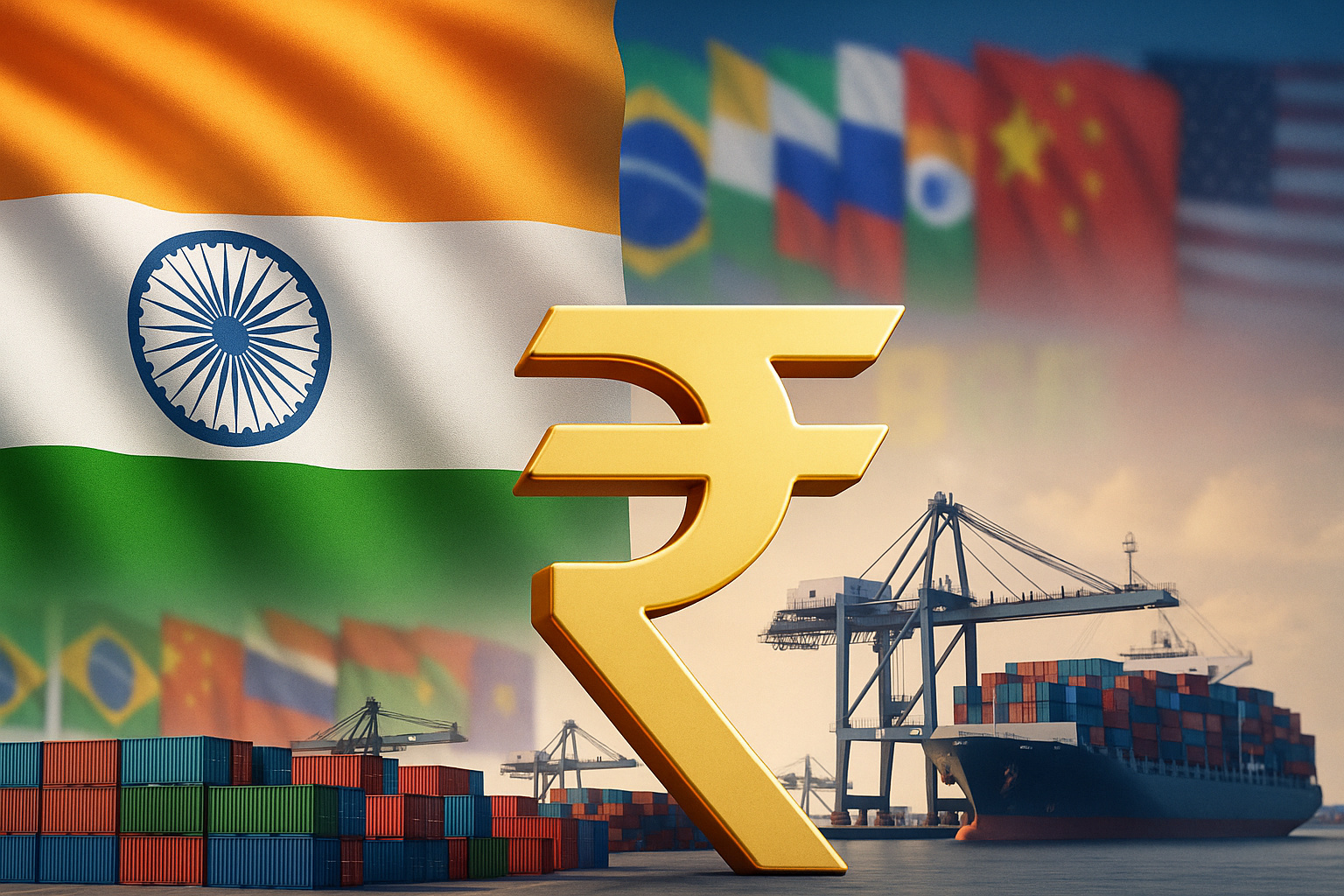
India Abandons Common BRICS Currency and Bets on Bilateral Agreements with Rupee to Reduce the Dollar and Lead a New Order in International Trade.
While the world’s attention was focused on the proposal for a single BRICS currency capable of rivaling the dollar, India discreetly took a bold — and perhaps even more effective — step: it initiated a systematic campaign to transform its own national currency, the rupee, into a global trade instrument through direct settlement bilateral agreements. The move not only deflates expectations around a common currency for the bloc but also highlights a strategic shift by one of the key BRICS members.
India Prioritizes Rupee Agreements with Other Countries
The Indian strategy is clear: use the rupee directly in international transactions, without relying on the dollar as an intermediary conversion currency. To achieve this, the government and the Reserve Bank of India (RBI) have been signing Memorandums of Understanding (MoUs) with strategic trading partners.
The most emblematic case occurred with the Maldives, when in November 2024 the RBI signed an agreement with the Maldives Monetary Authority to allow the settlement of commercial transactions directly in rupees and rufiyaa, the local currencies of the two countries.
-
USA and China compete for Brazil over resources that could be worth trillions — rare earths put the country at the center of a global dispute

-
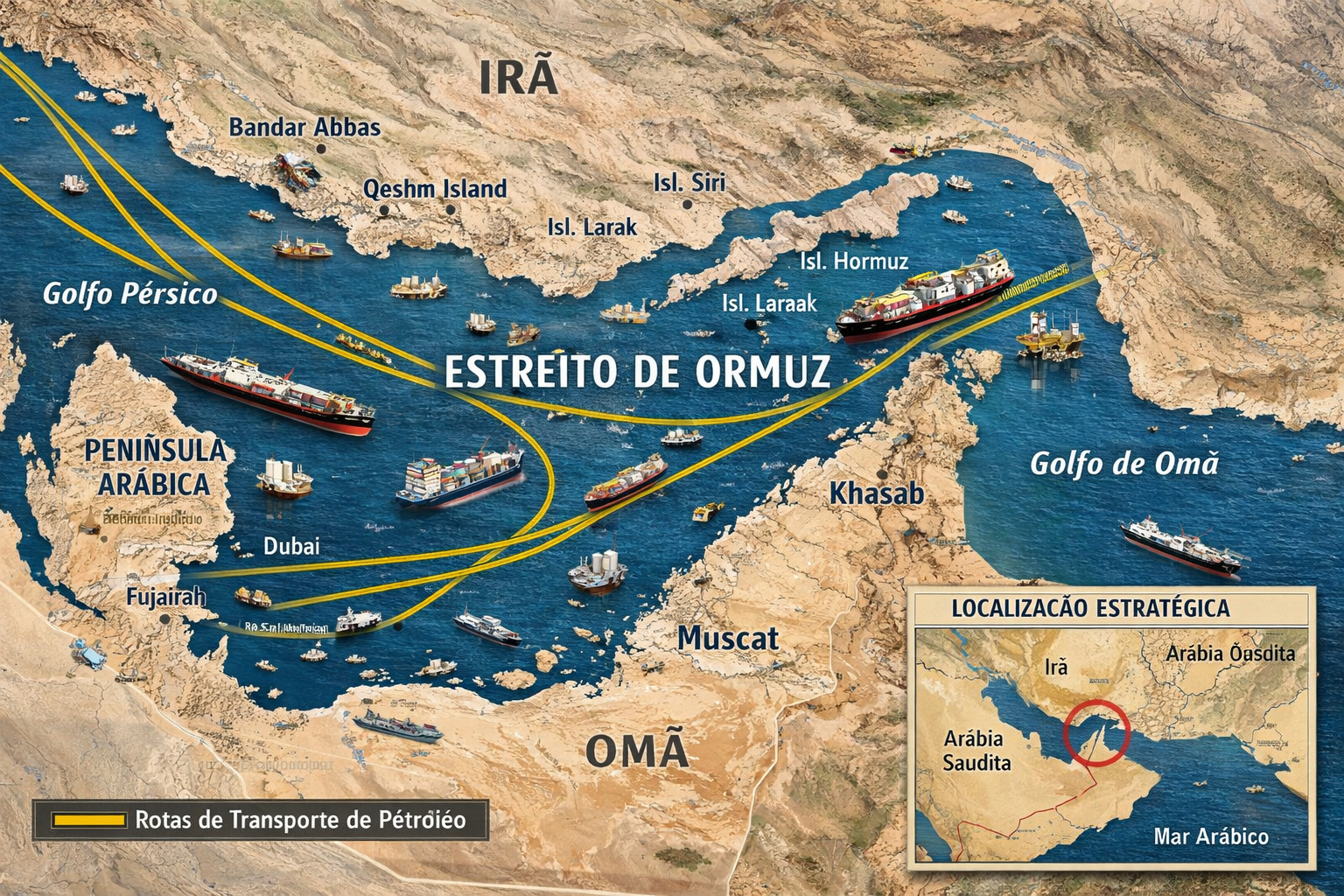
Global summit with over 40 countries pressures Iran for a blockade in the Strait of Hormuz and warns of direct impact on oil, food, and the global economy.
-
Russia has broken the U.S. maritime blockade to send oil to Cuba and is now loading a second ship while Trump says that “Cuba is next” in a possible military action against the island.
-
Spain challenges the USA and closes its airspace for operations against Iran, raising global tension and provoking the threat of a trade rupture.


This system operates outside the traditional dollar-based conversion network, making transactions faster and cheaper, while also increasing the influence of the Indian currency in the region.

According to the Deputy Governor of the RBI, Sanjay Malhotra, India already has similar operational agreements with the United Arab Emirates, and other countries in Asia and Africa are in negotiations to join the model. This advancement represents a clear internationalization of the rupee, with the potential to reshape regional trade flows and shake up the traditional logic of dollar use.
The BRICS Single Currency Cools — and India Takes Another Path
For years, BRICS — a bloc formed by Brazil, Russia, India, China, and South Africa — discussed creating its own currency to facilitate trade among members and reduce dependence on the dollar. In 2023, rumors circulated about the launch of the so-called “Unit,” a digital currency backed by a basket of assets.
However, the proposal never materialized. In July 2025, at the BRICS summit in Rio de Janeiro, no concrete definition about the common currency was announced. The leaders’ focus shifted to BRICS Pay — a decentralized payment network — and on bilateral agreements in local currencies, such as those already implemented by India.
New Delhi’s choice of a separate path indicates that confidence in a single currency for the bloc is far from being a consensus. For India, with its robust economy and focus on active foreign policy, waiting for a collective project may be more costly than acting independently.
This movement stands in stark contrast to the stance of countries like Brazil, which still rely on multilateral diplomacy as the main tool for economic transformation. India, on the other hand, more pragmatic, accelerates its unilateral strategy focused on immediate results.
How Bilateral Settlement Agreements Work
In practice, bilateral settlement agreements allow two countries to establish an institutionalized mechanism to make payments and receipts directly in their respective national currencies, without the need for conversion to the dollar or euro.
For example, a company in the Maldives can import Indian rice and pay in rufiyaa, which will be automatically converted into Indian rupees by the local central bank, with compensation authorized by the RBI. This reduces foreign exchange exposure, avoids extra conversion fees, and also decreases the risk of sanctions or blockages in systems dominated by Western powers, such as SWIFT.
This model is also technically more viable than a multilateral currency, as it requires less international infrastructure and depends only on the trust between the two countries involved. In other words: easier, faster, and more strategic in the current scenario of global economic disputes.
Why India Prefers to Promote the “Global Rupee”
India’s decision to accelerate the internationalization of the rupee is based on four main pillars:
- Monetary Autonomy: by using its own currency, the country avoids external pressures caused by fluctuations in the dollar or euro, in addition to preserving its internal monetary policy.
- Reduction of Transaction Costs: eliminating the dollar as an intermediary currency makes trade more efficient and less vulnerable to sanctions and exchange rates, especially in times of geopolitical tensions.
- Projection of Geoeconomic Power: by spreading the use of the rupee, India strengthens its political and commercial influence over neighbors and partners. This also expands the scope of Indian companies in foreign markets.
- Strategic Positioning Against China: while the yuan seeks to consolidate itself as an international alternative to the dollar, India aims for a similar role — but with a focus on bilateral agreements instead of multilateral networks or state-backed crypto-assets.
The Reaction of Other BRICS Countries
India’s move has been cautiously observed by other BRICS members. China, for example, continues to promote the use of e‑yuan in transactions with African and Asian countries, albeit still experimentally. Meanwhile, Russia, faced with international sanctions, has intensified the use of the ruble with regional allies, but without significant global impact.
Brazil, for its part, has not yet adopted any robust internationalization program for the real. Central Bank authorities claim that Brazilian foreign exchange infrastructure needs to evolve before any movement in this direction. This positions India as one of the only countries in BRICS actually implementing a systematic strategy for monetary internationalization, rather than just rhetoric.
The Challenges of Establishing the Rupee as a Reference
Despite the progress, India’s plan faces significant obstacles. The rupee is still not freely convertible like the dollar, euro, or even the yuan. Additionally, international acceptance of the Indian currency requires macroeconomic confidence, political stability, and liquidity in the markets.
Another challenge is that, without a broad multilateral compensation system like SWIFT, bilateral agreements require constant negotiation and political maintenance between countries, which may limit the scalability of the strategy.
Still, India hopes that the gains in agility, low costs, and the absence of external interference will be attractive enough for developing countries seeking to escape dollarization.
The Dollar Resists, but the Global Map is Changing
It is important to note that, according to the Central Bank of Brazil itself, there is currently not enough volume of reserves in BRICS currencies to replace the dollar in the short term. The same applies to the rupee: its share in global foreign exchange reserves is still modest.
However, what is at stake here is not the immediate replacement of the dollar, but the emergence of decentralized trade hubs, regional economic zones where local currencies gain prominence. India is leading this transformation with pragmatism and focus, while other BRICS powers still hesitate between cooperation and autonomy.
If it can consolidate its model, India may pave the way not only for greater financial sovereignty but also for a new trade order based on local currencies and direct agreements — something that could profoundly change the logic of international relations in the coming decades.








-

-

2 pessoas reagiram a isso.