





 Portuguese
  English
  Spanish
  3 min of reading
  0 comments


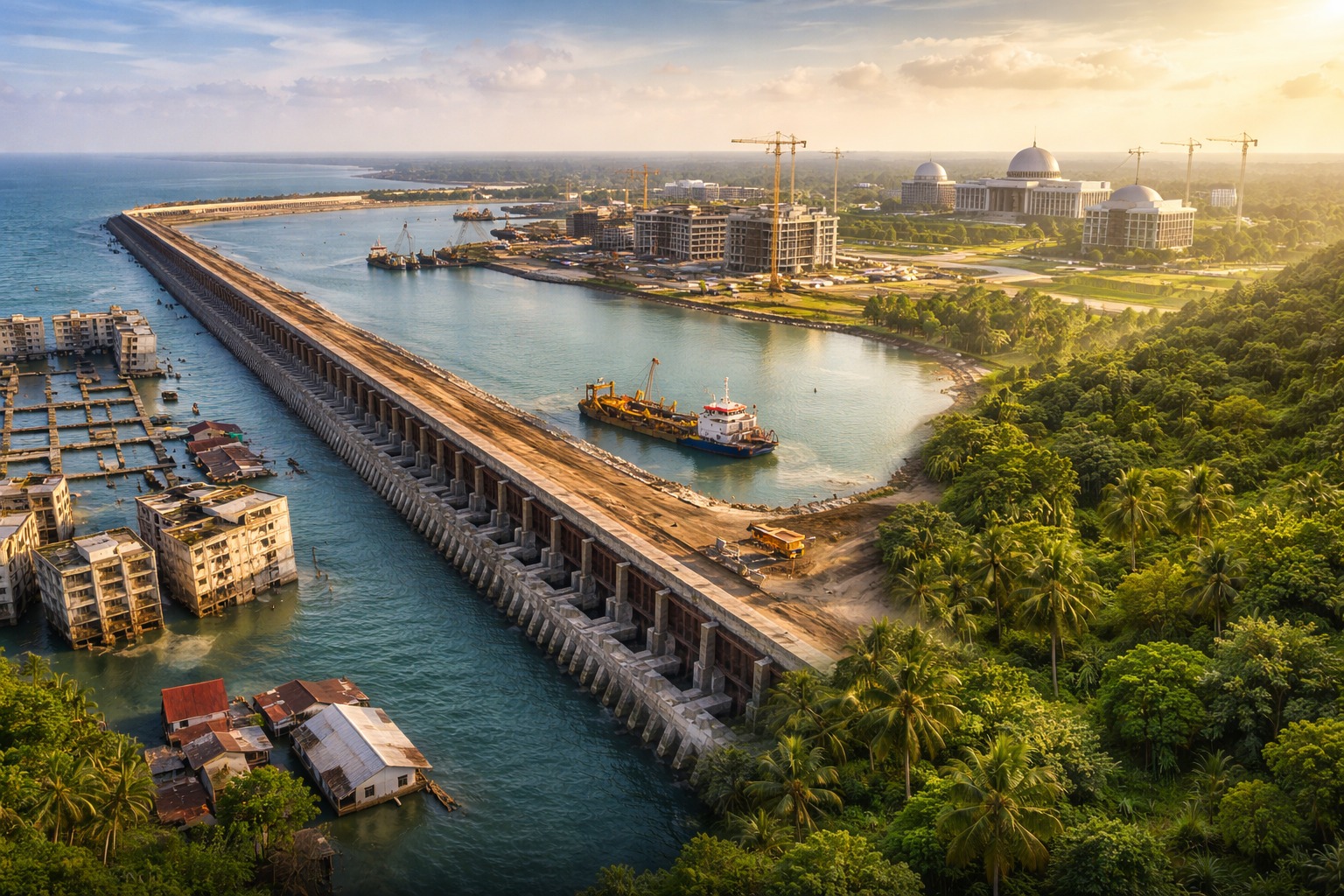
Nusantara Capital and US$ 40 Billion Seawall Mark Indonesia’s Strategy to Address Jakarta’s Sinking of Up to 25 cm Per Year and Reorganize the Government Seat by 2045
The Nusantara capital is the center of Indonesia’s national plan to address Jakarta’s sinking, which reaches 25 cm per year. The project combines the construction of a new capital on the island of Borneo and a US$ 40 billion seawall to protect the current metropolis.
Why Nusantara Capital Was Planned in Borneo
The Nusantara capital project was conceived as a structural response to the urban and environmental crisis affecting Jakarta.
The new city is being planned in Borneo with the aim of decentralizing the economy and reducing population pressure on the island of Java.
-
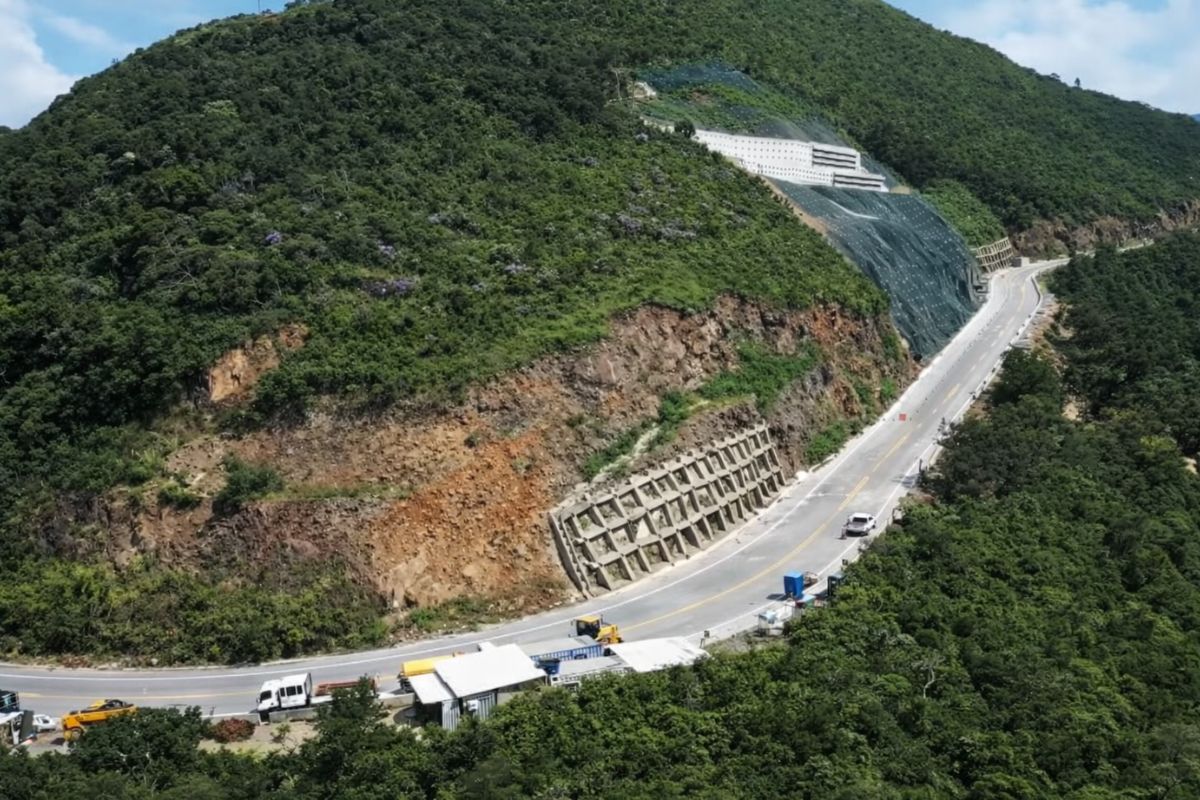
The section of Serra da Rocinha on BR-285 is now open in Timbé do Sul: 50 m tensioned curtains and top-down technique stabilize the slope, with a stairway duct controlling the water.
-
Scientists use sawdust mixed with clay to create a lighter brick, promising efficient thermal insulation and impressing by transforming waste into a solution for construction.

-
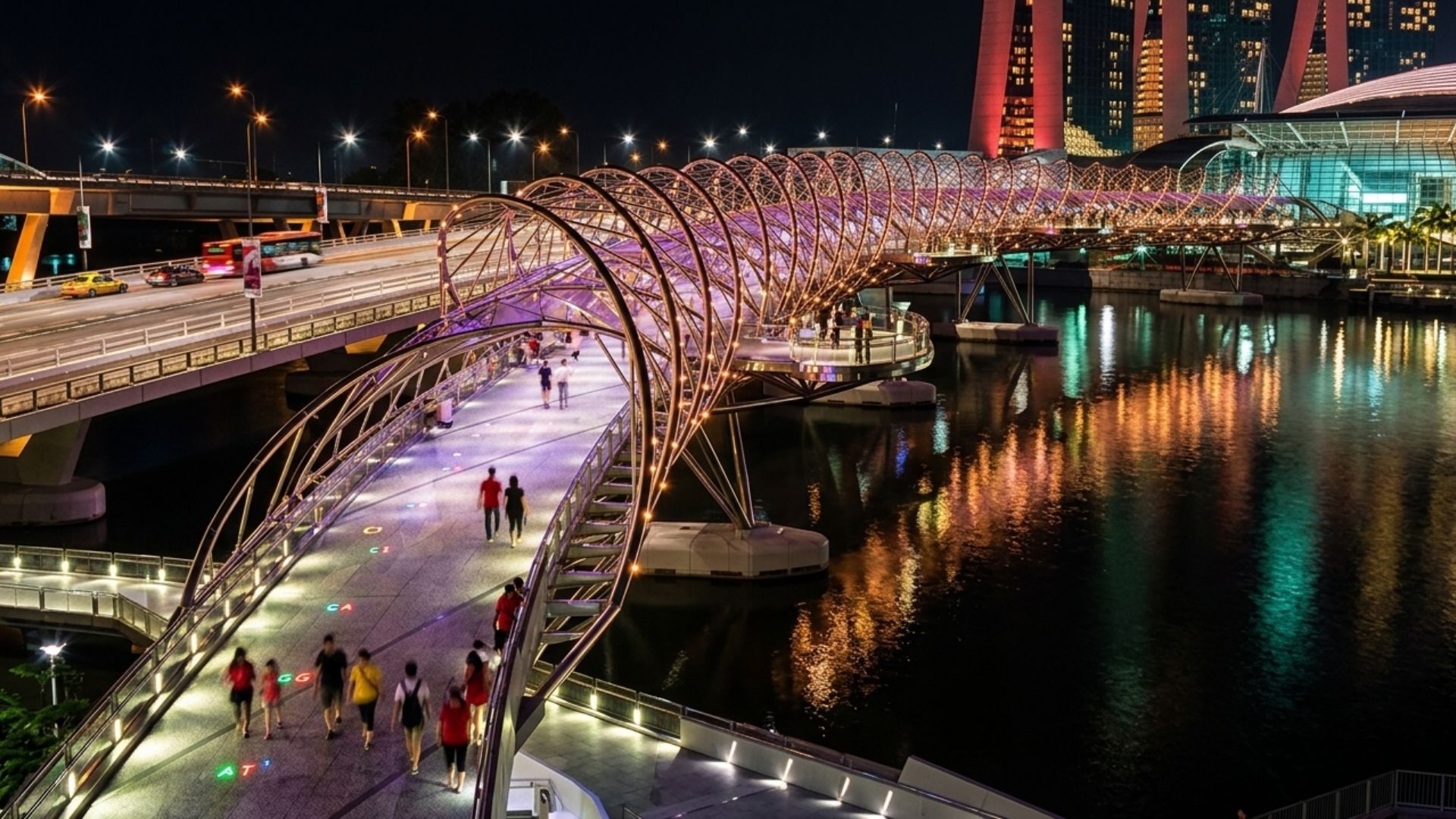
With a DNA shape, this bridge in Singapore draws attention in modern architecture and surprises tourists by transforming a simple crossing into an unforgettable visual experience in the urban heart.
-
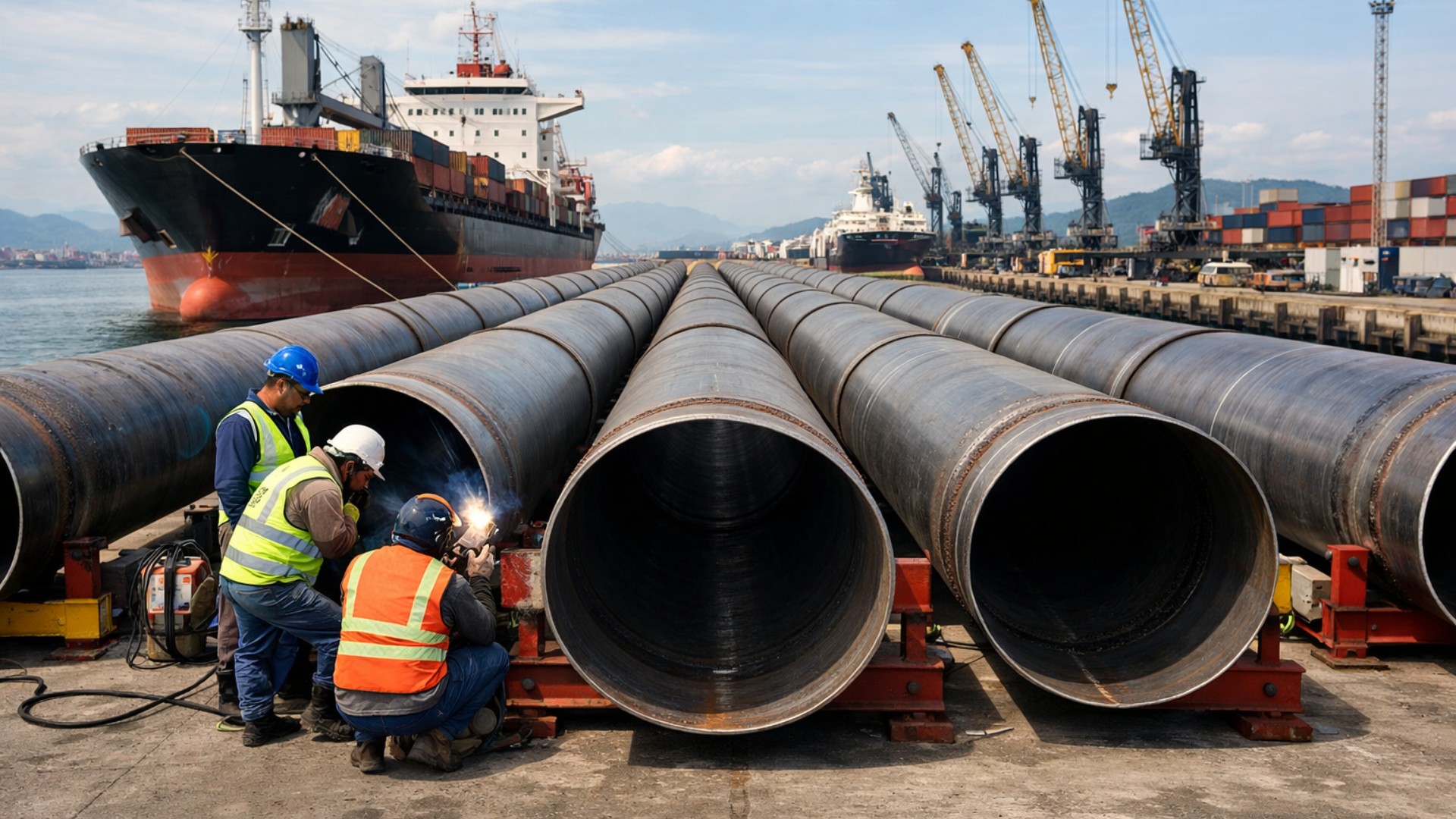
Giant underwater pipeline begins to take shape with a R$ 134.7 million project at the Port of Santos: the 1.7 km structure uses 12-meter and 700 mm pipes to supply water to 450,000 people in Guarujá.

According to official planning, the new location offers stable ground and greater availability of water resources.
These conditions contrast with the scenario in Jakarta, which faces constant flooding problems and geological instability in coastal areas.
The Indonesian government’s proposal is to transform the region into a “smart and green city.” The plan envisions that by 2045, urban infrastructure will be integrated with the natural jungle environment, creating a new political and technological center in Southeast Asia.
The US$ 40 Billion Seawall Planned for Jakarta
As the construction of the Nusantara capital progresses in Borneo, Jakarta is undergoing a parallel large-scale engineering project.
The country is erecting the so-called Great Garuda, a monumental seawall aimed at containing tidal advances.
The structure will also serve to create freshwater reservoirs. This measure seeks to reduce illegal groundwater extraction, one of the factors cited for the accelerated sinking of areas in the current capital.
This set of works represents an attempt to keep the city habitable while the administrative transfer gradually takes place to the Nusantara capital.
Structural Differences Between Jakarta and the New Capital
The comparison between the two cities reveals significant contrasts in geological and urban terms.
Jakarta is facing a sinking process that can reach up to 25 cm per year in coastal zones. The city also suffers from overcrowding, pollution, and recurrent flooding.
On the other hand, the Nusantara capital was planned on stable ground in Borneo. The proposed urban model prioritizes a green and smart city, with modern infrastructure and integration with natural ecosystems.
Despite this proposal, the main challenge for the new capital will be ensuring environmental preservation during urban expansion.
Environmental Criticism of the New Capital Project
Environmentalists have raised concerns about the environmental impact of constructing the Nusantara capital.
The main warning involves potential threats to orangutan habitats and indigenous communities living in the Borneo region.
Experts state that the risk is linked to the possibility of deforestation and loss of biodiversity if urban expansion is not controlled.
The Indonesian government claims that only degraded plantation areas will be used for the project. Nonetheless, international monitoring remains constant due to the region’s environmental sensitivity.
Indicators of the Crisis Leading to the Creation of Nusantara Capital
Various indicators monitored by geologists and infrastructure agencies help measure the severity of the situation in Jakarta.
Among the data presented by the Indonesian government and geoscience reports are:
- Sinking rate of up to 25 cm per year in coastal zones.
- Estimated cost of the seawall at US$ 40 billion.
- Planned investment in the Nusantara capital of US$ 35 billion.
- Goal of urban expansion and consolidation by 2045.
These numbers support the strategic decision to progressively transfer part of the country’s administrative structure.
How the Move to the New Capital Will Happen
The transfer process to the Nusantara capital will begin with ministries and public officials. The strategy aims to ease the population density of the island of Java and reorganize the country’s administrative structure.
Even with the move of the government seat, Jakarta will continue to function as the national financial center.
The current capital will undergo infrastructure reforms to cope with rising sea levels while the Nusantara capital solidifies as Indonesia’s new political hub.
With information from BMC News.







-

Uma pessoa reagiu a isso.