





 Portuguese
  English
  Spanish
  5 min of reading
  0 comments


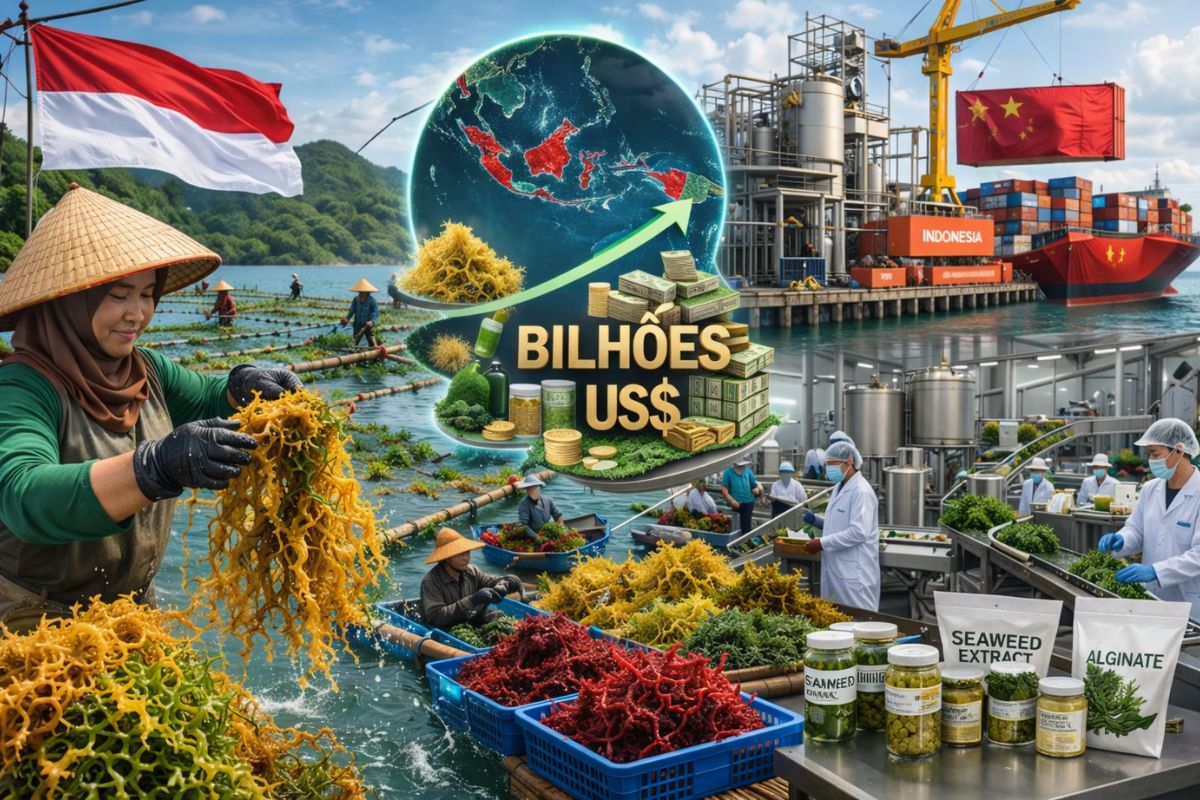
Indonesia produced more than 10 million tons of seaweed in 2024 and exported over 260 million dollars between January and October, but dependence on China as a buyer of raw material keeps prices unstable, and the country is now investing in its own processing and an international research center
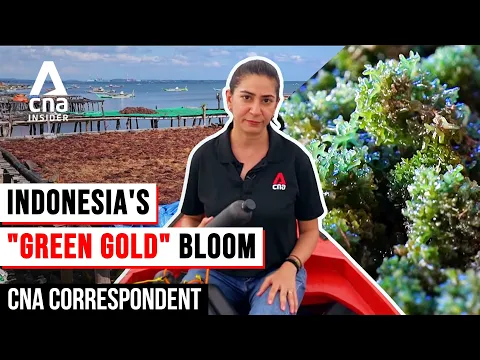
Indonesia is the largest producer of tropical seaweed on the planet and still captures only a fraction of the value that this commodity generates. According to information from the CNA Insider Channel, production in 2024 was 10.8 million tons, with more than 4 million coming from the south of Sulawesi alone, and seaweed exports exceeded 260 million dollars between January and October last year. The problem is that more than 80% of this harvest goes to China, mostly in dried and unprocessed form. China buys the raw material, processes it, adds value, and resells it to the world.
This imbalance defines the central dilemma of the Indonesian seaweed industry. While entire coastal communities depend on cultivation to survive and have indeed transformed their lives with it, building masonry houses and buying vehicles, the country exports green gold at raw material prices and imports processed products back at premium prices. Now, Indonesia wants to reverse this logic: invest in its own processing, diversify markets, and stop being just a supplier of cheap inputs to China.
How seaweed has changed the lives of entire coastal communities

In the village of Punaga, in the Takalar regency, in the south of Sulawesi, seaweed cultivation has visibly transformed the local economy. About 3,000 residents make their living from the sea, and the financial impact is concrete. Families that previously lived in precarious houses now reside in permanent masonry constructions, and dozens have already purchased vehicles, all financed by seaweed cultivation.
-
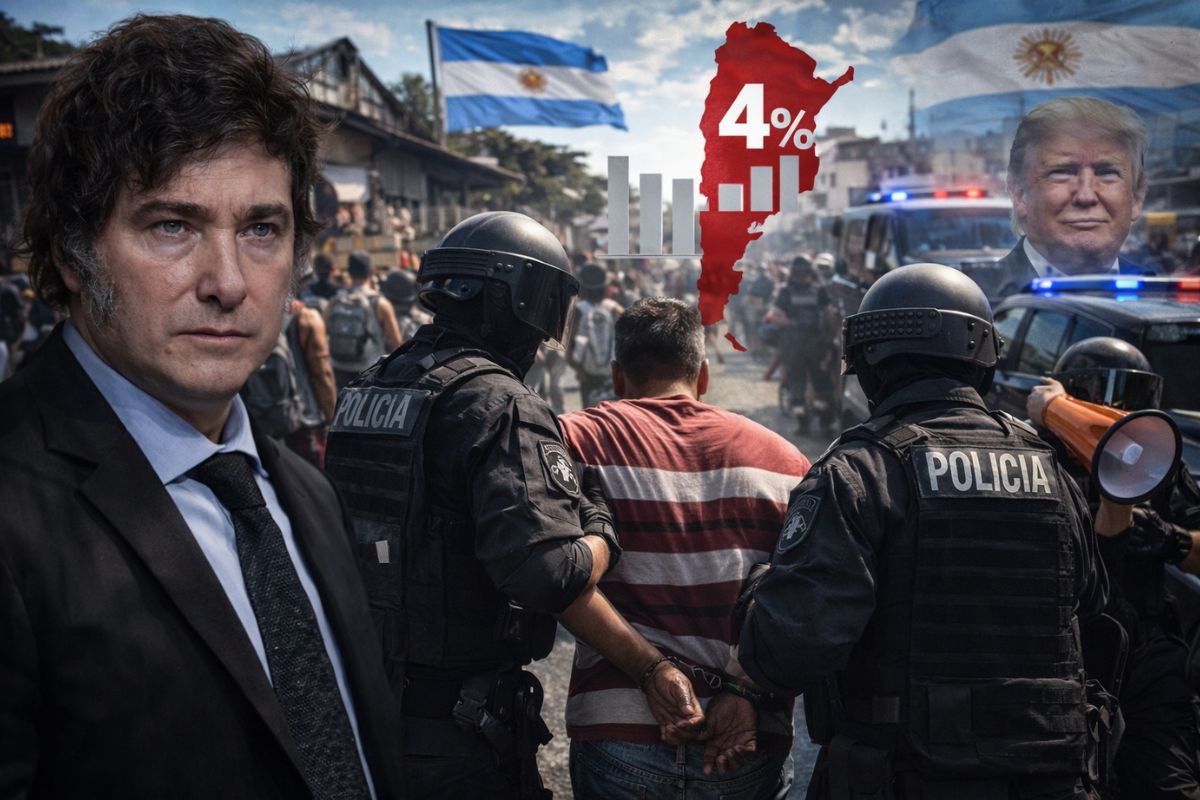
Milei’s government launches surprise police operations on the streets of Argentina to hunt undocumented immigrants, but the government’s own data reveals that only 4% were irregular. Critics say it is a copy of Trump’s policy without real necessity.
-
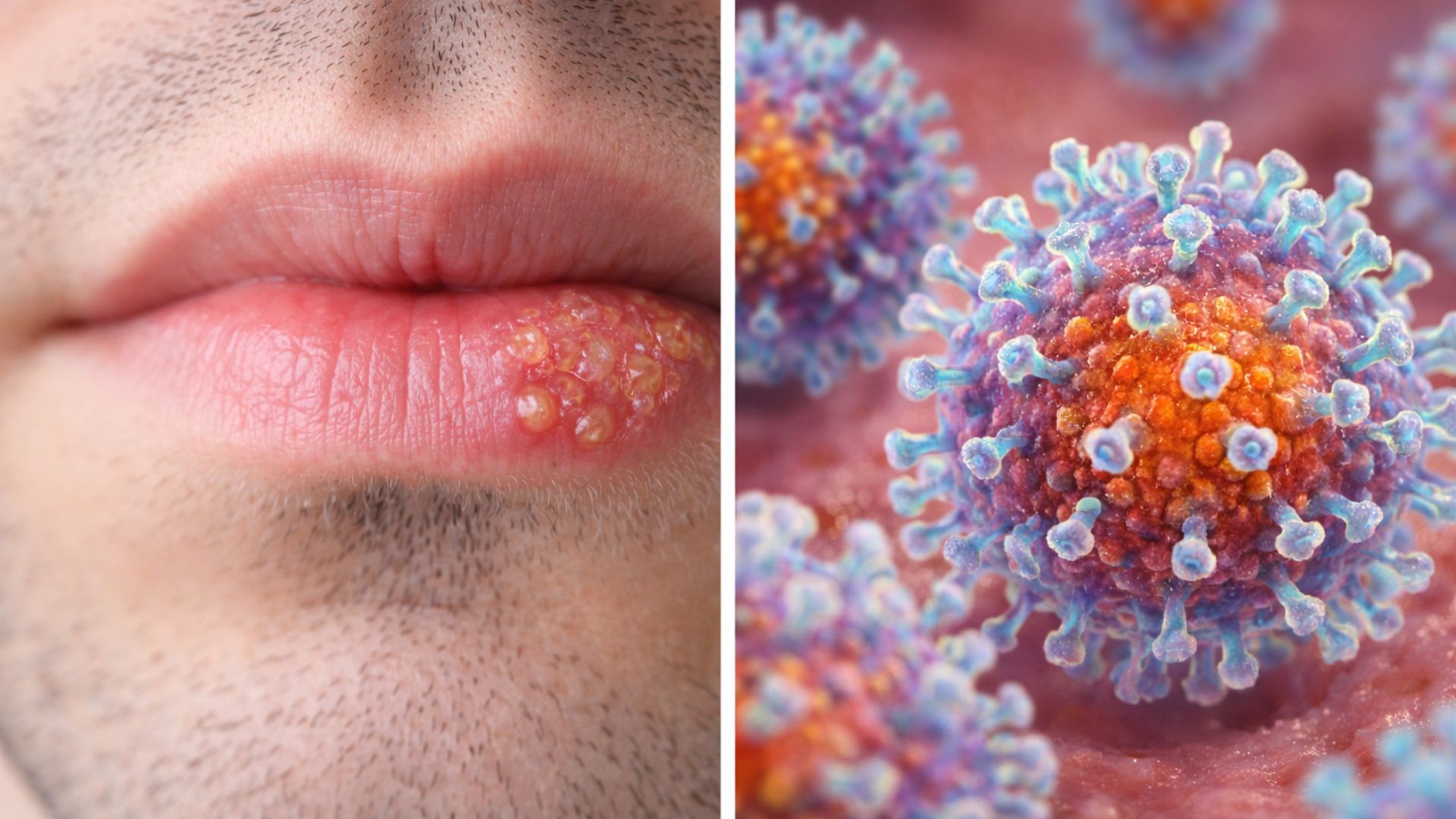
This extremely contagious virus has already affected 90% of the population of Brazil and has no cure.
-
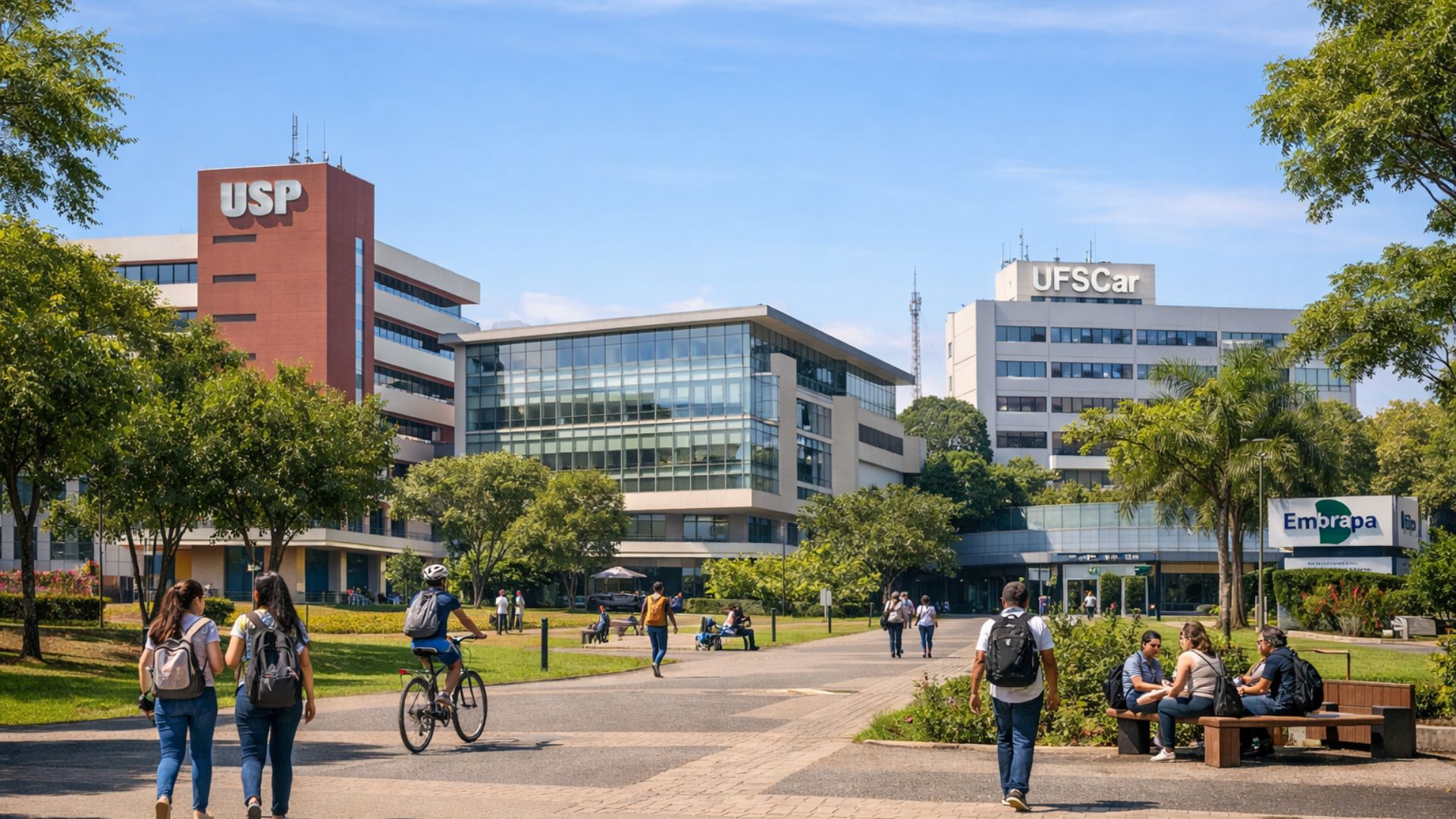
The São Paulo city has one doctor for every 100 inhabitants and still holds the title of the third best place to live in Brazil.
-
Brazilian chocolate made with fine cocoa from Bahia, without any preservatives or chemical additives, won second place for the best milk chocolate in the world and is now sold in the country that invented premium chocolate: Switzerland.


The work is hard. Seaweed seedlings are fixed to cultivation ropes suspended by floats and anchored in the water, creating vertical farms that maximize space and utilize the entire water column for growth.
A good season can transform 10 kg of seedlings into 70 kg of harvest, but a bad season can yield as little as 3 kg. Fixing a ton of seedlings to the ropes takes about 10 hours of manual labor.
It is an activity that requires patience, knowledge of the sea, and resilience, but it has completely changed the standard of living in villages that previously had no economic prospects.
Why 90% of Indonesia’s seaweed goes to China
The answer lies in the market structure. China has dominated the global seaweed processing market for over 20 years and has built an industrial infrastructure that Indonesia still lacks.
The largest Chinese seaweed processing factory, BLG, has set up a unit directly in the south of Sulawesi, in the heart of Indonesian production, to buy raw material and transform it into carrageenan, a gelling, thickening, and stabilizing agent used in food, cosmetics, and pharmaceuticals.
The exporting warehouses in the region send dried seaweed to China, Vietnam, the Philippines, Chile, and Spain, but 90% of the stocks go to China.
Prices fluctuate according to Chinese demand, creating chronic instability for Indonesian seaweed producers. When demand falls, prices plummet, and farmers absorb the losses. Dependence on a single dominant buyer places the entire supply chain in a vulnerable position.
Indonesia’s plan to process its own seaweed
The Indonesian government recognizes that exporting raw material leaves billions of dollars on the table. The strategy now is to develop downstream processing, build agar and carrageenan factories close to seaweed production centers, shorten the logistics chain, and capture the added value that currently goes to China.
As a demonstration of commitment, Indonesia began construction of an international research center for tropical seaweed in West Nusa Tenggara earlier this year. The goal goes beyond research: it is to change the country’s position in the value chain, from raw material producer to high-value product developer.
Indonesia already accounts for more than 30% of the global export value of carrageenan but wants to significantly expand this by investing in research and development, an area that industry entrepreneurs themselves recognize as underfunded.
The seaweed market that has yet to be explored
In addition to traditional carrageenan, there is a growing global market for non-hydrocolloid products derived from agricultural bio-stimulating seaweeds, animal feed, and pharmaceutical compounds.
This market was estimated at over 4 billion dollars in 2024, and the projection is that it will exceed 12 billion dollars by 2034. For Indonesia, which has only 12% of its seaweed cultivation potential effectively utilized, the growth space is enormous.
Local factories have already begun to diversify markets. Exporters who previously relied exclusively on China are sending carrageenan to Chile, Spain, and exploring the British market.
The logic is simple: prices in Europe are more attractive than in China, where competition among processing factories flattens values. Diversifying buyers reduces the vulnerability that concentration in a single market creates for seaweed producers.
The environmental problem that threatens the sustainability of seaweed

One challenge that the industry needs to address is the dependence on disposable plastic bottles as floats in cultivation lines. According to the NGO Theur Laut, a seaweed producer uses an average of 4,500 to 6,000 plastic bottles per 45-day cultivation cycle.
Without proper collection, these bottles end up on the coast, in the oceans, and adhering to the seaweed itself in the form of microplastics.
The government of South Sulawesi has begun replacing disposable bottles with floats made from high-density polyethylene, a more durable material, resistant to sun and saltwater, and recyclable. While a conventional bottle lasts only two harvest cycles, the new floats can last for years.
The replacement is part of a pilot project that also includes plastic waste collection points, where up to 600 kg of bottles are crushed per day, generating income for the communities. The transition to sustainable seaweed cultivation is slow but essential for the industry to grow without destroying the marine environment that sustains it.
Did you know that Indonesia’s seaweed is behind products you use every day? Do you think the country will be able to compete with China in processing? Let us know in the comments.







Seja o primeiro a reagir!