





 Portuguese
  English
  Spanish
  5 min of reading
  0 comments


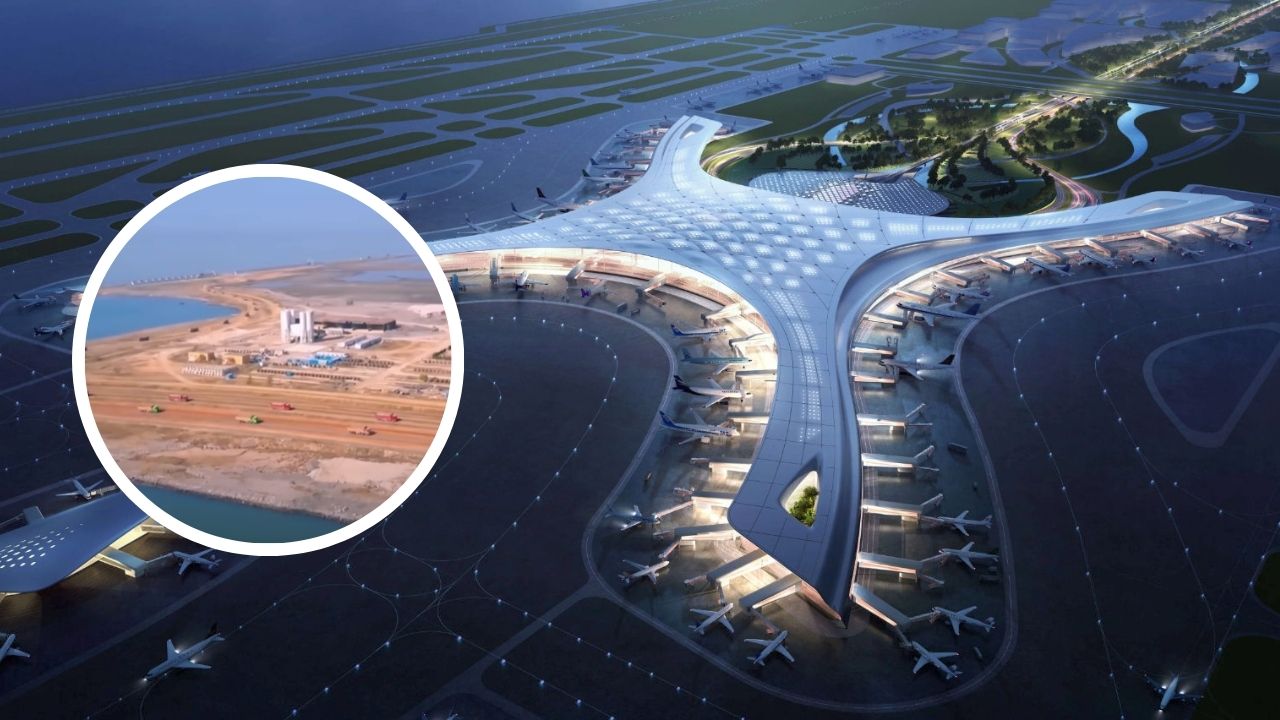
New International Airport of Dalian, China, Will Cost 13 Times More Than the Entire Investment Plan for 66 Interventions in Brazilian Airports in the Coming Years.
The China is redefining the limits of engineering and infrastructure investment with its latest monumental project: the Dalian Jinzhouwan International Airport. Literally built from scratch over the ocean, the project has an estimated budget of 130 billion reais. To put it into perspective, the amount allocated to this single offshore airport is more than 13 times higher than the total investment planned for 66 interventions in 55 Brazilian airports in the 2025-2026 period, which adds up to R$ 9.7 billion, according to data from Brazil’s Ministry of Ports and Airports.
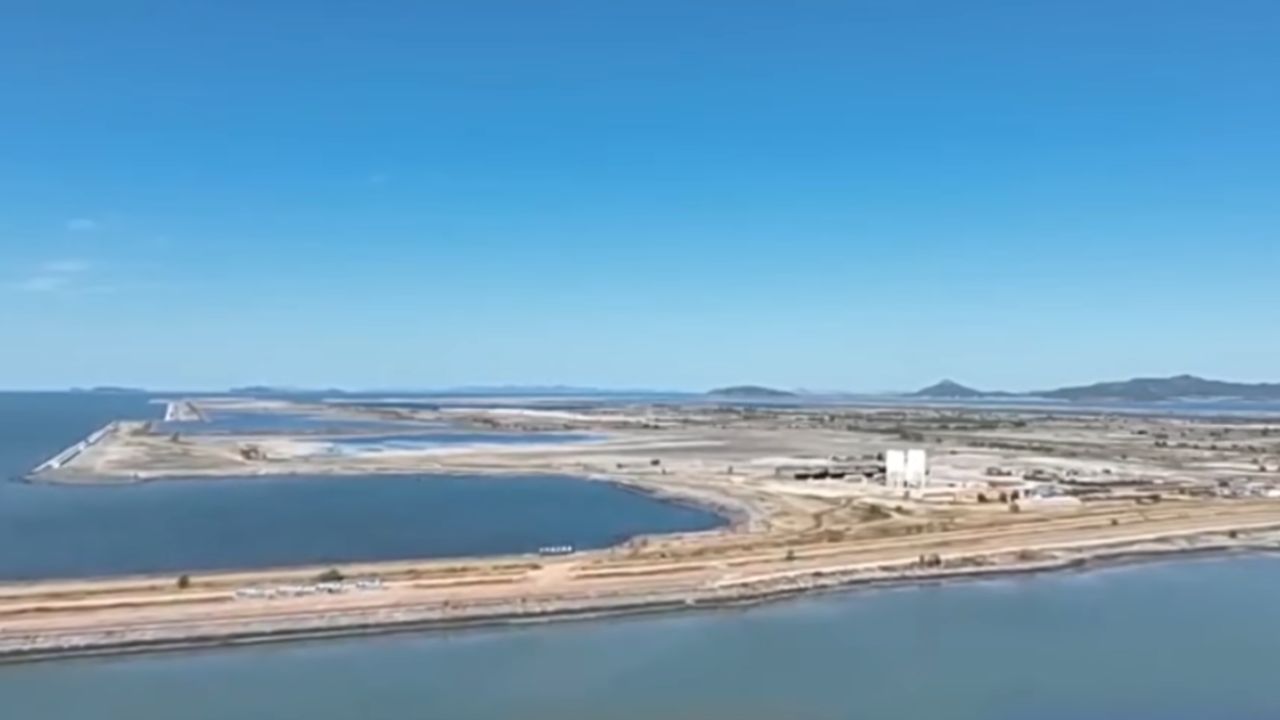
As detailed by specialized publications such as Construction Time, the project is not just a logistical expansion, but a demonstration of technical prowess. The work involves the creation of a colossal artificial island of 20.87 km² in the Bohai Sea, requiring the movement of millions of cubic meters of fill and the use of advanced geotechnics to ensure the stability of a structure that will soon accommodate tens of millions of passengers per year, connecting northeast China to the rest of the world.
Why Build an Airport Over the Ocean?
China’s decision to launch the Dalian Jinzhouwan International Airport into the ocean was not an architectural whim, but a strategic necessity. Dalian is a vital economic and port hub in the far northeastern part of the country, acting as a connection point with South Korea and Japan. The existing airport, Dalian Zhoushuizi, has been operating above its maximum capacity for years, stifling the region’s growth potential.
-
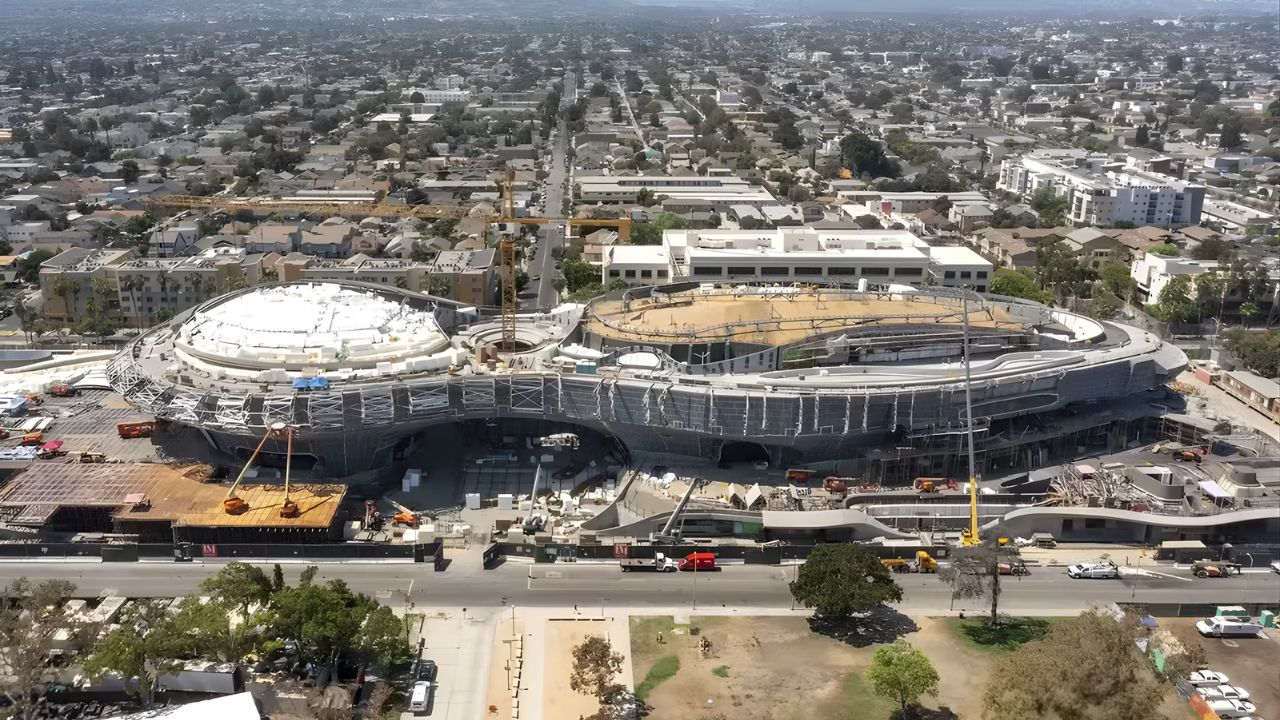
Created by George Lucas with over $1 billion, a futuristic museum in the shape of a spaceship with 1,500 curved panels is about to open in Los Angeles and will house one of the largest private collections of narrative art in the world.
-
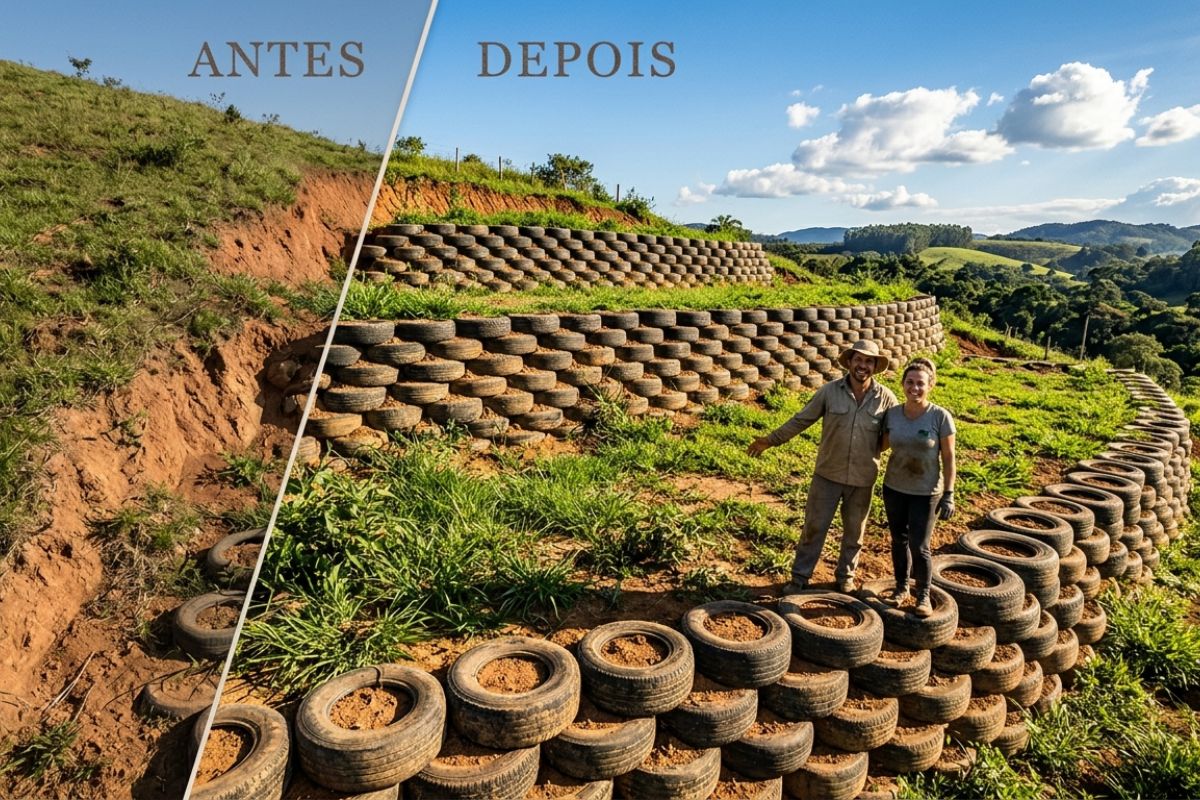
Couple shows how they built a retaining wall on their property using 400 old tires: sloped land turned into plateaus, tires are aligned, filled, and compacted with layers of soil, with grass helping in support and at almost zero cost.
-
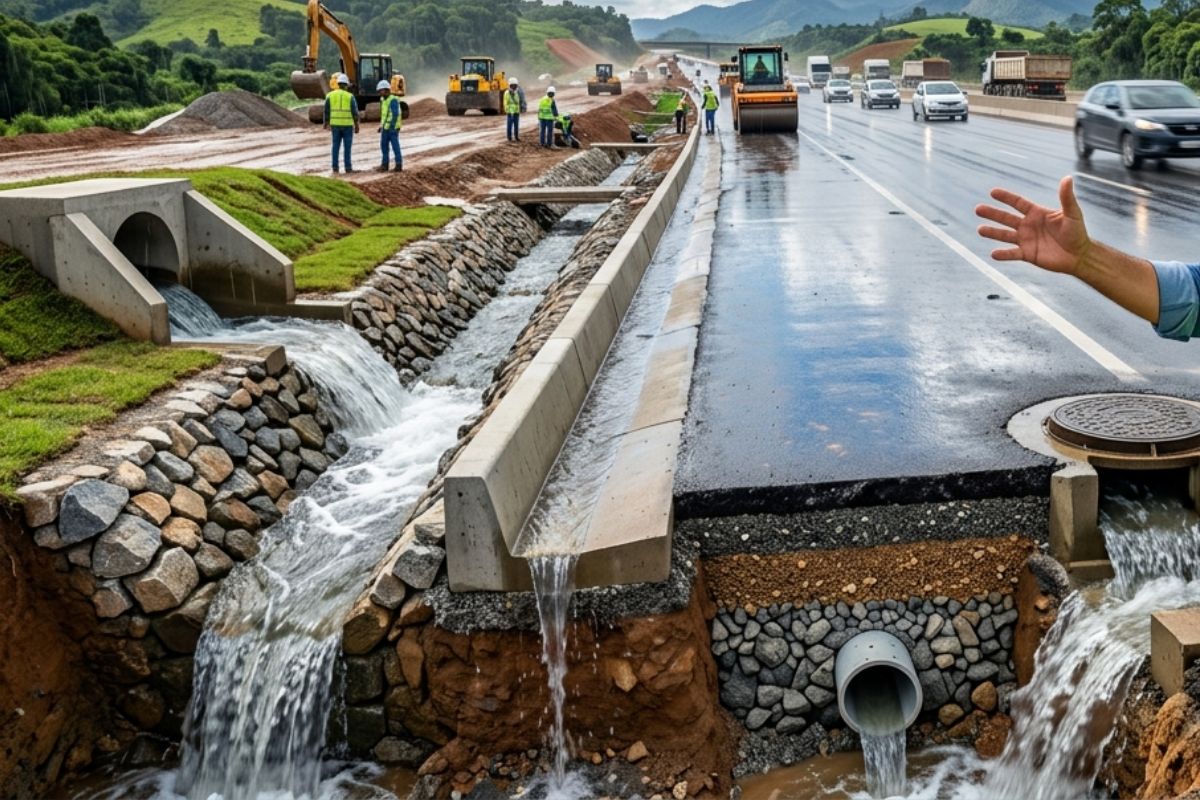
Engineer explains drainage during the rainy season: the difference between surface water and deep water, ditches, gutters, and water outlets on the road, as well as drains and drainage mattresses, to prevent erosion, aquaplaning, and flooding at the construction site today.
-
With 55 floors, 177 meters in height, a 15-meter walkway between the twin towers, ventilated facade, and 6,300 m² of leisure space, Ápice Towers already has one tower completed and another nearly at the top.

More importantly, the city’s geography, densely urbanized and surrounded by mountains, did not provide space on land for the massive expansion needed to transform Dalian into a complete international hub. The solution, inspired by projects such as Kansai in Japan, was to advance 4.5 kilometers over the Bohai Sea. The project, according to Construction Time, was originally approved in 2012 and initiated in 2014 but faced a series of interruptions. Funding issues, environmental challenges, and the pandemic stalled the work. Only in 2023 was the project revived, now as a priority of China’s 14th Five-Year Plan, symbolizing the country’s technical overcoming.
The Geotechnical Battle to Overcome Settlement
Building a platform of 20.87 km² (larger than Kansai and Hong Kong airports) is an extreme geotechnical challenge. The Construction Time reports that the work required the fill of an impressive 187 million cubic meters of soil and various materials, contained by a 21-kilometer perimeter dike. The marine subsoil, composed of thick layers of soft and highly compressible clay, is the main enemy. The risk is “differential settlement”, an irregular sinking of the terrain that can crack runways and terminals.
To avoid the settlement disaster experienced by other maritime airports, Chinese engineering applied cutting-edge solutions. About 12 million prefabricated vertical drains (PVDs) were installed throughout the area. These drains act like straws, accelerating the expulsion of water from deep soil and promoting the controlled consolidation (compaction) of the ground. Simultaneously, dynamic compaction was used, with 90-ton hammers applying impact energy to densify the soil up to 13 meters deep.
The management of the work is another highlight. The entire process is monitored in real-time by a network with over 3.7 million sensor readings (extensometers and pressure sensors). This data feeds a centralized BIM (Building Information Modeling) platform, which uses artificial intelligence to predict abnormal settlements. According to Construction Time, each driven pile has a traceability QR Code linking depth and resistance data to a digital database.
The Investment Gap: China vs. Brazil
The financial disparity is what truly underscores China’s ambition. The R$ 130 billion (approximately 26.3 billion yuan, according to Construction Time) allocated to a single project in Dalian stands in stark contrast to the reality of Brazilian airport infrastructure. According to official data from the Ministry of Ports and Airports of Brazil, the planned investment for the 2025-2026 period across the whole country amounts to R$ 9.7 billion.
This Brazilian amount, which combines private contributions from concessions and public funds, will be distributed over 66 different interventions in 55 airports (including major terminals such as Congonhas and Guarulhos, along with regional aviation). In short, the Chinese government is investing in a single project 13.4 times more than Brazil will invest in its entire main airport network during the same period. The scale of the Chinese project alone already exceeds the total investment of several years in infrastructure in Brazil.
The Future: A Global Hub
When fully operational, with four runways (planned for 2035), the Dalian Jinzhouwan International Airport will have the capacity for over 80 million passengers per year and 550,000 tons of cargo. The main terminal, at 500,000 m², rivals giants like Dubai. The objective is clear: to connect Dalian to major hubs in Asia, Europe, and North America, solidifying China’s position in global logistics.
The project, however, goes beyond aviation. Construction Time points out that the artificial island was designed to host logistics parks and aviation research centers. For the city of Dalian, the work forces the redevelopment of its waterfront and accelerates investments in integrated mobility, such as new subway lines and elevated highways. More than just an airport, China is building a new economic centrality over the sea.
The Dalian Airport is proof that for China, budget and engineering limits seem to be merely hurdles to overcome. The comparison with investments in Brazil raises a crucial debate about priorities and large-scale execution capacity.
In light of this monumental investment disparity, how do you see the future of infrastructure in Brazil? Do you think this scale of project in China impacts the global logistics market? Share your thoughts in the comments; we want to hear from those living the infrastructure reality firsthand.




Seja o primeiro a reagir!