





 Portuguese
  English
  Spanish
  5 min of reading
  1 comment


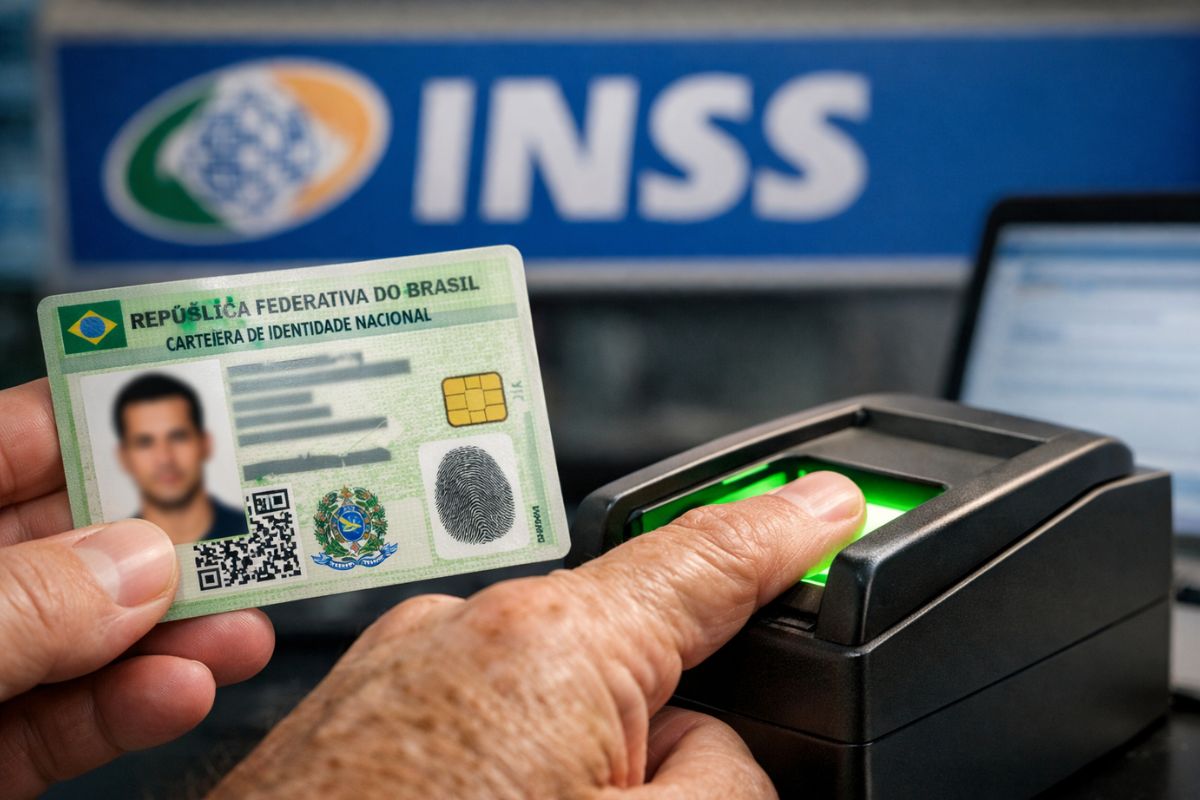


Publications With AI and Alarmism Say That INSS Will Suspend Payments in 2026 Without the National Identity Card. The Real Rule Requires a Document With Biometrics Only for New Applications and Expands Steps in 2026. The CIN Becomes Unique Biometrics Only in 2028, With Exceptions and Official Prior Notice.
The rumor seems simple: “without the new identity, payment stops.” However, the reality is much more specific. The INSS Will Not Cut Retirement in 2026 Due to Lack of the National Identity Card (CIN), and this detail changes everything for those who already receive benefits and for those who will still apply.
What exists is a biometrics schedule tied to new applications at INSS, with phases, accepted documents, and a future milestone in 2028. In the midst of this, videos with telejournalistic language, AI-generated characters and impactful phrases help push fear and urgency, as if it were an “immediate mandatory exchange.”
How the Rumor Gained Traction and Why It Confuses So Many People
The misleading content often repeats a formula: it claims that “starting in January” the new identity would be mandatory and that the INSS would stop paying for those who did not obtain the document. In some cases, there is even a digital “reporter,” with an emergency tone, to give the appearance of confirmed news.
-
Labor shortages are prompting Portugal, Spain, Germany, and Canada to open up opportunities for foreigners in 2026, with salaries ranging from 920 euros in Portugal to 50,700 euros per year in Germany.

-
The government is considering a temporary subsidy for cooking gas following the spike in oil prices due to the war in Iran and warns about the impact of 20% of imports on the prices paid by families.

-
The lack of truck drivers in the country is already halting shipments and threatening deadlines: 88% of transport companies are unable to hire, with an average of eight trucks idle, and the port complex of Itajaí is now feeling the impact.

-
Petrobras is about to transform a forgotten city in the far north of Brazil into the capital of oil: Oiapoque is already feeling the effects even before the first drop of oil comes out from the seabed.


This confuses because it mixes three different things: identity (CIN), biometrics, and benefit maintenance. In practice, the INSS did not consider 2026 as a cutoff date for those who already receive, but rather as part of a gradual process for new requests, with exceptions and alternatives for biometrics using other documents.
What the INSS Really Changed: Biometrics in New Requests
The central change is this: the INSS began to require a document with biometrics for new retirement and pension requests since November 21, 2025. The target is new applications, not the automatic interruption of payments for those already on the rolls.
The focus of biometrics is to enhance security and reduce the risk of fraud in requests. Therefore, the requirement serves as a validation step for the request, not as an instantaneous “tightening” of benefits already granted. Those who already receive do not fall into this blocking logic in 2026 simply because they do not have the CIN.
The Real Calendar Until 2028 and What Changes in 2026
The schedule has clear milestones, and understanding the dates helps avoid pitfalls. In 2026, biometrics are expanded to new applications for other benefits, including maternity leave, temporary incapacity benefit (the old sick pay), and survivor’s pension, starting on May 1, 2026.
The most important aspect is “for whom” and “when.” In 2026, what changes is access to the application protocol, not the automatic continuation of payments for those who already receive.
The requirement for benefit maintenance only enters the horizon in 2028, and even then with communication rules and exceptions.
Which Documents Are Valid Now and When Does the CIN Become the Only Biometrics
In this initial phase, it is not “CIN or nothing.” The INSS accepts biometrics from the CIN, the Driver’s License, or the Voter’s ID for the new requests covered by the rule.
This means that a person may already be covered by biometrics without issuing the new identity immediately, depending on the document they possess.
The turning point happens on January 1, 2028: the CIN becomes the only document with biometrics for all new requests and benefit maintenance.
This is the point that the rumor distorts, pushing 2028 into 2026 and turning “transition” into “immediate cut.”
Expected Exceptions and Why They Exist
Even when the biometrics rule is applied, there are groups protected by exceptions. Those exempt from the requirement include people over 80 years old, those with mobility difficulties due to health reasons (with proof), residents of hard-to-reach areas, migrants in refugee situations and stateless persons, as well as residents abroad.
These exceptions exist because public policy needs to balance security with access. The INSS cannot turn biometric validation into an insurmountable barrier for those with practical limitations related to mobility, documentation, or location. In simple terms: the rule acknowledges that real Brazil is not uniform.
What Changes for Those Who Already Receive and What to Do Without Panicking
For those who are already beneficiaries, the guidance is straightforward: in this first phase, nothing changes in payment due to lack of the CIN in 2026. The measure was not designed to disconnect retirements, but to organize biometrics requirements in phases, starting with new requests.
If, at any point, the INSS identifies the need for biometric updates for an active beneficiary, the expected logic is prior notice, with guidance in advance, without automatic blockage of benefits.
The safe path is to follow your channels and act when there is clear communication, avoiding hasty decisions based on viral videos.
Why Biometrics Entered the Debate and Where Scams Try to Take Advantage
Biometrics is a sensitive topic because it involves security, data, and fear of losing income. It is precisely here that shortcuts of misinformation emerge: “run,” “it’s mandatory,” “last chance,” “it will block.” Scammers and clickbait pages exploit panic to generate shares, audience, and, in some cases, push dubious links and contacts.
The practical filter is to be suspicious of urgency without context. When the message tries to put you against the wall (“either you do it now or you lose everything”), it often seeks to replace information with reaction.
For the INSS, what makes sense is the process: dates, phases, accepted documents, exceptions, and guidance in advance.
In the end, the difference between rumor and rule is the detail that matters most: 2026 is not the year of retirement cuts due to lack of the new identity, and the CIN as unique biometrics appears in the 2028 calendar.
What exists in the path is a reinforcement of biometrics for new requests at INSS, with alternative documents accepted and a clear set of exceptions.
Now I want to know about your experience, because it helps map where the confusion starts: have you ever seen anyone in your family receive this “cut in 2026” notice? And, when it comes to INSS, what makes you most insecure today: recognizing official communications, dealing with biometrics, or understanding the timeline until 2028?









Reconhecer comunicações oficiais, com certeza.