





 Portuguese
  English
  Spanish
  4 min of reading
  1 comment


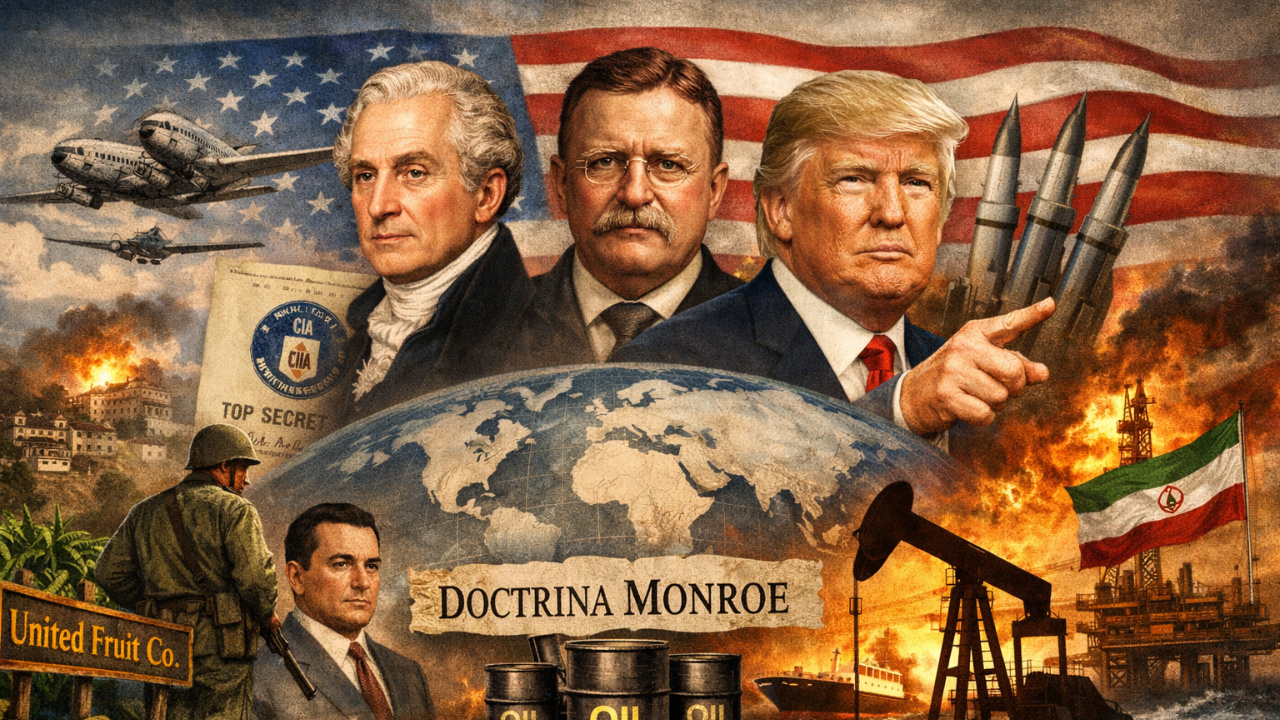


American Interventionism Resurges With Trump Under The Monroe Doctrine, Linking Cold War to Global Energy Geopolitics.
The American interventionism is back at the center of international debate after actions and threats from Donald Trump’s government involving Venezuela, Greenland, and Iran.
Experts point out that this stance of foreign policy brings back the fundamentals of the Monroe Doctrine, historically applied to justify interventions in the Western Hemisphere.
The most cited parallel dates back to 1954, when, in Guatemala, the United States supported the overthrow of democratically elected president Jacobo Árbenz.
-
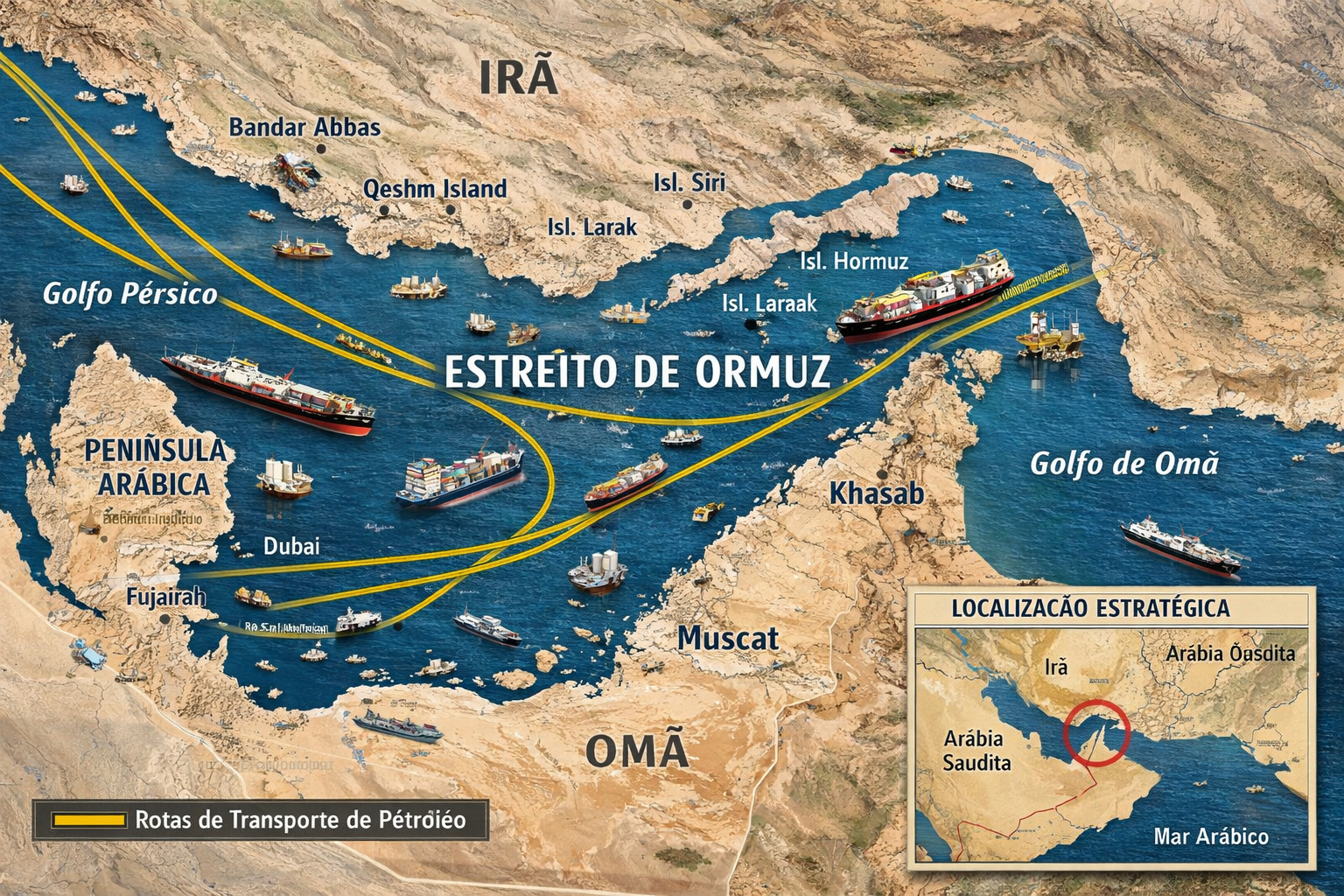
Global summit with over 40 countries pressures Iran for a blockade in the Strait of Hormuz and warns of direct impact on oil, food, and the global economy.
-
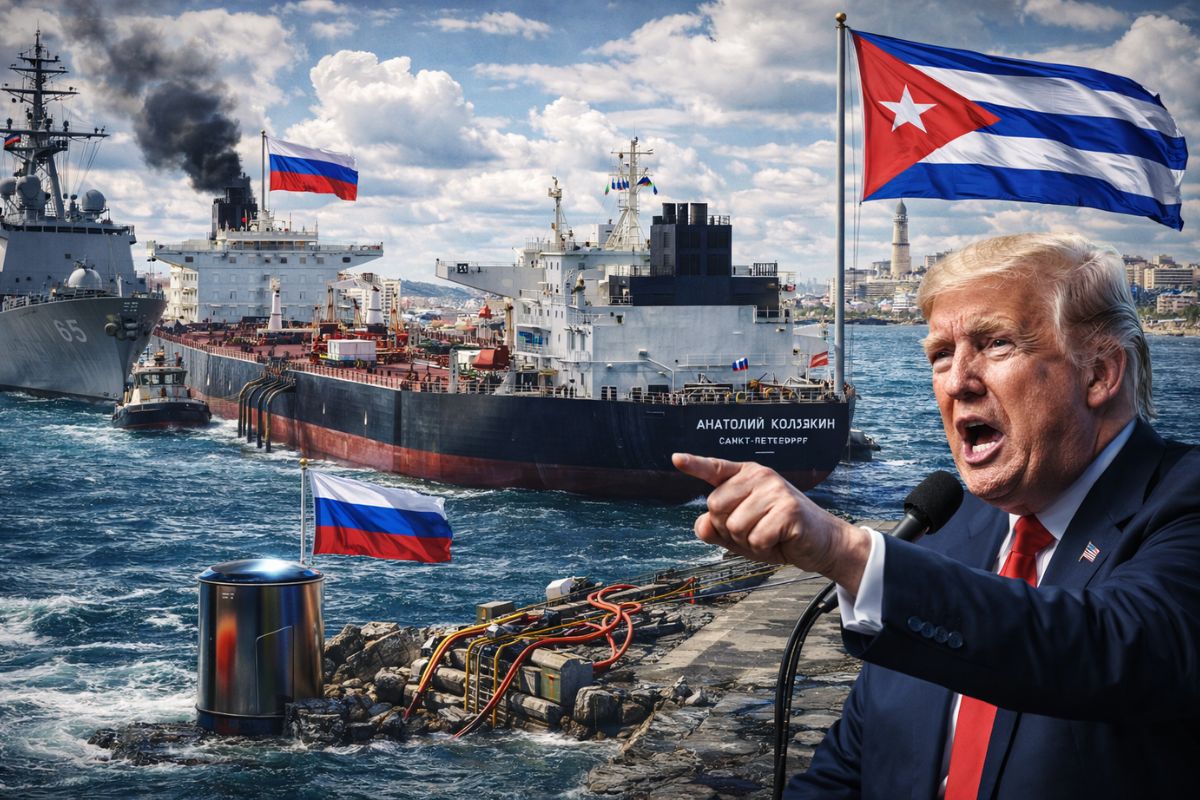
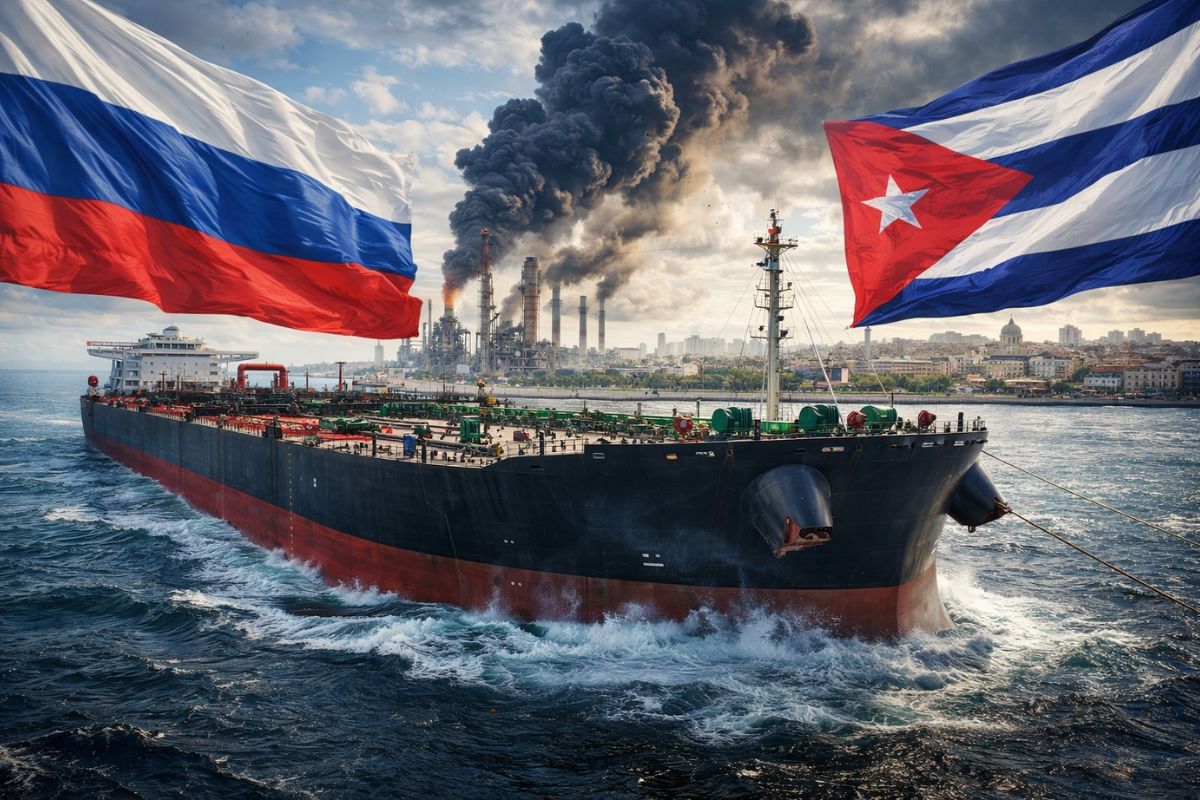
Russia has broken the U.S. maritime blockade to send oil to Cuba and is now loading a second ship while Trump says that “Cuba is next” in a possible military action against the island.
-
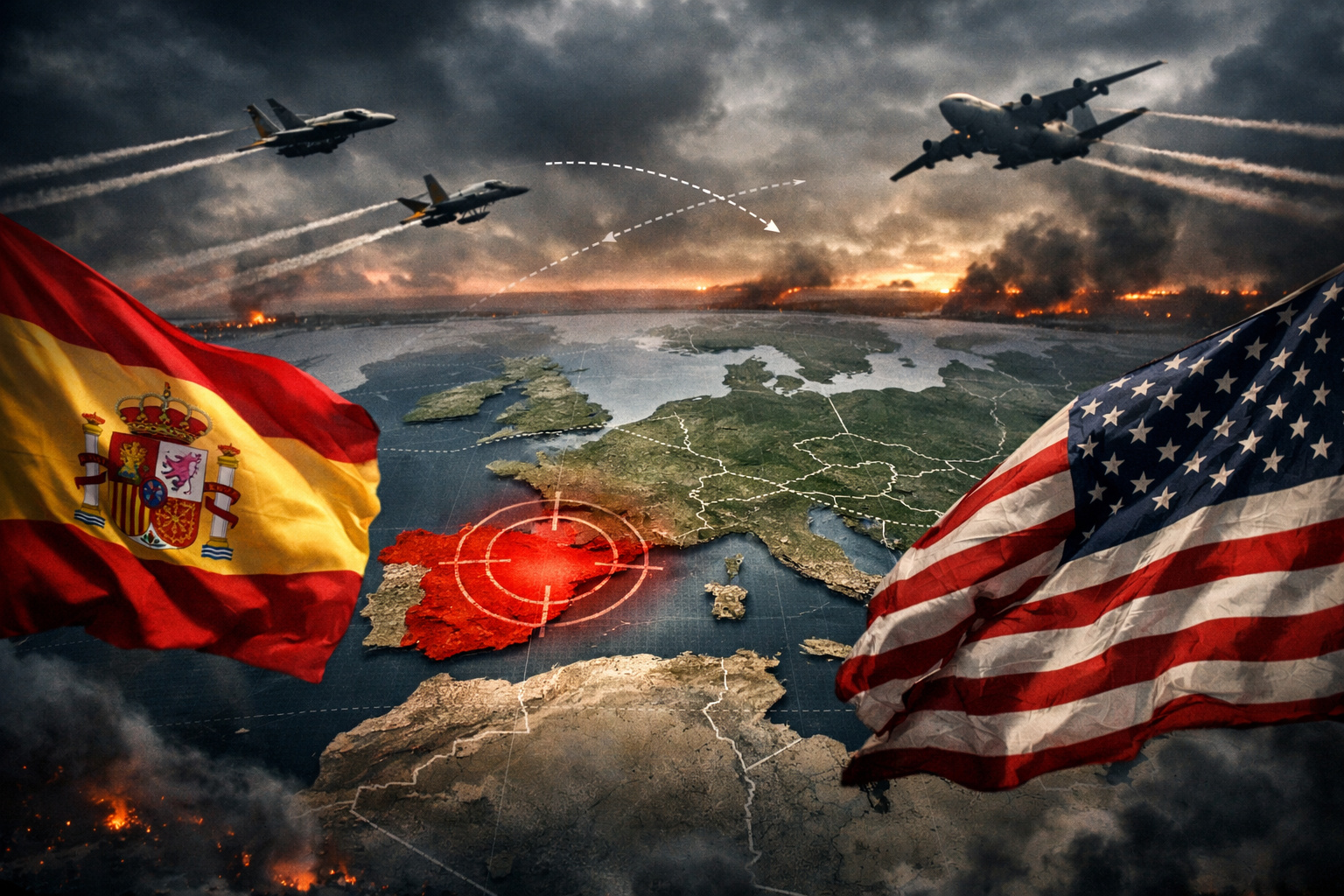
Spain challenges the USA and closes its airspace for operations against Iran, raising global tension and provoking the threat of a trade rupture.
-
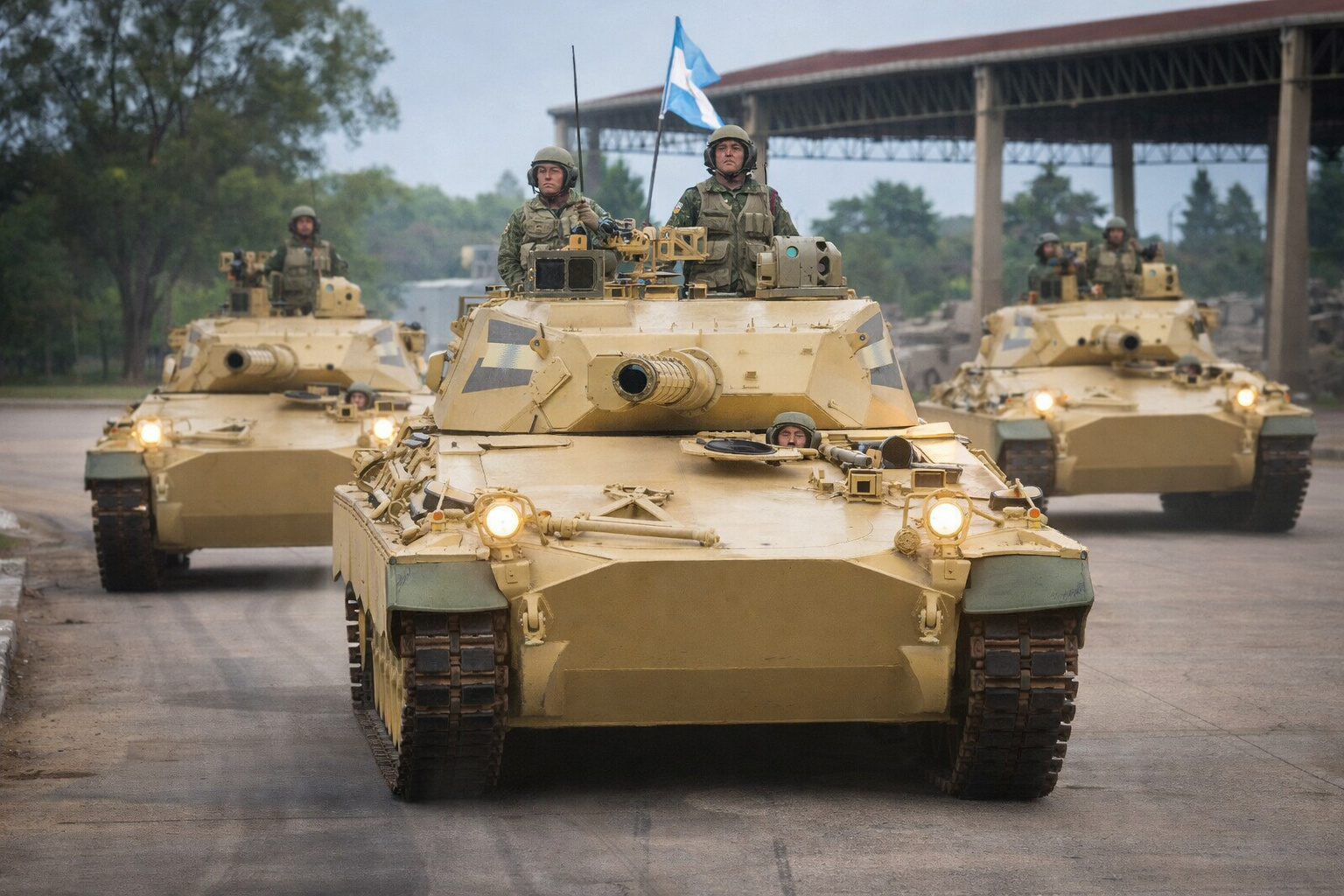
While no other country manufactures tanks in Latin America, Argentina activates the TAM 2C-A2 and raises a curiosity about the technological lag in the region.

In that Cold War context, corporate and strategic interests intertwined, inaugurating a pattern that today reappears under the logic of energy geopolitics and the competition for resources.
United Fruit and The Corporate Gears of American Interventionism
The Guatemalan episode was pivoted by the United Fruit Company (UFC), a banana multinational based in Boston.
Thus, the company reacted harshly when Árbenz proposed expropriating unproductive lands for land reform.
According to researcher Grace Livingstone:
“The company was so powerful in Guatemala and neighboring countries that it was nicknamed ‘octopus’, as its tentacles were everywhere”.
Árbenz planned financial compensation:
“Árbenz would pay a quite generous compensation — double the price paid by United Fruit”, explains Livingstone. “But the company… was not satisfied with the amount.”
Thus, corporate lobbying exploited fears of the Cold War, portraying Guatemala as susceptible to Soviet influence — a decisive argument for activating the U.S. foreign policy apparatus.
Monroe Doctrine: From European Containment to Interventionism
Formulated in the 19th century by James Monroe, the doctrine advocated that European powers should not interfere in the Americas. However, the concept evolved.
In 1904, Theodore Roosevelt expanded the principle, transforming it into a justification for military interventions.
Livingstone summarizes:
“An explicit justification for the United States’ military interventions in the region”.
This doctrinal framework supports, according to analysts, the current American interventionism.
Trump and The Strategic Reinterpretation of Foreign Policy
Experts state that Trump reactivated this logic in his foreign policy.
Jon Lee Anderson observes:
“Before Maduro’s capture, he announced the implementation of Trump’s corollary, reestablishing all doctrinal justifications for U.S. intervention in the hemisphere that we knew until then”.
Stewart Patrick evaluates:
This “logic of spheres” is “the center of Trump’s view of the world order… and is partly a consequence of his long-standing aversion to globalism, multilateralism, alliance formation, and endless wars in distant countries”.
Energy Geopolitics at The Center of Tensions
If in Guatemala the motivation combined ideology and corporate interests, today energy geopolitics occupies a central role.
According to Anderson, Venezuela and Iran hold strategic oil reserves. The fear is that these resources may fall into the Chinese sphere of influence.
Trump stated that the National Security Strategy aims to:
“Protect trade, territory, and resources that are fundamental to our national security”.
Thus, Greenland enters this board due to its rare mineral reserves — essential for technology and defense.
Repeated Tactics: From The Cold War to Modern Psychological Warfare
The operational similarities between 1954 and the present are striking.
Livingstone details:
“Just as we recently observed in Venezuela, there was a military concentration around Guatemala”.
“Eisenhower announced the deployment of two submarines to the south, they sent bombers to neighboring Nicaragua, and began intercepting Guatemalan ships in the waters surrounding the country. In other words, there are many similarities with Venezuela.”
At that time, the CIA used psychological warfare: pamphlets, covert broadcasts, and strategic bombings.
“At the CIA radio station, they claimed that thousands of people were joining the mercenary forces”, says Livingstone. “But when they crossed the border, there were no spontaneous uprisings.”
Military and Symbolic Pressure in The 21st Century
The current rhetoric maintains the coercive pattern.
Trump published:
“A massive armada is heading to Iran”.
“Like in Venezuela, it is ready, willing, and able to quickly fulfill its mission, with speed and violence, if necessary.”
In Greenland, threats of annexation and economic sanctions reinforced the visual intimidation policy, according to analysts like Mike Crawley.
Political Humiliation as A Tool of Power
The symbolism also spans decades.
After Árbenz’s fall:
“At the airport, the new regime forced him to be searched from head to toe, even his underwear, in front of the derision of the crowd”, Livingstone recounts.
Thus, Anderson draws a parallel with Maduro:
“First, we saw images of the bombing of Caracas”.
“Then, we saw Maduro handcuffed, accompanied by military personnel and humiliated. This is part of the pattern.”
Long-Term Consequences of American Interventionism
The Guatemalan outcome raises alarms.
Livingstone states:
“Guatemala shows that the United States was willing to overthrow a democratically elected government”.
“And since the Monroe Doctrine was proclaimed, the United States has intervened in Latin America over 80 times.”
Thus, after 1954, the country plunged into decades of violence, authoritarian regimes, and drug trafficking — side effects that exceeded the initial goals of American foreign policy.
Historical Lessons for Current Geopolitics
Thus, analysts assess that repeating Cold War strategies under a new energy guise can generate prolonged instability.
The power vacuum, as seen in Guatemala, favors migration crises, transnational crime, and indirect threats to the U.S. itself.
Thus, the debate about American interventionism ceases to be merely historical — and becomes a central theme of the contemporary global order.









parabéns pela matéria