





Known as stinknet, the invasive plant grows in backyards, sidewalks, and desert areas, competes with local vegetation, releases seeds capable of remaining viable in the soil for five years, and requires gloves, long clothes, safe disposal, and reporting of found foci by residents to the environmental authorities responsible for the local region.
An invasive plant with yellow flowers and a smell similar to turpentine is advancing through backyards, sidewalks, and desert environments in Arizona, United States. Known as stinknet, or stinknet, the species competes with native flowers, produces thousands of seeds, and can become highly flammable material during the summer.
The information was published by Popular Science on March 4, 2026, based on guidelines from the University of Arizona, environmental organizations, and conservation authorities. The expansion has already reached the counties of Maricopa, Pinal, and Pima, in addition to records in Nevada, California, Mexico, and Australia.
Yellow flowers hide an aggressive species
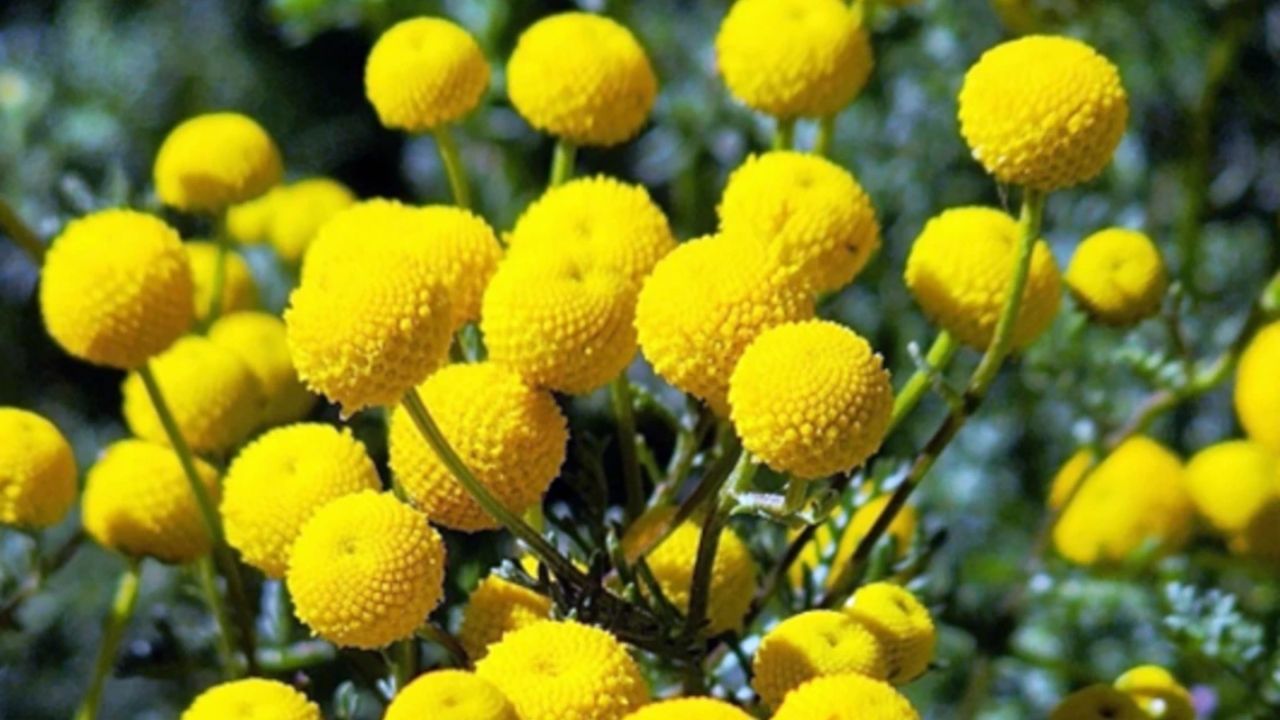
The stinknet has golden-yellow inflorescences, rounded and formed by numerous small flowers. Its leaves are green, finely cut, and may resemble the foliage of a carrot.
-
646 meters: The engineering error that brought down the tallest structure on the planet

-
Unreleased Honor smartphone appears in the hands of world champion and draws attention with robotic arm and gimbal camera.
-
Instead of demolishing the historic 2,750-ton theater to make room for a new stadium, engineers placed the entire building on 72 wheeled platforms, moved the structure 563 meters through the streets of Detroit, and preserved the halls, stage, and facades without dismantling the building.

-
Toyota puts hydrogen trucks in a race against diesel models in the Arizona desert, showing faster acceleration and emitting only water vapor from the exhaust, while investing in stations and preparing class 8 vehicles for commercial routes of up to 800 kilometers with refueling in 15 to 20 minutes.


This appearance makes identification difficult for people without botanical experience. Amid the desert wildflowers, the invasive plant may seem like a natural part of the landscape, allowing it to grow and produce seeds before being recognized as a threat.
Strong smell resembles solvent and turpentine
The plant releases a pungent odor, often compared to turpentine or paint solvent. The smell becomes even more intense when the leaves are touched, crushed, or removed.
According to the source, the intensity can be enough to cause headaches in some people. The unpleasant odor serves as an identification signal, but it is not the only risk associated with the species.
Backyards and Cracks Also Become Shelters
The stinkweed can grow in a wide variety of environments. Besides desert and riverside areas, it appears in disturbed lands, residential gardens, roadsides, and small cracks in urban sidewalks.
This adaptation facilitates its approach to homes and neighborhoods. An apparently small focus in the backyard can produce enough seeds to expand the infestation, especially when the plant completes its cycle without being removed.
Growth Occurs During Milder Months
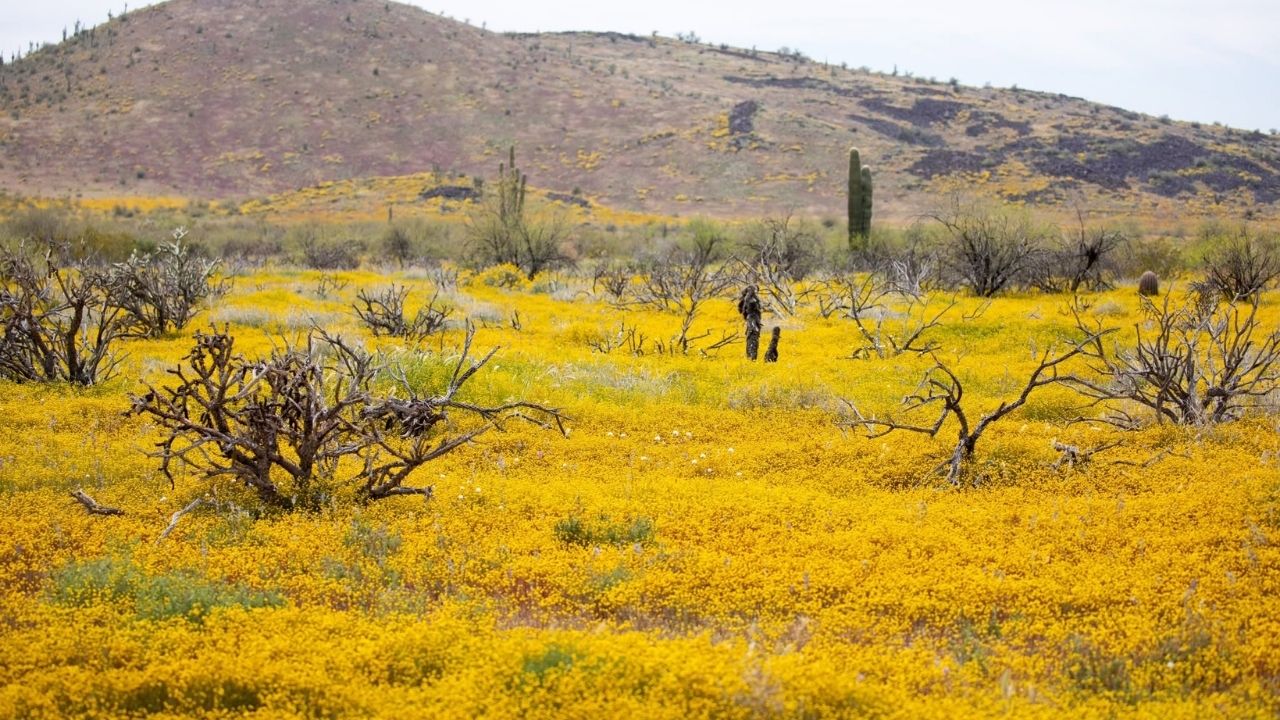
The species is an annual plant that develops mainly during the winter. During this period, it takes advantage of favorable temperature and humidity to occupy spaces among other plants.
When summer arrives, the dry vegetation remains on the ground. This change transforms a green and flowering infestation into a combustible mass, capable of contributing to the spread of fire in regions already vulnerable to fires.
Species Chokes Native Desert Flowers
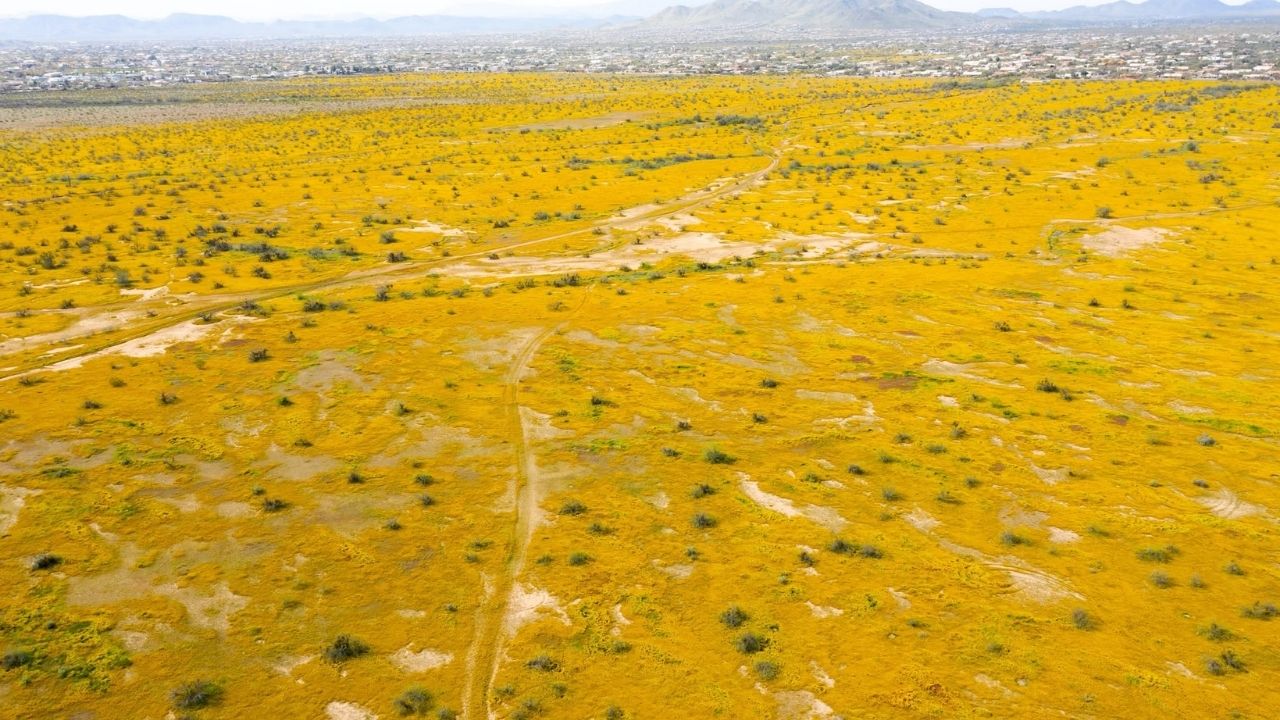
When it grows unchecked, the stinkweed competes for light, water, space, and nutrients with local plants. Its dense expansion can cover areas where different wildflowers once thrived.
Native species play important roles in Arizona’s ecosystems. By dominating the terrain, the invasive plant reduces available resources and hinders the survival of vegetation originally adapted to the desert.
Thousands of Seeds Worsen the Problem
A single plant can release thousands of seeds upon completing its development. As they are small and numerous, they can spread across the soil, adhere to objects, or reach nearby areas.
Late removal does not necessarily eliminate the infestation. The seeds can remain viable in the soil for up to five years, creating successive generations even after the adult plants have been removed.
Shoes and clothes can transport seeds
After walking through an infested area, seeds and plant fragments can remain stuck to shoes, clothes, or equipment. Without proper cleaning, this material can be carried to other yards, trails, or lands.
The recommendation is to carefully clean items used in areas with the species. Avoiding involuntary transport is one of the simplest ways to prevent new outbreaks from appearing far from the original area.
Pets should avoid the outbreaks
The source also recommends not allowing pets to run among large concentrations of the stinky weed. Contact can spread plant material through fur and paws.
Besides seed transport, there is concern about possible reactions to contact. Keeping dogs and other animals away reduces the chance of bringing plant fragments indoors or to other areas.
Dry plant increases the risk of fires
During the hot and dry period, dead vegetation becomes highly flammable. In areas with extensive infestations, the material can form a continuity between different points of the land.
This layer facilitates the advance of flames. The invasive plant does not need to start the fire to worsen the problem, as its dry biomass can act as fuel when the fire is already present.
Smoke can also affect breathing
Direct contact with the plant can cause skin irritations, according to the information released. People attempting to remove it without protection may experience rashes or skin discomfort.
When the vegetation burns, the smoke can also cause respiratory problems. The risk combines physical exposure, suspended particles, and gases produced by the combustion of plant material.
Removal requires gloves and long clothes
In yards, the guidance is to carefully remove the plant by the root, avoiding leaving parts capable of continuing development. The activity should be done with gloves, long sleeves, and other protective clothing.
All removed material needs to be collected and disposed of safely. Leaving uprooted plants on the ground can allow mature seeds to continue spreading, nullifying part of the control effort.
Early removal reduces dispersion
The timing of removal influences the outcome. Young plants, still without mature seeds, pose a lower risk of spreading during handling.
When the flowers are already developed, more care is needed. Controlling the focus before seed production reduces the amount that will remain hidden in the soil during the following years.
Herbicides require responsible application
The source reports that certain herbicides, including products with glyphosate and pre-emergent options, can be used in controlling the species. However, application depends on local conditions and growth stage.
Any chemical product should be used according to the label instructions and with adequate protection. Incorrect use can affect desired plants, expose residents, and not resolve the existing seed bank in the area.
Photographs help record new outbreaks
Residents who identify a possible infestation are advised to photograph the plant before removal. The record helps verify identification and document the species’ distribution.
The outbreaks can also be reported on the platform indicated by the organizations responsible for monitoring. The reports help create maps and direct actions to regions where stinkweed is still establishing.
Origin in Arizona has not yet been confirmed
It is not fully clarified when or how the species arrived in Arizona. One hypothesis is that it was transported in soil or adhered to a vehicle coming from California.
The plant was recorded in that state in 1981 and may have remained little noticed during part of its expansion. Introduced species often only attract attention when they have already formed numerous and difficult-to-eliminate populations.
Advance surpassed state borders
Besides the counties of Maricopa, Pinal, and Pima, the stinkweed has been identified in other regions. There are records in Nevada, California, Mexico, and Australia.
The distribution shows that the problem is not restricted to a single environment. The ability to grow in disturbed or preserved soils increases colonization opportunities and complicates large-scale control.
Rapid identification can contain the expansion
The appearance of a wildflower, the small size of the seeds, and the ability to remain in the soil for years make control prolonged. Removing only the visible plants in one season may not be enough.
Affected areas need to be monitored to detect new germinations. Recognizing the invasive plant early, removing specimens with protection, and preventing dispersal are essential measures to prevent small outbreaks from dominating large areas.
Backyards can become the first line of control
The stinkweed demonstrates how a visually discreet species can alter vegetation, increase fire risk, and affect people before being recognized as a threat. Control depends on both the authorities and the attention of residents.
Protected removal and reporting of outbreaks can prevent new seeds from remaining in the soil for years. Would you be able to differentiate this invasive plant from a common wildflower in your backyard? Leave in the comments how your region controls rapidly spreading species.


