





 Portuguese
  English
  Spanish
  4 min of reading
  1 comment


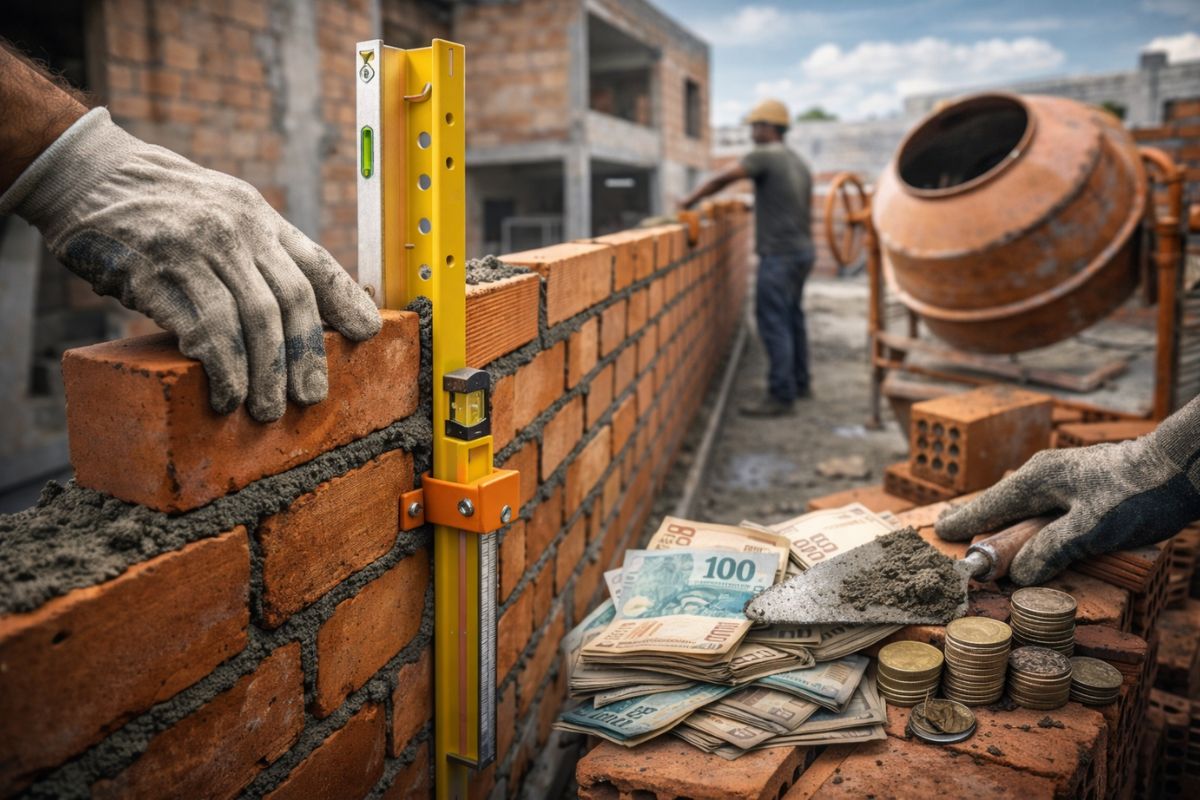


Inspired by the construction routine, a mason created a metal masonry template that makes the wall rise straight almost by itself, corrects plumb, integrates level hose, reduces heavy rework, and helps beginners to lay bricks correctly, saving material and effort on site in small works, renovations, and larger constructions
A video published on the channel “I’m Coming to the CONSTRUCTION” showed a mason using a masonry template attached to the foundation to raise walls almost in line, with less physical effort and much more precise control of plumb and level. The tool caught attention for being simple, metallic, and designed for direct use on site, without relying on expensive equipment.
From this solution, the mason transforms a job known for back pain, constant measuring, and the risk of crooked walls into a repeatable process, with less improvisation and more standardization. The goal is to enable both experienced professionals and beginner helpers to lift straight walls with the same template, reducing rework, waste of mortar, and time-consuming corrections in the finishing.
What Is the Template Created by the Mason
The equipment shown is a metal masonry template directly attached to the foundation, functioning as the “zero point” of the wall.
-
This is the cost to build a simple 60 m2 house in 2026, including contingencies, foundation, finishing, labor, and hidden fees.

-
Amphibious houses with a floating dock system gain global attention by revealing technology that allows homes to rise with floods and avoid losses in high-risk areas.

-
Between tunnels, bridges, and billions in investment, Istanbul is preparing to receive a 125-kilometer railway that crosses continents, enhances the circulation of goods and passengers, and changes the strategic outlook of Turkish transportation.

-
China completes the most critical section under the Yangtze River with the intelligent tunneling machine Linghang, excavating 11.32 continuous kilometers at depths of up to 89 meters and transforming the Chongming-Taicang tunnel into a landmark that redefines the scale of high-speed rail engineering in the 21st century.

Instead of relying on improvised corners made of wood or stacked blocks, the system offers a stable mechanical reference, guiding the entire laying of the bricks from the first course.
This template combines, in a single body, three main functions: plumb orientation, support for the mason’s line, and marking the height of each course.
In practice, it works as a guide rail that accompanies the growth of the wall, allowing the mason to maintain the same standard from the first to the last brick.
How the Template Keeps the Plumb of the Wall
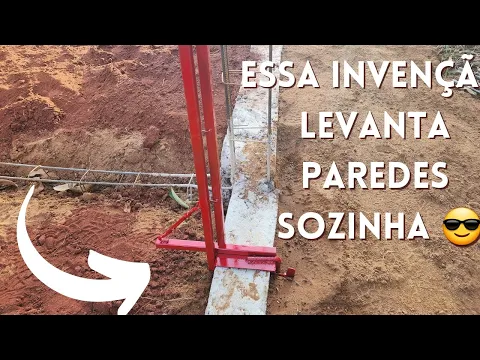

At the base of the template, there is an adjustment system that allows for small lateral movements in relation to the foundation.
The mason turns the mechanism until the piece aligns with the concrete, correcting the plumb without having to redo the corner of the wall.
Once the correct plumb is found, the structure is locked and acts as a fixed reference for the corner.
From that moment on, it’s enough to align the bricks to the template’s metal tube.
This reduces the reliance on the “trained eye” and ensures a repeatable plumb standard throughout the wall, even when the work is divided between an experienced mason and a learning helper.
Level Hose Integrated into the Template
To control the horizontal level, the creator of the device added clips to the metal body to secure the level hose.
This way, the water column is exactly at the height where the measurement needs to be made, without improvisation with tape or loose markings on the wall.
The mason adjusts the water level to the desired marking and secures the hose to the template, which then works as a simultaneous reference for both plumb and level.
Periodic checks throughout the construction prevent small errors from adding up and resulting in visible differences from one side of the wall to the other.
Control of Course Height and Material Savings
Another important function of the template is the vertical control of the work.
The structure features markings along the tube that correspond to the brick and mortar set, with about 21 centimeters between each marking, simulating a standard step for each course.
To utilize these references, the mason installed a nail at the end of the structure, which serves as a fixed support for the line.
This way, the system provides clear advantages during the laying:
Precision, because the predefined marks indicate the exact height of each course of blocks
Alignment, as the line always rests on the same point, avoiding irregular rises and falls
Standardization, allowing a consistent rhythm of courses and facilitating the helper’s work
Savings, reducing rework in sensitive areas such as doors and windows, where level errors tend to appear
The use of these fixed references improves masonry control, accelerates the progress of the work, and decreases the chance of costly corrections in plastering, finishing, and placing frames.
The Impact of the Invention on the Construction Site Routine
With the template properly adjusted to the foundation, the helper can continue laying bricks following only the references of the piece, without having to rely on measurements all the time.
When the metal tube touches a rebar, a marker, or another previously defined limit, it becomes clear that the corner is within the previously established plumb.
In practice, the invention reduces the constant measuring effort, frees the mason for more complex tasks, and makes the process of raising walls much more educational for those still learning.
Instead of wasting time checking tape, plumb line, and level at every turn, the team relies on a repeatable system, which reduces the margin of error without increasing project costs.
Knowing this, would you use a template like this to raise straighter walls in your construction or do you prefer to rely only on the trained eye of the mason and the traditional work line?









Claro que sí 👍