





 English
  Francês
  Alemão
  Italiano
  Japonês
  Norueguês
  Portuguese
  Spanish
  6 min of reading
  0 comments


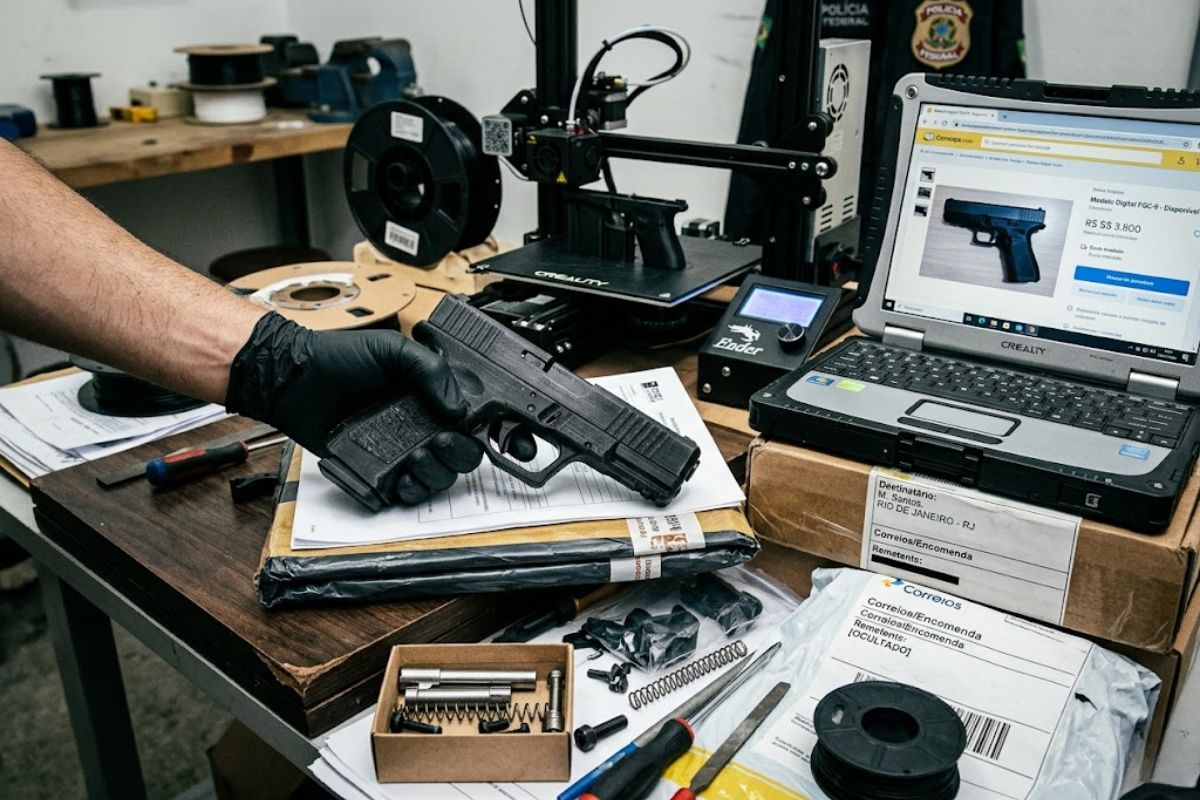
The Investigation Into 3D Printed Weapons Identified At Least 75 Transactions on E-Commerce Platforms Used in Brazil. Parts, Digital Designs, and Technical Support Were Sold Online, Allowing Domestic Production of Arms and Raising Alerts About Easy Access, Criminal Risk, and Control Difficulties by Authorities.
An investigation conducted by the Public Prosecutor’s Office of Rio de Janeiro revealed that 3D printed weapons were being sold on e-commerce platforms used in Brazil. The information was confirmed this Tuesday (12) by the coordinator of the Special Action Group Against Organized Crime (Gaeco) of the Public Prosecutor’s Office of Rio, Letícia Emile, during a press conference on the case, opening a new chapter in the debate about home technology and public safety. The scheme involved the sale of parts, digital designs, and even technical guidance for the manufacture of arms.
According to the G1 portal, at least 75 transactions involving components of 3D printed weapons were identified on digital platforms, with buyers distributed across different regions of the country. Part of these acquisitions, according to the Public Prosecutor’s Office, was associated with individuals linked to drug trafficking, militias, and other crimes.
How 3D Printed Weapons Arrived on E-Commerce
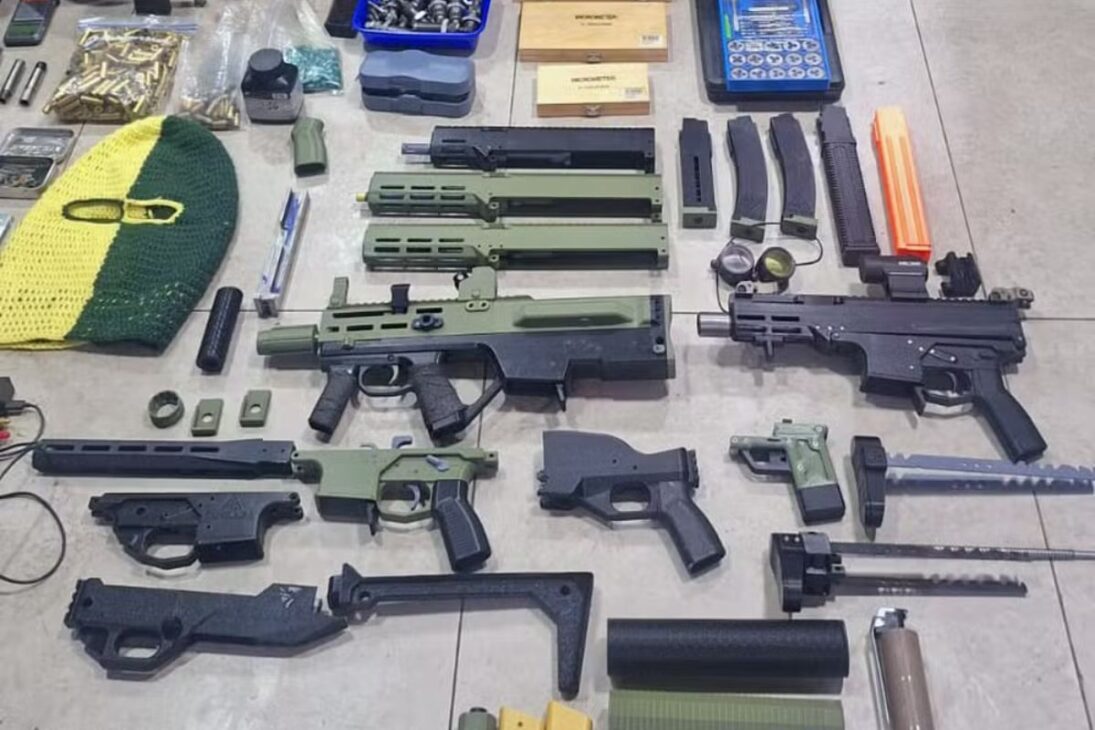
The investigations indicate that 3D printed weapons have started to circulate in common digital buying and selling environments, expanding the reach of this type of technology outside any formal system of arms control.
-
A trick with a fan and a PET bottle goes viral in the extreme heat of 2026 and promises to cool the environment while using almost no electricity.

-
A 176,000-hectare farm in the Northeast is up for sale for R$ 1.2 billion, featuring a runway, fuel station, river, schools, and warehouses, and has become a phenomenon on social media due to its size, which surpasses that of Brazilian capitals.

-
Finding a 3.9 mm larva of the lionfish in the Amazon raises maximum alert and indicates that the invader may already be reproducing in the region.

-
On a tiny island of 6.3 hectares, Mitsubishi created a city for over 5,000 residents, sustained by underwater coal mining, until the project’s collapse left ruins that still impress Japan.

During a press conference on the case, the coordinator of the Special Action Group Against Organized Crime (Gaeco) of the Public Prosecutor’s Office of Rio, Letícia Emile, confirmed that investigators located ads and transactions involving parts of arms produced through 3D printing. These items were offered on platforms widely used by Brazilian consumers.
According to the data presented, approximately 75 transactions involving parts and accessories related to the manufacture of these weapons were identified, which drew the attention of authorities due to the potential for dissemination of this type of armament.
In addition to the direct sale of the parts, investigators detected that the very structure of e-commerce allowed these items to be offered like any other product, facilitating access for interested individuals in different parts of the country.
The Operation That Revealed the Sales and Production Network
The case came to light during the so-called Operation Shadowgun, an investigation conducted by the Civil Police of Rio de Janeiro in partnership with the Public Prosecutor’s Office and the Ministry of Justice.
The operation aimed to dismantle an interstate scheme for the production and commercialization of 3D printed weapons, identified from monitoring suspicious activities linked to the sale of arms components on the internet.
To date, four men have been arrested, including the one identified as the leader of the investigated group. In total, five arrest warrants and 36 search and seizure warrants were executed.
The actions occurred in eleven Brazilian states, including Rio de Janeiro and São Paulo, indicating that the scheme had a national reach and involved buyers from different regions of the country.
Digital Designs and Technical Support Expanded the Reach of Weapons
One aspect that caught the investigators’ attention was the way the group operated. It was not just about selling weapons or physical parts.
According to the Attorney General of Justice of Rio, Antônio José Campos Moreira, the suspects also marketed the digital design needed to produce 3D printed weapons, which significantly expands the reach of the technology.
In addition to the digital file, buyers received detailed instructions and even technical support to carry out the manufacturing at home. This model allows anyone with access to a 3D printer to produce arms without relying on a traditional industrial structure.
For investigators, this combination of digital design, tutorial, and technical support transforms weapon manufacturing into an accessible process, capable of being performed by ordinary users with basic knowledge of the technology.
Domestic Production and Low Cost Worry Authorities
Another point highlighted during the investigation was the relatively low cost to produce certain models of weapons using 3D printing.
According to Delegate Marcos Buss, head of the 32nd Police District (Taquara), one of the models analyzed during the investigation was the Urutau carbine. The weapon is said to have been developed by a Brazilian using the pseudonym “Zé Carioca.”
According to the delegate, this carbine can be fully manufactured using a domestic 3D printer, without the need for complex industrial equipment.
Investigators claim that the approximate production cost of this model can reach about R$ 800, which makes the technology even more concerning from a public safety standpoint.
The possibility of manufacturing weapons at home, with relatively accessible materials, raises discussions about how to control technologies that were originally developed for industrial, educational, and prototyping applications.
Risk of Dissemination Among Young People and Radical Groups
During the press conference on the case, authorities also warned about a sensitive aspect: the social impact of the dissemination of these technologies.
According to the Public Prosecutor’s Office, access to 3D printed weapons could expand rapidly among young people, especially because the technology necessary to produce them is increasingly present in home and educational settings.
Another concerning factor pointed out by investigators is the discourse used by certain groups that encourage the production of these weapons as a way to unrestricted access to armament.
For the Attorney General of Justice, this narrative could stimulate individuals with no criminal history to manufacture and carry weapons outside any state control system, increasing the risks of circulation of irregular arms.
Moreover, authorities warned that the technology could also be exploited by extremist groups or criminal organizations, precisely due to the difficulty in tracking weapons produced outside traditional industrial chains.
Buyers Linked to Crimes Were Also Identified
The investigation identified at least 79 buyers across the country related to the investigated scheme. Among them, some have records or connections with criminal activities.
According to the Public Prosecutor’s Office, some of the buyers were associated with crimes such as drug trafficking, militias, and homicides, which led to the execution of search and seizure warrants in different states.
In the state of Rio de Janeiro, for example, ten buyers were identified, distributed between the capital, the Lakes Region, and North Fluminense.
Authorities reported that the investigated individuals may be charged with organized crime, money laundering, and illegal arms trading, depending on each person’s involvement in the scheme.
The Challenge of Controlling 3D Printed Weapons
The advance of digital manufacturing technologies has brought new challenges for authorities and public safety experts.
3D printers were originally created for industrial applications, product design, and rapid prototyping. However, the emergence of digital designs for weapons demonstrates how technology can be used in ways that escape traditional state control.
Unlike weapons produced by registered manufacturers, 3D printed weapons can emerge in domestic environments, without serial numbers or traceability, complicating investigations and oversight.
For this reason, the investigation has opened a new debate about how to balance technological innovation, freedom of use of digital tools, and effective mechanisms for arms control.
Now We Want to Hear From You: Given the advancement of technology and the possibility of producing weapons at home, do you believe that new rules should be created to control digital designs and 3D printers used to manufacture arms? Share your opinion and participate in the discussion.








Seja o primeiro a reagir!