





 Portuguese
  English
  Spanish
  6 min of reading
  0 comments


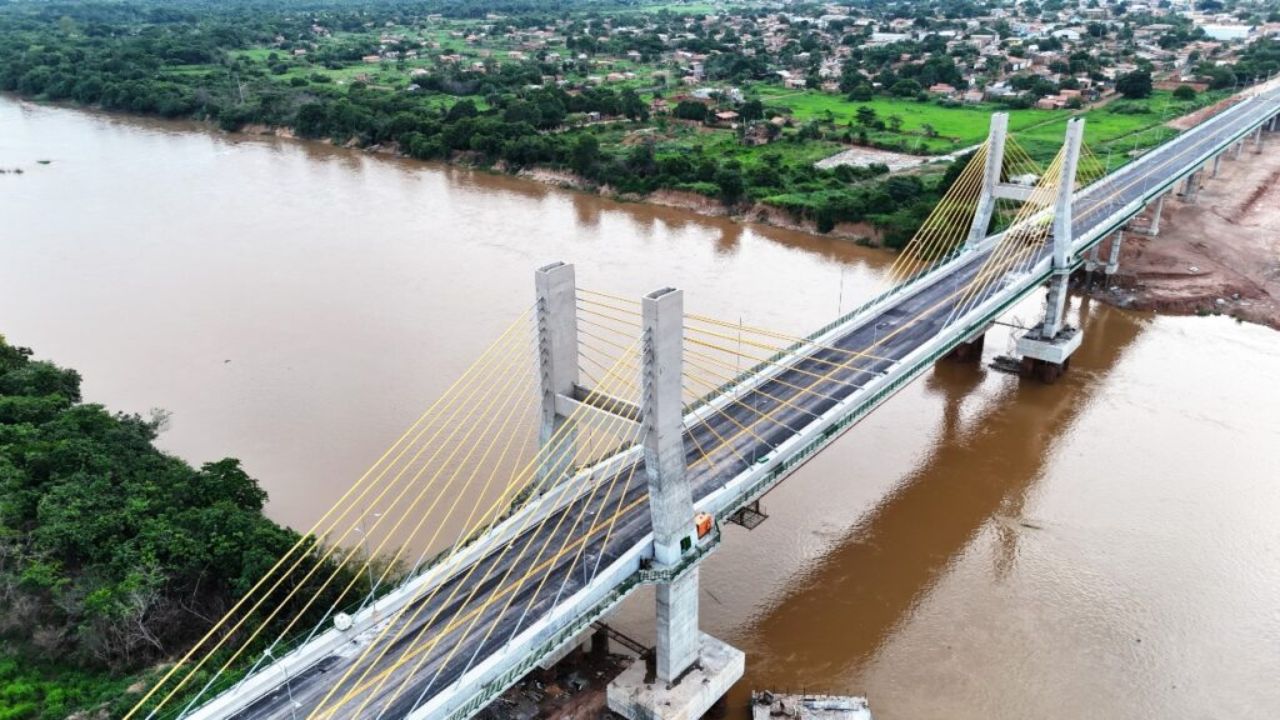
In Marabá, A Billion-Dollar Investment in Bridge and Infrastructure Breaks Isolation, Attracts Mining and Agribusiness, Multiplies Jobs, Increases Property Values, and Proves That The Project Called Waste Has Become An Asset That Pays For Everything
A billion-dollar investment may initially seem like just a gigantic number on a public spreadsheet. In the case of Marabá, in southeastern Pará, this figure seemed even riskier: an isolated city, cut off by the Tocantins and Itacaiunas rivers, reliant on slow and expensive ferries, with blocked logistics and suppressed economic potential. For many, it was the perfect picture of a project doomed to be labeled as waste.
However, time has told a different story. The construction of a monumental bridge over the Tocantins River, combined with a billion-dollar investment in infrastructure that included roads, drainage, lighting, and social projects, has transformed Marabá into a vital logistics hub, accelerated mining and agribusiness, fueled real estate appreciation, and demonstrated that a major project can indeed become an asset that pays for itself and returns much more than it received.
Before The Billion-Dollar Investment: Marabá Surrounded by Isolation
For decades, Marabá lived with a paradox. The city was in a strategic position, at the confluence of two major rivers, surrounded by areas rich in minerals and with expanding agricultural frontiers. At the same time, it suffered from a chronic problem: the lack of infrastructure made logistics expensive, slow, and unpredictable.
-
India announces a plan of $3.06 billion to bring aviation to forgotten regions: 100 new airports, $1.07 billion in subsidies, and regional routes guaranteed for 10 years, from 2026 to 2036, away from the centers.
-
Brazil blocked a proposal from the United States at the WTO that would make the exemption from tariffs on digital products like streaming and ebooks permanent, favoring American tech giants at the expense of developing countries.
-
IPTU exemption for seniors in 2026: see how to secure the benefit.

-
The institute that trained the greatest aerospace engineers in Brazil has just opened its first campus outside São Paulo after 75 years: ITA Ceará will have R$ 445 million, new courses in energy and systems, and classes are expected to start in 2027.

Crossing the Tocantins River depended on ferries, subject to schedules, weather, and endless queues. Trucks loaded with minerals, grains, and various goods would sit idle for hours. The high logistical cost eroded much of the region’s competitiveness, drove away investments, and kept the city stuck in a cycle of missed opportunities.
The Bridge Over The Tocantins, The Core of The Billion-Dollar Investment

Everything changes when the federal government decides to invest in a billion-dollar infrastructure investment centered on the construction of a bridge over 500 meters long over the Tocantins River. It was not just concrete connecting two banks, but the start of a new logic of circulation.
Previously, crossing the river was a dragged-out operation. With the bridge, the crossing time drops dramatically, the flow of trucks gains predictability, and the cost per ton transported decreases. The project is now seen as a symbol of progress, a physical landmark that marks Marabá’s definitive entry into the map of the country’s major logistics corridors.
When “Waste” Becomes A Driver of Companies, Jobs, and Revenue
During the announcement phase, there was much talk of “excessive spending,” “a project that will never pay for itself,” and “political promise.” As soon as the bridge and the package of roadworks come into operation, the narrative starts to crumble. Companies begin to set up in the region, new businesses emerge, cargo movement increases, and municipal revenue skyrockets.
What was seen as a risk turns into a driver of real economy. Warehouses, distribution centers, workshops, transport companies, and services in general grow around the new road networks. Each truck that crosses the bridge reinforces the idea that the billion-dollar investment didn’t just stand still in concrete, but spread out in the form of jobs, taxes, and income.
Infrastructure That Affects Every Day Life


The effect is not limited to trucks and large companies. With more taxes flowing into the city’s coffers, Marabá gains momentum to invest in health, education, and security. Hospitals are modernized, new schools are built, and social programs receive more resources.
What started as a billion-dollar investment in bridge and infrastructure has turned into a concrete improvement in quality of life. Streets gain lighting, neighborhoods become structured, and services come closer to those who previously depended on long commutes. The city ceases to be merely a transit route and becomes a place where more people want to live, work, and invest.
Increased Property Values and A New Urban Dynamic
With easier access and a faster-moving economy, Marabá’s real estate market enters a new phase. Properties that were once worth little due to isolation are now in demand. Entire neighborhoods develop around the new routes, featuring subdivisions, commerce, services, and even shopping malls.
Real estate appreciation is one of the most visible signs that the billion-dollar investment in infrastructure has become an asset. Land, houses, commercial spaces, and warehouses begin to include, in their price, the value of the bridge, the roads, and the entire constructed network. The project is no longer seen as a cost but rather as a asset incorporated into the city’s and its residents’ patrimony.
Mining Expands With Cheaper and More Efficient Logistics
The Marabá region has always had a strong presence of mining, but logistics limited the potential for growth. With the bridge and access network, the extraction and transport of minerals become more economically viable. Large mining companies expand operations, open new work fronts, and increase demand for local services.
This expansion brings more direct and indirect jobs, from mining sites to restaurants, hotels, and maintenance companies. The city begins to feel a ripple effect, where each stage of the mineral chain pulls in other activities and reinforces Marabá’s role as a mandatory stop for production from the Amazon region.
Agribusiness Gains Competitiveness and Enters A Virtuous Cycle

Southern Pará is also emerging as a relevant agricultural frontier, especially for crops like soy and corn. Previously, many producers operated on the edge of viability, facing high transport costs to ports and tight margins.
With the billion-dollar investment in infrastructure, the cost of getting products to market decreases. Better-structured roads, faster connections, and the bridge over the Tocantins shorten economic distances, even when the physical kilometers remain the same. Agriculture begins to attract new investments, increasing the use of technology, mechanization, and storage. Agribusiness enters a virtuous growth cycle, fueled by more rational logistics.
Environmental Planning and Returns That Exceed Expectations
One often overlooked point when discussing massive projects is the attention given to the environment. In the case of Marabá, the project included studies, delineation of preservation areas, reforestation programs, and monitoring systems, demonstrating that it is possible to combine large-scale projects with environmental responsibility.
Years after completion, economic analyses show that the returns on the billion-dollar investment exceeded initial projections. For every real invested, the local economy generated multiples in revenue, jobs, new businesses, and asset appreciation. Beyond the physical infrastructure that remains, there is also an intangible asset left behind: technical knowledge, skilled labor, and a new culture of development in the city.
Marabá as A Showcase of The Power of A Well-Planned Billion-Dollar Investment
Today, Marabá is a living example of how a well-designed billion-dollar investment can change the fate of an entire region. The city that once faced isolation and lack of opportunities has become an attractive hub for people and businesses from various parts of Brazil.
The bridge, the roads, the urban systems, and associated projects have ceased to be “expensive works” and have solidified as an asset that pays for everything, both in concrete infrastructure and in economic, social, and cultural development. It is proof that, with a long-term vision, engineering and planning can transform cold numbers into real quality of life.
And for you, what stands out most in this story of billion-dollar investment in Marabá: the strength of the economic impact, the social change for the population, or the fact that a project previously labeled as waste became an asset that pays its own bill?



-

-

-

4 pessoas reagiram a isso.