





 Portuguese
  English
  Spanish
  2 min of reading


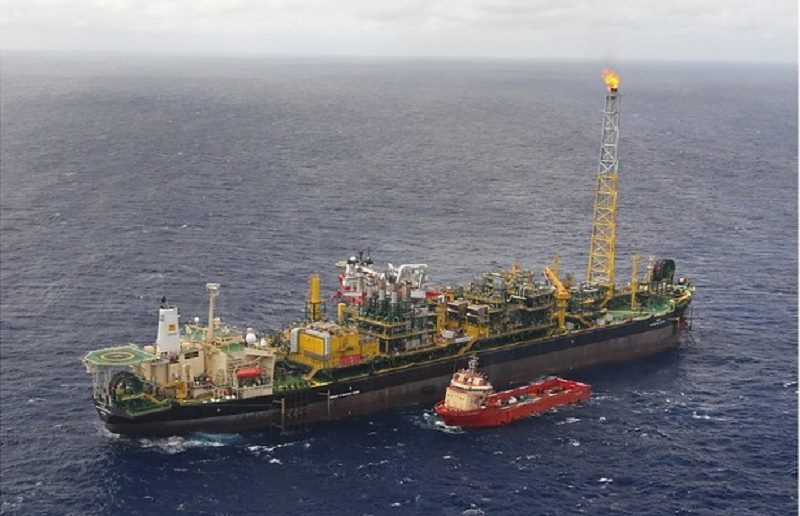
Petrobras Considers The State A Key Player As It Produces Oil In All Areas: Onshore, Shallow And Deep Waters, And Offshore (Post-Salt And Pre-Salt)
A meeting at the Anchieta palace, in the capital of the state of Espírito Santo, focused on discussing Petrobras’ investments in the state.
The meeting was attended by the governor of the state, Renato Casagrande (PSB), and the director of institutional relations of the state company, Roberto Ardenghy.
The governor was very pleased with what he heard regarding Petrobras’ plans for the state. According to Petrobras, R$ 15 billion will be invested in Espírito Santo by the end of 2023.
In an official statement after the meeting, Petrobras reportedly declared that Espírito Santo has been and will be a fundamental piece of the company’s Exploration and Production efforts.
-
Mars is accelerating, and scientists have discovered that the planet’s day is getting shorter, revealing surprising signs of internal activity.

-
Artemis 2 is set to launch on April 1 at 7:24 PM to orbit the Moon with four astronauts, but a class X solar flare and coronal mass ejection could interfere with communications and threaten the launch.

-
The largest deposit of Vale was discovered by accident and today represents almost all the ore produced by the company.
-
The Brazilian Army takes F-5 fighters out of the garage and stars in an air combat with support from the KC-390.


The note further clarifies that the state is considered a complete oil producer, as it has reserves both on land (onshore) and offshore, as well as in shallow and deep waters.
The Petrobras director also added that the state of Espírito Santo is very important to the company, a view that aligns with the thoughts of the interim secretary of development of Espírito Santo, Paulo Menegueli, who stated that the state is strategic for Petrobras.
The newly appointed president of the Espírito Santo Gas Company (ES Gás), Heber Resende, also participated in the meeting with the state government and Petrobras.
Espírito Santo Basin
The beginning of onshore production in the Espírito Santo basin was in the late 1960s, with important discoveries recorded since the late 1990s, such as Fazenda Alegre, Inhambu, Cancã, and Jacutinga.
In the maritime part, with great potential for light oil and gas, are the fields of Camarupim, Canapu, and Peroá, whose gas production is important for supplying the national market. The first oil production in shallow waters began in 1978, with the Cação field, and the first discovery in deep waters was the Golfinho field in 2002, with light oil and associated gas.







Seja o primeiro a reagir!