





 Portuguese
  English
  Spanish
  3 min of reading
  5 comments


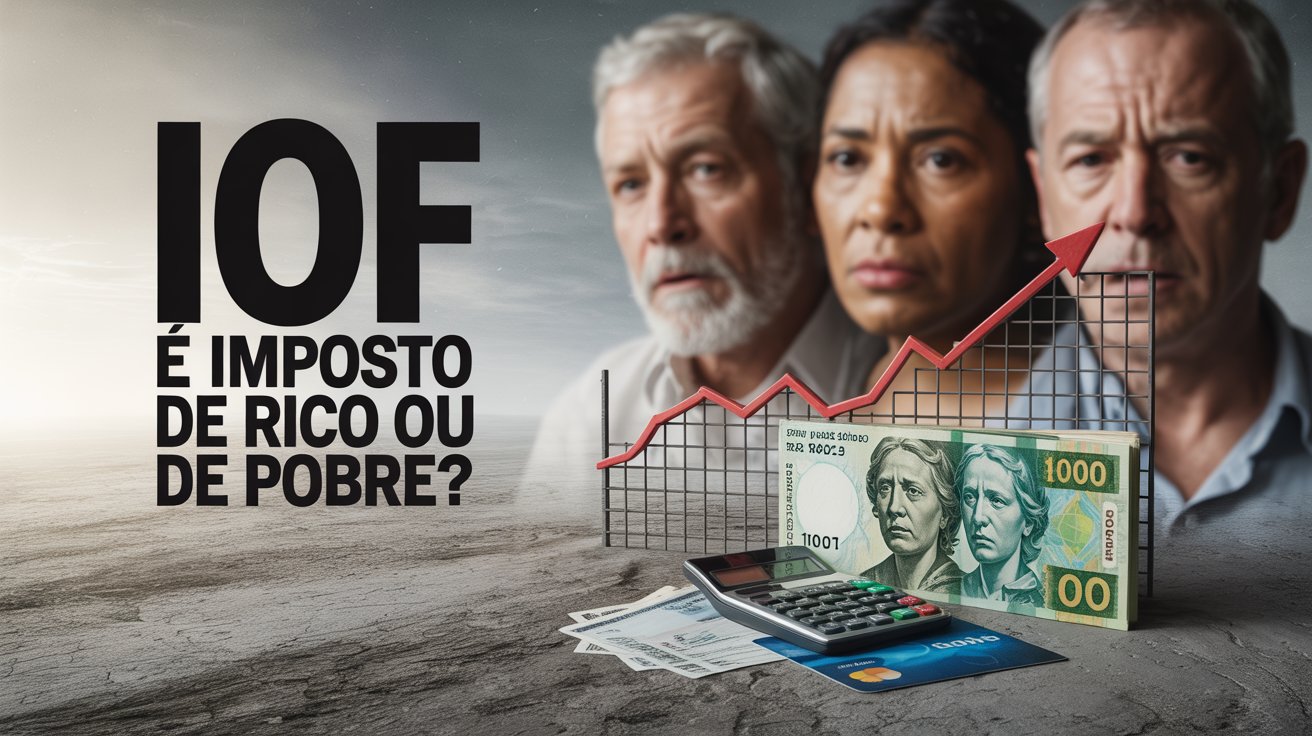


Expert Explains The Impact Of IOF On The Wallets Of Brazilians And Reveals Who May Pay More If The Supreme Court Upholds Lula’s Government Decree
Have you ever wondered if the IOF (Tax on Financial Transactions) affects the rich or the poor more? This question has resurfaced strongly after the National Congress repealed the Lula government’s decree that increased the tax rate on various financial transactions. Now, with the possibility of the Supreme Court restoring the decree, many are wondering: who will really pay this bill?
To clarify the issue, economist Tsai Chiu, CEO of the investment firm STI, explained to CNN that the impact of the IOF goes far beyond what it seems. According to him, although many see the tax as a measure that only affects the financial elite, the poorer layers of the population are also directly affected, especially in credit operations.


The IOF applies to operations such as currency exchange, loans, financing, credit cards, and private pensions. In each of these categories, the effects are felt by different groups. Those who make remittances abroad, invest in dollars, or travel frequently, for example, really feel the IOF in their wallets — and this is a wealthier group. However, those who installment purchases, take out bank loans, or seek financing also bear the tax, and this is the profile of the middle and lower-class Brazilian.
-
China alone accounts for 70% of trade within the BRICS, while Brazil establishes itself as an essential supplier of food and minerals: understand how the group, which already represents nearly 40% of the world’s GDP, is changing the game.
-
Starting in May, those who do not have registered biometrics will not be able to apply for Bolsa Família, sickness benefits, or unemployment insurance: understand the new rule that changes access to benefits for millions of Brazilians.

-
A new law being voted on in Brazil proposes a minimum fare of R$ 10 per trip and R$ 2.50 per kilometer for Uber and 99 drivers, and promises to ensure they earn as well as taxi drivers did during the golden age of taxis in the country.

-
Bauer Group collapses after failed judicial recovery: 25 years, 800 vehicles, and a network of gas stations leave a debt of R$ 50 million and 100 layoffs, exposing costs, tight margins, and expensive credit in Brazil.


The Difference Between IOF On Currency Exchange And IOF On Credit
Tsai Chiu makes it clear that the IOF on currency exchange mainly affects the wealthier, as it involves transactions with foreign currencies and international travel. However, the broader and heavier impact occurs with IOF on credit, because it is in this type of operation that the majority of the population is involved. Millions of Brazilians use revolving credit, installment bills, or seek loans to pay their bills — and this is where the tax truly weighs.
In the case of private pensions, the IOF had less repercussion, but still caused uncertainty in the market. Tsai recalls that there was difficulty even in defining who would be responsible for collecting the tax, which only increased discomfort among institutions and investors.
If The Supreme Court Accepts The Government’s Appeal, What Changes?
With the repeal of the decree in Congress, the current scenario has returned to what it was before, that is, without the expansion of IOF proposed by the Executive. However, as Tsai explained to CNN, the government is expected to appeal to the Supreme Court to try to restore the measures. If the Supreme Court rules in favor of Lula, the decree comes back into effect, and collection on these financial operations rises again — with a direct impact on the population’s wallets.
Tsai also warns that the debate surrounding the IOF is more political than economic. The government needs revenue to balance the budget, and if it cannot collect through this tax, it will have to cut spending or find another source of revenue. The issue is that, when it reaches Congress, any attempt to reduce tax benefits or cut subsidies ends up stumbling upon political interests.
The Final Bill: Who Ends Up Losing?
In the end, the rich feel it in currency exchange, but the poor suffer in credit. And this changes everything. When the government increases the IOF, revenue grows, but the cost falls on those who need it the most. The tax thus becomes a silent revenue tool, overlooked by many, but weighing more heavily on those with less margin to negotiate with the financial system.
And you, what do you think about all this? Is the IOF more unfair to the poor or necessary to balance public accounts? Do you agree with the government’s attempt to maintain the decree, or do you believe that the Supreme Court should prioritize relief for taxpayers? Share your opinion in the comments and join the debate.









Classe média pagará mais imposto sim, mas prefiro a ter que ver programas sociais serem cortados. A miséria neste país é desonrosa. Estou com o presidente como milhares de brasileiros.
Total falta de conhecimento sua , se informe direito , estude e aprenda a interpretar textos.
Vale manter o decreto do lula
Sustentar as mordomias governamentais, classe media e o pobres sofrerão mais pelo aumento para sobreviver miseravelmente