





 Portuguese
  English
  Spanish
  8 min of reading
  1 comment


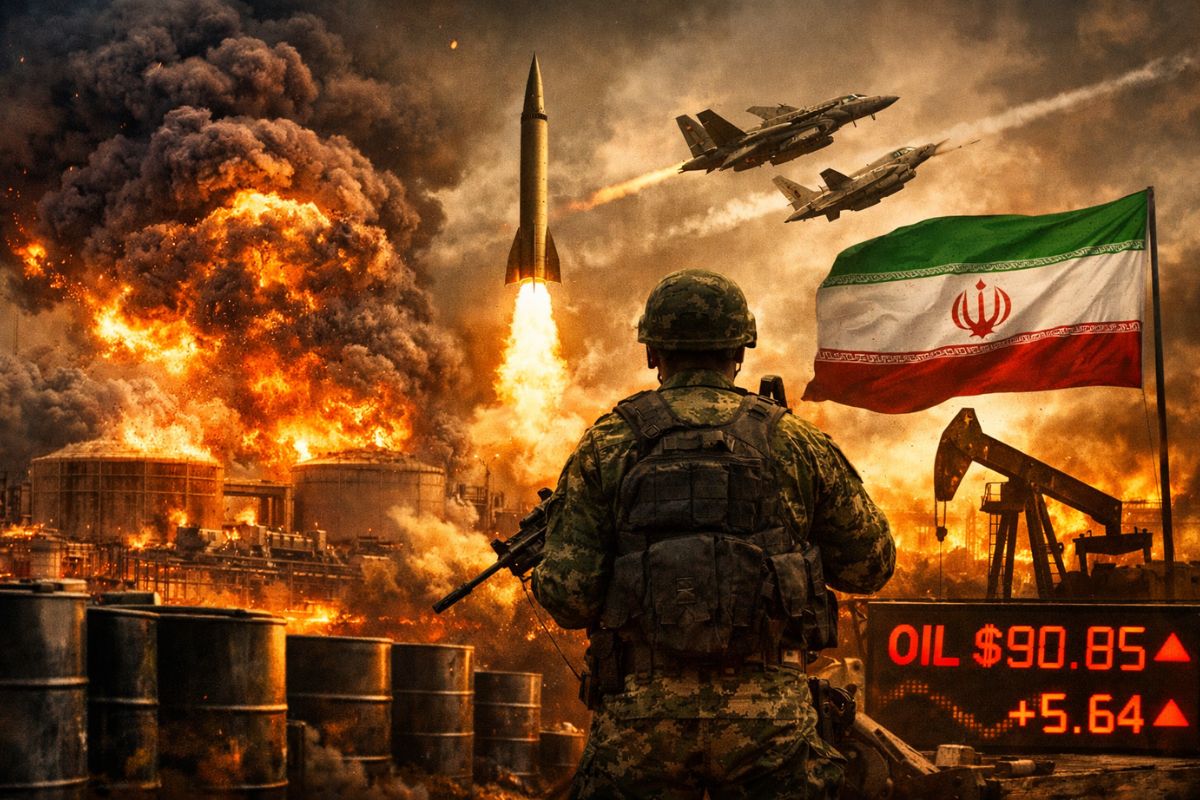


Iran Claims To Be Fully Prepared For New Attacks By The United States And Israel, Says It Has Unrevealed Responses And Transforms Military Tension Into Immediate Economic Risk, In A Scenario Where Fires In Fuel Depots, Retaliation Threats, And Harsh Words Are Already Pressuring Global Oil.
The Iran has once again hardened its rhetoric amid the worsening of the war in the Middle East, stating on Monday (9) that it is fully prepared to face new attacks on its nuclear and oil facilities. While attempting to demonstrate its capacity for response, the country reinforces the message that it still has unrevealed means of retaliation, elevating political and military tension in a region already experiencing a strong instability.
The new round of statements comes as fires in fuel depots in Tehran, long-range bombings, and retaliation threats amplify fears that the conflict will extend beyond the military realm and deepen its economic effects. Oil is already responding to this environment of uncertainty, and the concern now extends beyond the scale of escalation, but also includes the impact it may have on consumers, governments, and markets around the world.
Iran Hardens Rhetoric And Attempts To Show Response Capacity
The most direct statement came from Foreign Minister Abbas Araghchi, who stated on social media that Iran is “fully prepared” for new attacks from the United States and Israel. By mentioning that the country has “many surprises in store,” he indicated that Tehran wants to convey a dual message: on one hand, to show firmness in the face of offensives; on the other, to maintain a layer of unpredictability regarding the nature of any potential response.
-
The Federal Revenue Service now automatically cross-references everything you declare with data from banks, credit cards, brokerage firms, and insurance companies, and any discrepancy between your income and your expenses triggers an alert in seconds.

-
Amid global tensions, Brazil blocks the United States’ proposal at the WTO and paves the way for a trade crisis and possible retaliations.
-
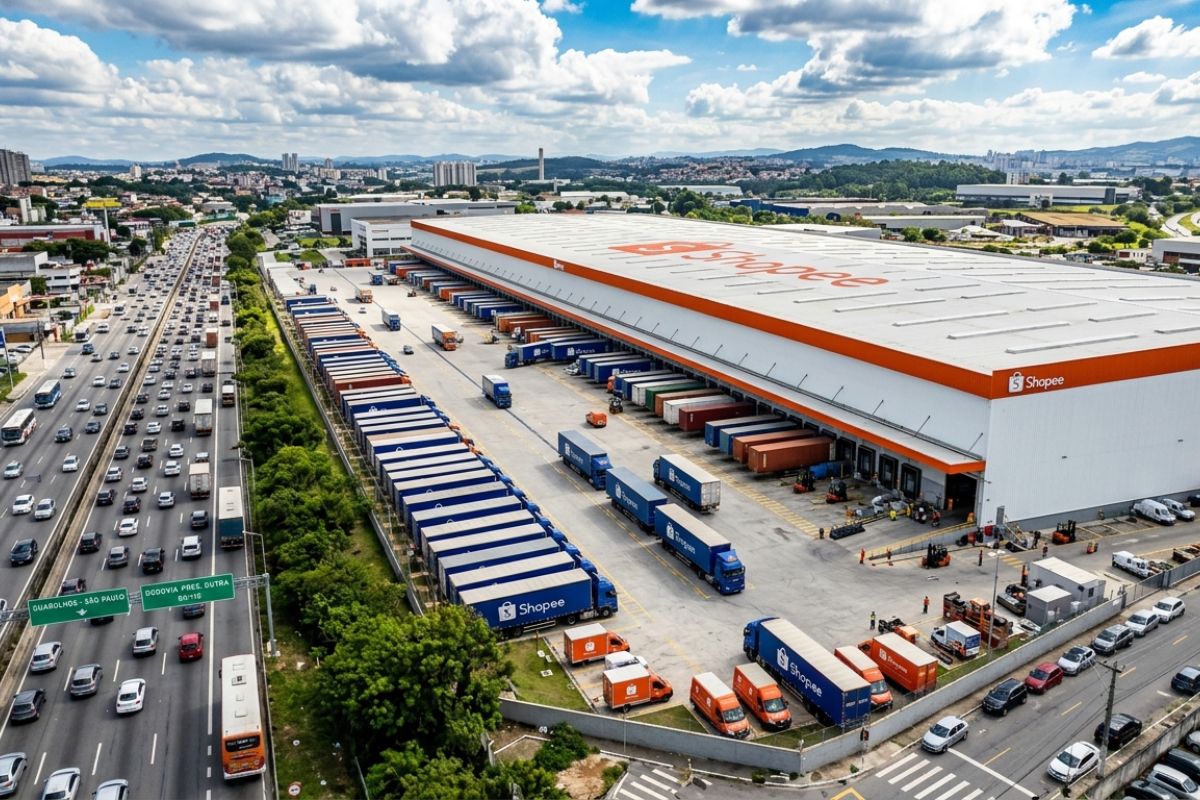
Shopee opens the largest logistics warehouse in Brazil in Guarulhos: 220,000 m² on Dutra, contract signed before construction, pays R$ 45/m² and accelerates deliveries at scale, putting pressure on Mercado Livre and Amazon.
-
After mistakenly transferring R$ 50,000 via Pix, a man will receive the amount back along with R$ 10,000 for moral damages from the recipient.


This type of positioning carries political and military weight because it shifts the center of the crisis beyond the already attacked targets. When Iran speaks of total preparedness, it is not just about symbolic defense, but rather a clear attempt to indicate that any new incursion could lead to broader consequences. The rhetoric also serves to strengthen the internal image of the regime, especially at a time when the country seeks to avoid the perception of vulnerability in the face of successive attacks.
Araghchi also linked the surge in oil prices to mistakes made in military operations in the Middle East. By calling the American operation an “epic error” in an ironic tone, the Iranian chancellor sought to shift the responsibility for energy instability onto its adversaries, maintaining that actions against Iran’s infrastructure end up fueling the very economic shock that Washington claims to want to avoid.
Attacks On Fuel Depots Increase Tension In Tehran And Markets
The crisis reached a new level following Israeli airstrikes on Saturday (7), which targeted fuel depots and caused large fires in Tehran. The flames were visible for miles, while a thick layer of smoke spread across the Iranian capital. The visual dimension of these attacks weighs as much as the material damage, as it projects to the world the image of a war that has already reached sensitive structures and areas tied to supply.
Israel stated that the targeted depots were used by the Iranian regime to serve various consumers, including military entities. Even though they are not, according to the context presented, oil production facilities, the very fact that energy infrastructure was hit was enough to trigger an international alert. In wartime scenarios, the market reacts not only to what has been destroyed, but also to what could potentially be hit next.
This is a central point in the current escalation. The market’s fear stems from the possibility of conflict expansion, and not just from the confirmed damages. When fuel depots come under bombardment, the perception grows that the war may compromise supply chains, regional supply, and price stability. It was precisely this movement that helped drive up oil prices in the global market.
White House Tries To Contain The Impact And Fears A Response Contrary To What Was Expected
Behind the scenes, the US government has shown discomfort with the scale of Israeli attacks on about 30 Iranian fuel depots over the weekend. The American concern is not limited to the immediate effect on the targeted infrastructure. There is fear that attacks of this nature, especially when affecting structures associated with the daily lives of the population, may end up producing the opposite effect of what was intended, strengthening internal support for the Iranian regime and further pressuring energy prices.
A White House spokesperson stated that Donald Trump and his energy team already had a plan to keep markets stable even before the start of the Epic Fury Operation and that they are still assessing all viable options. The official message seeks to calm the environment and maintain the idea that the rise in oil prices would be temporary. The problem is that the market reacts in real time to risk, not to promises of future normalization.
An advisor to Trump summarized this concern directly by stating that the president does not like the attack because he wants to preserve oil and avoid a new cycle of high gasoline prices. This view shows that, on the American side, the war is also seen as a domestic economic problem. The more images of burning infrastructure circulate, the greater the chance that fear will spread regarding prices, consumption, and public perception of the conflict.
The Threat of Retaliation Increases Regional Risk And Further Pressures Oil
On the Iranian side, the message has also become harsher. The spokesperson for the Khatam al-Anbiya headquarters, responsible for overseeing military operations, warned that if attacks on Iran’s oil infrastructure continue, the country may respond with similar actions throughout the region. This is a threat with strong potential for geographical expansion, as it shifts the conflict from internal targets to a potential regional network of energy and fuels.
The gravity of this statement lies in the economic reach of the warning. The same spokesperson stated that Iran has not yet attacked regional fuel and energy infrastructure, but indicated that, should that happen, the price of oil could reach US$ 200. This type of statement acts as strategic pressure and as a warning to the market, as it anticipates an extreme scenario of disruption and immediately raises the perception of risk.
The President of the Iranian Parliament, Mohammad Bagher Ghalibaf, reinforced the same line by stating that if attacks continue, retaliation will come “without delay.” The repetition of this tone by different authorities shows that this is not an isolated statement. There is a coordinated political effort to show that Iran wants to raise the cost of any new attack and convince its adversaries that persisting on this path could ignite not only depots but also the energy balance of the region.
Change in Iran’s Command Adds Political Uncertainty to The Conflict
Military tension intersects with a delicate change at the center of Iranian power. The Assembly of Experts appointed Mojtaba Khamenei, son of Ali Khamenei, as the new supreme leader of Iran. The succession occurs after the death of the former leader in a bombing conducted by the United States and Israel at the end of February, which gives the leadership change even greater weight within the war and the definition of the country’s political response.
Mojtaba Khamenei, 56, is characterized as a hardliner and maintains close ties with the elite of the Revolutionary Guard. This increases the perception that Iran may adopt an even tougher stance at a time when external military pressure and the need for internal cohesion walk hand in hand. The call for the population to maintain unity and loyalty to the new leader reinforces the attempt to stabilize the regime amid the shock caused by the attacks.
Donald Trump commented publicly for the first time on the choice of the new leader, stating that he was not happy with the appointment. At the same time, he avoided advancing on possible measures and once again rejected the idea of sending American ground troops to Iran for now. This combination of political disapproval and operational caution shows that Washington is trying to preserve maneuvering room. Nevertheless, each public statement raises the temperature of the conflict and reduces the space for easy retreats.
Oil Becomes The Immediate Thermometer of A War That May Expand
More than a technical reflection, the rise in oil prices has come to function as the most visible indicator of the current stage of the war. Whenever the conflict advances on structures linked to fuel, energy, and logistics, the market begins to price in the risk of more severe disruptions. In this context, even installations that are not directly oil-producing can provoke a strong reaction, as they reveal the vulnerability of the energy chain in the face of broader bombings.
The US concern over the repercussions of the attacks shows that this economic dimension is no longer secondary. The war has ceased to be merely a military confrontation between strategic targets and has firmly entered the realm of global costs, with potential impacts on inflation, fuels, and perceptions of energy security. The price of oil, in this scenario, becomes an instant summary of international anxiety regarding what may happen next.
The most sensitive point is that no one seems willing to signal a clear retreat at this moment. Iran insists it is prepared, Israel maintains that the attacks were communicated and justified, and the United States tries to contain the economic effect without losing political control of the operation. Meanwhile, the market observes every statement, every fire, and every threat as pieces of a crisis that can quickly escalate and affect much more than the battlefields.
The escalation between Iran, the United States, and Israel shows how a regional war can produce immediate effects on energy, political power, and international stability.
When fuel depots burn and authorities speak of surprises, retaliation, and new attacks, the impact crosses borders with impressive speed. In your view, can the conflict still be contained, or is the market already anticipating a much larger crisis?






O Trump se meteu numa sinuca de bico. Os iranianos vão levar essa guerra longe e desgastar as forças armadas dos EUA. O combustível subiu rapidamente nos EUA, a maior alta dos últimos tempos num ano de eleição do congresso. Os democratas devem estar comemorando a o tiro no pé que o Trump deu no Irã