





 Portuguese
  English
  Spanish
  3 min of reading
  0 comments


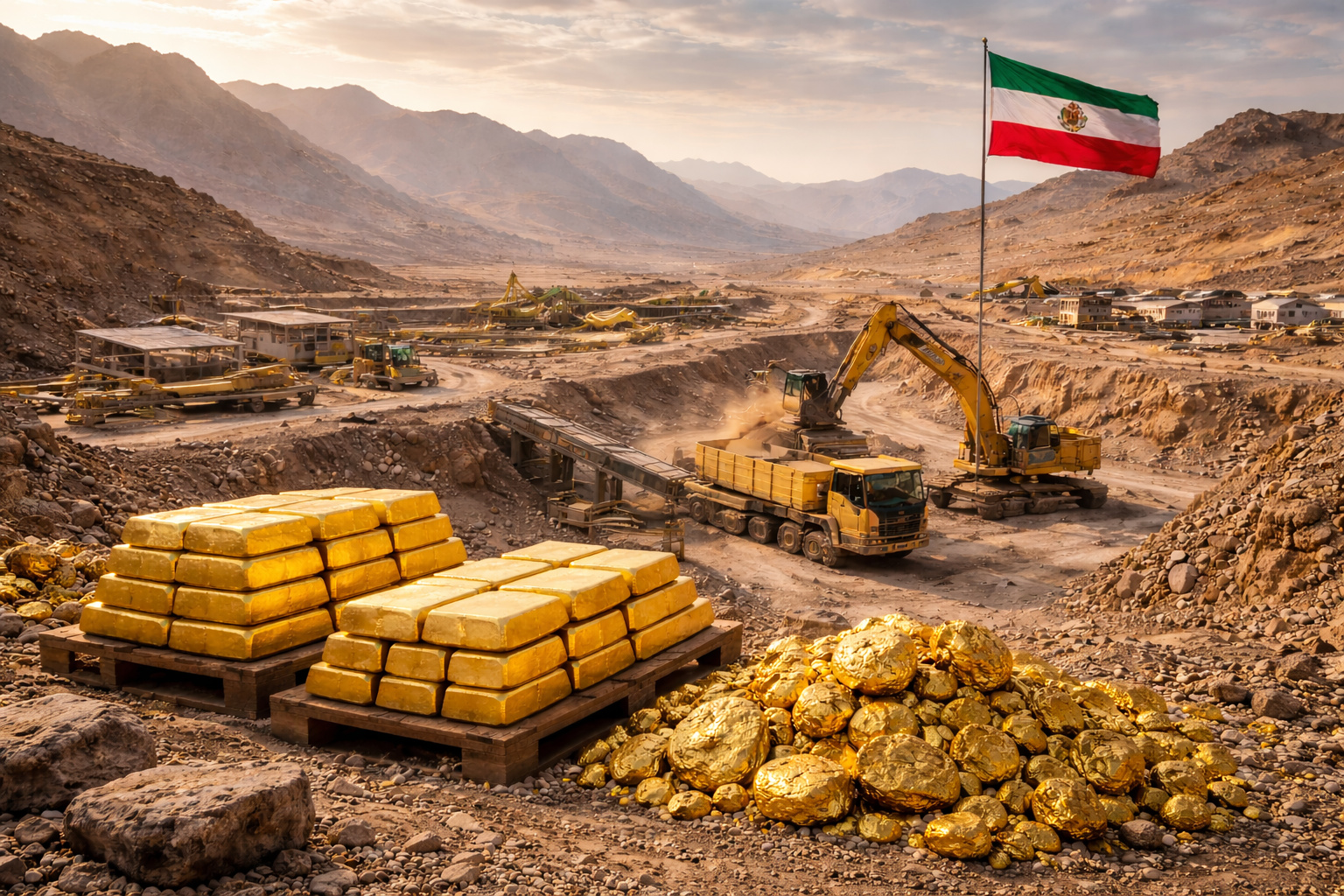
Certification of Shadan Mine Expands Mineral Reserves, Strengthens Iranian Economy and Generates Regional Impacts Amid Geopolitical Tensions
In eastern Iran, a deposit with 61 million tons of gold emerges amid geopolitical tensions and reinforces the country’s mineral strategy. Thus, a mineral discovery of great economic impact was recently confirmed, attracting international attention.
This announcement came after recent attacks by the United States on Iranian targets, in a context of regional instability. Therefore, the confirmation of the deposit gained immediate strategic weight for the country’s economy.
Official Certification Places Shadan Mine Among the Largest in the Country
According to Iranian authorities, the final certification of the Shadan Mine was completed in 2024. With this, the presence of 61 million tons of gold ore concentrated in a single mineral body was validated.
-
Russia has broken the U.S. maritime blockade to send oil to Cuba and is now loading a second ship while Trump says that “Cuba is next” in a possible military action against the island.

-
Spain challenges the USA and closes its airspace for operations against Iran, raising global tension and provoking the threat of a trade rupture.

-
While no other country manufactures tanks in Latin America, Argentina activates the TAM 2C-A2 and raises a curiosity about the technological lag in the region.

-
A Russian ship with 730,000 barrels of oil has just arrived in Cuba while Mexico negotiates fuel sales through private companies: the communist island is desperately seeking alternatives after losing its supply from Venezuela due to American military action.


This significant volume, therefore, means that the Shadan deposit becomes part of the group of the largest mineral reserves in Iran. In addition, the discovery strengthens the national policy of expanding the exploration of natural resources.
Gold Reserves Increase the Weight of Mining in the Iranian Economy
According to official data from the Iranian government, the country has about 300 tons of total gold resources distributed across different regions. Currently, there are 32 mapped mines, most of which are already operating or are in advanced preparation stages.
In this context, the entry of the Shadan Mine increases the weight of gold in the national mineral matrix. Thus, mining establishes itself as one of the central pillars of the Iranian economic strategy.
Diversified Mining Complex Reduces External Dependence
Besides gold, Iranian mines produce copper, lead, silver, and zinc. Thus, the country maintains a diversified mining complex, capable of supplying internal production chains.
As a result, there is a reduction in dependence on imports, especially during periods of trade restrictions and international instability.
Job Creation Boosts Remote Areas
Meanwhile, the expansion of mining creates a direct impact on job creation, especially in areas far from major urban centers. In these areas, mineral activity becomes the primary economic base.
Moreover, the increase in production boosts sectors such as transport, logistics, industrial maintenance, and technical services. Consequently, there is a greater circulation of local income.
Mining Revenues Fund Public Services
This movement contributes to the settling of the population and to the reduction of internal migration flows. At the same time, part of the mining revenues begins to finance public services.
According to Iranian authorities, since 2023, resources from mineral extraction have been applied to schools, hospitals, and municipal infrastructure projects. Thus, mining also assumes a relevant social role.
In light of this scenario, the Shadan deposit consolidates itself as a strategic economic and regional asset, even in an international context marked by constant tensions.
In light of this discovery, do you think Iran should prioritize immediate economic gains or further increase social investments related to mining?







Seja o primeiro a reagir!