





 Portuguese
  English
  Spanish
  5 min of reading
  0 comments


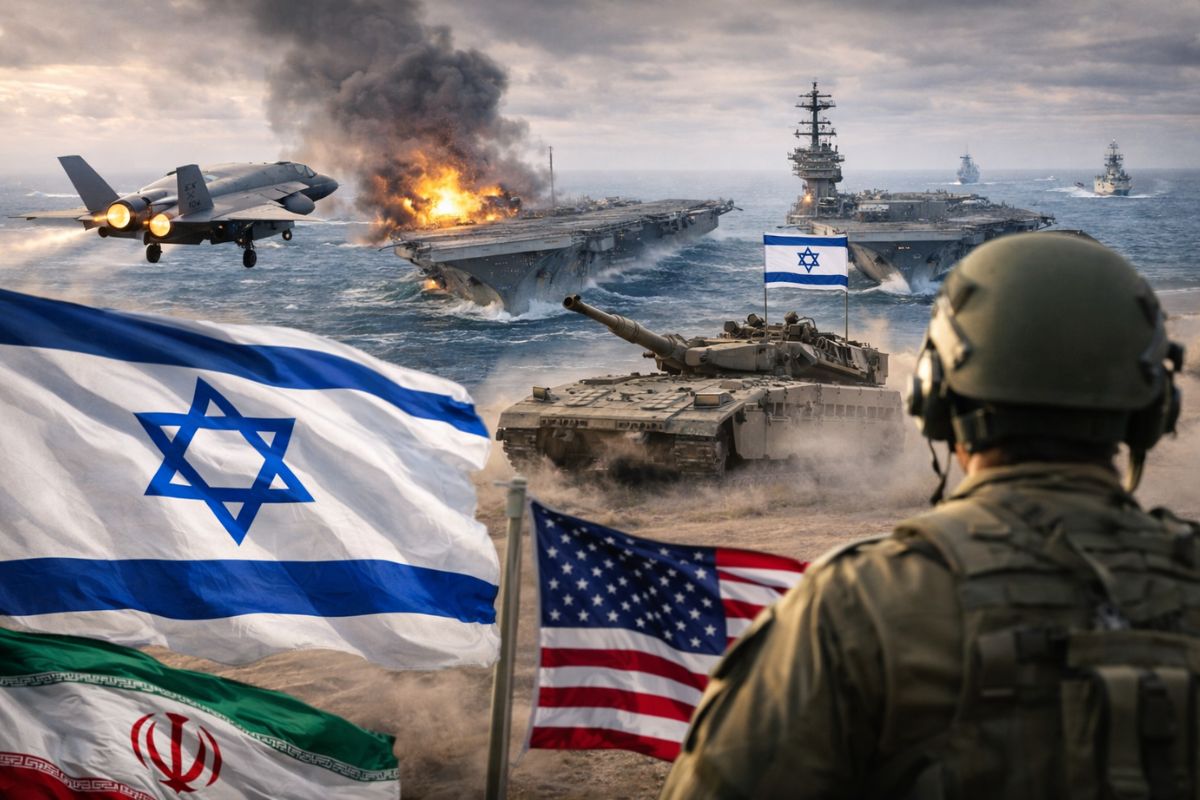
With Gaza Still in the Rearview, Israel Considers Entering the War Between the U.S. and Iran, According to Times of Israel. Amos Adlin Warns of Imminent Threat. Axios Source from the White House Predicts a Weeks-Long Campaign and 90% Chance of Attack, Greater than the Bombing in June, Lasting 12 Days There.
The war between the U.S. and Iran has entered Israel’s radar as a possible next chapter right after the most acute phase of the conflict in Gaza, and the discussion became concrete when a former head of military intelligence, Amos Adlin, described an imminent risk and suggested avoiding travel abroad this weekend. The message, coming from within, alters the weight of speculation.
At the same time, behind-the-scenes in Washington are heating up the debate by treating the war between the U.S. and Iran as a long campaign, lasting several weeks with a 90% estimated chance of an attack in the coming weeks, according to a White House official speaking on condition of anonymity. When the forecast turns into a calendar, the entire region begins to recalculate costs.
Israel and the Post-Gaza Calculation, Why the Political Window Matters
The starting point is temporal and political. Israel, still dealing with the outcome of the campaign in the Gaza Strip against Hamas, appears to be evaluating entry into a possible broader confrontation in the Middle East, according to the Times of Israel.
-
USA and China compete for Brazil over resources that could be worth trillions — rare earths put the country at the center of a global dispute

-
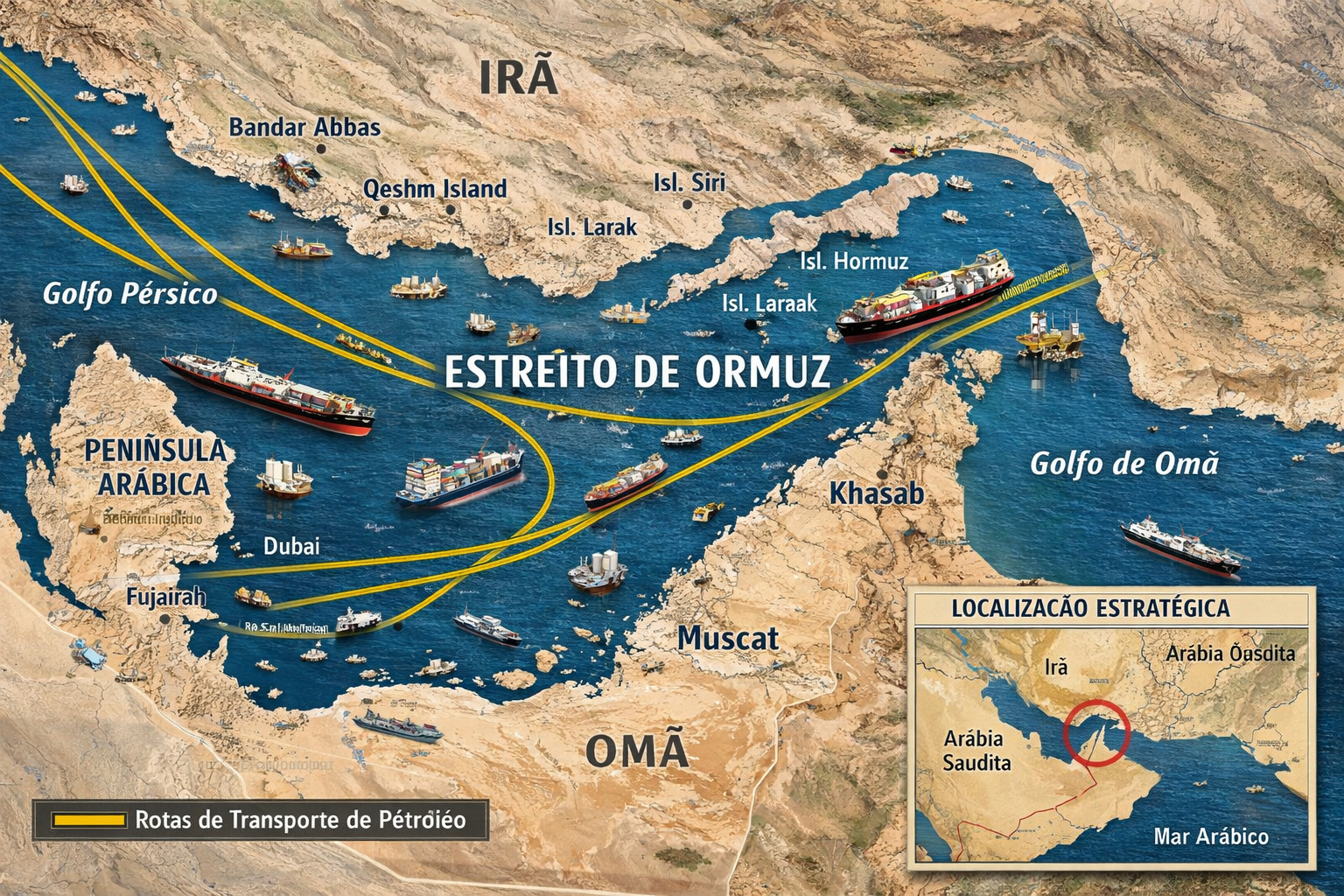
Global summit with over 40 countries pressures Iran for a blockade in the Strait of Hormuz and warns of direct impact on oil, food, and the global economy.
-
Russia has broken the U.S. maritime blockade to send oil to Cuba and is now loading a second ship while Trump says that “Cuba is next” in a possible military action against the island.
-
Spain challenges the USA and closes its airspace for operations against Iran, raising global tension and provoking the threat of a trade rupture.

The discussion is not just about willingness, but about sequence — how to fit a new effort in a moment when society and defense forces are already coming out of an intense cycle.
In this equation, the war between the U.S. and Iran operates as a variable that could drag allies and adversaries into a greater escalation than what has been observed in recent episodes.
The most sensitive detail is not the public announcement; it is what is being prepared in silence, because the timing of strategic decisions usually precedes any open confirmation.
Amos Adlin’s Warning and What It Signals Internally
Amos Adlin, cited as a former head of military intelligence for the Israel Defense Forces, did not speak as a distant commentator.
By suggesting that a war of this kind could be imminent and advising against traveling abroad, he signals an awareness of operational risk, and not just rhetorical tension. This places the debate at a level where “if” turns into “when,” even if no one gives a date.
The immediate effect of this kind of warning is internal. Practically speaking, it suggests that the hypothesis of war between the U.S. and Iran has ceased to be just a behind-the-scenes issue and has begun to influence individual and institutional behaviors.
When a figure with a history of intelligence calls for caution, the subtext is that there are too many signs to ignore.
Behind the Scenes in Washington, Weeks-Long Campaign and the Shadow of June
On the American side, the narrative described by Axios points to a long campaign lasting several weeks, with a 90% estimated chance of an attack in the coming weeks, according to a source speaking on condition of anonymity.
The same line suggests that the conflict would be greater than the bombing campaign led by Israel last June, which lasted 12 days. The contrast matters because it establishes a comparative standard for the public and governments in the region.
Two Israeli officials, also cited, speak of preparations for a war that could begin in a few days and mention an operation aimed at overthrowing the regime.
This adds a layer of political ambition that tends to extend the duration and unpredictability of any campaign. A war between the U.S. and Iran, if treated as a regime-change project, ceases to be “action” and becomes “process.”
Iran Reacts, Exercises with Russia and China, and the Maritime Theater
Amid the escalation, Iran announced joint military exercises with Russia and China by the end of the month, a gesture that can be read as external signaling and internal messaging.
The semi-official Iranian agency Fars reported that the Iranian army would conduct naval exercises the following day with Russian forces in the Oman Sea and the northern Indian Ocean.
The maneuvers would take place just days after Iranian exercises in the Strait of Hormuz, described as the world’s main oil route.
This geographical detail matters because it connects the war between the U.S. and Iran to a nerve of global trade and the debate over routes, energy, and the risk of interruptions. When the map enters the conversation, the escalation ceases to be only military and becomes economic.
Why the Scenario May Exceed the Bombings of June and Last Longer than the Public Imagines
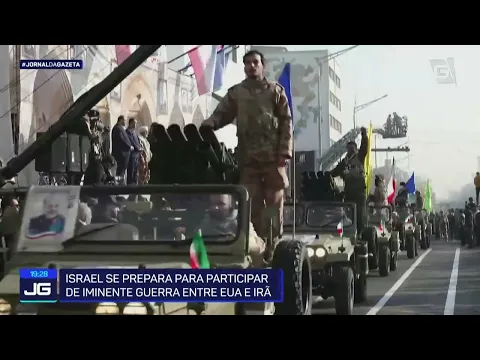

The reference to June and the 12 days of bombings serves as a psychological comparison but also as an alert regarding scale.
If the hypothesis under discussion is of a weeks-long campaign, what changes is the pressure for continuity, for replenishing capabilities, and for political resilience to sustain unpopular decisions. In prolonged conflicts, the decisive factor is often attrition, not the initial impact.
This is one reason why Israel appears to be discussing the issue before any confirmation of a timeline.
If the war between the U.S. and Iran indeed gains momentum, it may require quick decisions about participation, regional posture, and domestic preparation, even if the official goal is merely “to be ready.” In war, delays often cost more than caution.
Israel is already discussing entering the war between the U.S. and Iran against the backdrop of Gaza, an internal alert of imminent risk, and behind-the-scenes reports indicating weeks, not days.
At the same time, Iran is signaling strength and alignments with exercises in the Oman Sea, the northern Indian Ocean, and the Strait of Hormuz, amplifying the sense that the board is closing in.
If you had to bet on the most likely trigger for a greater escalation, which seems more decisive: the weight of behind-the-scenes discussions in Washington speaking of a weeks-long campaign, Amos Adlin’s warning of imminent risk, or the maritime component involving Hormuz and exercises with Russia and China, and why?








-

Uma pessoa reagiu a isso.