





 Portuguese
  English
  Spanish
  7 min of reading
  0 comments


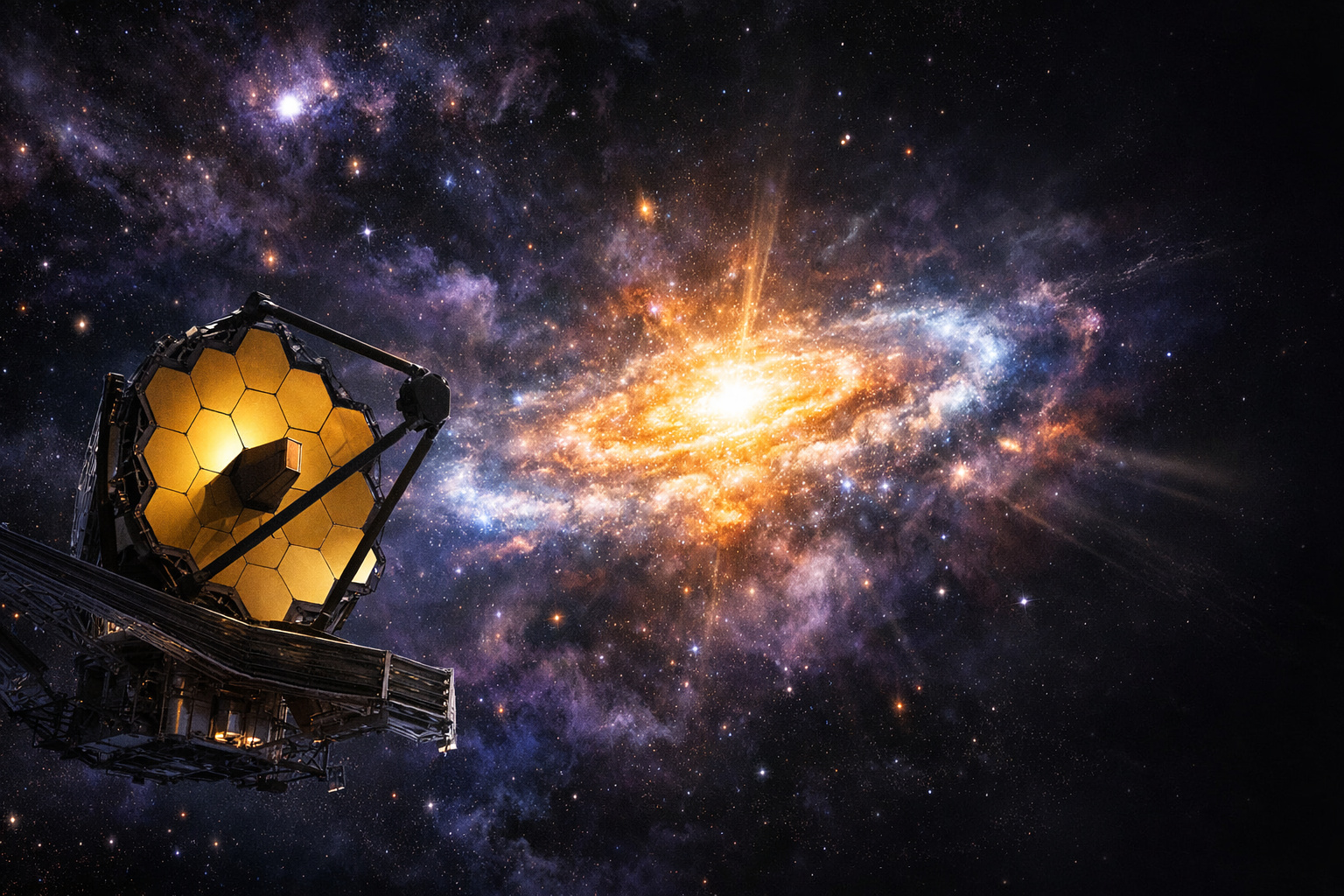
Capotauro, Object Detected by the James Webb Telescope, May Be a Galaxy Formed Just 90 Million Years After the Big Bang or a Brown Dwarf in the Milky Way.
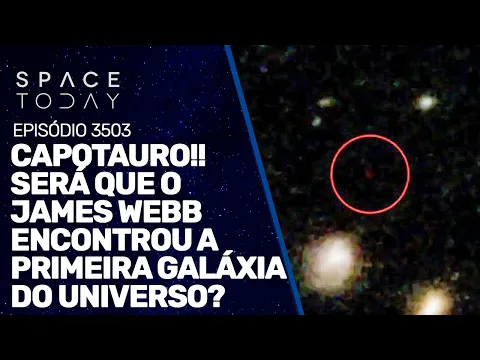
In September 2025, a group of 41 astronomers led by Giovanni Gandolfi from the University of Padua published in the scientific repository arXiv a paper with a seemingly modest title: Mysteries of Capotauro. The object that names the study is an extremely faint orange point detected by the James Webb Space Telescope during the CEERS (Cosmic Evolution Early Release Science) survey. Despite its modest appearance, the object quickly drew the attention of the scientific community. The collected data does not allow for a definitive identification of what it is. So far, no hypothesis fully explains the observed behavior.
Astrophysicist Muhammad Latif from the United Arab Emirates University — who was not involved in the study — described Capotauro as one of the most enigmatic discoveries made by the James Webb since the telescope began operations.
How the James Webb Telescope Detects Extremely Distant Objects in the Universe
The James Webb Telescope observes the universe primarily in the infrared, a range of radiation essential for studying extremely distant objects in the cosmos.
-
Scientists have finally discovered where the plastic that disappeared from the oceans went, and the answer is frightening: it fragmented into such tiny particles that they became invisible and now there are 27 million tons of nanoplastic just in the North Atlantic.

-
The Artemis II mission will take the Orion capsule back to the vicinity of the Moon with four astronauts, a private bathroom with a curtain, a system adapted for men and women, and a level of comfort that highlights how the Apollo era operated at the rawest limits of space exploration.

-
Giant structures on the seabed precisely control oil and reveal how high-tech underwater valves work.

-
China has just tested a giant drone the size of a fighter jet with a wingspan of 25 meters that carries 6 tons, flies for 12 hours, and the most frightening part: it can launch entire swarms of smaller drones directly from the air.


This happens because light emitted by very old galaxies undergoes a phenomenon called redshift. As the universe expands, the wavelength of the light emitted by these structures is stretched, shifting the radiation to longer wavelengths.
The farther away the object is, the more its light is shifted to the infrared.
For this reason, galaxies formed in the early moments of the universe often appear only in the James Webb’s reddest filters, completely disappearing in others. In astronomy, this phenomenon is called dropout, because the object literally “disappears” in the shorter-wavelength filters.
The Unusual Behavior of Capotauro in the Infrared Filters
The Capotauro exhibits an extreme pattern of this effect. The object appears only in two of the longer infrared bands of the James Webb telescope, known as F410M and F444W. In all other filters of the NIRCam instrument, as well as in the MIRI instruments and even in observations from the Hubble Telescope, it simply does not appear.


The brightness difference between 3.5 and 4.5 micrometers exceeds three magnitudes, which amounts to a drop in brightness sufficient for the object to practically disappear when observed at another radiation range.
To try to understand the phenomenon, Gandolfi and his team analyzed the data using three independent spectral modeling tools: BAGPIPES, CIGALE, and ZPHOT. None of the models managed to convincingly categorize the object into a known astronomical category.
Redshift 32: The Hypothesis of a Galaxy Formed Just 90 Million Years After the Big Bang
The most extreme hypothesis tested by the researchers — and also the one that showed the greatest statistical weight in the models — places Capotauro at a redshift close to 32. To understand the significance of this number, it is necessary to comprehend the meaning of redshift in cosmology.
Redshift serves as a cosmic ruler, used by astronomers to measure the distance to objects in the universe and also the time when they were formed. The higher the redshift, the farther away the object is and the older the moment in cosmic history when its light was emitted.
The oldest confirmed galaxy to date, called MoM-z14, has a redshift of 14.4 and is believed to have formed about 280 million years after the Big Bang.
If Capotauro is indeed at redshift 32, it would have emerged just 90 million years after the birth of the universe. This represents an extremely early moment in cosmic history.
The Cosmic Calendar Shows How Early Capotauro Would Have Emerged
To illustrate this time scale, astronomers often use an analogy known as the Cosmic Calendar, created by astrophysicist Carl Sagan. In this model, the 13.8 billion years of the universe are compressed into a single Earth year.
Each day of the calendar corresponds to about 40 million years of cosmic history. Within this scale, the galaxy MoM-z14 would have emerged around January 8.
On the other hand, Capotauro, if it is indeed at redshift 32, would have appeared on January 3, in the early morning hours — when the universe had yet to complete its first week of existence.
Why a Galaxy So Ancient Challenges Current Cosmological Models
If Capotauro is really a galaxy formed during this extremely early period, it poses a serious problem for current models of structure formation in the universe.
Cosmological simulations indicate that galaxies need at least 200 to 300 million years to begin forming.
This timeframe would be necessary for the primordial gas composed mainly of hydrogen and helium to cool, collapse under gravitational influence, and give rise to the first stars.
A galaxy existing just 90 million years after the Big Bang would imply that this process occurred much more rapidly than current models predict. The issue becomes even more pronounced when considering the object’s luminosity.
The Estimated Mass of Capotauro Could Reach One Billion Solar Masses
If the calculated distance is correct, models indicate that Capotauro could have a mass close to one billion solar masses. Galaxies formed this early should be much smaller and less efficient at star production.
A structure with that mass would imply that billions of stars had formed in an extremely short period.
According to Giovanni Gandolfi himself, this scenario would be incompatible with what astronomers believed they knew about the formation and evolution of galaxies in the primordial universe.
The Alternative Hypothesis: A Cold Object within the Milky Way
There is, however, a completely different explanation that cannot be dismissed. Capotauro may not be at the edge of the observable universe. It could be relatively close to Earth, within the Milky Way itself.
Extremely cold objects, such as Y-type brown dwarfs or rogue planets without a host star, may also disappear in shorter filters and appear only in the deep infrared.
When spectral data is limited, the color pattern of these objects can mimic that of very distant galaxies. If Capotauro is a cold brown dwarf, it could be one of the coldest substellar objects ever identified.
Estimated Temperature and Distance for a Possible Brown Dwarf
In this alternative scenario, Capotauro would have a temperature below 300 Kelvin, equivalent to about 27 °C. Its distance from Earth could range between 130 and 2,000 parsecs, which corresponds to approximately 420 to 6,500 light-years.
Gandolfi himself acknowledged this possibility when commenting that the object could represent one of the first substellar objects formed within our own galaxy.
The irony is that both hypotheses — a primordial galaxy or a local brown dwarf — are equally unusual.
Spectroscopy Will Be Necessary to Discover What Capotauro Is
To solve the mystery, astronomers will need to conduct more detailed spectroscopic observations. Spectroscopy is the technique that breaks down the light from an object into its different frequencies, revealing its chemical composition and allowing for the measurement of its receding velocity.
The James Webb has already collected a preliminary spectrum of about 48 minutes with the NIRSpec instrument, but the signal obtained was too weak to provide a definitive conclusion.
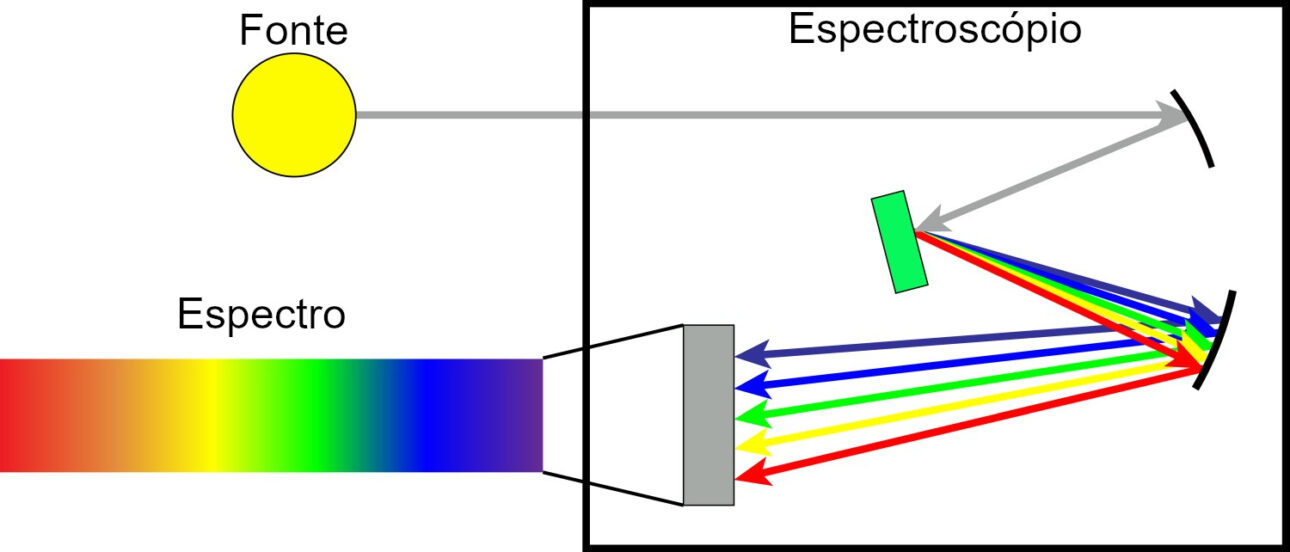
The researchers have requested more observation time on the telescope for a longer spectroscopic session, planned for 2026.
If Capotauro is indeed at redshift 32, the spectrum should show a clear signature known as Lyman break. If it is a brown dwarf, the spectral pattern will be completely different.
Why Discoveries from James Webb Are Challenging Modern Cosmology
Since its launch in 2022, the James Webb Telescope has already identified more than 5,000 galaxies from the first billions of years of the universe. In just a few years of operation, the observatory has nearly doubled the number of known galaxies in this period of cosmic history.
Many of these discoveries are already pressuring theoretical models. The telescope has found galaxies from the first 500 million years after the Big Bang that appear larger and more organized than cosmological models predicted.

What initially seemed like a series of isolated anomalies has begun to repeat frequently enough to raise new discussions among cosmologists.
Capotauro May Represent the Most Extreme Case Ever Observed
If Capotauro is confirmed as a galaxy with redshift 32, it would become the most extreme case ever observed. A structure with a billion solar masses formed when the universe was less than 1% of its current age does not easily fit into any simple adjustment of current cosmological models.
On the other hand, if the object is a cold brown dwarf in the Milky Way, the challenge will be different. In this case, the methods used to identify extremely distant galaxies would need to be revised, since local objects could be contaminating the catalogs of primordial galaxies.
Regardless of the final answer, Capotauro has already played an important role in science. It forced 41 researchers from institutions across four continents to gather data from multiple instruments and publicly admit, in an open scientific paper to the international community, that they still do not know exactly what they are observing.
In the Cosmic Calendar, this is equivalent to looking at the early hours of January 3 and finding something that, according to all current theories, should not exist yet.









Seja o primeiro a reagir!