





 Portuguese
  English
  Spanish
  4 min of reading
  0 comments


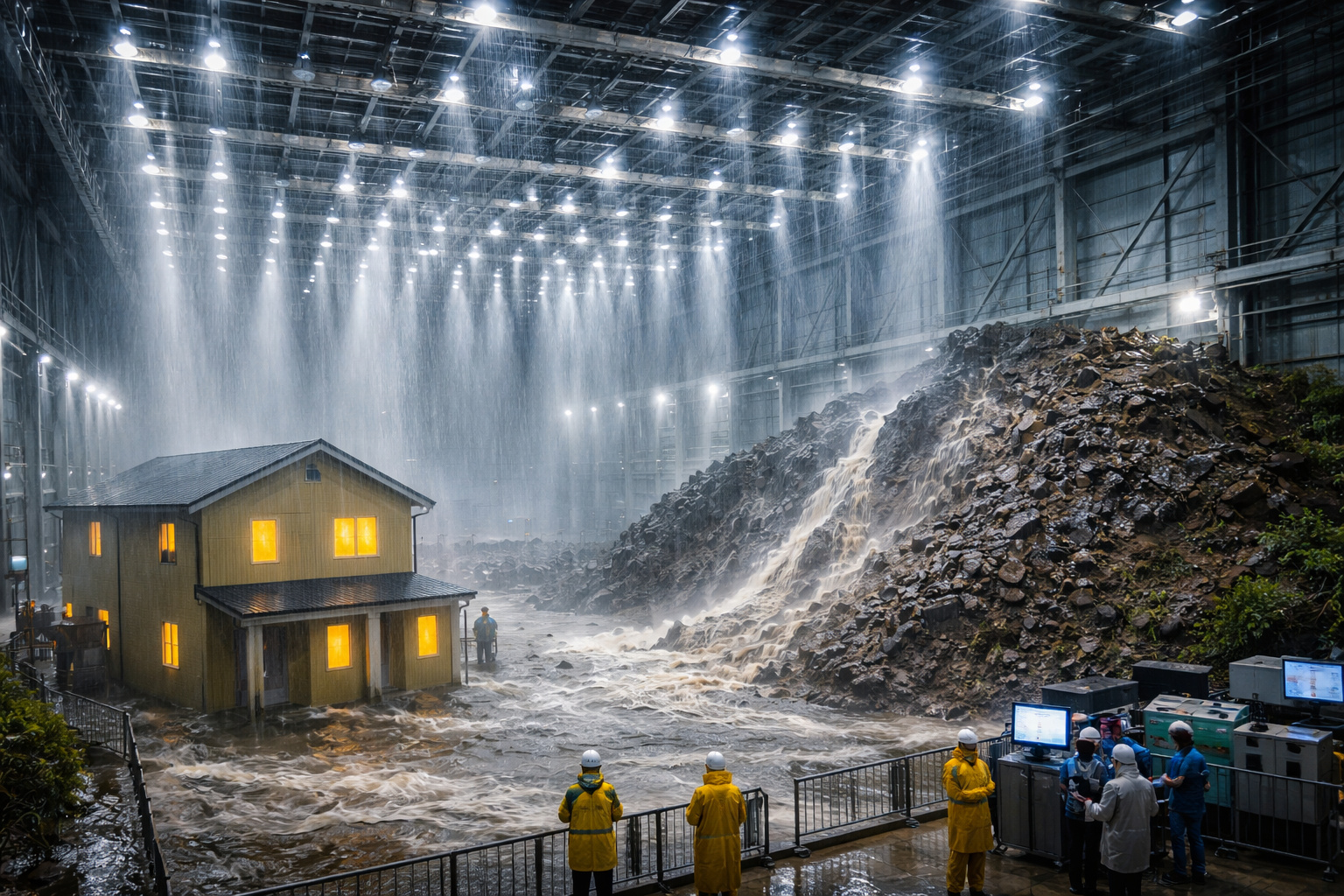
Giant Simulator Produced by the National Research Institute for Earth Science and Disaster Prevention, 75 Kilometers from Tokyo, Recreates Rain Nearly Forty Times More Intense than the Level Considered Very Heavy to Test Houses, Slopes and Infrastructure
A storm capable of toppling mountains can begin with the push of a button. In Japan, scientists built a giant simulator that replicates some of the heaviest rains ever recorded on the planet. It’s not a weather forecast. It’s heavy engineering applied to survival.
The goal is straightforward: to understand exactly when the ground gives way, when water invades houses, and when a city collapses.
The Billion-Dollar, Silent Challenge of a Country Where More Than 80 Percent of the Territory Is Mountainous and Vulnerable to Fatal Landslides
Every year, typhoons strike Japan with force. Rivers overflow, neighborhoods get submerged, and entire slopes slide without warning.
-
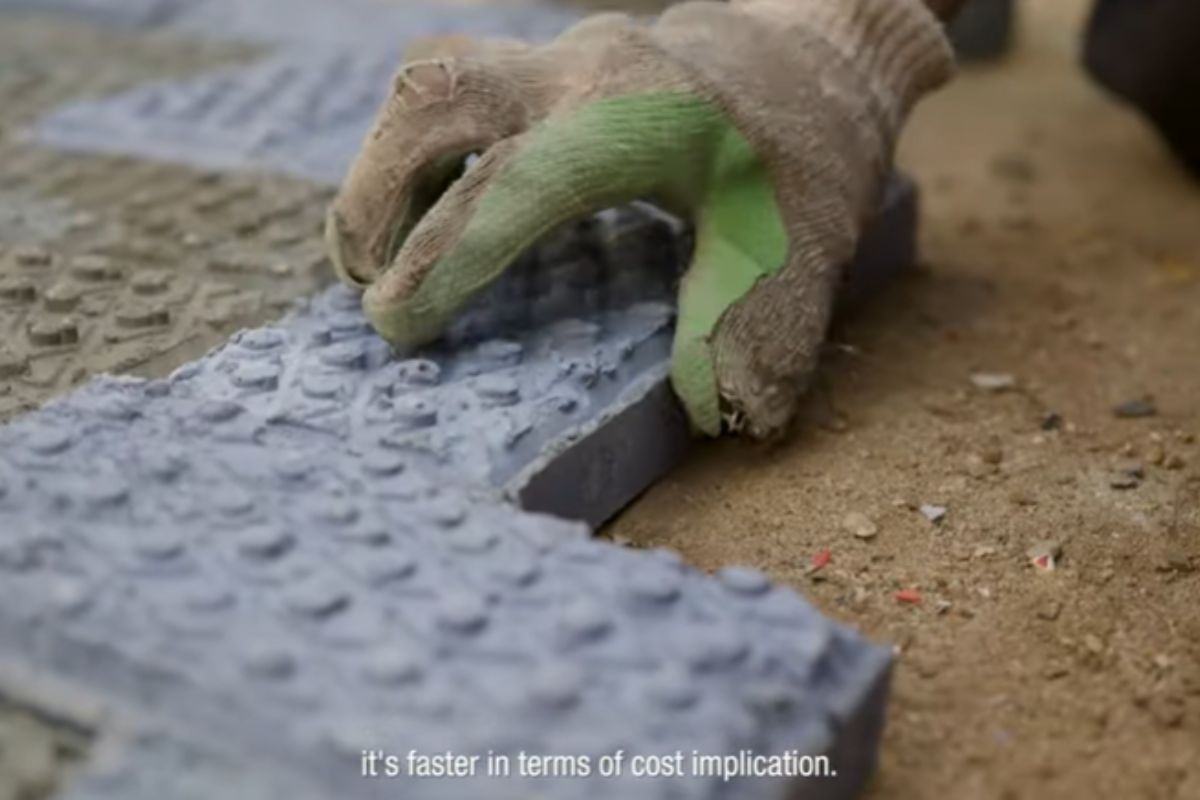
In Kenya, engineer Nzambi Matee created “bricks 2.0” using packaging plastic: a mixture with sand, heated and pressed; they are 5 times more resistant, already have official licensing, and are being used in streets and construction projects.
-
More than 20,000 positions could be opened, and thousands of technicians are starting to be trained in Brazil, as the expansion of data centers creates an urgent race for professionals to keep the internet, cloud, and artificial intelligence running 24 hours a day.

-
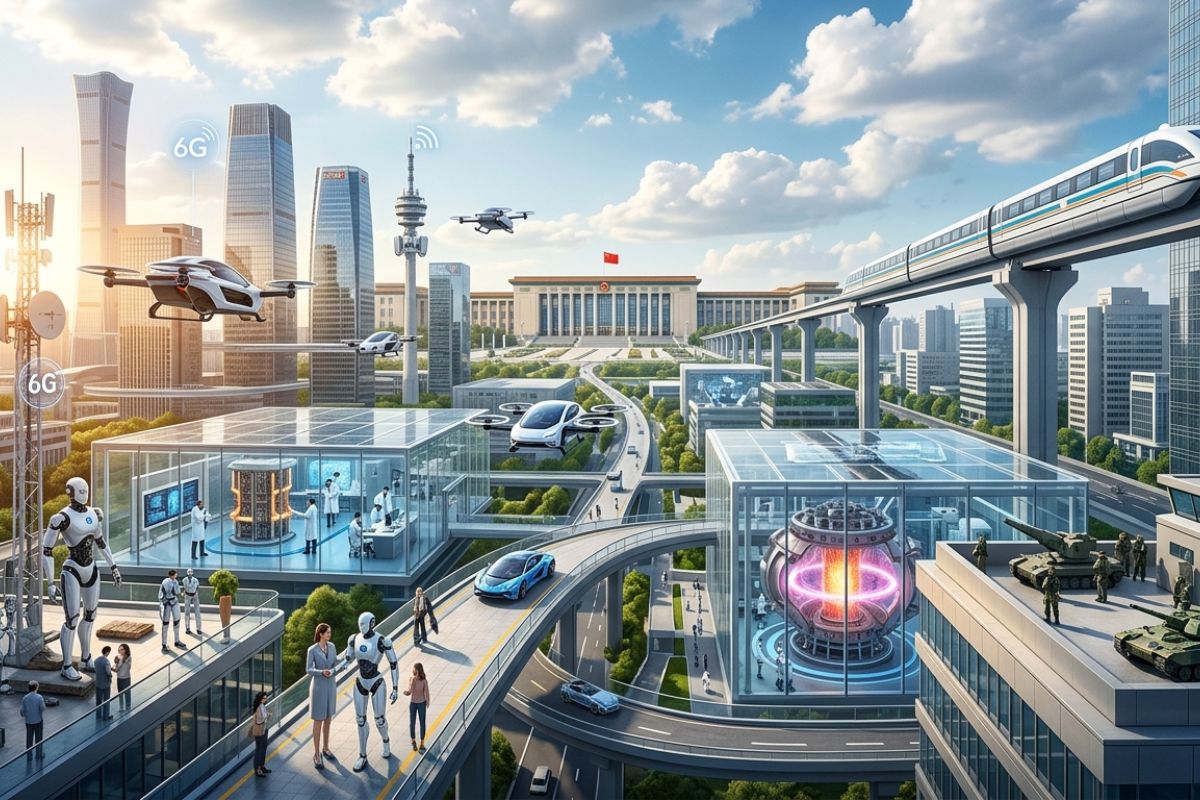
China approves the 15th Five-Year Plan 2026-2030 to become a global power: prioritizes brain implants, 6G with AI, humanoid robots, flying cars, quantum technology, and nuclear fusion, while strengthening defense and the economy.
-
HONOR X80i arrives with a massive 7,000 mAh battery, a 120 Hz AMOLED display with a brightness of 6,500 nits, and the new Dimensity 6500 Elite chip, promising up to 22 hours of video playback and impressive performance in casual gaming.


More than 80 percent of the country is made up of mountains. Many cities were built in narrow valleys or coastal areas. A sequence of intense rain is enough to turn the landscape into real risk.
Landslides are among the leading causes of deaths in natural disasters in the country. The problem is not new. What changes now is the way to face it.
The 75-Meter Structure That Dumps Rain Nearly Forty Times Above the Level Considered Very Heavy
About 75 kilometers from Tokyo, in the city of Tsukuba, lies the Large-Scale Rain Simulator, within the National Research Institute for Earth Science and Disaster Prevention.
The warehouse impresses with its size. It measures about 75 meters long and 15 meters wide, resembling an aircraft maintenance hangar.
Suspended 16 meters off the ground is the centerpiece of the project: a lattice with more than 2,000 spray nozzles.
When activated, they release water with millimeter precision. The system can generate rain of up to 300 millimeters per hour.
By comparison, meteorological agencies classify rain between eight and ten millimeters per hour as very heavy. The simulator’s limit is nearly forty times greater.
It’s the type of volume that rarely appears even in severe storms. But when it does, it tends to leave a trail of destruction.

The Technical Secret Behind the Artificial Storm that Accelerates Erosion and Tests the Limits of Houses and Slopes
This is not just about pouring water from above.
The nozzles produce droplets ranging from 0.1 to 8 millimeters in diameter. Smaller droplets fall like mist. The larger ones hit the ground with more force, accelerating erosion and runoff.
The height of 16 meters allows each droplet to reach its natural speed before touching the ground. This ensures that the simulation behaves like real rain.
Inside the structure, researchers build full-scale slopes, some over 20 meters long. The soil is layered to mimic true geological conditions.
Transparent panels on the sides allow observation of how water infiltrates, increases the weight of the terrain, and reduces friction between particles. The exact moment the slope begins to give way ceases to be a mystery.
This knowledge feeds the development of sensors that may be installed in risk areas across the country. The goal is to detect signs of collapse before tragedy strikes.
The Race for Water-Resistant Homes and Technology That Could Change Construction Standards
The tests are not limited to mountains.
Engineers use the giant simulator to evaluate flood-resistant housing designs. Prototypes have been equipped with special sealing on windows, automatic valves in ventilation systems, and devices that prevent water from backing up through pipes.
Under simulated storm conditions, these adaptations showed significant protection gains.
In a country where many homes are rebuilt after about 30 years, according to experts, updating construction standards is part of the national adaptation strategy.
The impact goes beyond Japanese borders. With climate change intensifying extreme events in various regions of the world, cities in Asia, Europe, and North America face similar challenges.
What is being tested in Tsukuba could influence building codes and urban planning on other continents.
Why Does This Engineering Matter to the Infrastructure and Energy Sector Now?
The installation was created in 1974, after a sequence of typhoons exposed flaws in the ability to predict and mitigate risks.
Since then, it has become a strategic tool to anticipate extreme scenarios without waiting for the next catastrophe to actually occur.
Energy infrastructure, roadways, drainage systems, and even industrial facilities depend on more accurate predictions of rainfall volume and impact.
The sooner risks are detected, the less human and economic damage occurs. In a scenario of increasingly intense climatic events, the pressure for technical solutions is rising.
Japan has chosen to confront the storm before it arrives.
The image of a warehouse capable of dumping rain nearly forty times above the level considered very heavy draws attention because it shows something rare: technology being used to provoke chaos in a controlled manner, solely to prevent real tragedies in the future.
And you, do you believe other nations should invest in structures of this magnitude to protect cities and industries? Share your opinion in the comments.







-

Uma pessoa reagiu a isso.