





 Portuguese
  English
  Spanish
  3 min of reading
  7 comments


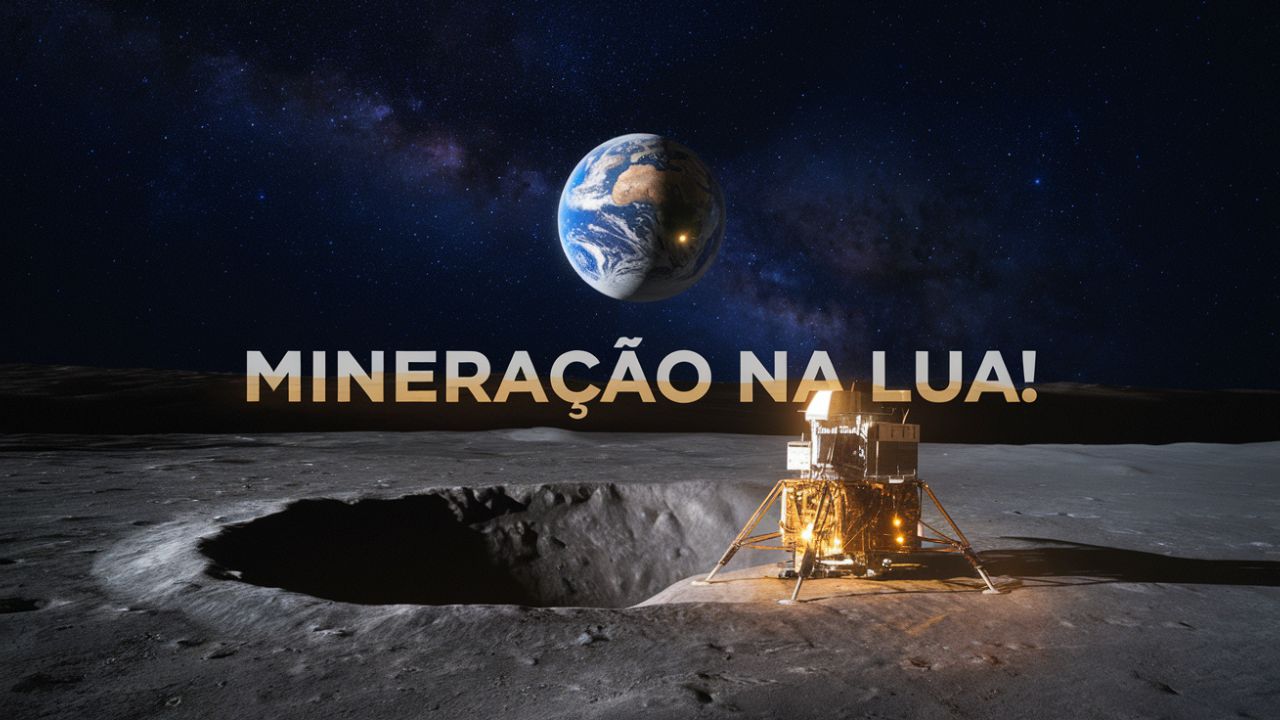


With Potential To Generate Clean And Unlimited Energy, Helium-3 Found On The Moon Could Move US$ 4 Trillion, And Japan Advances With Ambitious Plans To Dominate Lunar Mining While Superpowers Dispute This New Frontier.
Have you ever stopped to think about what the future of energy on Earth will look like? Japan believes the answer lies on the Moon, where trillions of dollars in resources await exploration. Lunar mining, which once seemed like something out of a science fiction movie, is becoming a reality. And what’s at stake? A rare and precious gas called Helium-3.
The competition to explore the Moon has never been so fierce. On one side, the US and China are competing to see who will be the first to establish permanent bases at the lunar south pole. On the other, Japan is strategically positioning itself to secure its slice of this billion-dollar market.
What Is Lunar Mining And Why Is It So Valuable?
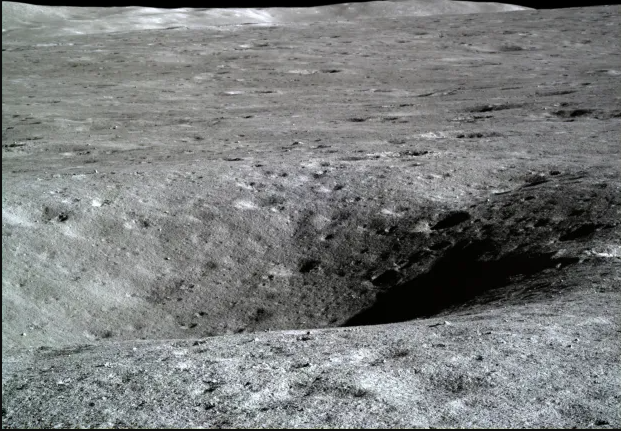
Lunar mining involves extracting valuable resources found in the lunar regolith, the layer of dust covering the Moon’s surface. Among these resources, Helium-3 stands out, a rare gas that can be used as fuel in nuclear fusion reactors. Its main advantage? It does not generate dangerous radioactive waste.
-
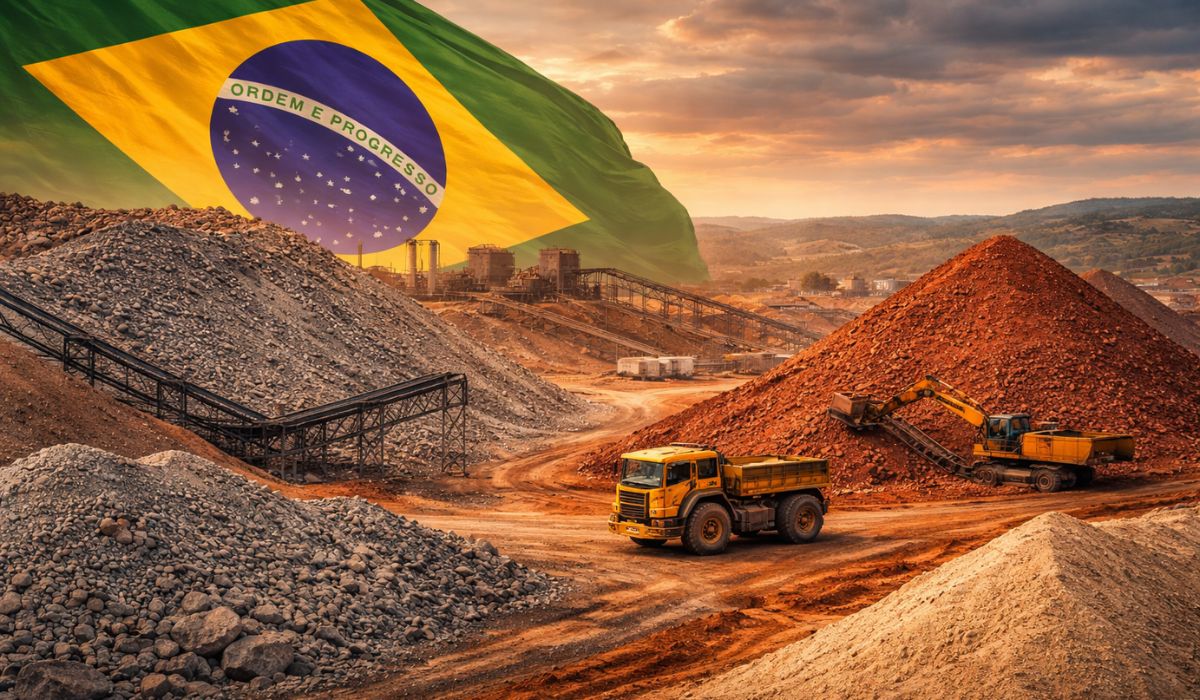
Brazil extracts 26.3 million tons of ore from what was previously treated as waste, transforming residues into wealth, producing over 3 million tons of sand, and demonstrating how national mining is relearning to generate value.
-
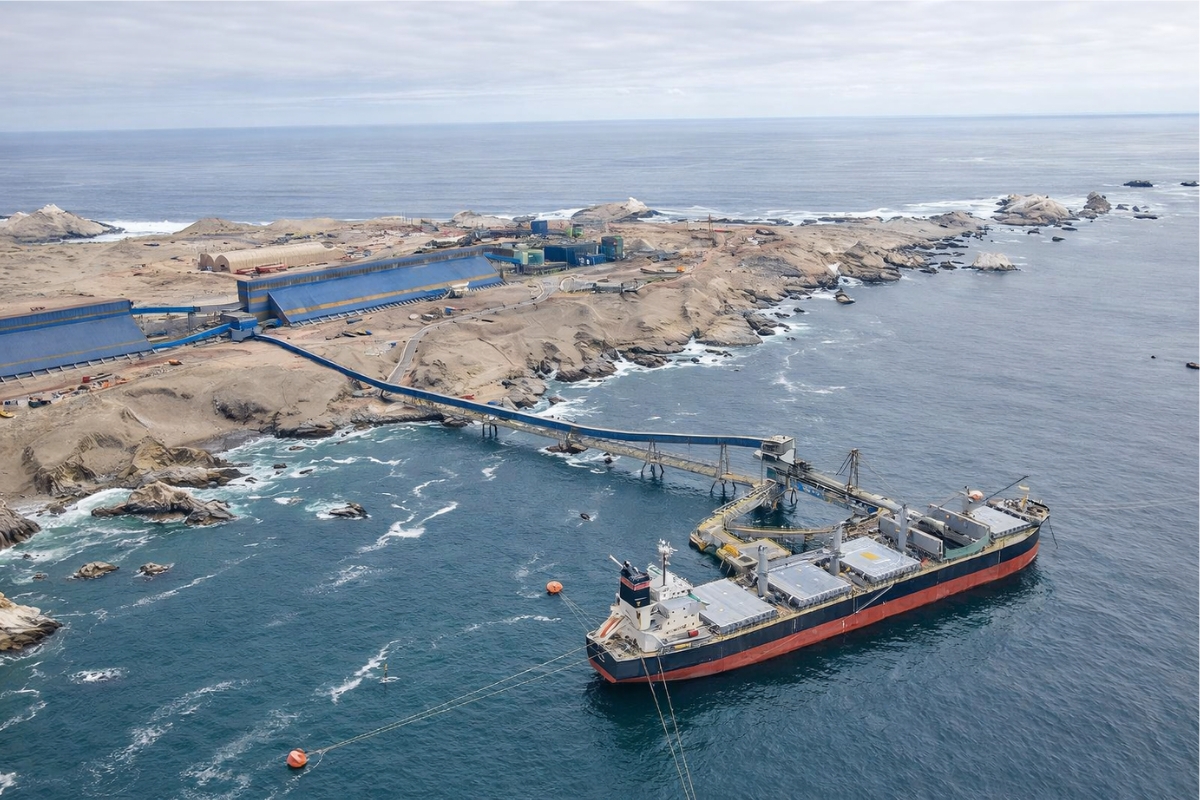
A $3.5 billion megaproject in Latin America pumps desalinated seawater at 1,050 liters per second over 194 km to keep a copper supermine in the Andes operational for another 20 years.
-
A hidden mine in the Andes valued at nearly R$ 1 trillion is starting to attract global attention, containing copper, gold, and silver, and raises an intriguing question: why do Argentina and Chile need to act together to exploit this gigantic wealth?
-
A silent discovery in the interior of Bahia could change the future of energy in Brazil: a uranium reserve in Lagoa Real has an estimated capacity to produce 400 tons per year and is already attracting the attention of energy sector specialists.

Imagine a world powered by clean and virtually unlimited energy. Helium-3 could make this possible. With just one gram valued at about US$ 1,400, it presents itself as the “gold” of the space race. And with trillions of dollars in economic potential, it’s easy to understand why major powers are eyeing this resource.
How Japan Is Positioning Itself In Lunar Mining
Japan has shown a well-defined plan to explore the Moon, led by companies like ispace, which has partnered with Magna Petra to collect Helium-3 sustainably and bring it back to Earth.
ispace is a pioneer in lunar exploration and, along with Magna Petra, seeks to develop extraction methods that preserve the lunar environment. The idea is not only to extract Helium-3 but also to demonstrate to the world that it’s possible to do so responsibly.
According to Takeshi Hakamada, CEO of ispace, sustainable use of lunar resources will be essential for creating a robust cislunar economy. This includes not only the extraction of Helium-3 but also utilizing frozen water found at the lunar south pole.
Despite the enormous economic potential, lunar mining faces significant challenges. In addition to technological barriers, there are diplomatic and ethical issues that need to be resolved.
Global Rivalries And The Risk Of A ‘Wild West In Space’
Joseph Silk, a renowned astrophysicist, warns of the risk of the lunar race turning into chaos similar to the Old West. With limited locations for exploration, such as the lunar south pole, conflicts between nations and private companies are almost inevitable.
Exploring the Moon is no simple task. Companies must develop advanced technology to ensure efficient and safe extraction of resources, in addition to facing extreme temperature and radiation conditions.
If successful, lunar mining could transform the global energy landscape and drastically reduce our dependence on fossil fuels.
Nuclear Fusion As A Sustainable Energy Solution
Nuclear fusion, fueled by Helium-3, is seen as the “Holy Grail” of energy. Unlike traditional sources, it is clean, safe, and virtually unlimited, making it the key to a more sustainable future.
With a market valued at trillions of dollars, Helium-3 could create new industries and jobs, as well as boost the global economy. Pioneer countries in this technology will have a massive competitive advantage in the coming centuries.
Japan is showing that lunar mining is no longer a futuristic idea, but an imminent reality. With strategic partnerships and a focus on sustainability, the country is determined to lead this new frontier. The question is: how far are Japan, the US, and China willing to go in this race? Only time will tell.








Um aluno meu, 13 anos, foi o primeiro que me falou sobre o hélio 3. Mesmo com as dificuldades de ida e volta da lua, talvez 100 kg desse elemento já compensassem os gastos…
O Hélio-3 é um gás raro e precioso encontrado na Lua que pode ser usado para gerar energia limpa. Com apenas um grama valendo cerca de US$ 1.400, ele se apresenta como um recurso valioso. A mineração lunar visa extrair esse gás da camada de poeira que cobre a superfície da Lua, conhecida como regolito lunar. Países como o Japão, os EUA e a China estão se destacando na corrida espacial para explorar a Lua e dominar essa nova fronteira. A mineração lunar enfrenta desafios como blocos tecnológicos e questões diplomáticas, mas o potencial econômico é vasto com a fusão nuclear como solução energética sustentável.
A China já está fazendo os tijolos com a terra lunar para fazer a instalação da colônia na lua até 2035, junto com a colaboração da Russia que vai fornecer um reator nuclear para fornecer a energia na base lunar.
O Japão já teve alguns fracassos nas tentativas de lançar os foguetes
A intenção é boa, mas ainda falta a tecnologia amadurecer
A mineração lunar é um campo que busca explorar os recursos encontrados na Lua, como o Hélio-3, com o potencial de gerar energia limpa e ilimitada. O Japão tem um plano ambicioso de liderar essa exploração, liderado por empresas como a ispace. A empresa busca desenvolver métodos de extração sustentáveis, que preservem o ambiente lunar. A ideia é não apenas extrair o Hélio-3, mas também mostrar ao mundo que é possível fazê-lo de maneira responsável. Isso inclui a utilização de água congelada encontrada no polo sul lunar. A competição para explorar a Lua é acirrada, com as superpotências e empresas privadas disputando a fatia desse mercado bilionário. A fusão nuclear alimentada pelo Hélio-3 é vista como oportunidade para transformar o panorama energético global. Alguns desafios precisam ser superados, como a tecnologia, a diplomacia e questões éticas, mas a relevância do assunto coloca a atenção no Brasil como um passo importante para a exploração das fronteiras da Lua.
A ambição humana não tem limite, destruíram o nosso planeta, e agora querem destruir a lua: com estações.