





 Portuguese
  English
  Spanish
  5 min of reading
  0 comments


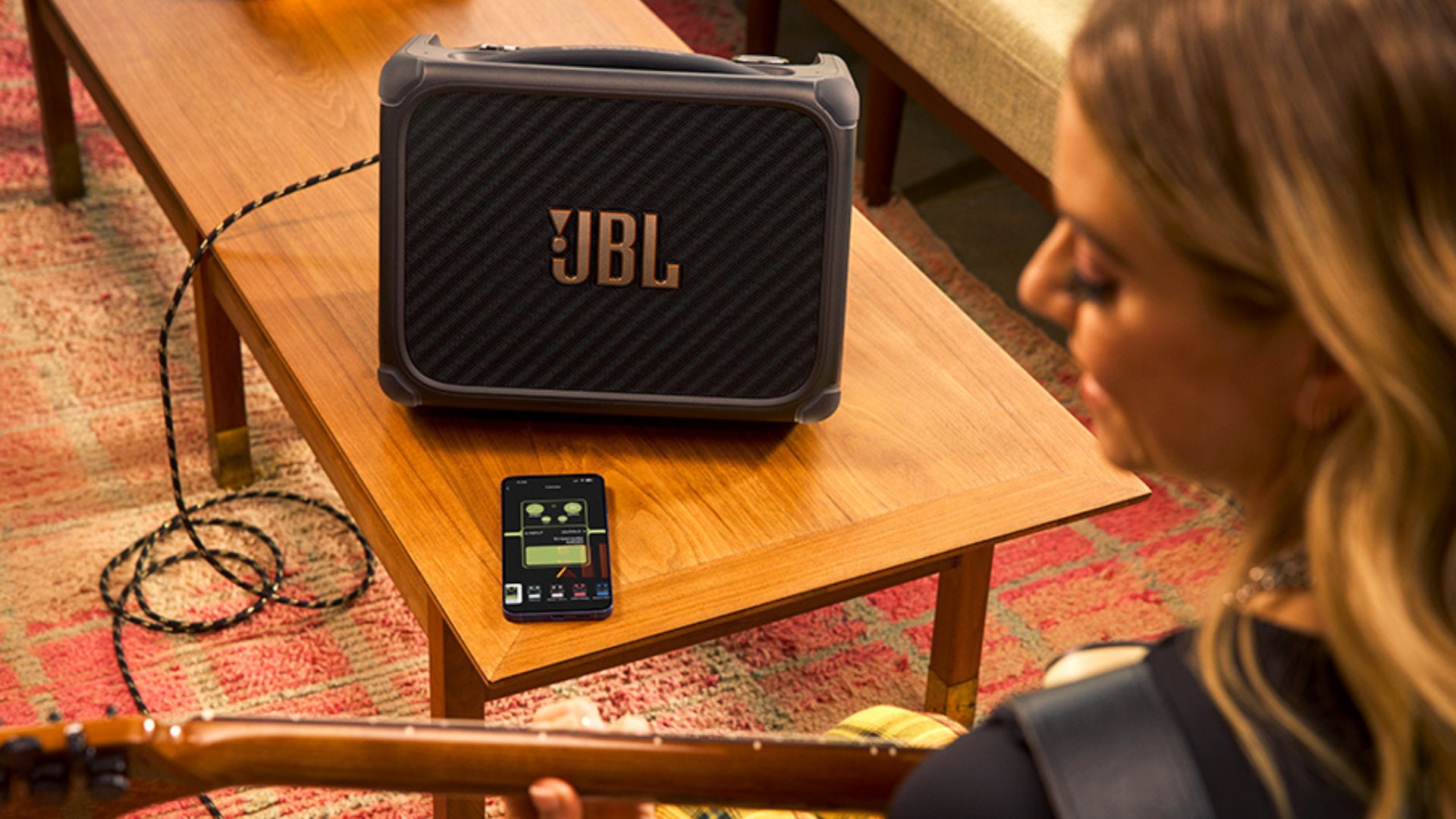
Real-time music separation technology arrives in portable amplifiers in Brazil with the proposal to replace traditional setups and integrate study, rehearsal, and recording in a single compact device.
JBL has launched the BandBox line in the Brazilian market, consisting of the BandBox Solo and BandBox Trio models, aimed at practice, rehearsal, and musical creation in a single device.
The main novelty is the Stem AI technology, which separates elements such as vocals, drums, and guitar in real-time from tracks played on the device, without relying on external software.
On the official website of the brand in Brazil, both products are already listed as available with suggested prices of R$ 1,699 and R$ 3,599, respectively.
-
A mass blockade of over 100 Baidu robotaxis in Wuhan exposes serious flaws as the sector tries to prove that autonomous cars are already ready.

-
Archaeologists went to study a well-known trail and ended up finding another one that is even older, dated between 3,770 and 3,640 B.C., hidden under the swamp for almost 6,000 years.

-
Frequently described by astronauts as one of the most improbable natural phenomena on Earth, the Okavango Delta spreads over up to 15,000 km² in the middle of the Kalahari Desert and transforms Botswana into a living maze of channels, islands, and floodplains that emerge and disappear every year.

-
Archaeologists find giant Roman necropolis with 3,000 tombs hidden beneath the city, and the discovery could rewrite the history of Zadar.

JBL’s Proposal with the BandBox Line
In practice, JBL’s proposal is to condense into a portable format functions that would normally require more than one piece of equipment.

Instead of relying on separate speakers, amplifiers, pedals, tuners, and interfaces, the manufacturer combines these resources into devices that can also operate on battery.
The focus is on musicians in the study phase, artists rehearsing outside conventional studios, and users seeking mobility without sacrificing practice and recording tools.
How Stem AI Technology Works
The feature that differentiates the new line is precisely the ability to “open” the music into parts on the device itself.
According to JBL, the system allows for the separation of instruments and voices in real-time to mute sections, highlight specific passages, or adapt the performance for study and improvisation.
This type of use, however, comes with a relevant warning in the official material: the function is intended for non-commercial use only, and the company emphasizes that the user must observe copyright rules and the terms of the songs or streaming services used.
BandBox Solo: Compact Amplifier with Study Functions
In the case of the BandBox Solo, JBL positions the product as a more straightforward solution for those who play alone or need a compact amplifier for practice routines.
The model features integrated tools such as a tuner, metronome, guitar effects, and amplifier simulations, as well as Bluetooth connectivity and app control.
The company also highlights the ability to change key and tuning during use, a feature designed to facilitate studies, quick rehearsals, and accompaniment of repertoire in different keys.

Although it appears as an entry-level option in the new family, the Solo goes beyond basic use.
In the specifications published by JBL in Brazil, the device has an output of 30 W RMS, a 2.25-inch full-range transducer, and a battery life of up to 6 hours.
The model also functions as an audio interface, with a USB-C connection for direct recording to a computer and integration with digital audio workstations, which broadens its appeal for those recording ideas, demos, and studies at home.
The manufacturer also adds to the Solo a proposal for silent use, important for home environments.
The device accepts wired headphone connections, allowing for nighttime practice sessions without relying on open volume.
Additionally, the JBL One app consolidates some volume adjustments, tone, equalization, effect changes, and practice tool controls, turning the phone into a command center for the equipment.
BandBox Trio: 135 W Power and Mixer for Rehearsals
The BandBox Trio, on the other hand, is designed for a broader scenario, targeting group rehearsals, small performances, and situations where more than one musician needs to connect to the same system.

The model delivers 135 watts of power and combines a 6.5-inch woofer with two tweeters, in a configuration that aims to provide more sound pressure without losing the portable proposal of the line.
With this, JBL tries to position the product as a hybrid between a practice amplifier, active speaker, and rehearsal center.
Another central point of the Trio is the integrated four-channel mixer.
The structure allows for simultaneous connection of instruments, microphones, keyboards, and even electronic drums, while a color LCD screen assists with adjustments during use.
JBL also informs that the device includes microphone effects, amplifier simulations, looper, tuner, metronome, and an internal electronic drum with presets, expanding the range of applications beyond individual study.
Battery, Mobility, and Direct Recording
In terms of mobility, the Trio advances compared to the Solo.
The autonomy reported by the brand reaches 10 hours, depending on the volume and type of sound played, and the official material states that the battery is replaceable, an uncommon feature in portable equipment of this category.
In practice, this tends to interest musicians who spend long periods away from power outlets, whether in extended rehearsals, travels, or performances in less structured environments.
Like the smaller model, the Trio can also be connected via USB-C for direct recording to a computer, reducing the need for additional interfaces in more compact setups.

This combination of functions helps explain JBL’s positioning in presenting the line as an alternative to traditional arrangements formed by pedals, dedicated amplifiers, separate speakers, and specific accompaniment software.
The company’s discourse aims at operational simplicity, portability, and reduction of steps in the creative process.
JBL’s Strategy and Advancement of AI in Music
The arrival of the BandBox in the country reinforces a broader movement in the audio industry, which has begun to incorporate artificial intelligence features not only in home consumption but also in products aimed at musicians.
In this case, JBL seeks to occupy an intermediate space between study, performance, and convenience, offering a ready solution for playing, rehearsing, recording, and experimenting with arrangements with fewer pieces of equipment around.
By bringing this package to Brazil with direct sales on its official website, the brand connects a technology previously more common in software to a portable and physical format, appealing to both beginners and more experienced users.








Seja o primeiro a reagir!