





 Portuguese
  English
  Spanish
  5 min of reading
  18 comments


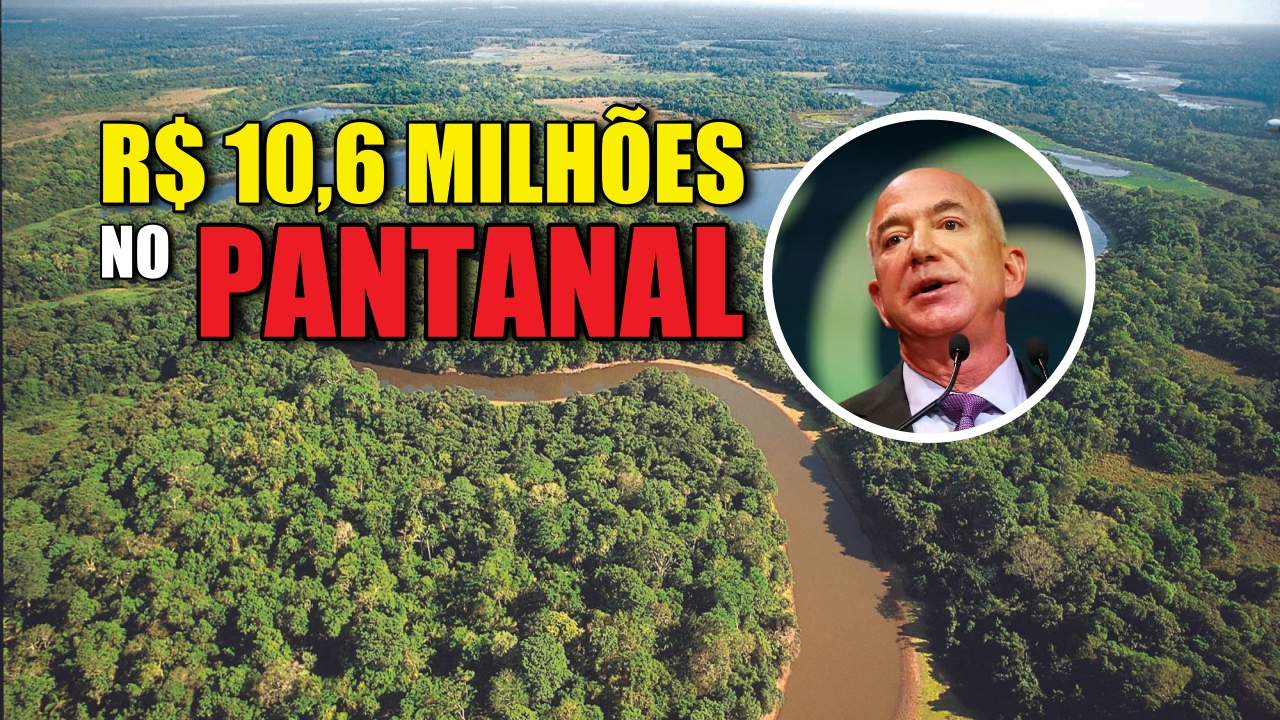


Selected Among More Than A Thousand Global Proposals, PPBio-Pantanal Will Receive About US$ 2 Million From The Bezos Earth Fund To Use AI In Monitoring Fauna And Ecosystem Health
A multi-million investment in the heart of the Pantanal is attracting attention! When one of the richest men on the planet decides to invest money in an environmental project in Brazil, it is worth paying attention. And you, have you ever imagined the Pantanal, the largest flooded grassland on the planet, becoming one of the most advanced places in the world for environmental monitoring?
This is happening now: a Brazilian research project has been selected to receive a billion-dollar investment of about US$ 2 million from the Bezos Earth Fund, a fund created by Jeff Bezos, founder of Amazon, to support innovative environmental initiatives.
This project won a global competition with more than a thousand qualified proposals and will now monitor sounds from nature through artificial intelligence and bioacoustics.
-
“No one will make us change the Pix,” says Lula after the US report.

-
Lula responds directly to Trump and says that Pix is from Brazil and will not change under pressure from anyone, after a report from the United States pointed out the Brazilian payment system as an American trade barrier.

-
Amazon has just announced a new fee on all deliveries, and your online purchases will become more expensive starting April 17, including for those buying from the United States here in Brazil.

-
He sold his share for R$ 4 thousand, saw the company become a giant worth R$ 19 trillion, and missed the opportunity of a lifetime.


The Project That Will “Listen” To The Pantanal
The initiative is part of the PPBio-Pantanal (Pantanal Biodiversity Research Program), a partnership between UFMS, Cornell University (USA), and the environmental organization The Nature Conservancy.
The goal is to install sensors and recorders that capture sounds of birds, mammals, amphibians, insects, and other sound signals from the environment. This data will be analyzed with advanced technology tools to detect ecological patterns and possible threats to the ecosystem, something that previously relied solely on human observations and often was expensive and time-consuming.
A Global Competition And A Victory For Brazilian Science
This project was submitted to the Global AI for Climate and Nature Challenge, an initiative of the Bezos Earth Fund with a commitment of up to US$ 100 million to finance solutions that use technology to address serious environmental problems.
Among more than a thousand proposals submitted from dozens of countries, only 15 initiatives were selected in this round to receive up to US$ 2 million each — and one of them is the Brazilian initiative aimed at monitoring the Pantanal. It is an achievement that places Brazilian researchers alongside solutions of global reach.
The Impact Goes Beyond Technology
Those who follow the project know that it is not just about technology: it unites scientific resources and local knowledge to broaden understanding of how the environment works in practice. Coordinator Liliana Piatti, from UFMS — one of the project leaders — summarized the importance of this opportunity well:
“Receiving the investment from the Bezos Earth Fund means making a technological and structural leap towards more effective conservation, combining the most advanced in artificial intelligence and bioacoustics with the traditional knowledge of the people who live in the biome.”
This statement highlights that monitoring will not only collect data but also support residents, researchers, and local managers in decision-making and environmental protection.
Two Biodiversity Hotspots Under Observation
The resources will not be used only in the Pantanal. The project will also monitor another location considered critical for global biodiversity: the Maia Biosphere Reserve, in Guatemala. There, the goal is to identify, in real time, threats to forests caused by illegal and destructive activities, such as logging and deforestation.
This dual approach shows that technological solutions can be adapted to different ecosystems with similar challenges, expanding the reach of what is learned in the Pantanal to other regions of the world.
The combination of acoustic sensors and intelligence to interpret nature’s sounds represents a leap from traditional monitoring techniques, which relied on field teams and spot observations. With this technology, it will be possible to track trends over time, detect changes early, and support public policies with robust and continuous data.
This is especially relevant at a time when areas like the Pantanal face pressures from extreme events, climate change, and human interventions that accelerate biodiversity loss.
Bezos Earth Fund Focuses On Supporting Projects That Combine Science And Technology To Address Critical Environmental Challenges
The fund was created by Jeff Bezos and focuses on supporting projects that combine science and technology to address critical environmental challenges. Since the announcement of its initiative of up to US$ 100 million aimed at the use of technology and AI for climate and nature, the challenge has funded innovative ideas that can accelerate conservation solutions on a global scale.
This strategy combines financial resources, technical knowledge, and international networks to amplify the impact of environmental actions on multiple fronts.
What Experts Are Saying
In a publication by the Cornell Lab of Ornithology, one of the international partners in the project, director Ian Owens highlighted the value of bioacoustics and technology:
“Technology is essential for understanding wildlife comprehensively and timely in highly biodiverse regions, where traditional methods cannot cover the necessary scale.”
This opinion echoes the importance of uniting automatic sensors with analytical methods capable of processing large volumes of data and transforming natural sounds into actionable information.
The Name Jeff Bezos In This Story
Since stepping down from direct leadership of Amazon, Jeff Bezos has been investing in environmental causes through the Bezos Earth Fund, including initiatives aimed at protecting nature, climate, and biodiversity. This investment in the Pantanal is another area of focus in this field.
That is why many outlets refer to Bezos as one of the richest men in the world — his position in rankings such as those by Forbes and other wealth panels is often highlighted in global analyses of fortunes.
This investment is not just about money. It represents a bridge between science, technology, and conservation that can influence how other tropical regions and threatened biomes study and protect their species. It is a meeting of expertise, international resources, and local knowledge that can change the game for conservation in Brazil and beyond.
And what do you think? This combination of technology, environment, and billion-dollar investment in the Pantanal raises important questions about how we preserve our biomes and use innovation to face environmental challenges. Leave a comment with your opinion and share this article with those interested in the environment, science, and a sustainable future.








Caramba !!!!!! o condominio vizinho gastou
2 milhões numa área de lazer de
800m2……
Acho engraçado essas pessoas, 2 milhões não dá pra pagar nem os administradores desse dinheiro. Gravar sons…..??? e as pessoas passando fome e sem ter um teto pra se abrigar, realmente o ser humano está deixado em 10° plano mesmo!!!!
A ignorância fornece liberdade poética para falar qualquer bobagem.
Acredito que j. Bezos esteja provido de boas intenções para com o Pantanal com sua flora e fauna únicas e que se autoridades brasileiras não procuram preservar e conservar adequadamente,outras de fora e com boas intenções que o façam