





 English
  Francês
  Alemão
  Italiano
  Japonês
  Norueguês
  Portuguese
  Spanish
  4 min of reading


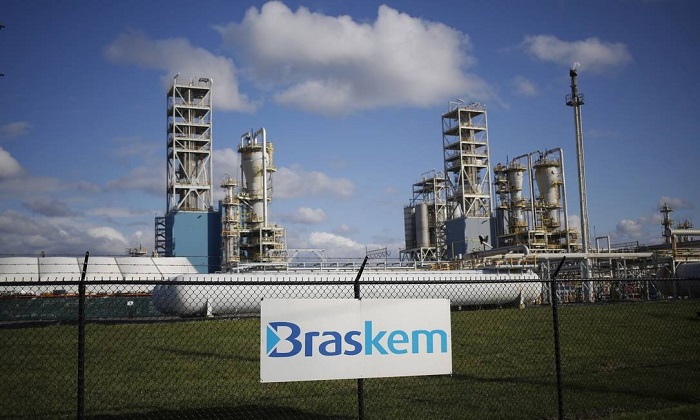
The Court of Justice of Alagoas Ordered a “Preventive” Freeze of Up to US$ 25.45 Million in Financial Assets of the Petrochemical Giant Braskem
The freeze is intended to potentially cover costs associated with fissures and other geological damage to neighborhoods near the company’s salt mining operations in the Brazilian state of Alagoas.
Earlier this month, the company issued a statement to shareholders announcing that a lawsuit filed against Braskem by the Public Prosecutor’s Office and Public Defender’s Office in the state of Alagoas sought a freeze of US$ 6.7 billion to “guarantee possible damages owed to the general public due to the geological phenomenon that occurred in districts close to the rock salt extraction area in Maceió.”
-
Government unlocks R$ 554 million for a highway that has been requested for decades and accelerates the duplication of BR.
-
Without bricks, without cement, and without endless construction: the cardboard house that is assembled in modules and can be moved.

-
Billions of barrels on the equatorial margin could lead Amapá to double its oil production in Brazil — the state aims to enter the route of companies in the Campos Basin, attract investments, and boost jobs and businesses in the oil and gas sector.
-
Without bricks, without cement, and without endless construction: the cardboard house that is assembled in modules and can be moved.

In a second statement issued three days later, Braskem reported that a civil court in Maceió partially granted the injunction request and ordered the freeze of the lesser amount. Prosecutors appealed this order for the lesser freeze and, last week, Braskem announced that a civil court ordered the company to suspend the payment of dividends on April 16 amounting to R$ 2.7 billion “until the merits of the appeal have been examined.”
Braskem also appealed the freeze, arguing that there is no conclusive study showing evidence that the company is responsible for any fissures, and there is no reason for a cash freeze “that negatively affects its operations in Alagoas,” the company said in a statement.
FISSURES AND IMPACT OF PRODUCTION
The issue arises from fissures in neighborhoods of the city of Maceió, in the Brazilian state of Alagoas, where Braskem has chlor-alkali and polyvinyl chloride plants. The company extracts salt in the region used to produce chlorine at the chlor-alkali facility. Chlorine mixed with ethylene produces ethylene dichloride, or EDC, a precursor to PVC.
According to the Geological Service of Brazil (CPRM), which is scheduled to release a report on the damages at the end of April, the Pinheiro neighborhood historically has shown fissures and holes between houses and public roads. Such incidents intensified after heavy rains in the region in February 2018 and an earthquake the following month, which registered a magnitude of 2.5 on the Richter scale, according to the agency.
“The event caused significant damage, such as fissures, cracks, and fractures in buildings, streets, and sidewalks across a significant area of the neighborhood, including the prohibition of several houses,” the Geological Service said in a statement.
Braskem, which has been mining salt in Alagoas since 1975, stopped operations in Pinheiro and began monitoring issues with buildings in the neighborhood in March 2018. A source familiar with the company’s operations stated that chlor-alkali and vinyl production “has not been impacted by these products” in tests so far.
However, Braskem launched a caustic soda tender earlier this month – a byproduct of chlorine production – and EDC. According to various market sources, the tender sought two loads of 8,000 tons of caustic soda, a raw material for alumina and cellulose and paper, and two 10,000-ton loads of EDC. The tender sought both products in a package for delivery in May and June.
Sources say that Braskem included caustic soda in the auction in search of an acceptable deal on the EDC to complement its PVC production, not related to the fissure issues. Braskem declined two US offers for EDC in 2018, considering the prices too high, but prices still remain at the highest level since October 2014. Instead of waiting for prices to drop, the company chose to bundle its EDC contract with caustic soda, as caustic soda prices have been under pressure amid high inventories and are at their lowest level since September 2016, according to S&P Global Platts data.
“We understand that purchasing both products would be more attractive for EDC production, and we would get better deals that way,” said the source. “We are not interested in buying soda without EDC. Additionally, we believe that current soda prices are low, reducing the risks for us.”
It remains unclear whether US producers could fulfill one or both shipments, due to the large available export of EDC.
SEARCHING FOR CAUSE OF THE EARTHQUAKE
Braskem has been working with public authorities to help determine the cause of the March 2018 earthquake, including the Civil Defense, the National Mining Agency, the Geological Service of Brazil, and the Ministry of Mines and Energy, the company stated.
Additionally, Braskem signed this month a technical cooperation agreement with the State and Federal Public Prosecutor’s Office, the Public Prosecutor’s Office of Alagoas, and Maceió to implement a series of contingency measures to assist the neighborhood before the rainy season, which lasts from April to mid-August.
Braskem stated that it has developed a surface drainage project as part of this agreement.
Dinaro Lemos, deputy special secretary of Civil Defense, also announced a plan to evacuate residents of Pinheiro and two other neighborhoods if the rains in the area reach 30 mm per hour.





Seja o primeiro a reagir!