





 Portuguese
  English
  Spanish
  5 min of reading
  0 comments


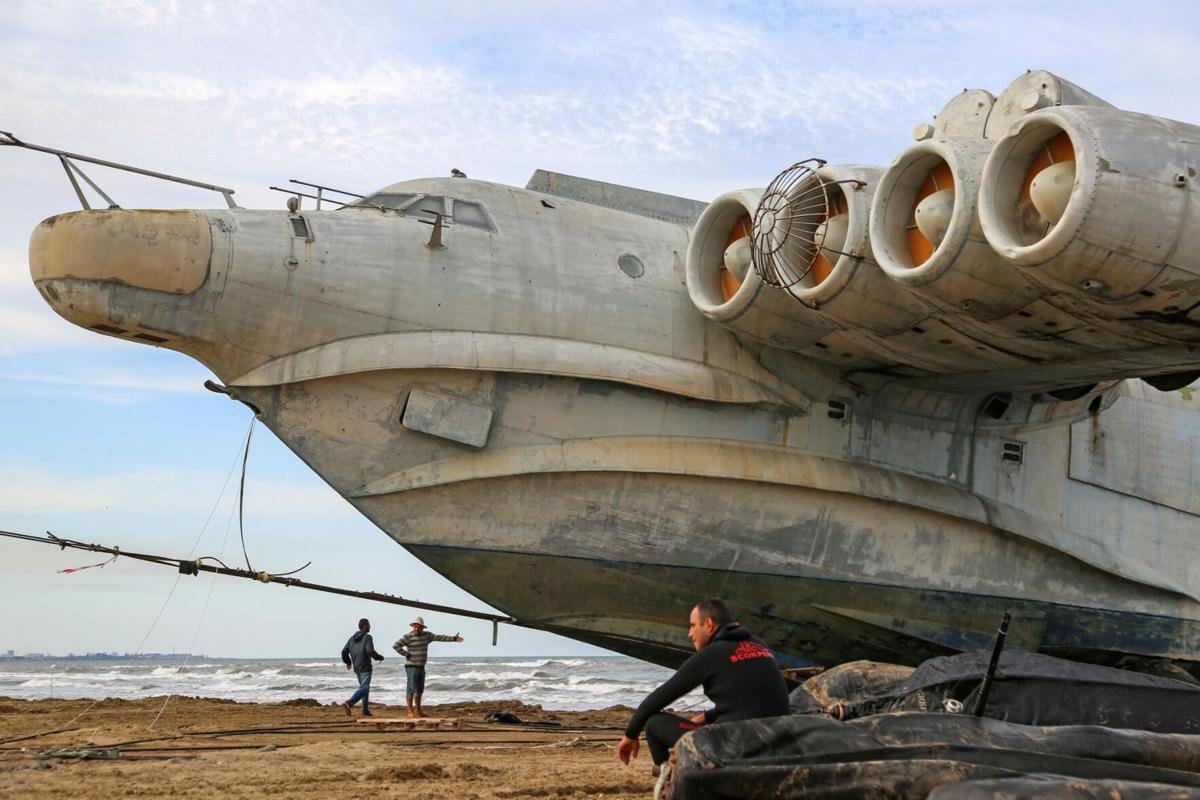
KM, the “Caspian Sea Monster,” Was the Largest Ground Effect Vehicle Ever Built, at 92 Meters and Over 500 Tons, Developed by the Soviet Union in the 1960s.
In the tensest years of the Cold War, when each technological advancement was treated as a potential strategic advantage, the Soviet Union initiated a project that confused Western military analysts. In images captured by American spy satellites at the end of the 1960s, a colossal object appeared stationed along the shores of the Caspian Sea. It looked neither like a ship nor a conventional airplane. It measured about 92 meters in length, had huge wings and eight jet engines mounted at the front. The U.S. intelligence community began calling it the “Caspian Sea Monster.” Its real name was KM, an abbreviation for Korabl-Makét (prototype ship, in Russian). The KM was the largest ground effect vehicle ever built and became the direct precursor to the famous Lun-class.
What Was the KM and How Did Ground Effect Work?
The KM was a ground effect vehicle, meaning it was designed to fly just a few meters above the water’s surface using the physical phenomenon known as ground effect.
Ground effect occurs when a wing flies very close to a flat surface, compressing the air between the wing and the ground or water. This compression generates an aerodynamic “cushion” that increases lift and reduces drag.
-
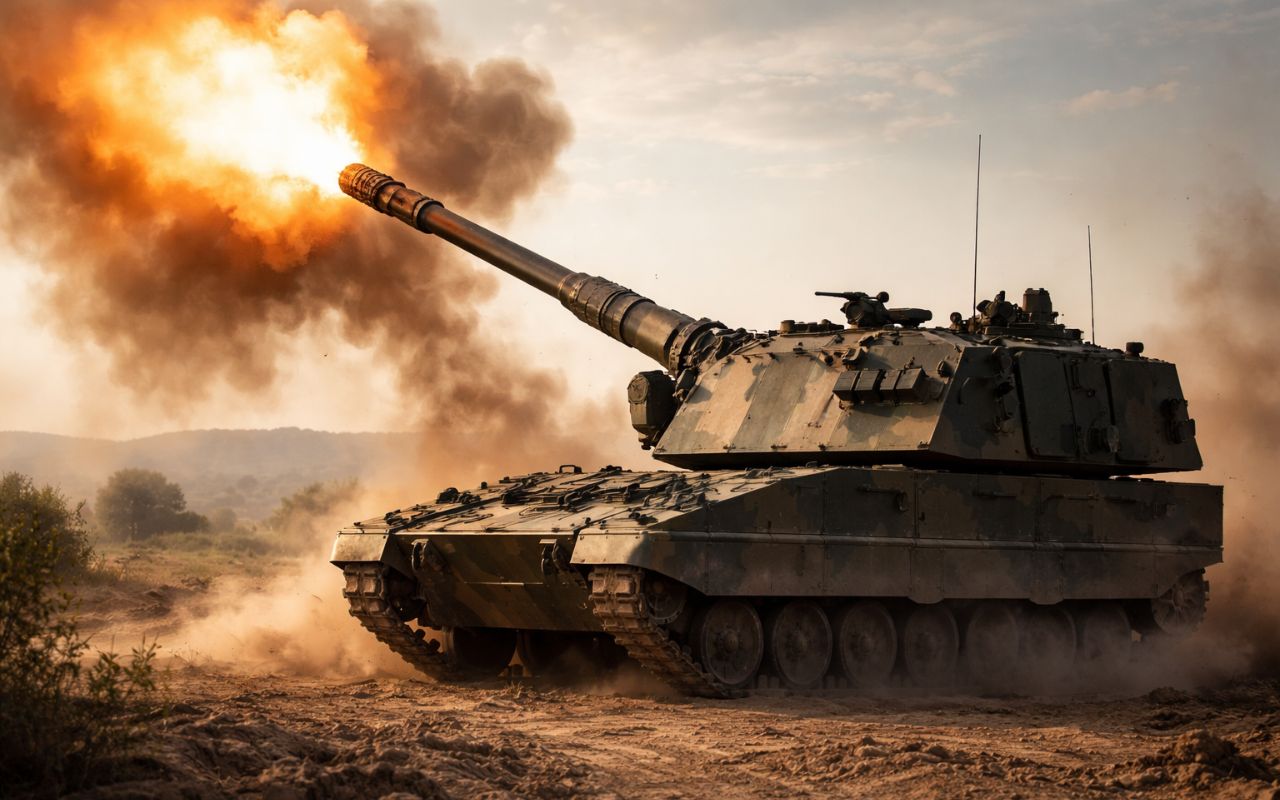
The German “steel monster” weighing 55 tons fires up to 10 projectiles per minute at over 40 km and avoids counterattacks on the battlefield by moving quickly to escape enemy attacks; meet the Panzerhaubitze 2000.
-
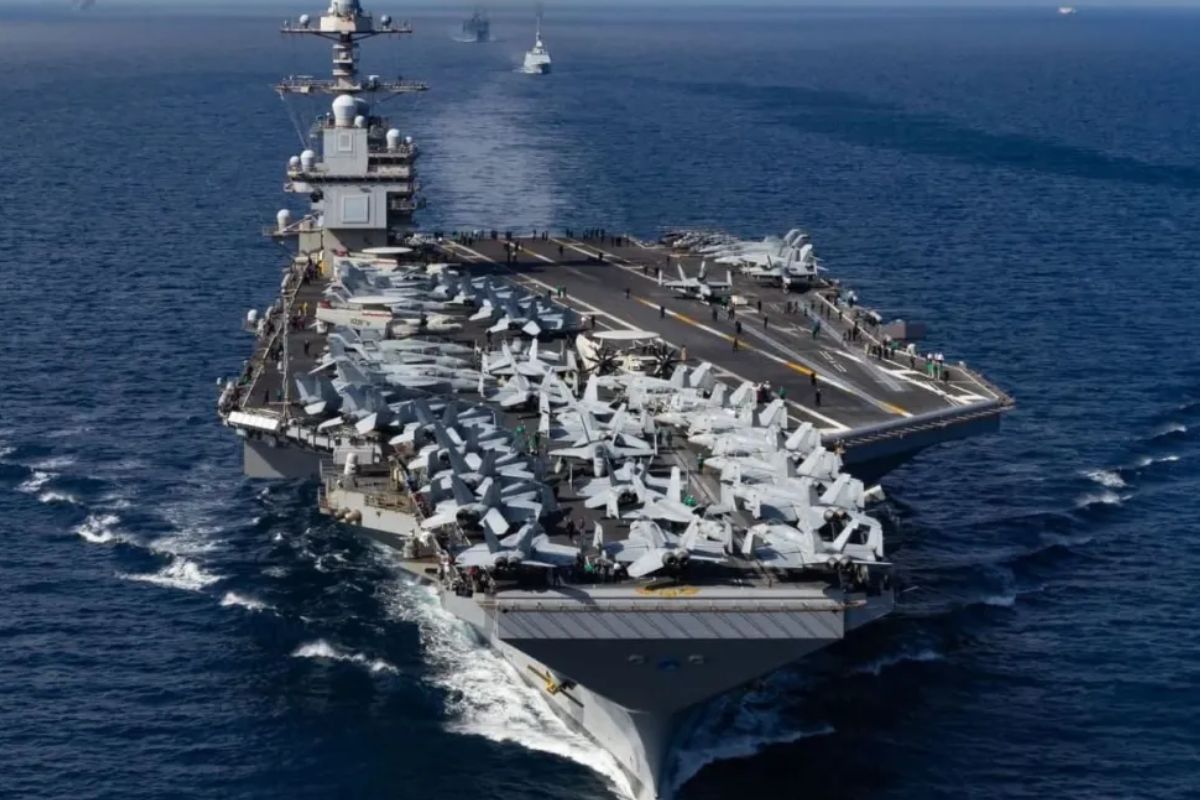
USS Gerald R. Ford, the largest aircraft carrier in the world, returns to sea after a fire in the laundry in the Red Sea; repaired in Crete, it resumes missions of Operation Epic Fury against Iran.
-
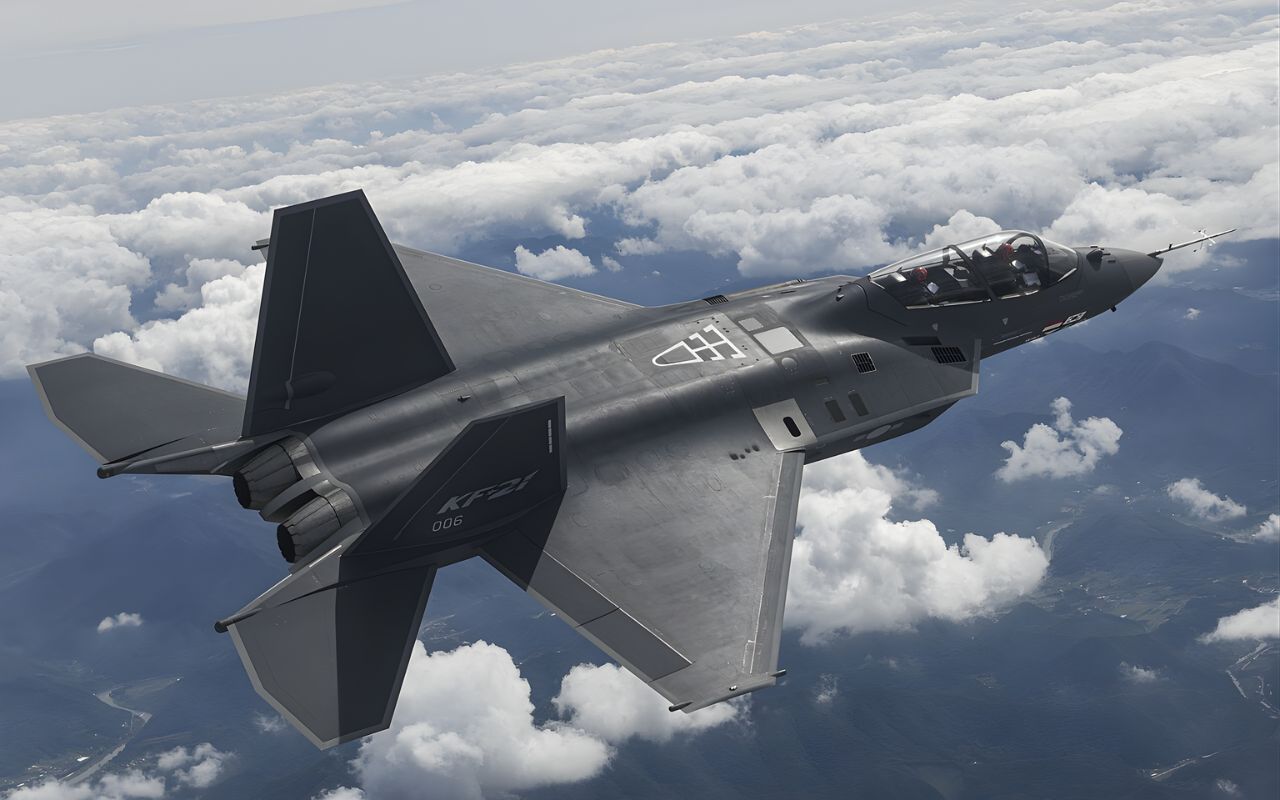
Military power: South Korea’s new KF-21 fighter jet will be a key component in replacing the aging aircraft of the air force, placing the country on the map of air military powers.
-
With 310 meters, 80 thousand tons, and capable of operating for 45 years, the new nuclear aircraft carrier France Libre will be the largest in France and will enter service in 2038.

In the case of the KM:
- It typically operated between 4 and 14 meters in altitude
- It utilized ground effect to gain efficiency
- It depended on high speed to maintain stability

The project explored a flight range where conventional aircraft do not operate and ships never reach.
Impressive Dimensions of the Caspian Sea Monster
The KM’s numbers continue to impress decades later:
- Approximate length of 92 meters
- Wingspan of over 37 meters
- Height close to 21 meters
- Estimated maximum weight of over 500 tons
- Eight Dobrynin VD-7 turbofan engines
These engines were mounted at the front to generate sufficient thrust during the initial acceleration over water.
It was, in practice, a flying giant that skimmed the sea at speeds exceeding 500 km/h. Its size surpassed many aircraft of the time and came close to that of large vessels.
Why Was the KM So Secret?
The project was developed under the leadership of Soviet engineer Rostislav Alexeyev, a specialist in high-speed vessels. The Caspian Sea was chosen as a testing ground for being a relatively isolated area controlled by the Soviet Union.


For years, the project remained unknown in the West until satellite images revealed the existence of the enormous vehicle.
For CIA analysts, it was something that did not fit into traditional categories of aircraft or ships. The mystery further heightened strategic interest in the program.
Military Objective of the KM in the Cold War
Though the KM was primarily an experimental prototype, the concept behind it had clear military implications. Among the theoretical advantages were:
- High speed over water
- Heavy lifting capacity
- Low flight profile, making radar detection difficult
- Potential to carry armaments
The idea was to create a platform capable of moving quickly across large maritime expanses with reduced vulnerability.
The KM represented a Soviet attempt to open a new category of naval strategic mobility.
Difference Between the KM and the Lun-Class
The KM was the prototype that gave rise to the Lun class. While the KM:
- Was experimental
- Did not enter full operational service
- Served as a testing platform
The Lun-class, developed later, incorporated armaments such as P-270 Moskit missiles and entered limited service in the 1980s. The KM was the flying laboratory that paved the way for later armed versions.
Operational Challenges of the Soviet Giant
Despite the technological boldness, the KM faced significant challenges.
Low flying required:
- Relatively calm sea conditions
- Highly trained pilots
- Extremely precise control
Any error at low altitude could be fatal. Furthermore, maintaining eight jet engines in a saline marine environment was complex.
The combination of high cost and operational complexity limited production.
The Accident That Ended the KM’s Trajectory
In 1980, during a test flight, the KM suffered an accident in the Caspian Sea.
Reports indicate that the pilot made a maneuver error while attempting to land under adverse conditions. The vehicle was damaged and partially sank.

The incident marked the end of the specific KM project, although studies on ground effect vehicles continued.
Even without being widely operationalized, the KM had a significant impact:
- Demonstrated the feasibility of ground effect on a large scale
- Inspired the development of the Lun-class
- Provoked attention from Western military intelligence
The mere existence of the KM changed the strategic calculus of the time. It showed that Soviet engineering was exploring unconventional concepts.
The Legacy of the Caspian Sea Monster
Decades later, the KM remains a reference when discussing ground effect vehicles. Its record size remains impressive.
Although the project was limited, it proved that it was possible to build a machine of hundreds of tons capable of flying close to the water at high speeds.
The KM remains the largest ground effect vehicle ever built in history. Today, historical images and declassified records allow for a better understanding of what was once just an intriguing blur in satellite photos.
The Giant That Confused the World
At 92 meters in length, over 500 tons, and with eight jet engines, the KM became one of the most ambitious projects of Soviet military engineering.
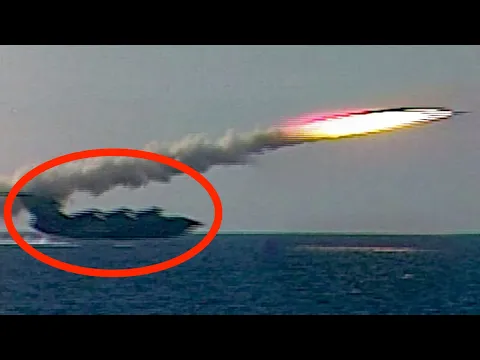
Its emergence surprised the United States and marked a unique chapter in the technological race of the Cold War.
Even after the accident that ended its trajectory, the Caspian Sea Monster solidified its place in history as the largest ground effect vehicle ever built. The KM not only flew over the sea, it challenged traditional categories of modern warfare.









-

-

-

-

7 pessoas reagiram a isso.