





 Portuguese
  English
  Spanish
  3 min of reading
  0 comments


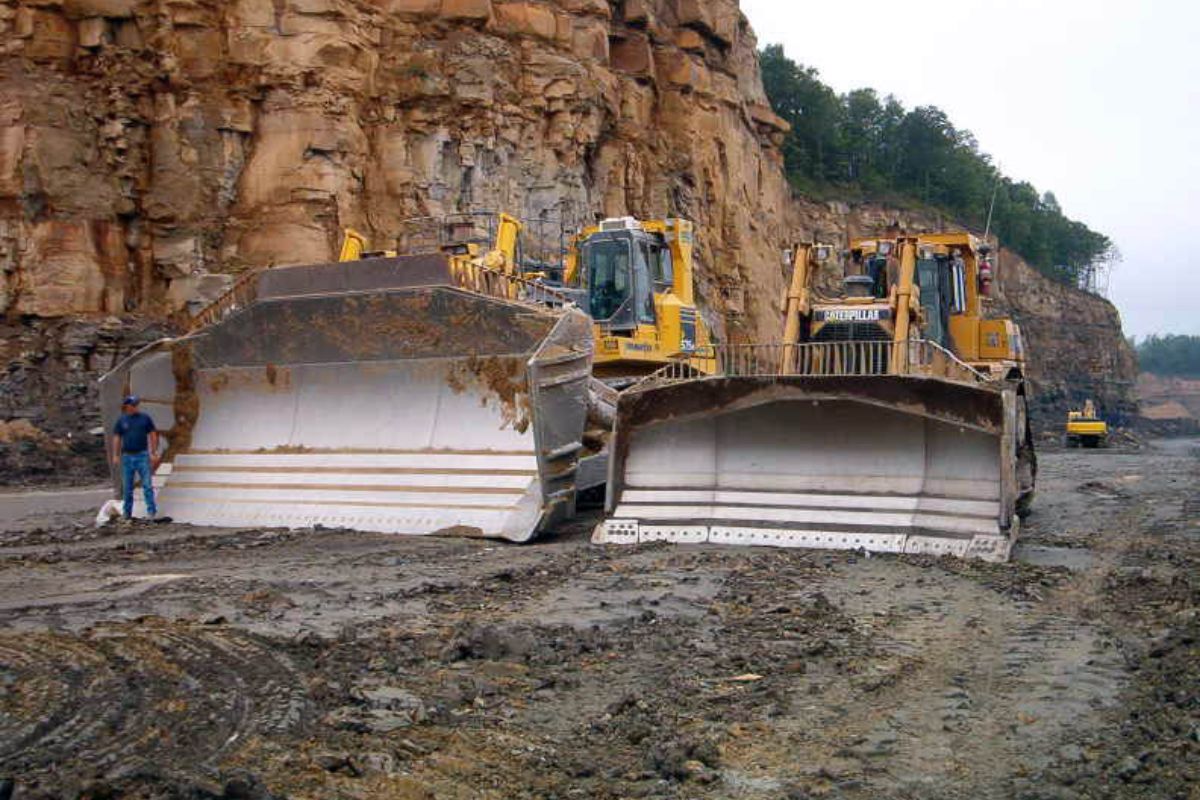


Giant Japanese Bulldozer Moves Up to 150 Tons in a Single Pass and Impresses with Its Efficiency in Open-Pit Mines
The Komatsu D575A‑3 Super Dozer is capable of moving, in one go, the equivalent volume of a small house. With a blade of up to 96 m³ and a weight of 152 tons, it is the most powerful bulldozer ever mass-produced, standing out for its gross capacity and application in heavy mining areas.
The machine was designed to move up to 150 tons per cycle, surpassing rivals like the Caterpillar D11T and operating in regions where excavation needs to be done without the use of explosives. With a strong presence in mines in the United States, Japan, and Australia, the D575A‑3 SD has become a legend in heavy engineering.
History and Specifications of the Komatsu D575A‑3
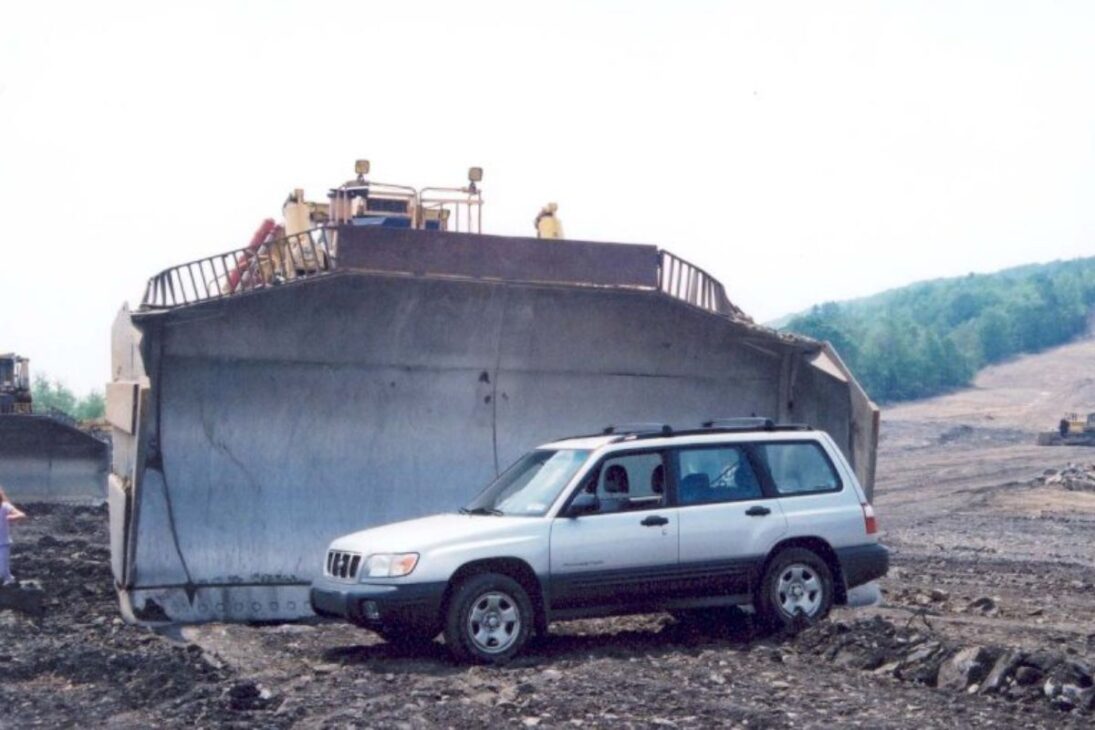
The Komatsu D575A‑3 is the largest bulldozer produced in series in the world. Developed by Komatsu Ltd. in Japan, its first version was launched in 1991, with the Super Dozer (SD) variant being offered starting in 2001. This version featured an option for a front blade of up to 96 m³, capable of moving around 150 tons in a single pass — a volume comparable to that of a compact residence.
-
Attracting around 250,000 people a year, a lighthouse 200 meters from the sea, on a 60-meter high cliff, on the North Sea coast in Denmark, becomes one of the most impressive examples of how nature can threaten historical buildings.

-
The narrowest house in the world is only 63 centimeters wide, but inside it can accommodate a bathroom, kitchen, bedroom, office, and even two staircases.

-
In the middle of the sea, these enormous concrete and steel structures, built by the British Navy to protect strategic maritime routes, look like they came straight out of a Star Wars movie.
-
For years, no one could cross a neighborhood in Tokyo because of the tracks, but an impressive solution changed mobility and completely transformed the local routine.


With 1,150 hp (858 kW), Komatsu SA12V170E engine and an operational weight of 152.6 tons, the model was mainly used in open-pit mining operations. Its production was halted in 2012, without a direct successor.
The Blade That Pushes Like a House
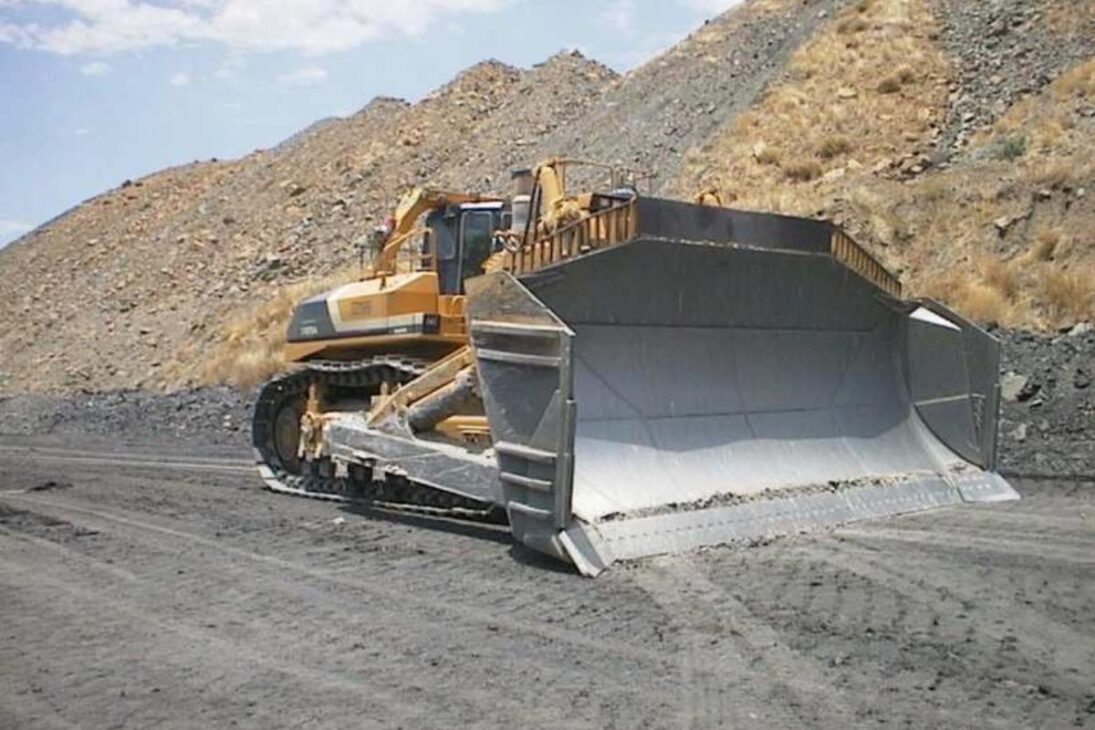
The Super Dozer version of the Komatsu D575A‑3 had a front blade capable of carrying up to 96 m³ of soil at a time. Considering the average density of dry material (approximately 1.6 t/m³), this capacity represents up to 150 tons moved in a single movement.
The comparison to a small house is technically backed: a single-story building of about 90 m² (with a ceiling height of 2.5 m) totals around 225 m³ of internal volume. The blade of the D575A‑3 SD moves practically half of that, equivalent to all the earth used in the foundation or filling of six large dump trucks.
Where the Super Bulldozer Was Used
Despite its limited production — only about 10 SD units — the Komatsu D575A‑3 had significant practical application in large mining projects. Operators such as Alpha Natural Resources (USA) and Alcoa (Australia) used the machine in deep excavation environments where the use of explosives was unfeasible.
Countries that received units include United States (especially in West Virginia and Kentucky), Australia, Canada, Japan, and New Zealand. In some cases, the bulldozer was operated with remote control for work in hazardous areas.
Why It Was Not Replaced
The end of production of the D575A‑3 in 2012 did not bring a direct substitute. One of the main reasons is the operational cost and the need for specialized logistics for transport and maintenance. Another relevant factor is the advancement in alternative excavation methods, such as off-road trucks and large excavators, which have begun to perform the same function with greater flexibility.
Still, some units remain operational to this day, maintained by companies that still value the gross output per operating cycle and the machine’s robustness.
Is the Analogy Valid?
Yes. Even with variations in material density and the exact definition of what a “small house” would be, the calculations based on sources such as Ritchie Bros Blog and Wikipedia indicate that the Komatsu D575A‑3 Super Dozer really does push, in a single pass, enough earth to fill the volume of a compact residential building.
Do you agree with this analogy? Have you worked with machines of this size or witnessed their operation? Share your opinion in the comments; we want to hear from those who experience this in practice.







EU VOU COMPRAR UM DESSES PRÁ MIM.