





 Portuguese
  English
  Spanish
  5 min of reading
  0 comments


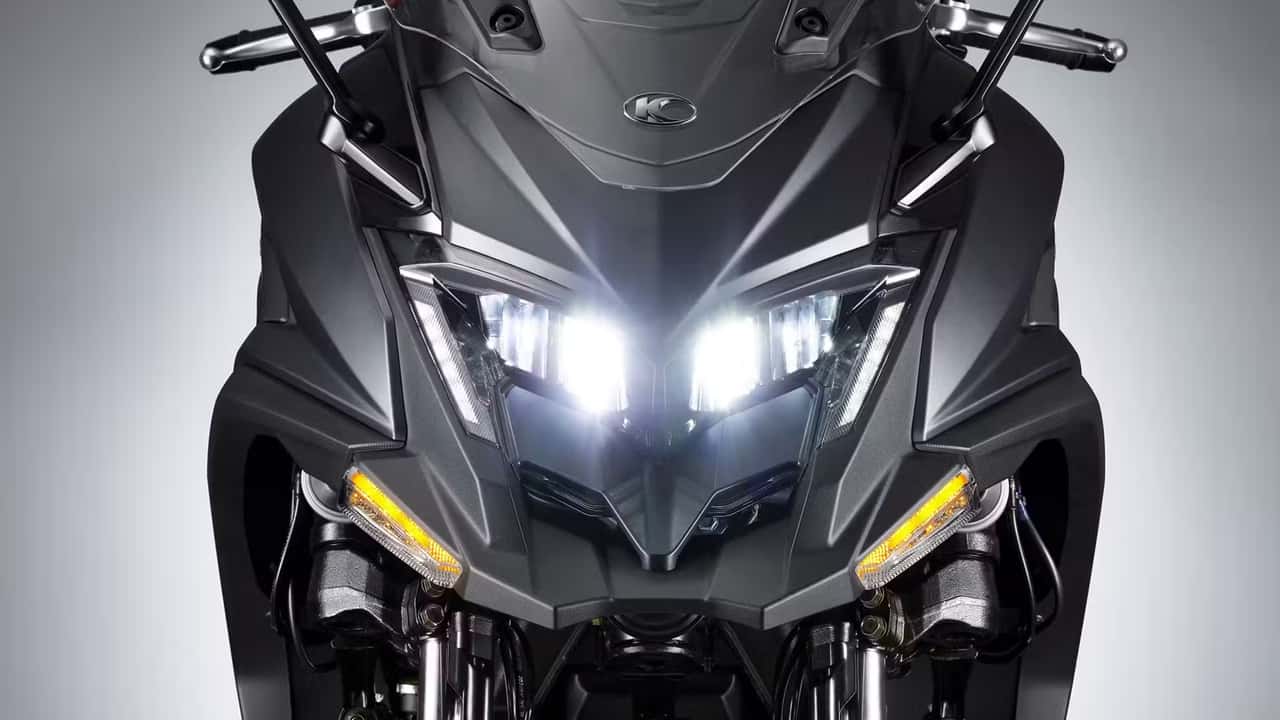
Kymco model brings an uncommon proposal, maxi scooter size, and solutions focused on stability, in a segment that mixes urban practicality, road use, and new driving formats in the two-wheeler market.
Kymco launched the CV3, a three-wheeled maxi scooter that combines a medium displacement engine, automatic transmission, and a proposal centered on enhancing front stability.
The model combines scooter characteristics with technical solutions closer to motorcycles aimed at long-distance travel, especially on highways and medium-distance routes.
The mechanical set consists of a 574 cc twin-cylinder engine, with a declared power of 37.6 kW at 7,000 rpm and torque of 54.4 Nm at 5,750 rpm, according to the manufacturer’s technical sheet.
-
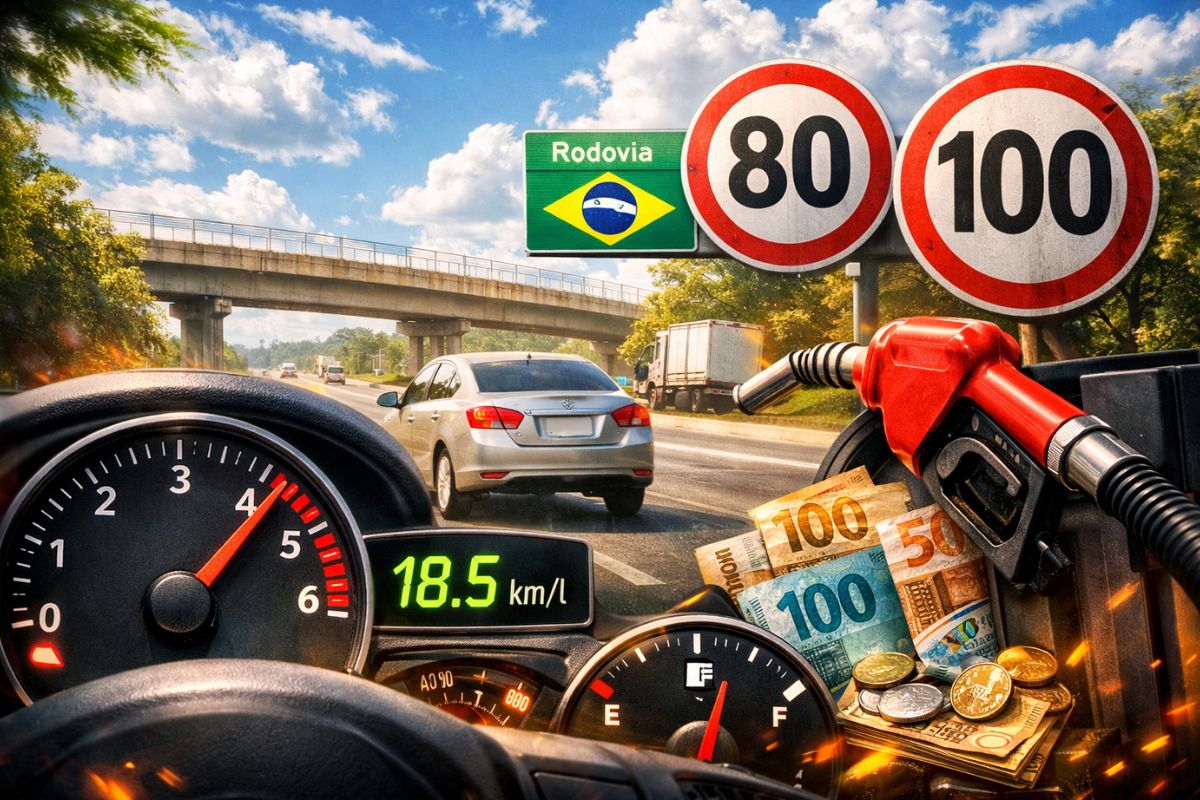
Most drivers make a big mistake on the road without knowing: there is an exact speed that makes the engine work with minimal effort and saves much more fuel, and it is neither 80 km/h nor 100 km/h as many imagine.
-
Mechanic explains: Ferrari 296 has a hybrid system management failure that can drain the high-voltage battery to an “irrecoverable” point in the car; recovery requires charging cell by cell on a bench, is risky, and the battery can cost R$ 250,000 imported.

-
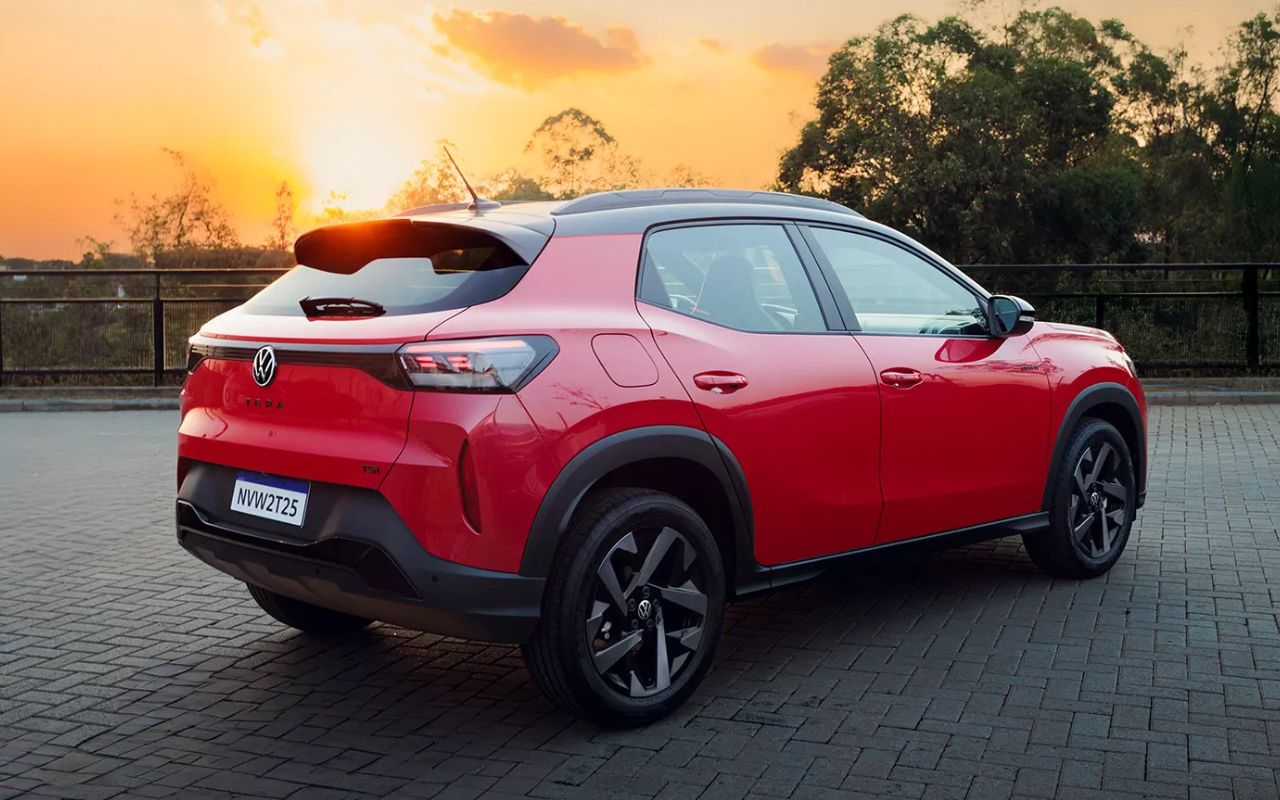
It surpassed the T-Cross, Creta, and Tracker: with nearly 8,000 units sold, the Volkswagen Tera was the best-selling SUV in March 2026.
-
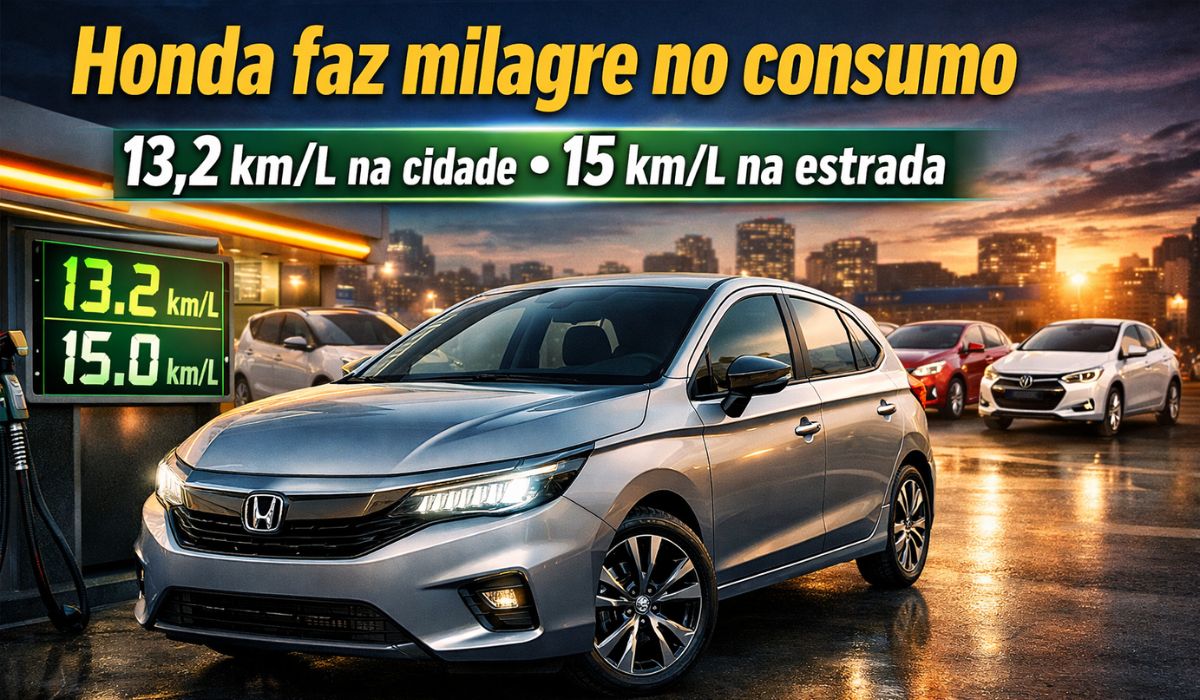
Honda performs miracles in fuel consumption with a hatch that marks 13.2 km/l in the city and 15 km/l on the highway, leaving Polo, HB20, 208, and Onix behind and becoming a reference among compact cars without resorting to turbo or hybrid systems.
The maximum speed reported by the brand in the British market is 105 mph, equivalent to about 169 km/h.
The numbers place the CV3 in a range above low-displacement urban scooters.
In this segment, the focus shifts from merely mobility on short routes to include road use, comfort, and capacity for longer trips.
The reported fuel consumption is 55 mpg, which corresponds to approximately 19.5 km/l when converted to the metric system.
At the same time, the size of the vehicle distances it from comparisons with compact scooters.
The CV3 weighs about 282 kg in running order, which directly influences the handling and proposed use.
Instead of prioritizing agility in narrow corridors, the model positions itself as a larger option, focused on stability, aerodynamic protection, and load capacity.
Three-wheel system is the main differential of the Kymco CV3
The most characteristic element of the CV3 is at the front.
The scooter uses two 13-inch wheels, independent suspension, and a leaning system that allows the assembly to lean in curves while maintaining parallelism between the wheels.
Kymco calls this system KALS and reports a maximum leaning angle of 40 degrees.
In practice, the proposal is to increase the contact area with the ground at the front and offer more stability under certain usage conditions.
According to the manufacturer, the system was developed to improve the vehicle’s behavior during braking, cornering, and on surfaces with varying grip.
This type of technical solution already appears in other three-wheeled models but still occupies a specific niche within the two-wheeler market.
Additionally, the CV3 brings electronic features aimed at driving.
Among them are the assistance system to keep the vehicle upright when stopped and cruise control.
These items reinforce the proposal for use on longer routes and help position the model beyond the strictly urban context.
At the rear, the assembly follows the expected standard for a larger scooter.
The transmission is of the CVT type, without manual gear shifts, while the final drive is by belt.
The rear tire measures 160/60 R15, a common size in medium-displacement motorcycles, and the swingarm is of the unit swingarm type.

Engine, speed, and dimensions bring the model closer to medium motorcycles
Although it has scooter ergonomics and bodywork, the CV3 combines specifications that bring it closer to medium motorcycles aimed at touring.
The inline twin engine is liquid-cooled, uses electronic fuel injection, and adopts dual overhead camshafts.
The configuration indicates a proposal aimed at sufficient performance for road use, without relying on manual gear shifts.
The maximum speed close to 169 km/h reinforces this framing.
Still, the technical data and the brand’s official communication indicate that performance is not the main selling point of the model.
The highlight falls on stability, the ability to be used on different surface conditions, and practicality for daily commutes or trips.
In this context, the total weight also needs to be considered.
With about 282 kg, the CV3 was not designed for the same circulation dynamics as light scooters.
The larger size favors stability in a straight line and comfort at cruising speeds, characteristics usually associated with vehicles designed for road use.
Equipment and tourism proposal reinforce the positioning
The list of equipment reinforces this positioning.
The model features a 6-inch TFT display, keyless ignition, heated grips, cruise control, ABS system, USB-C and 12V ports, and an adjustable windshield.
The manual also refers to the TPMS, a tire pressure monitoring system.
The cargo space under the seat and the possibility of installing hard luggage enhance the vehicle’s functionality.

With this, the CV3 caters not only to daily commuting but also to short and medium trips, including with a passenger and luggage.
The manufacturer itself describes the model as a scooter with a tourism proposal and crossover style.
These elements show that the CV3 was designed for broader use than that of a conventional urban scooter.
Instead of prioritizing only maneuverability in traffic, the project incorporates items typically valued by those who ride for longer periods and at higher speeds, with attention to comfort and convenience.
Who is the Kymco CV3 designed for
The model’s proposal caters to a defined audience.
Due to its size and width, the CV3 is unlikely to be the most suitable choice for those seeking mobility in narrow corridors or maximum ease in intense urban commutes.
Similarly, the declared power does not place it in the realm of sports motorcycles.
On the other hand, the three-wheel configuration may attract riders who prioritize front stability and ease of handling.
In this case, the combination of two wheels in front and automatic transmission without manual clutch appears as one of the main attractions of the project.
The title associates the model with a recurring fear among motorcyclists: the loss of confidence in the front on wet, uneven, or low-grip surfaces.
The architecture of the CV3 addresses this point by offering two contact points at the front, but this does not eliminate the need for technique, adaptation to the vehicle, and riding experience.
What the technical proposal suggests is an attempt to expand the stability margin in certain situations, according to the manufacturer’s description.
Thus, the CV3 occupies an intermediate range between the traditional scooter and the touring motorcycle.
The model does not fully replace any of these categories but combines elements of both in a product aimed at a specific usage profile.
In an increasingly segmented market, Kymco bets on a vehicle that seeks to combine convenience, riding capability, and a driving proposal centered on front stability.









Seja o primeiro a reagir!