





 Portuguese
  English
  Spanish
  4 min of reading
  0 comments


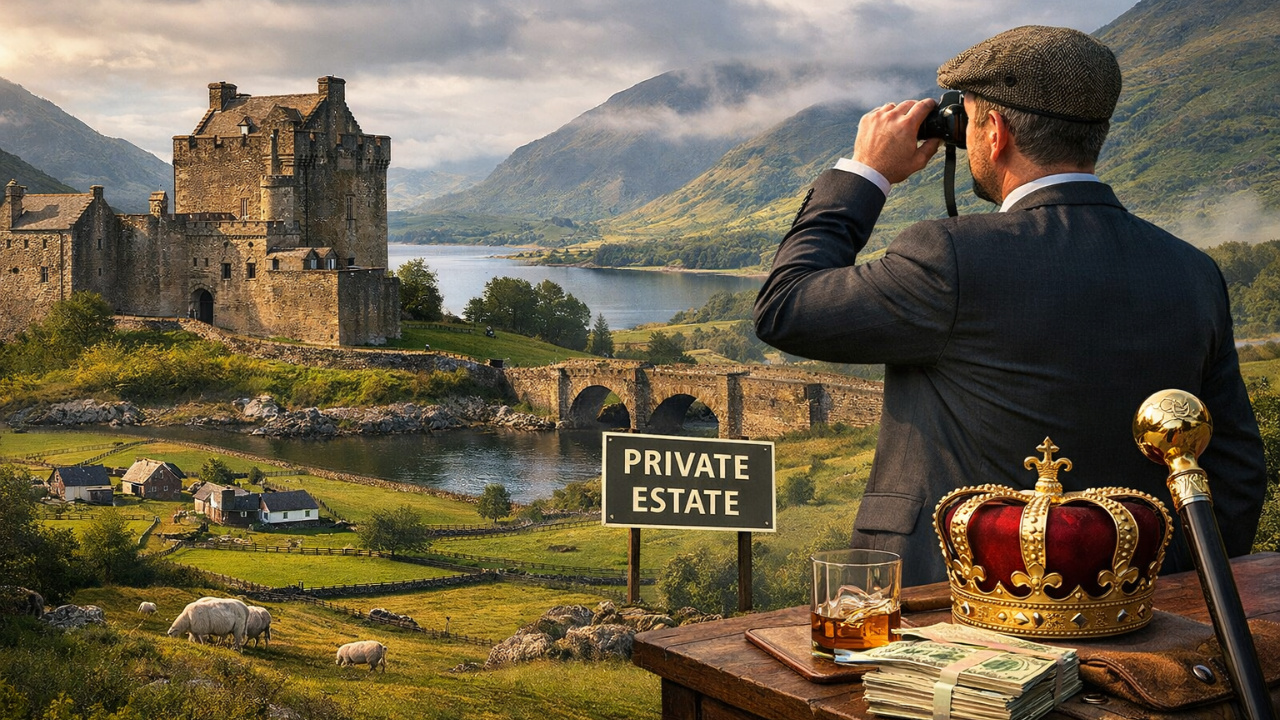
Land Concentration Maintains Private Estates and Reinforces Territorial Inequality in Scotland, A Legacy of Feudalism.
Scotland carries, in the 21st century, a rare territorial legacy in Europe: extreme land concentration.
Today, only 421 owners control about 50% of the country’s private rural land, according to official surveys and historical studies.
The phenomenon involves large heirs, international billionaires, and investment funds, occurring mainly in the Highlands, persisting for centuries without deep ruptures, and raising an increasing debate about territorial inequality, local democracy, and the effectiveness of land reform in Scotland.
-
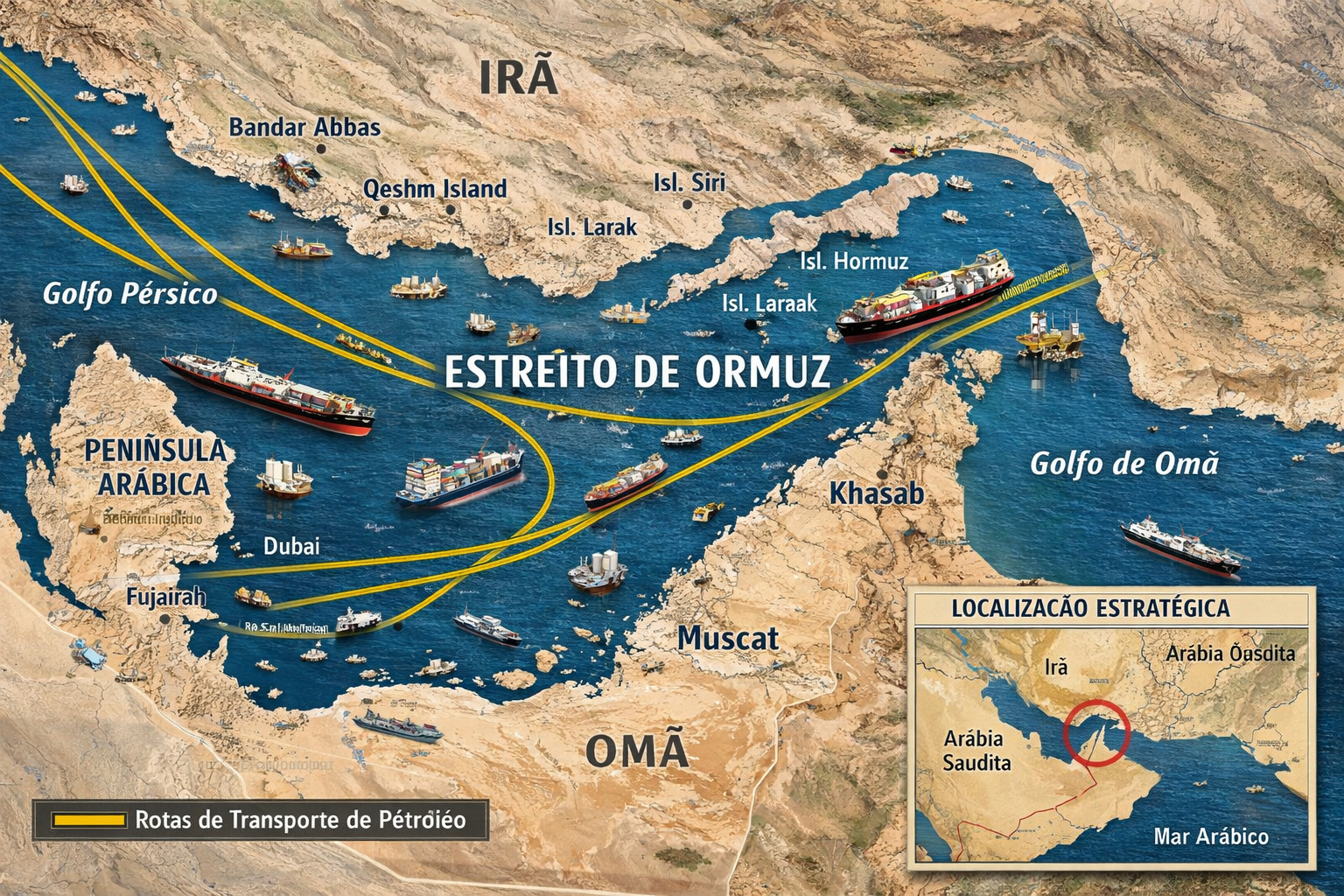
Global summit with over 40 countries pressures Iran for a blockade in the Strait of Hormuz and warns of direct impact on oil, food, and the global economy.
-
Russia has broken the U.S. maritime blockade to send oil to Cuba and is now loading a second ship while Trump says that “Cuba is next” in a possible military action against the island.

-
Spain challenges the USA and closes its airspace for operations against Iran, raising global tension and provoking the threat of a trade rupture.

-
While no other country manufactures tanks in Latin America, Argentina activates the TAM 2C-A2 and raises a curiosity about the technological lag in the region.

A Land Concentration That Spanned Centuries
The land concentration in Scotland is not a recent phenomenon. On the contrary, it is a model that has survived transformations that reshaped almost all of Europe.
While countries like France, Germany, and Nordic nations underwent revolutions, wars, or land redistributions, Scotland has maintained its property map practically intact.
This scenario makes the country a continental exception. Studies indicate that, by the end of the 19th century, land was concentrated in few hands.
The arrival of the modern state, therefore, did not significantly alter this structure.
Scottish Feudalism: Deep Historical Roots
The origin of this configuration is directly linked to Scottish feudalism.
Initially, power was exercised by tribal clans, who controlled vast territorial expanses.
Later, the rural aristocracy consolidated these areas into large hereditary estates.
Unlike other European regions, the right to land in Scotland remained protected over time.
There was no historical moment of rupture capable of broadly fragmenting these properties.
Why Has Land Reform Never Advanced?
The absence of a deep land reform in Scotland was not a matter of chance.
Unlike countries that faced civil wars, social revolutions, or institutional collapses, the United Kingdom experienced a more gradual political process.
This stability preserved private ownership as a central pillar of the economic system.
As a result, territorial privileges were maintained even after the formal end of feudalism.
From Traditional Lords to Global Billionaires
If previously the landowners were dukes and aristocratic families, today the profile has changed, but the power remains concentrated.
Scotland has become a strategic destination for international millionaires seeking large expanses of land and legal security.
Among the most cited examples is Danish businessman Anders Povlsen, owner of brands like Jack & Jones and an investor in Zalando, who has become one of the largest private landowners in the UK.
Along the same lines, the billionaire heiress of the Lego empire has been acquiring extensive areas in the Highlands, according to The Times.
Meanwhile, Sheikh Mohammed bin Rashid al-Maktoum, Emir of Dubai, owns at least eight properties in the region.
Private Estates and Power Over Communities
Private estates continue to be a symbol of power.
Whereas in the Middle Ages land ensured agricultural production, today it defines decisions regarding renewable energy, property projects, environmental preservation, and land use.
Whoever controls thousands of hectares directly influences the future of entire villages.
A study by the Scottish Land Commission warns that this concentration may weaken local democracy and limit rural development.
Territorial Inequality and Social Impacts
Territorial inequality is one of the most visible effects of this model.
Local communities face difficulties in acquiring land, while farmers cannot compete with the financial power of large investors.
This scenario drives the gentrification of the Highlands, raising prices and reducing opportunities for traditional residents to remain in the region.
Reforms Advance, but at a Slow Pace
In recent years, the Scottish government has tried to tackle the problem with new laws.
There have been advances in property transparency, facilitation of public bidding, and debates about the use of “public interest” in large projects.
Still, analysts and the British press assess that these measures are insufficient. The land concentration continues to be the rule, not the exception.
Re-concentration Reinforces the Historical Model
The paradox is that, even with the ongoing political debate, recent data indicate a new wave of re-concentration. Large buyers are acquiring areas that already belonged to other landowners.
According to former parliamentarian Andy Wightman, most large transactions end up in the hands of those who already held large properties.
High prices, shortage of supply, and abundant capital sustain this cycle.
A Debate That Gains Momentum
Scotland enters the global debate on inequality not only through money or technology but through land.
The challenge now is to know whether land reform in Scotland will finally manage to break a model that has spanned centuries with almost no changes.










Seja o primeiro a reagir!