





 Portuguese
  English
  Spanish
  4 min of reading
  1 comment


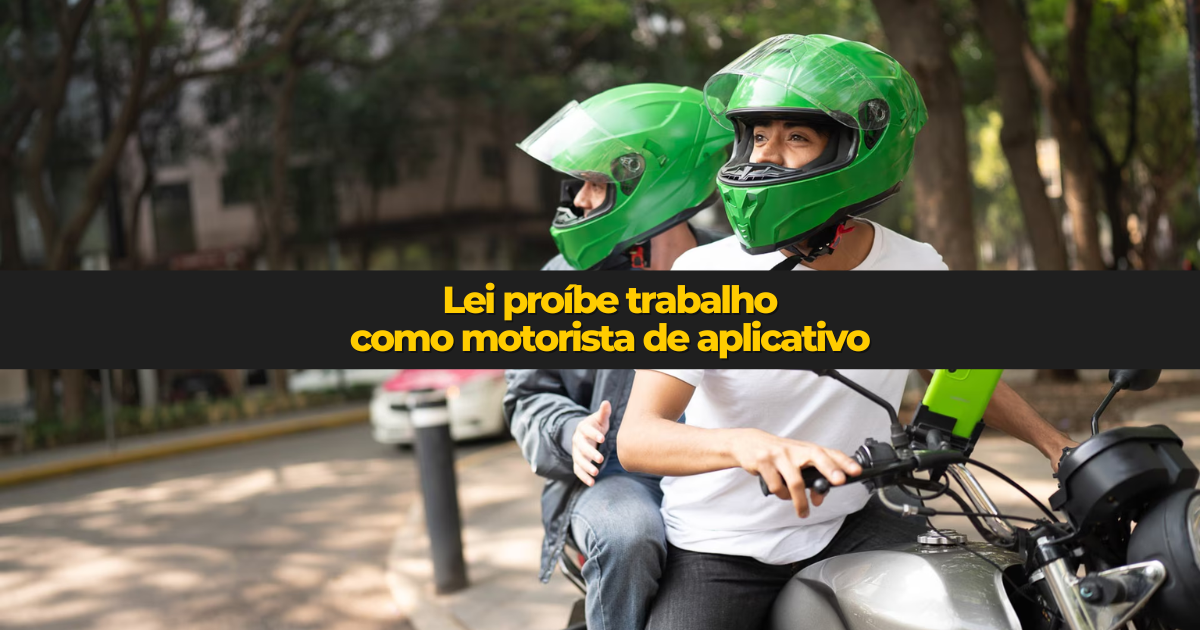


Law Prohibits Motorcyclists from Using Their Motorcycles to Work as Uber or 99. The Fine for Offenders Can Reach R$ 4 Thousand in Some Regions.
An federal law nearly forgotten by app drivers prohibits motorcyclists from providing paid private transport for passengers in Brazil, a rule that still surprises many users and drivers.
Since the beginning of the motorcycle service on Uber and 99 in 2021, the practice has become popular, but it faces a norm that few know about and that can result in heavy fines for those who challenge the legislation.
The Regulation and the Role of Category B
-
With a 1.0 engine producing 75 hp and costing less than R$ 70,000, Fiat’s car returns to the podium as the cheapest in the country; a temporary promotion for the 2026 Like version reduces the price of the Fiat Mobi.
-
With a mild hybrid system of 48 V, 176 hp and a price of R$ 175,990 in the Sahara version, the new Jeep Renegade changes mostly on the inside, improves slightly in fuel consumption, and remains almost the same car.
-
With a 293.5 cm³ engine and a range of up to 400 km with a 14.1-liter tank, the Honda CB 300F Twister 2026 has up to 24.7 hp, an initial price of R$ 25,150, and already exceeds R$ 29,000 in the Fipe Table.
-
With a 1.3 engine, nearly 700 km of range, and Turbo 200, the Fiat model surpasses Polo, Tera HB20, and Onix, becoming the best-selling car in March; see the numbers for the Fiat Strada and others.

The Federal Law No. 13.640/2018, enacted three years after Uber’s entry into Brazil, defines that only drivers licensed in category B of the CNH or higher are allowed to transport passengers for profit.
This category, intended for vehicles with four wheels or more, automatically excludes motorcycles and other vehicles that require a license in category A, such as motorcycles and mopeds, from the paid transport of people.
This restriction aims to ensure the safety of passengers, considering that motorcycles, classified as less safe vehicles, pose a higher risk in traffic accidents.
According to experts, this measure protects both users and drivers by restricting the service to vehicles considered more robust and safe.
Debate Among Experts Brings to Light Risks and Illegalities
The legislation was the topic of a debate broadcast by Rádio Jornal, which highlighted the risks and legality of motorcycle services via apps.
Traffic and urban mobility attorney Renato Campestrini pointed out that many municipal administrations still do not know or ignore Law 13.640, applying it in a limited or negligent manner.
Campestrini noted that category B, required for paid passenger transport, exclusively includes vehicles with four wheels or more, leaving motorcycles, which require a license in category A, outside this regulation.
The debate also featured Vanessa Patriota, a prosecutor from the Public Labor Ministry in Pernambuco, and journalist Roberta Soares, a mobility specialist and editor of the Mobility column at Jornal do Commercio.
The discussion highlighted how the regulation is becoming increasingly relevant in light of the rise in traffic accidents involving motorcycles in Pernambuco and across the country.
Paid Transport with Motorcycles is Illegal
The use of motorcycles for paid private passenger transport is, according to the law, an irregular practice that can result in significant fines.
As pointed out by Campestrini, clause I of Article 11-B of Law 13.640/2018 reinforces that drivers licensed in categories lower than B do not have legal permission to engage in paid private transport activities.
In other words, paid transport conducted by motorcyclists without category B is classified as clandestine.
In many regions of Brazil, the enforcement of irregular transport is monitored more strictly, resulting in heavy penalties.
In the Metropolitan Region of Recife, for example, the fine for those who violate the rule can reach nearly R$ 4 thousand, according to information reported by Folha de S. Paulo.
The Conditions Established by Law 13.640/2018
Article 11-B of Law 13.640/2018 establishes some fundamental conditions for drivers wishing to provide paid private passenger transport services:
- Category of CNH: The driver must possess category B or higher, which requires four wheels or more and qualifies the driver to engage in paid activities.
- Vehicle Requirements: The vehicle must meet specific age and characteristics required by the traffic authority and municipality.
- Documentation and Background: The driver must present an updated Vehicle Registration and Licensing Certificate (CRLV) and a negative criminal background certificate.
Providing service without complying with these rules, at either the municipal or federal level, characterizes the transport as illegal.
The Role of Public Authorities and the Challenges of Enforcement
Campestrini suggests that federal legislation can serve as a basis for public authorities to confront the illegal activities of Uber and 99 Motos, aiming to reduce the number of traffic accidents involving motorcycles.
For him, the increase in the number of accidents, now defined as incidents according to the Brazilian Traffic Code (CTB) and the Brazilian Association of Technical Norms (ABNT), justifies a more forceful action from municipal administrations, responsible for local regulation of paid transport.
Perspectives for the Future and Safety
Although Uber and 99 Motos have popularized the transport of passengers on motorcycles, the service faces obstacles regarding regulation and safety.
The growth of this mode of transport in Brazil is linked to increased convenience and savings for passengers and drivers, but it also presents challenges for traffic safety.
Allowing motorcycles to transport passengers jeopardizes the safety of both parties.
Experts warn that, without adequate oversight, the rise of motorcyclists working clandestinely in passenger transport could have a significant impact on the number of incidents, especially in densely populated urban areas.
Will municipal administrations be able to rigorously enforce paid motorcycle transport to reduce traffic incidents?








Na verdade, o principal objetivo dessa Lei não é contribuir para a redução no número de sinistros, pois o os riscos envolvidos no transporte de passageiro por motocicleta não se altera pelo fato de ser ou não remunerados. Na verdade, essa Lei atende a interesses de setores da economia que se sentem prejudicados com uma alternativa mais barata ao cidadão médio comum, tanto quanto para o piloto, que ganha uma parcela significativa dos ganhos diários de outras modalidades de transporte regular. Nunca houve preocupação das autoridades em colaborar com o bem estar da sociedade, e sim em agir em prol de interesses diversos, conflitantes com as necessidades do cidadão comum. Governo e autoridades sobrepõem interesses financeiros de certos setores às necessidades de uma fonte de renda da população média, notadamente num cenário de desafios econômicos para todos.