





 Portuguese
  English
  Spanish
  4 min of reading
  0 comments


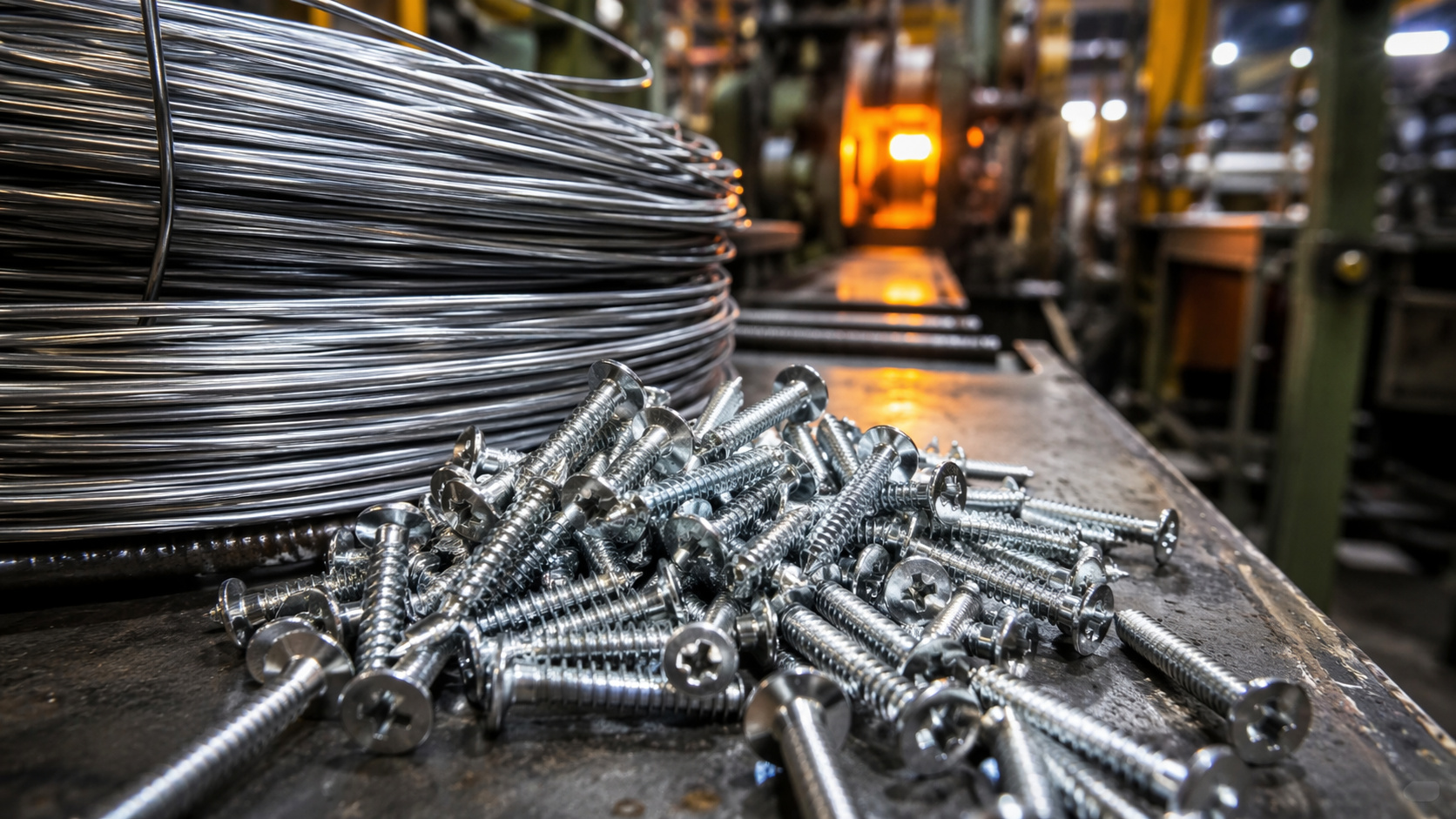
Understand how screw manufacturing works from raw steel to the final product with high strength and rust protection
The manufacturing of screws goes through a complex industrial process that starts with huge coils of steel and ends with durable parts used in various sectors. What seems simple involves intense heat, extreme pressure, and several stages of transformation.
This process ensures a final product with durability, precision, and corrosion protection, essential factors for safe use in daily life and industry. The information was released by Bora Ver, an industrial dissemination channel on YouTube.
Giant wires are the starting point in screw manufacturing
It all starts with steel coils that can reach 10 km in length and weigh almost 2 tons. This material still needs to be prepared before it transforms into screws.
-
The production of the Porsche 911 reveals the process inside the German factory, with manual engine assembly, high-precision robots, and luxury finishing that goes far beyond the common automotive industry.
-
A country with only 9 million inhabitants transports 1.5 million passengers per year on night trains and dominates all of Europe: how Austria invested in what everyone else was abandoning and became the powerhouse of sleeper trains.

-
Amidst calm landscapes and a peaceful pace of life, a town in the interior of São Paulo holds a secret that impresses experts: it produces almost half of Brazil’s mineral water.

-
Palmanova, in Italy, concentrates its urban structure within a star-shaped layout with 9 points, walls that extend for about 7 km, and three perfectly symmetrical concentric defensive rings, creating an entire city designed as a Renaissance military diagram and one of the most geometric urban patterns ever built in Europe.

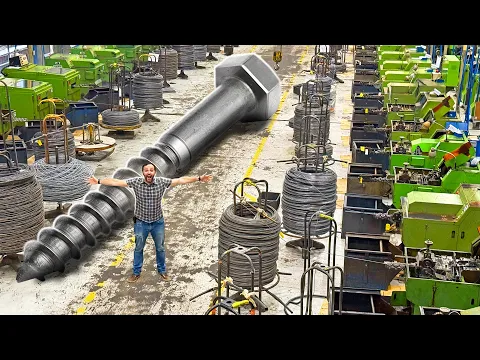

The wire goes through chemical baths to remove impurities. Then, it receives a layer of zinc phosphate, which protects and helps with lubrication. Next, another lubricant is applied to reduce friction during the process.
This preparation prevents damage to the material, especially in the following stages, which require strength and intense heating.
Drawing process stretches the steel and reduces its thickness
Drawing is a fundamental step in screw manufacturing. In this stage, the wire is pulled through narrow pieces that decrease its thickness.
The result is impressive. For every kilometer of material that enters, up to seven kilometers of thinner wire can come out. This elongation happens because the steel is stretched under control.
During this process, the material heats up significantly. In some cases, it goes through an annealing furnace, remaining for about 8 hours heating and another 6 hours cooling, which increases its malleability and prevents cracking.
Cold press molds the screw with intense force
After preparation, the wire is cut to the correct size and goes to the cold press. It is at this moment that the shape of the screw begins to emerge.
The machine applies successive blows to shape the metal. Each stage defines a part of the piece, such as the body and the head, until it reaches the final shape.
This process uses high pressure to transform the steel without the need for direct heating, ensuring precision and efficiency in production.
Threading forms the grooves of the screw with pressure
The screw thread is not cut. It is formed by pressure in a machine called a threader. The metal is compressed by tools that create the grooves.
This process generates heat and uses a lot of oil to prevent wear. The tip of the screw is also shaped in this phase, becoming darker due to the temperature.
Bora Ver, an industrial dissemination channel on YouTube, showed that the tools used vary according to the type of screw, ensuring precision in each model.
Thermal treatment at 900 degrees increases the strength of steel
After formation, the screws go through cleaning and proceed to thermal treatment. First, they are washed with high-pressure water and then dried.
Next, they enter an oven at a temperature of 900 degrees for about 50 minutes. This environment contains carbon-rich gas, which adheres to the surface of the metal.
After that, cooling occurs in oil, which further increases the strength and hardness of the screw, preparing the piece for intense use.
Galvanization protects against rust and defines the finish
The final step of screw manufacturing is galvanization. In this process, the screw receives a zinc bath with the help of electric current.
This layer protects against corrosion and increases the lifespan of the piece. Depending on the treatment, the screw can become silver, gold, or black.

After this, the pieces are weighed, organized, and packaged. In some cases, magnetic systems align the screws to facilitate storage.
Mass production impresses with millions of pieces per month
The industry produces a huge variety of screws, with different sizes, shapes, and types of threads.
A single factory can produce more than 400 million pieces per month, with about 6,500 different items. This scale shows the importance of this component in modern industry.
If all these pieces were aligned, it would be possible to wrap around the world twice, highlighting the impressive volume of production.
Industrial process guarantees quality and safe use
The manufacturing of screws involves several stages that ensure quality and safety. Each phase contributes to a resistant and reliable product.
From steel treatment to the final finish, everything is done to withstand stress, heat, and constant use.
If you enjoyed understanding how this industrial process works, feel free to share this content and leave your comment telling what caught your attention the most.









Seja o primeiro a reagir!